
Beached Vessels and a Wagon, near Trouville, France — History & Facts
When did color learn to lie? In a world where hues often mask their intentions, Richard Parkes Bonington’s work beckons us to confront the beauty of raw truth. The canvas presents an unvarnished reality, yet it breathes with an enchanting allure that invites our gaze deeper. Focus on the foreground where two languid vessels rest upon the sandy shore, their wooden hulls weathered and worn. Notice how the light dances across their surfaces, reflecting a spectrum of muted browns and blues that seem to whisper secrets of the sea.
The delicate brushwork captures not only the texture of the vessels but also the gentle play of shadow and light, creating a serene yet contemplative atmosphere that envelops the viewer. Delve into the emotional contrasts within the scene; the beached vessels, symbols of adventure and freedom, now lie still, echoing a poignant sense of abandonment. The wagon nearby, though sturdy, seems to blend into the landscape, a testament to the passage of time and the relentless march of nature reclaiming its domain. This juxtaposition evokes a sense of nostalgia for journeys past, inviting the observer to ponder the stories these vessels might tell if only they could speak. In 1825, Bonington painted this work while residing in Trouville, a coastal town that inspired many artists of the time.
Emerging as a prominent figure in the Romantic movement, he was influenced by the evolving landscapes and seascapes of the era. With the rise of plein air painting, he sought to capture the ephemeral qualities of light and color, reflecting his growing mastery and unique vision in a world filled with artistic experimentation.
More Artworks by Richard Parkes Bonington
Browse all →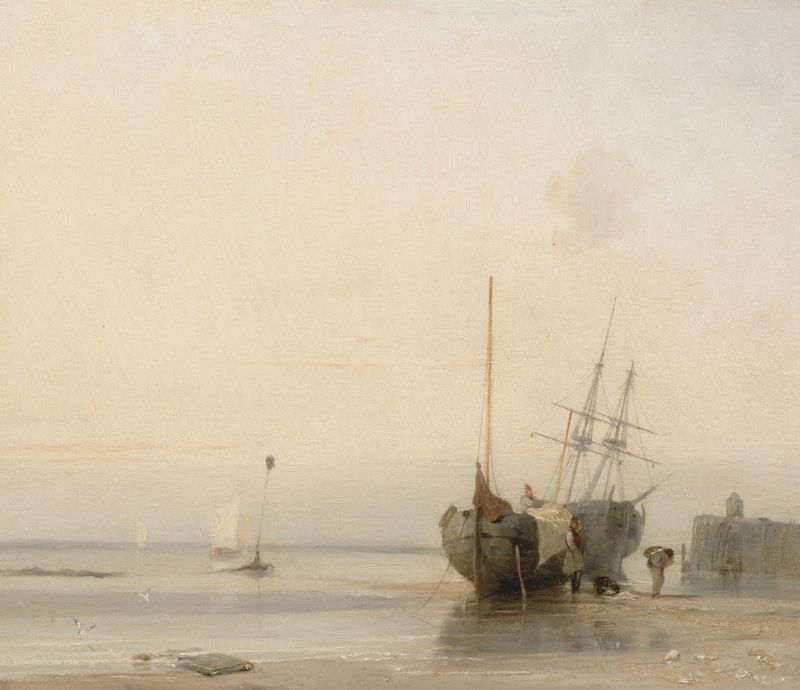
Calais Jetty, France
Richard Parkes Bonington
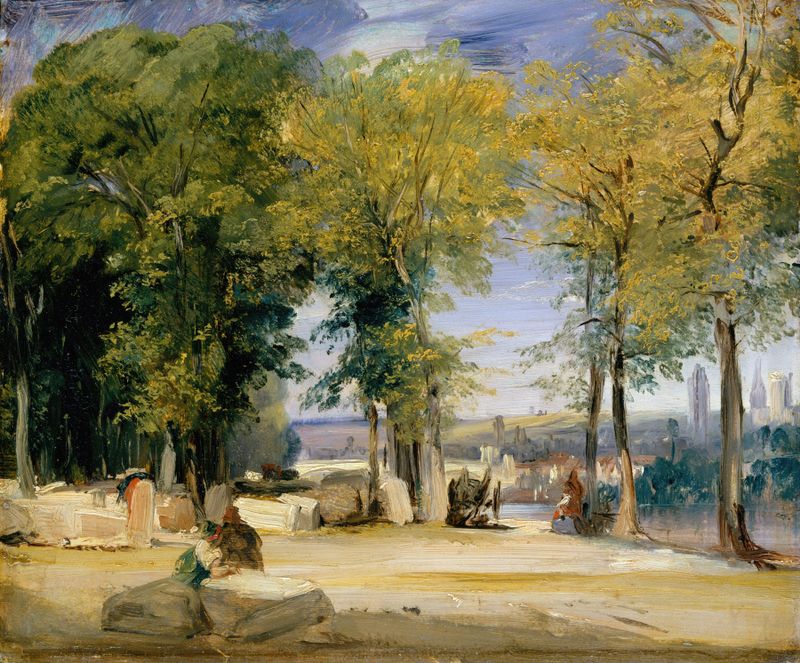
View near Rouen
Richard Parkes Bonington
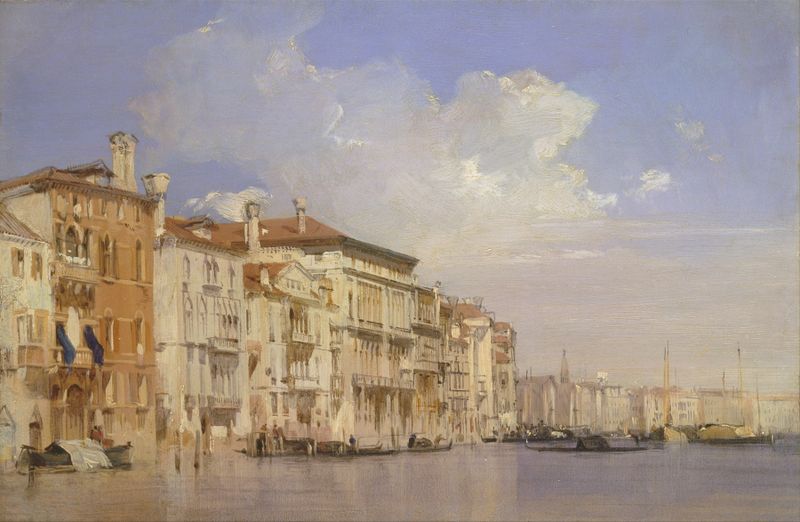
Grand Canal, Venice
Richard Parkes Bonington
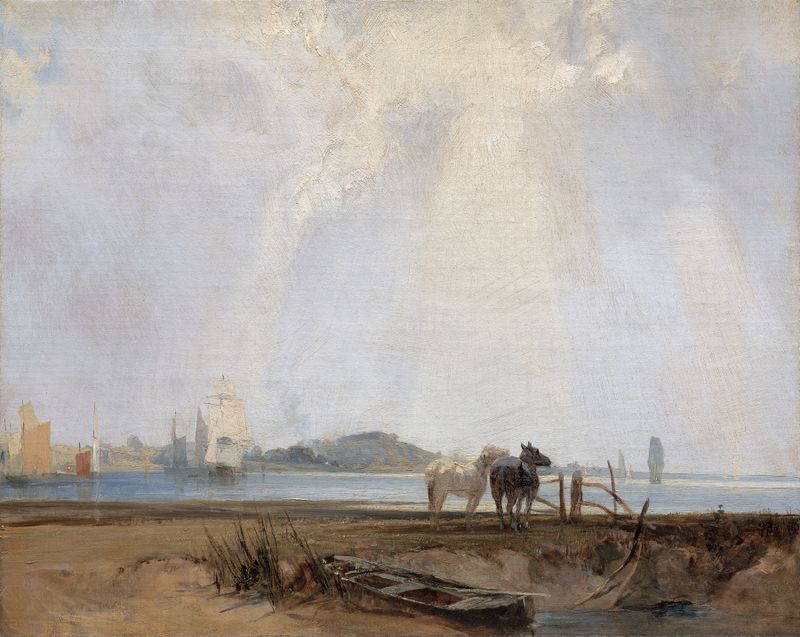
Near Quillebeuf
Richard Parkes Bonington
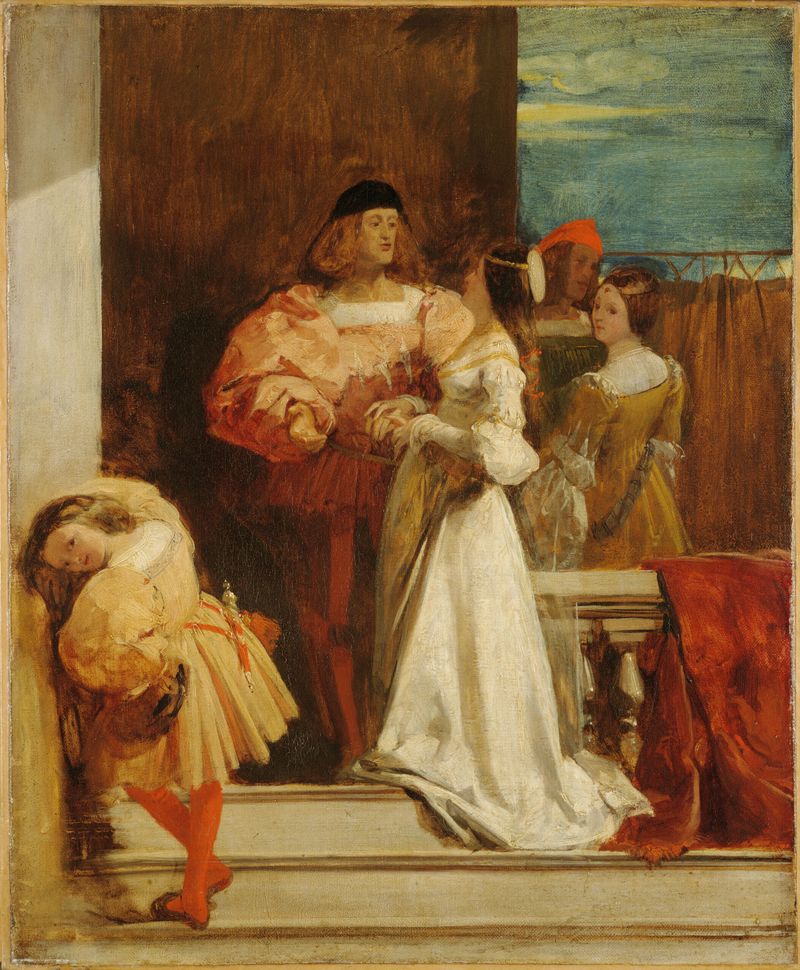
Evening in Venice
Richard Parkes Bonington
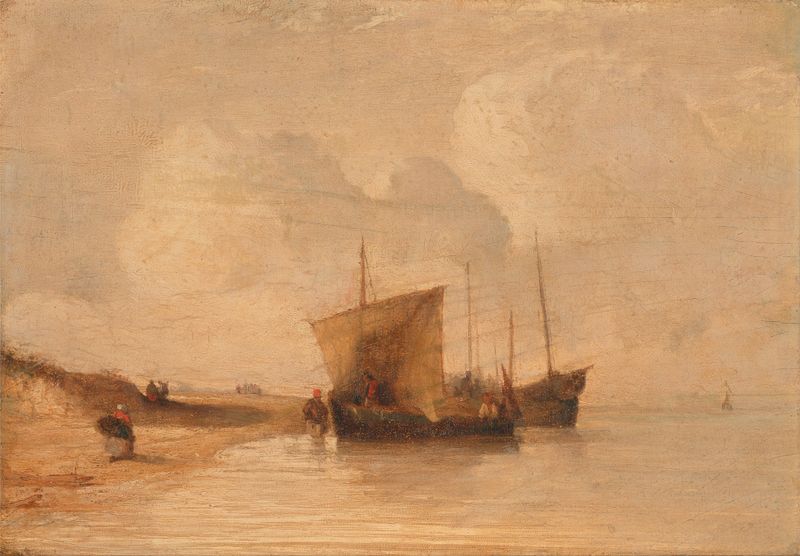
Normandy Coast
Richard Parkes Bonington
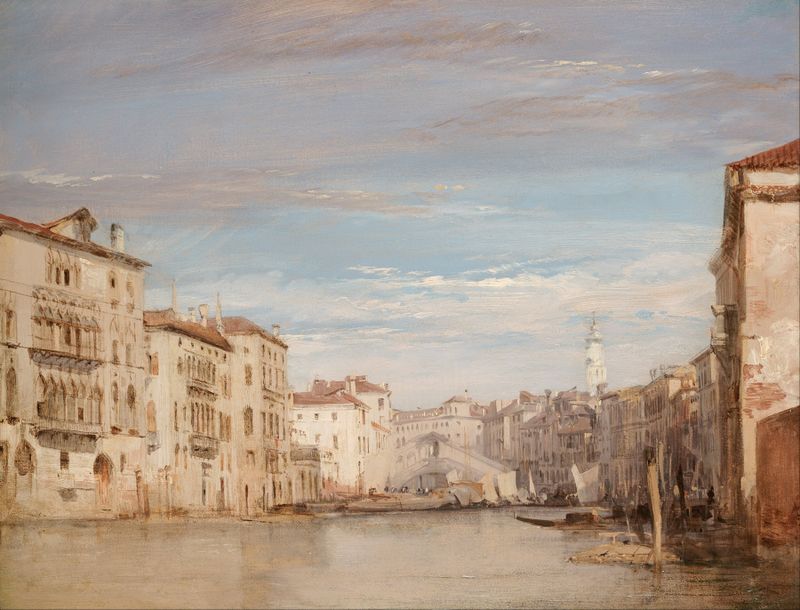
The Grand Canal, Venice, Looking Toward the Rialto
Richard Parkes Bonington
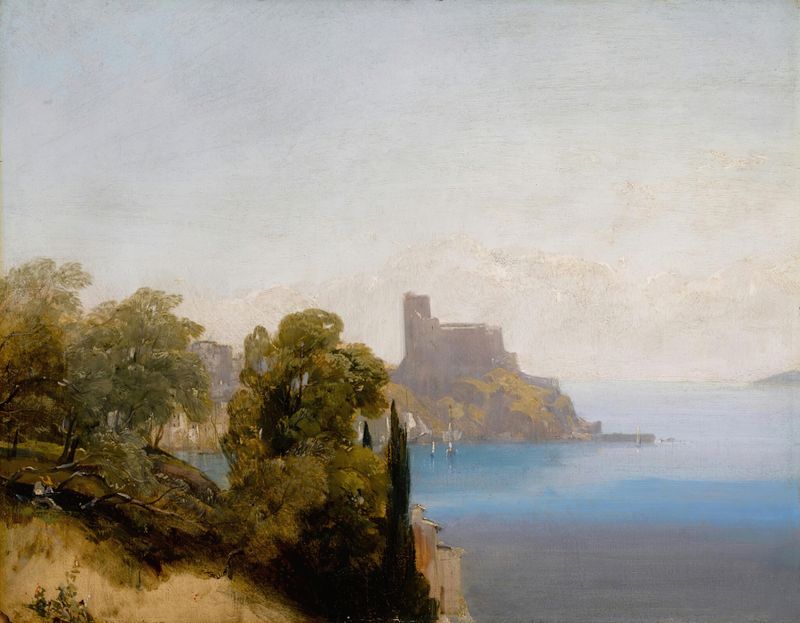
View of Lerici with Baron Charles Rivet sketching in the foreground
Richard Parkes Bonington
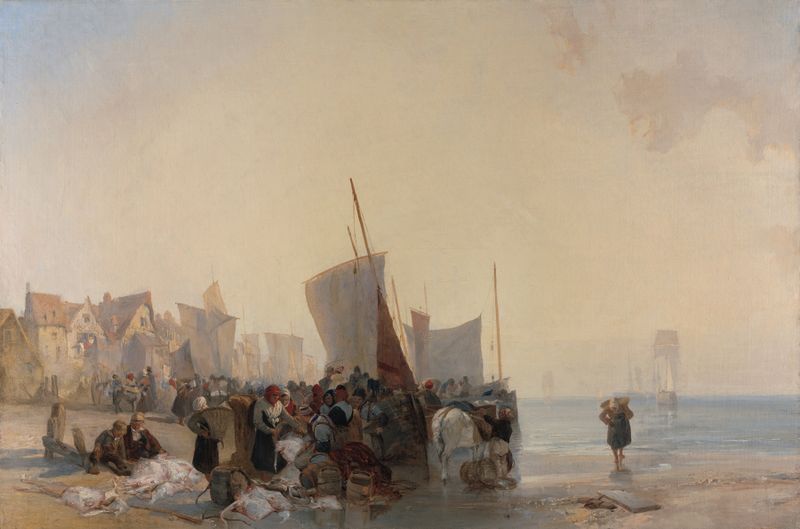
A Fish-market near Boulogne
Richard Parkes Bonington
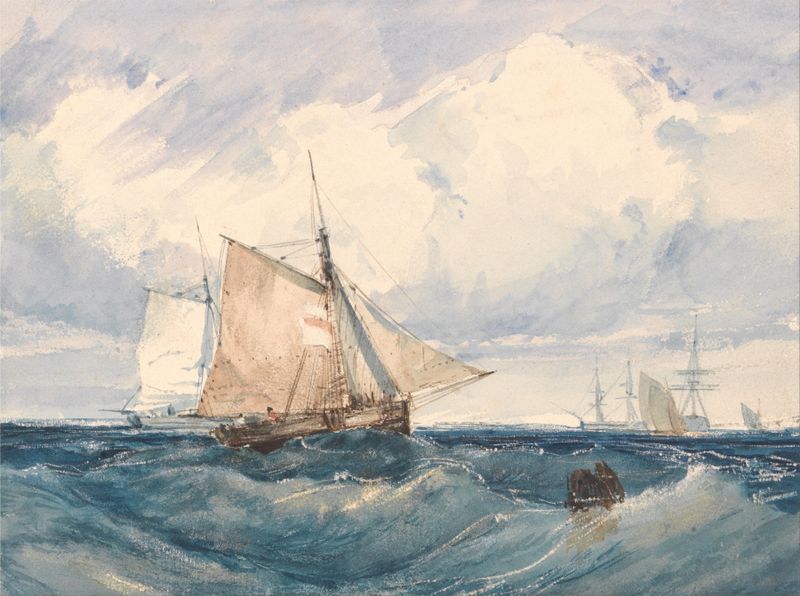
A Cutter and other shipping in a Breeze
Richard Parkes Bonington





