
Bei der Kartoffelernte — History & Facts
Beneath the surface of this pastoral scene lies an undeniable truth, one that speaks to the labor of the land and the weight of existence itself. Look to the foreground, where workers laboriously dig into the earth, their hands caked with soil as they harvest the potatoes. The earthy tones of browns and greens dominate the canvas, grounding the figures in a rich, tactile reality. Notice how the sunlight filters through the clouds, casting soft shadows and illuminating the workers’ forms, creating a dynamic interplay of light and labor.
The composition draws your eye toward the quiet intensity of their expressions, revealing a shared bond with the land. The emotional tension of Bei der Kartoffelernte arises from its contrasts: the vibrancy of life amidst the exhaustion of toil, the promise of sustenance against the backdrop of hardship. The workers’ worn faces tell stories of resilience and sacrifice, while the humble potatoes symbolize both sustenance and poverty. Each stroke of paint conveys a profound sense of truth about rural life, connecting the viewer to the laborers' intimate relationship with the earth and their unyielding dedication. Created during a period of socio-economic change, this piece reflects the artist’s keen observation of rural labor in early 20th century Germany.
Mühlig painted it amidst a rich tradition of naturalism, capturing the essence of agrarian life in a rapidly industrializing world. The artwork serves as both a tribute and a commentary, inviting reflection on the fundamental truths embedded in the rhythm of human labor.
More Artworks by Hugo Mühlig
Browse all →
Sommerliche Heuernte
Hugo Mühlig

Holzfäller am Feuer
Hugo Mühlig

Horse cart on a hill
Hugo Mühlig
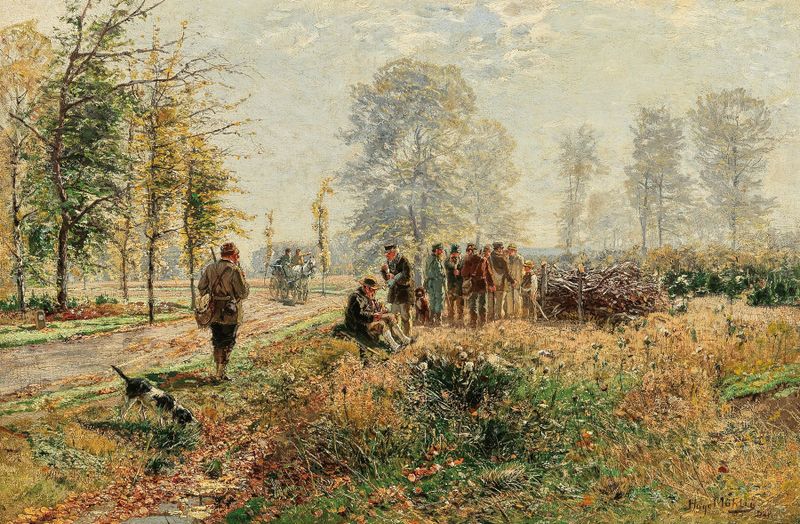
Aufbruch zur Jagd
Hugo Mühlig

Schäfer auf dem Heimweg
Hugo Mühlig
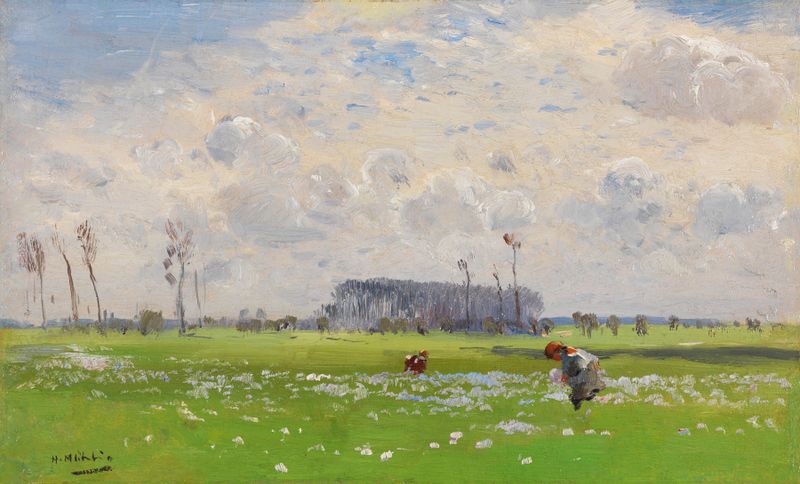
Sommerwiese mit blumenpflückenden Mädchen
Hugo Mühlig
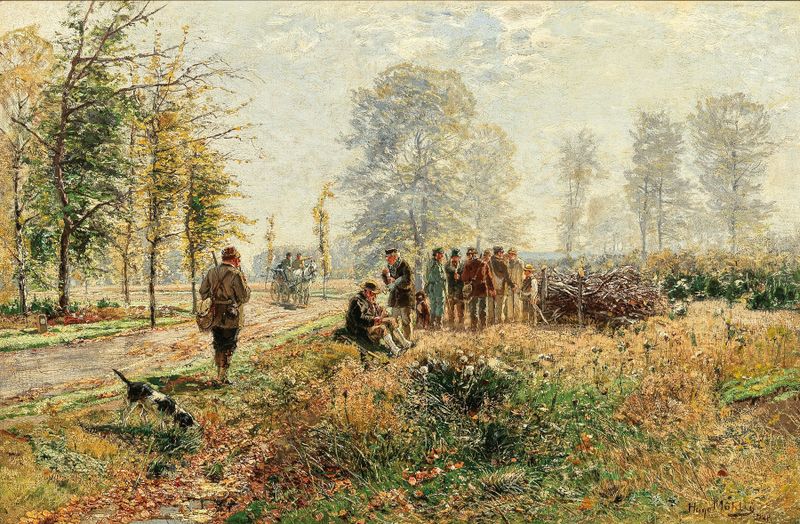
Off to the Hunt
Hugo Mühlig

Bei der Ernte (Niederrhein)
Hugo Mühlig
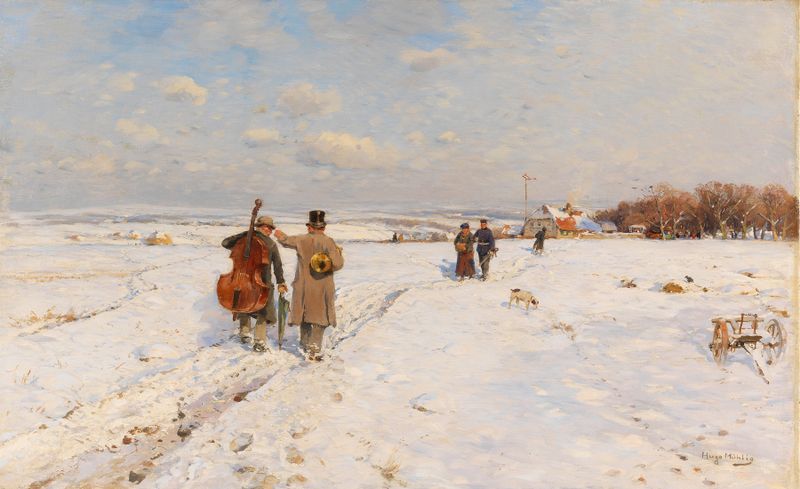
Heimkehrende Musikanten im Schnee
Hugo Mühlig
Herbstmorgen am Niederrhein
Hugo Mühlig





