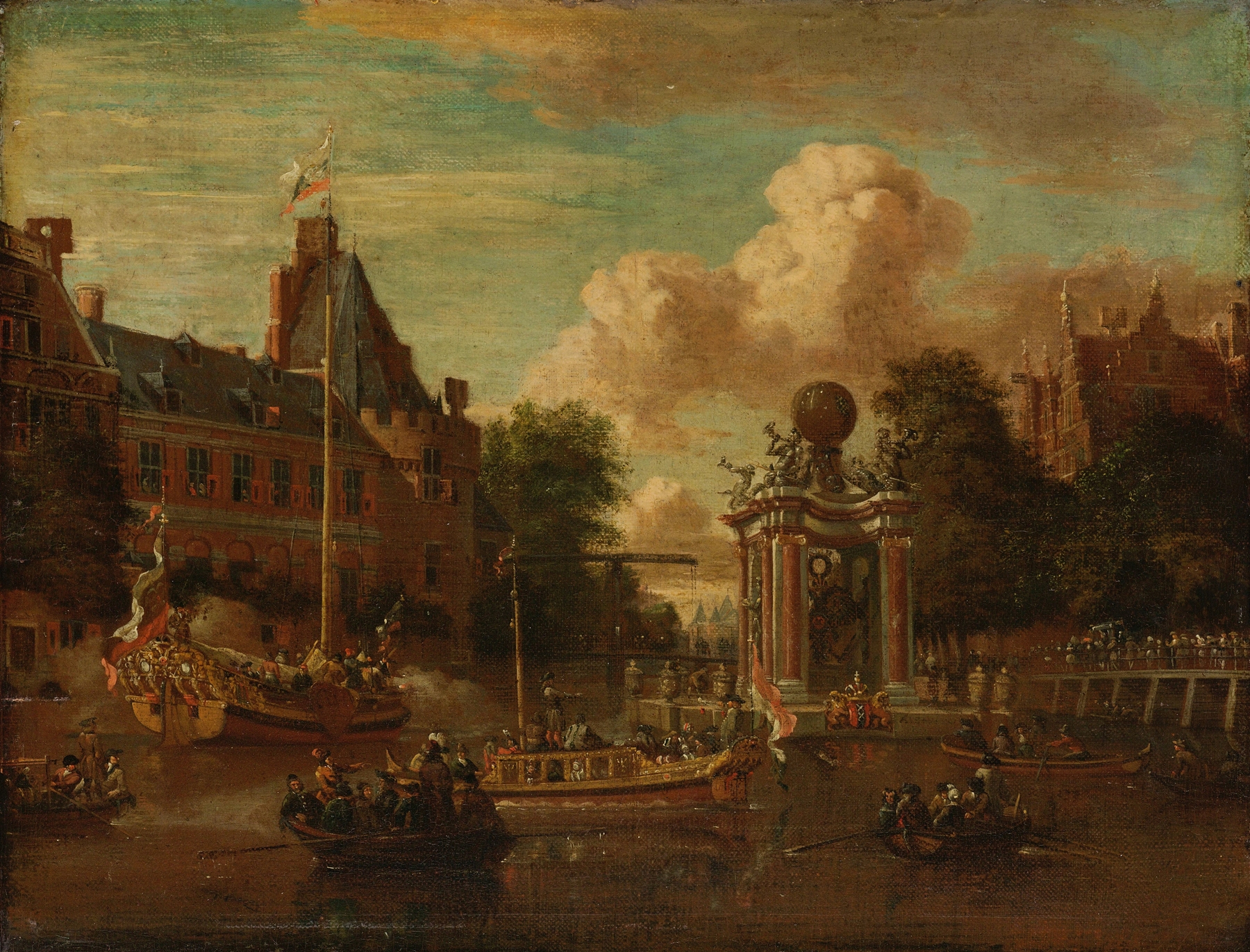
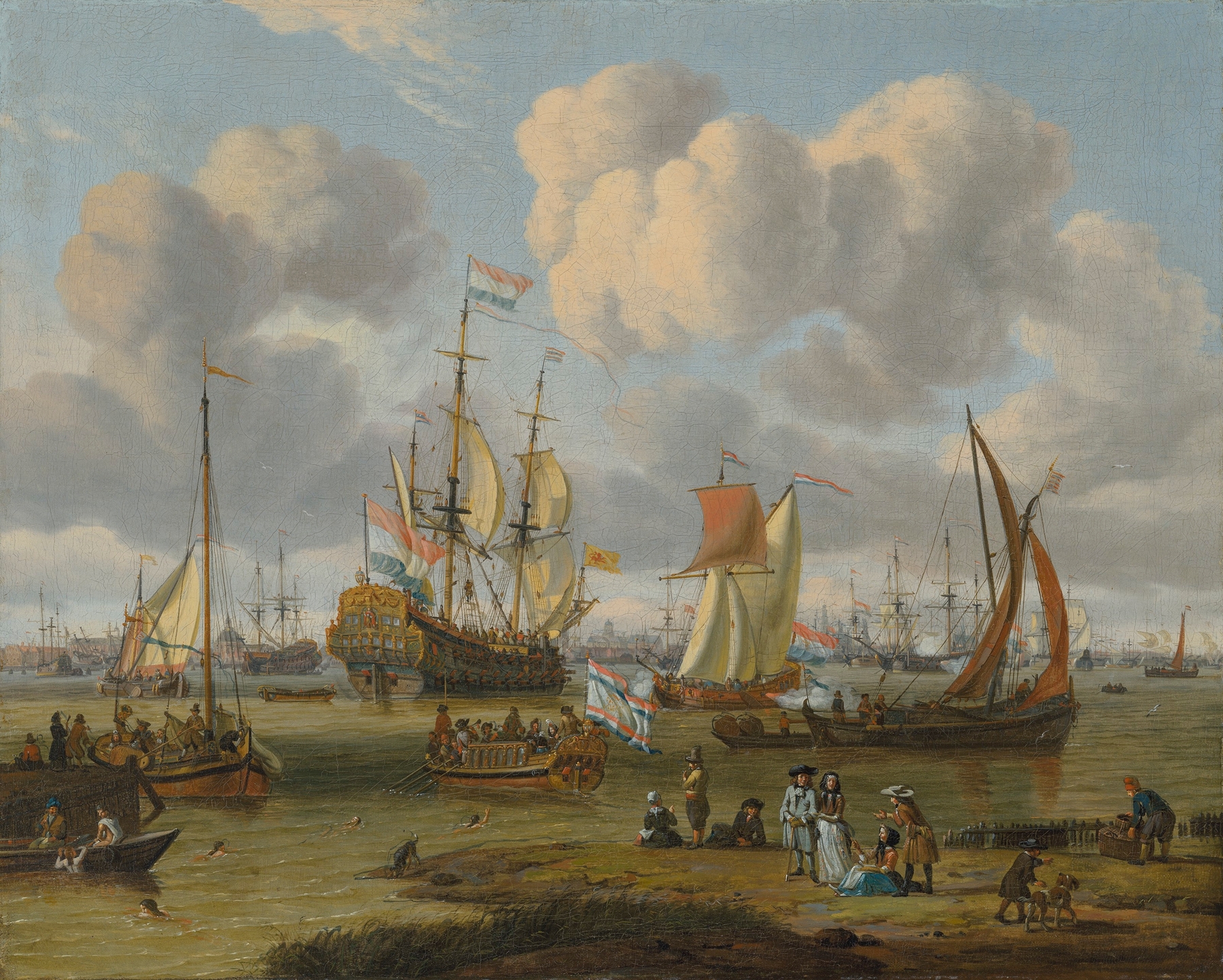
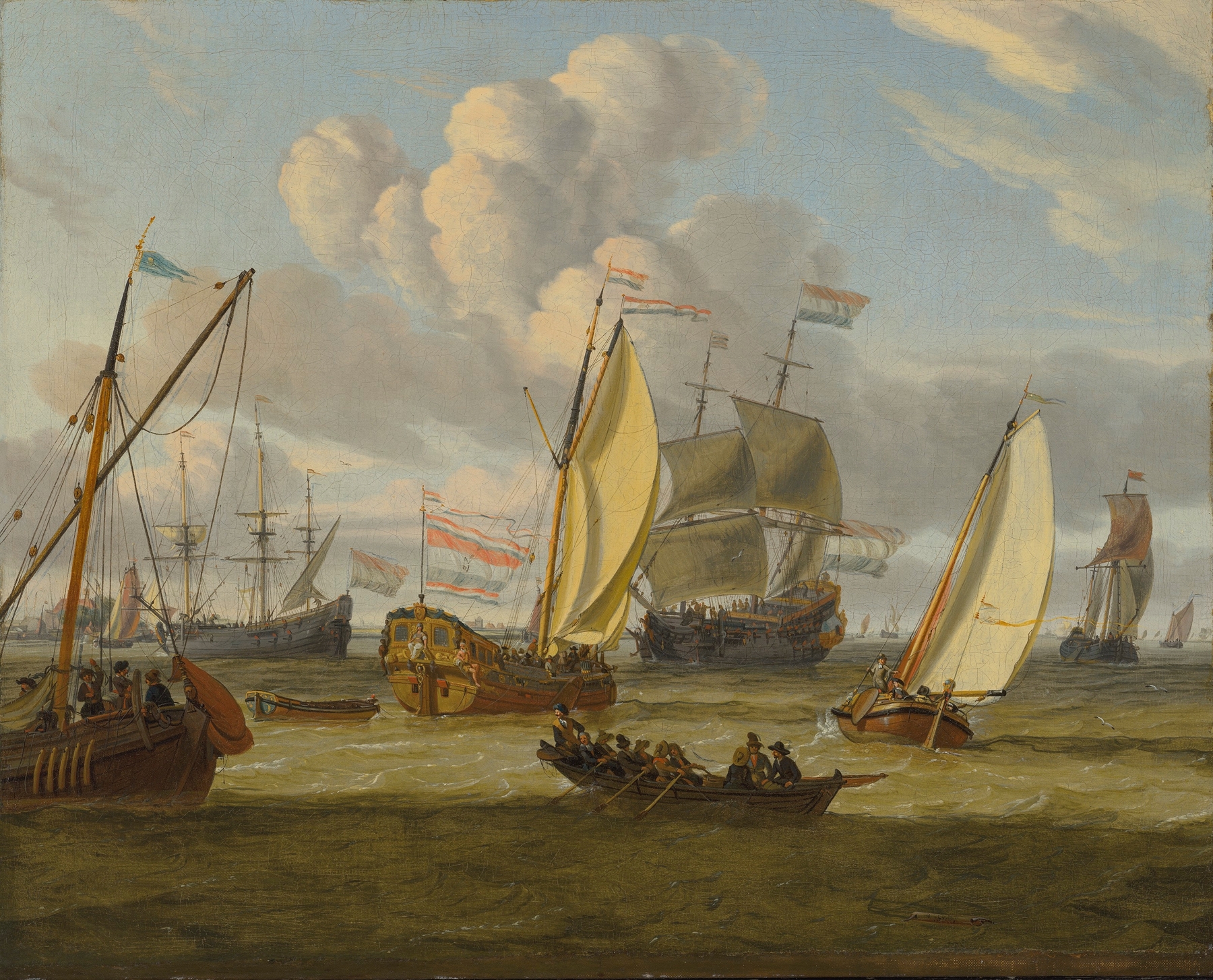
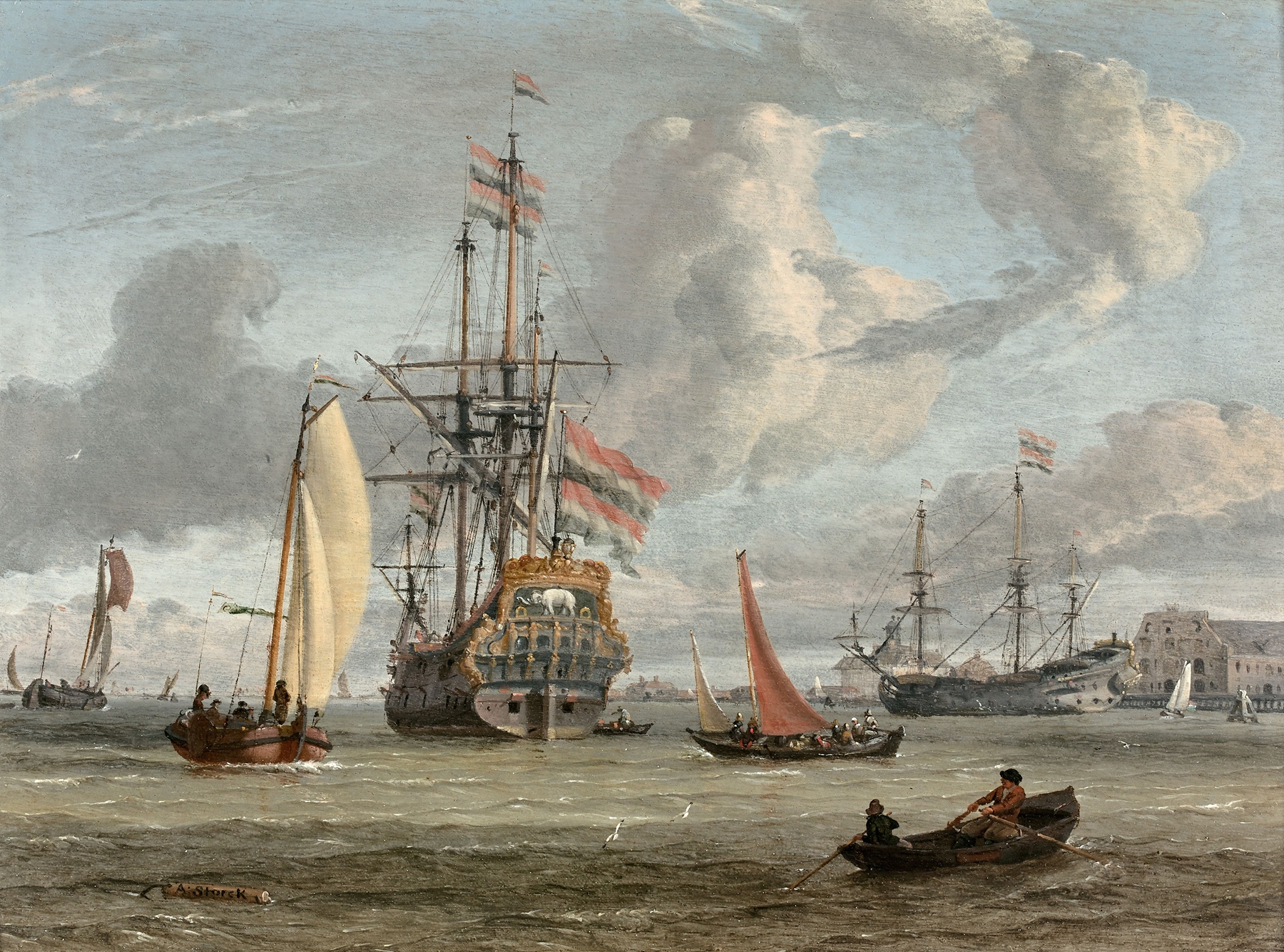
Bei einem Holzdamm liegen Boote, ein Handelsherr mit seiner Frau läßt Waren einladen — History & Analysis
Could beauty survive in a century of chaos? This question echoes through time, resonating with the delicate balance captured in art, where harmony and disorder entwine. Look to the foreground, where a merchant and his wife stand poised by the water’s edge, contemplating the loading of their goods. The boats, laden with vibrant colors, contrast against the muted tones of the landscape, drawing the eye to their intricate details. Notice how the sunlight glimmers on the water’s surface, creating a mesmerizing reflection that blurs the line between reality and illusion.
Each brushstroke tells a story, inviting us to explore the quiet yet bustling life of trade along the riverbanks. Deeper insights reveal an interplay of commerce and domesticity, symbolizing the tensions between personal aspirations and the mercantile world. The presence of the figures, seemingly grounded yet distant from their goods, underscores the emotional weight of their choices. The gentle ripples in the water echo the uncertainty of their endeavors, hinting at both the promise and peril that accompany ambition.
The painting invites contemplation on the ephemeral nature of success and the enduring beauty that emerges from life’s transitory moments. Created in the 17th century, Storck’s work reflects the spirit of an era where trade flourished yet faced the shadows of impending turmoil. While the exact date of this piece remains unknown, it is clear that the artist was navigating the changing tides of art, influenced by the burgeoning Dutch Golden Age. At this time, the vibrant merchant culture thrived, even as the world outside the canvas grappled with its own chaos.