
Beneath the White Canopy (East of the Sun and West of the Moon) — History & Facts
A luminous hush fills the world beneath the white canopy, where Kay Nielsen’s line and wash conjure a moment suspended between dream and waking. At the heart of the scene, a pale, spectral figure in flowing robes sits poised on the edge of a great, rounded bed, her hair and gown cascading in delicate threads. The low, patterned arch of the canopy encloses her in a private universe, while the figure at her feet, sprawled in harlequin trousers and soft slippers, seems caught in reverie or exhaustion.
The patterned dress of the onlooker—her back turned—echoes the geometry of the rug and floor, while a tiny chandelier floats above, its fragile flowers a counterpoint to the heavy darkness beyond. The eye is drawn again and again to the contrast between the sharp black void and the soft, almost glowing whites, as if the figures themselves are spun from moonlight. Created in 1922 for East of the Sun and West of the Moon: Old Tales from the North, this illustration belongs to a golden age of book art, when publishers sought to enchant readers with images as rich as the stories themselves. Nielsen, a Danish artist, became renowned for his ability to translate the uncanny atmosphere of Scandinavian folklore into visual form, blending Art Nouveau elegance with a hint of the surreal.
Such works were commissioned to elevate fairy tales into objects of wonder for both children and adults, at a time when illustrated books were prized as gifts and status symbols. History has kept few traces of the individual journeys of these images, but their power endures—inviting us to linger, as if we too might slip beneath that mysterious canopy.
More Artworks by Kay Nielsen
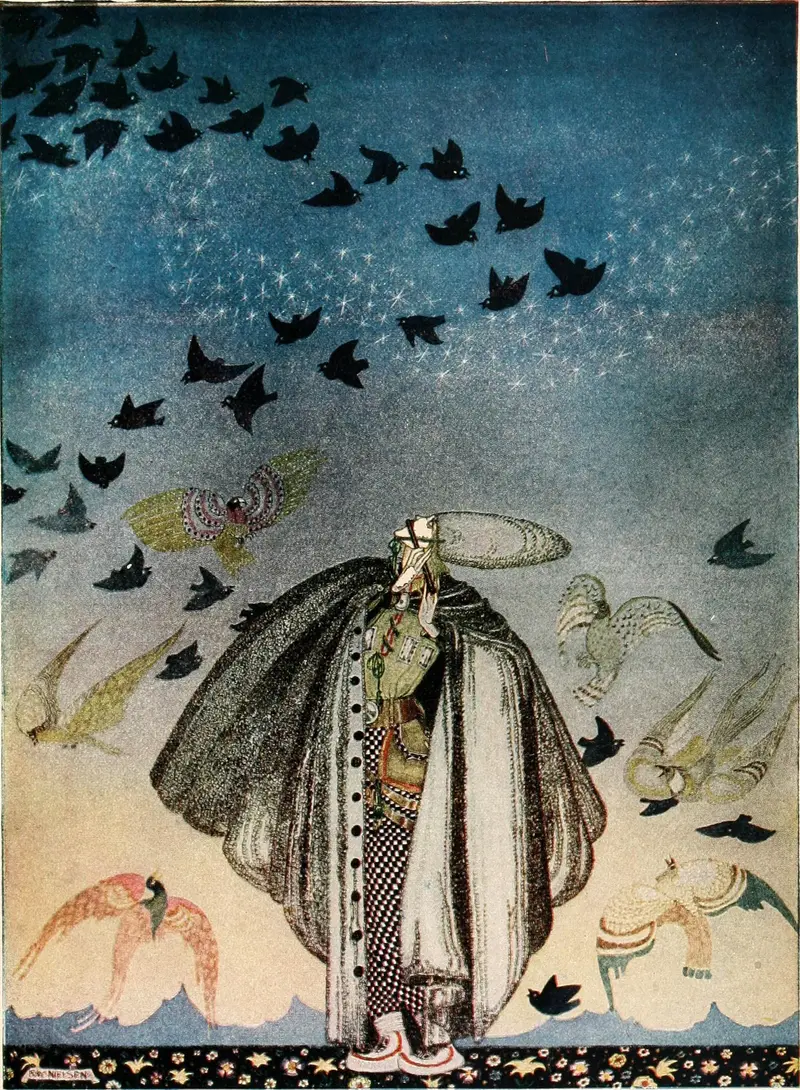
The Cloak of Black Birds (East of the Sun and West of the Moon)
Kay Nielsen

The Spirit at the Lighted Door (East of the Sun and West of the Moon)
Kay Nielsen
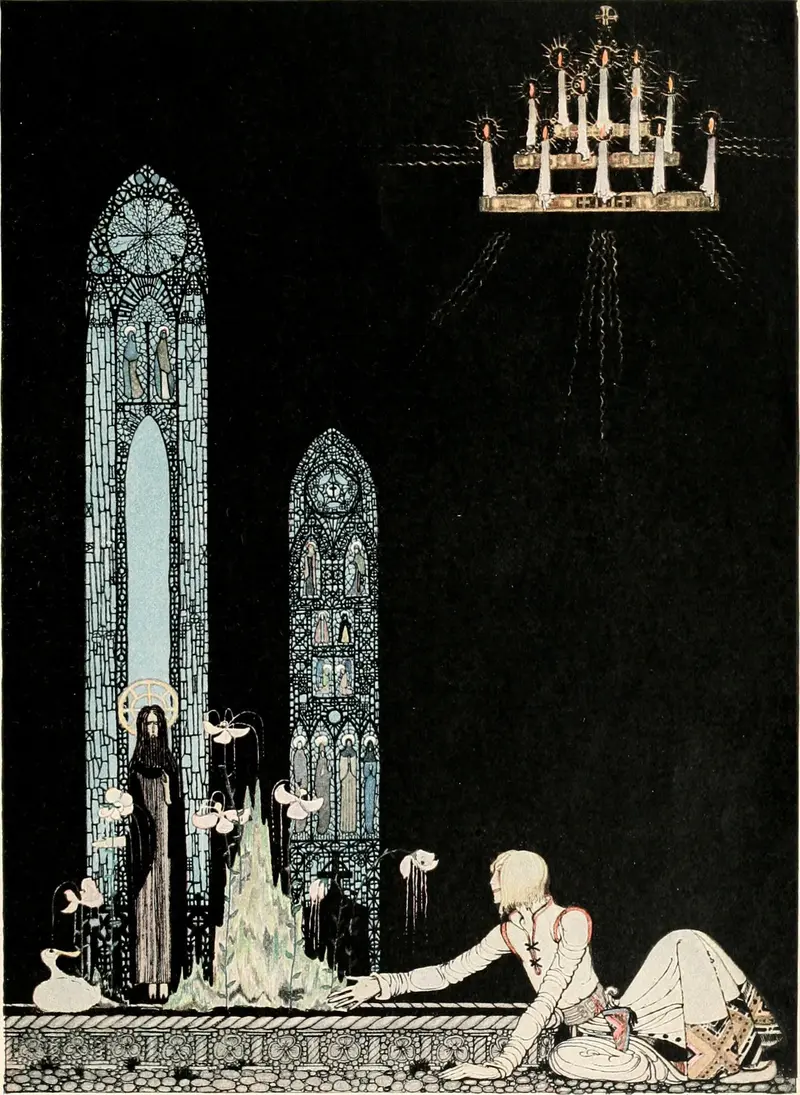
The Widow's Son and the Candles (East of the Sun and West of the Moon)
Kay Nielsen
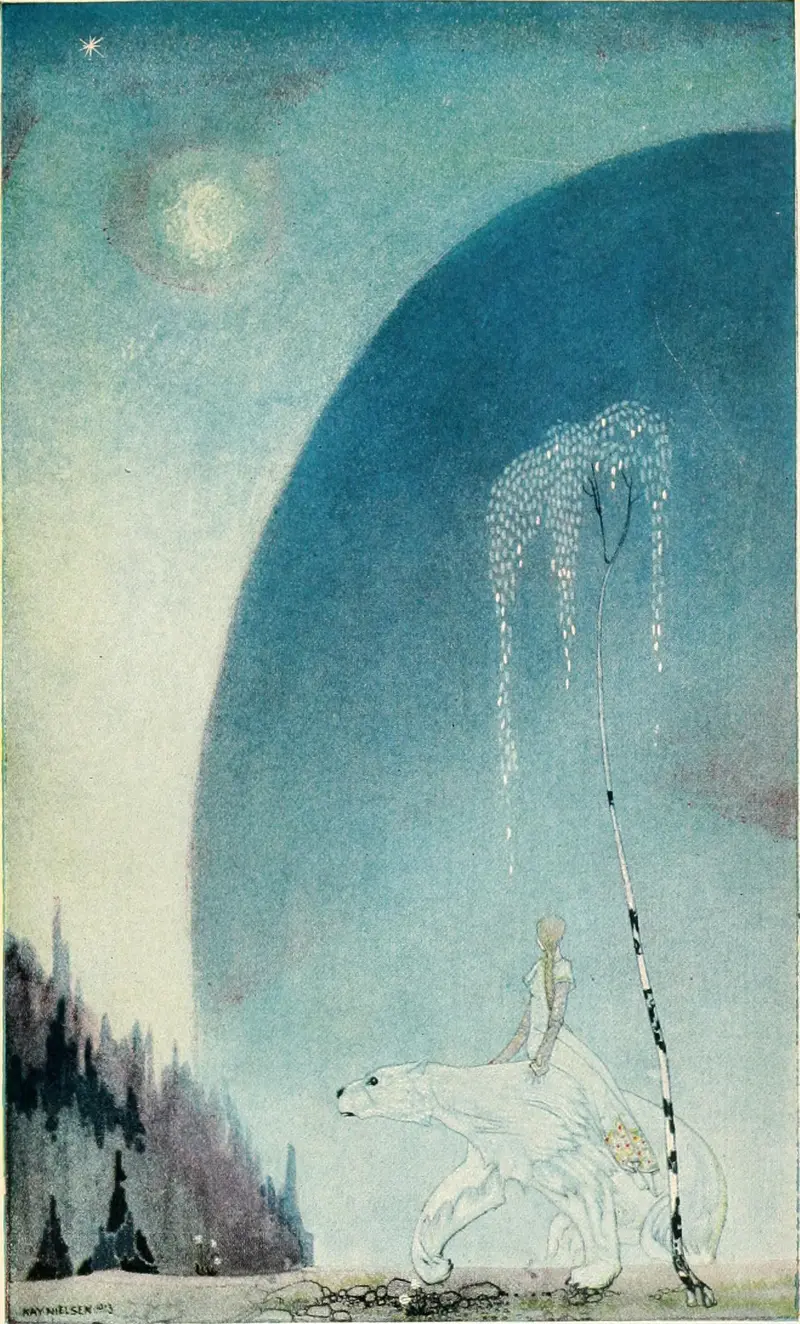
The White Goat Under the Moon (East of the Sun and West of the Moon)
Kay Nielsen

The Cloud Castle (Hansel and Gretel and Other Stories)
Kay Nielsen
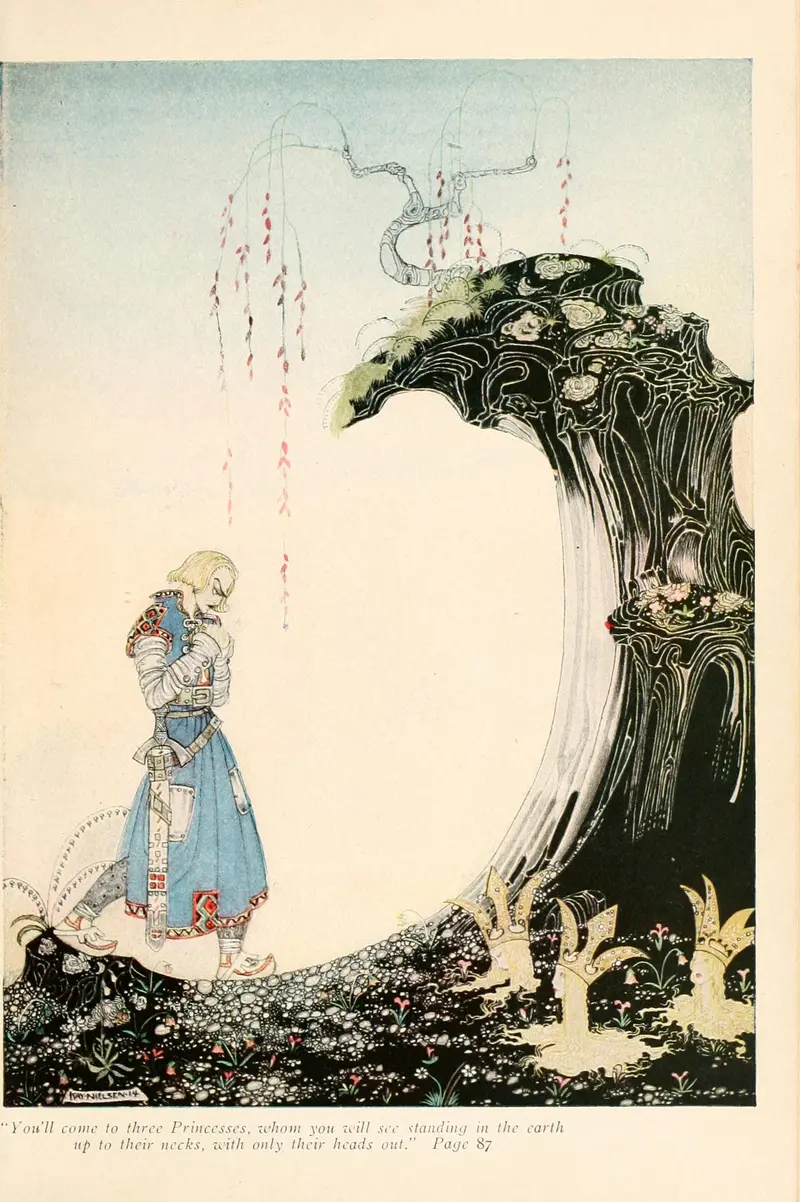
The Enchanted Wave (East of the Sun and West of the Moon)
Kay Nielsen
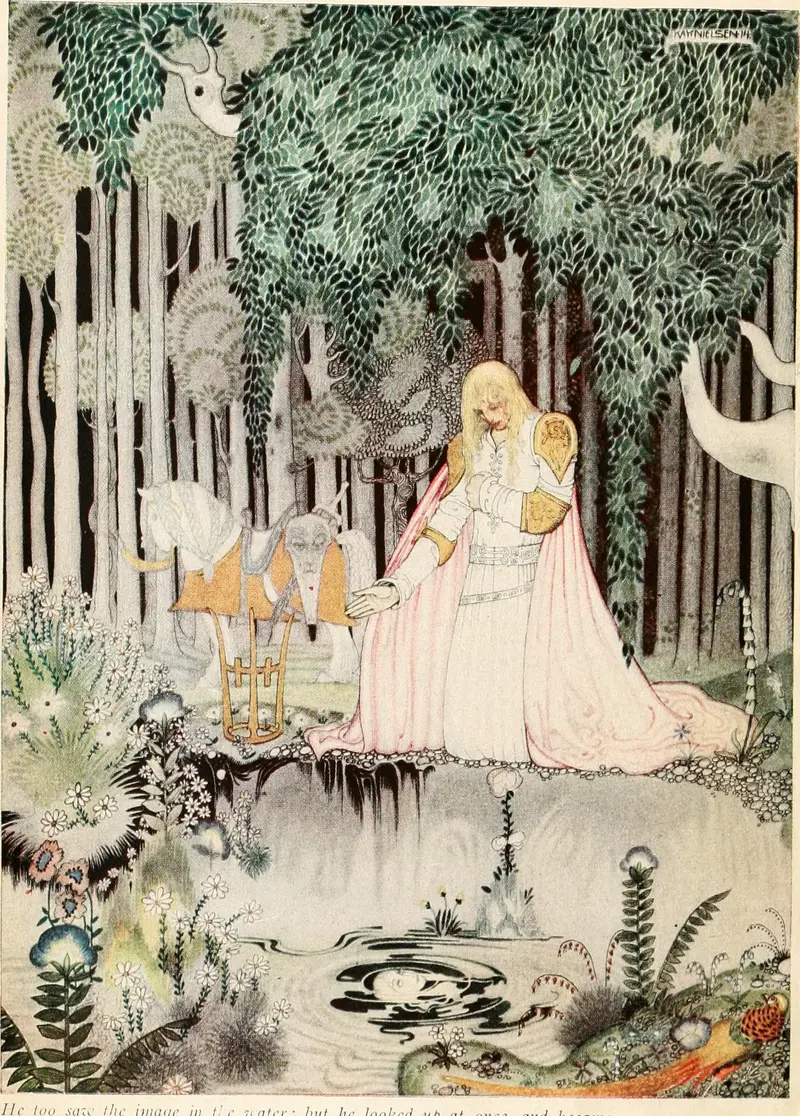
The Princess in the Moonlit Wood (East of the Sun and West of the Moon)
Kay Nielsen
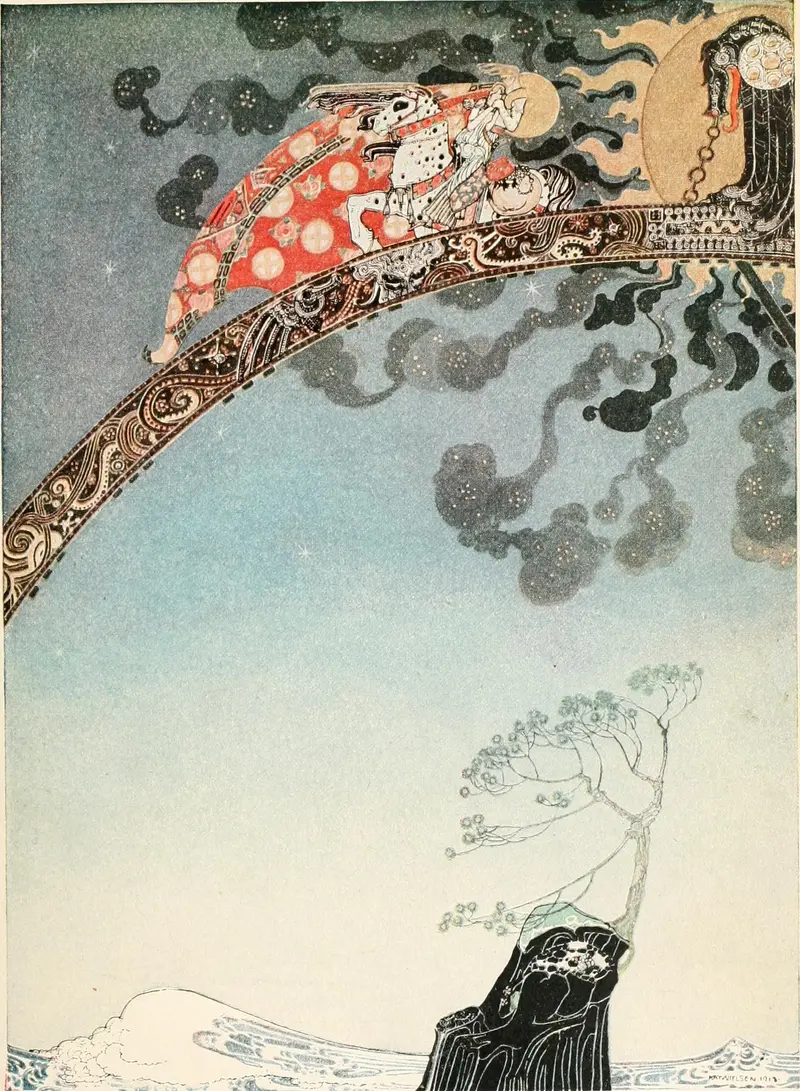
The Bridge Over the Sea (East of the Sun and West of the Moon)
Kay Nielsen
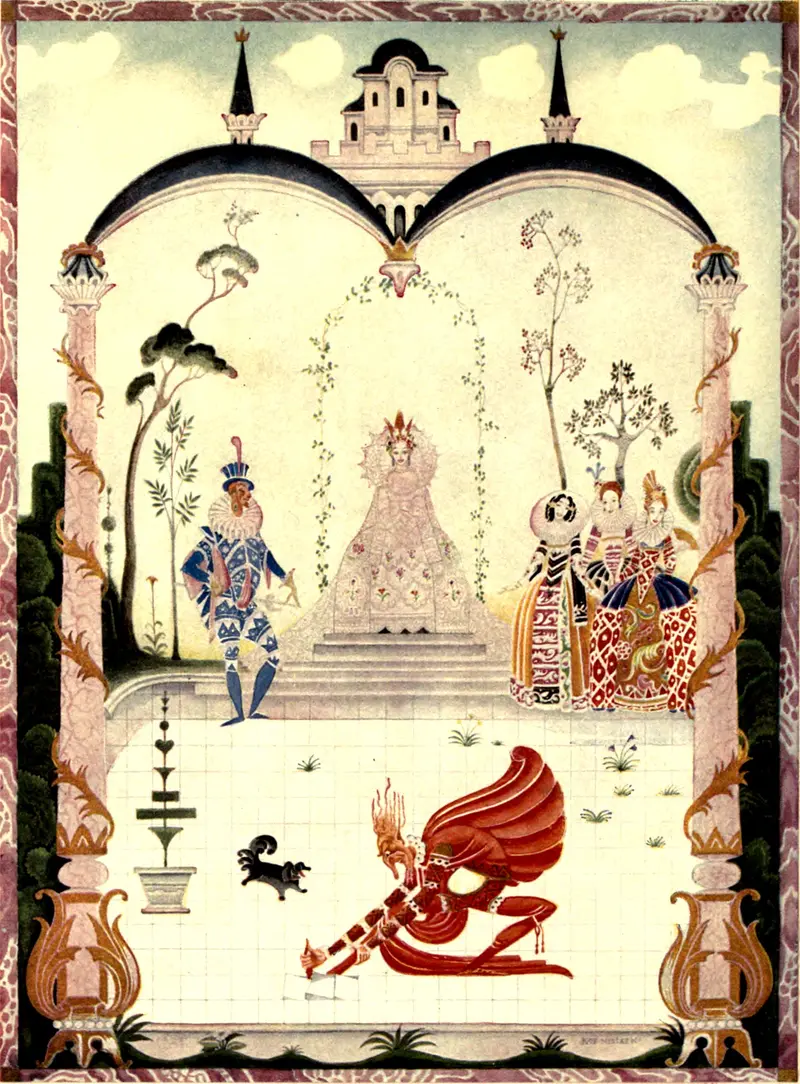
Frontispiece (Hansel and Gretel and Other Stories)
Kay Nielsen
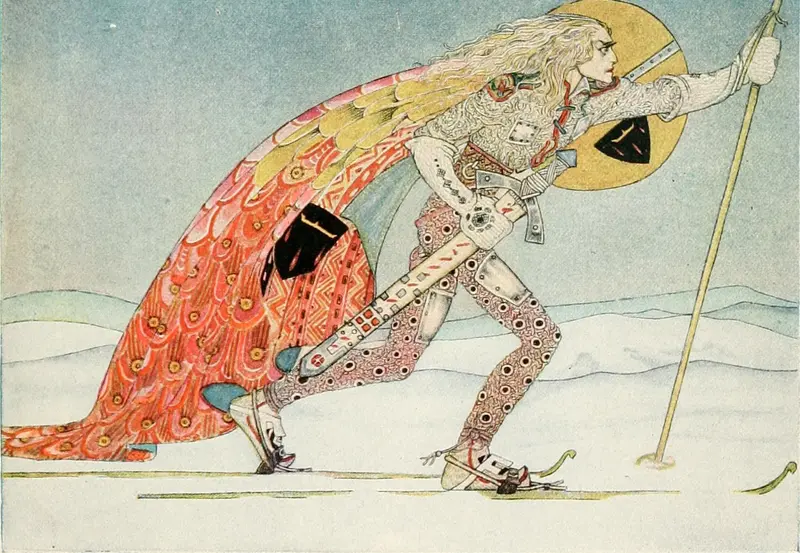
The Princesses of Whiteland (East of the Sun and West of the Moon)
Kay Nielsen





