
The Enchanted Wave (East of the Sun and West of the Moon) — History & Facts
A pale-haired figure in a blue tunic pauses at the edge of an uncanny landscape, hands clasped in anxious wonder. The ground before him is alive with pattern and detail, but what arrests the eye are the three golden crowns and heads—princesses, half-submerged, their faces turned upward from the earth itself. The curling, marbled tree above them, with its delicate, drooping branches, frames the scene with a sense of both enchantment and isolation.
Kay Nielsen’s line is unmistakable: every fold of fabric, every swirl of bark, is as deliberate as embroidery, drawing the viewer into a world where fairy tale logic reigns. The palette is cool and restrained, yet the gold of the crowns and the intricate patterns in the soil spark with hidden life, guiding us from the solitary figure to the mysterious captives below. Created for the 1922 edition of East of the Sun and West of the Moon: Old Tales from the North, this illustration belongs to a moment when European artists, inspired by the Arts and Crafts movement and the influx of Art Nouveau, reimagined folk stories for a new age of print. Kay Nielsen, a Danish illustrator, was celebrated for his ability to transform Scandinavian folklore into images that feel both ancient and modern, suffused with a dreamlike clarity.
Such works were commissioned for deluxe gift books, intended to enchant both children and adults with their otherworldly grace. While little is recorded about the journey of this specific piece, its survival in a digitized library speaks to the enduring power of illustration to conjure worlds—inviting us, still, to lose ourselves east of the sun and west of the moon.
More Artworks by Kay Nielsen
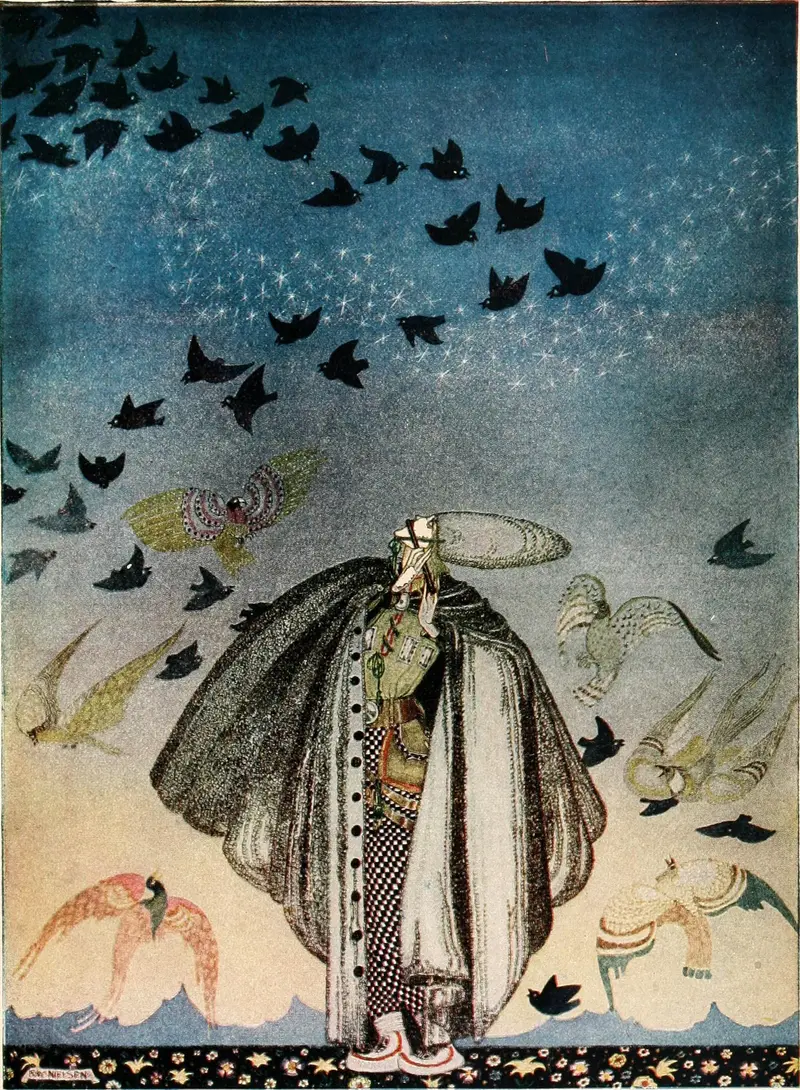
The Cloak of Black Birds (East of the Sun and West of the Moon)
Kay Nielsen

The Spirit at the Lighted Door (East of the Sun and West of the Moon)
Kay Nielsen
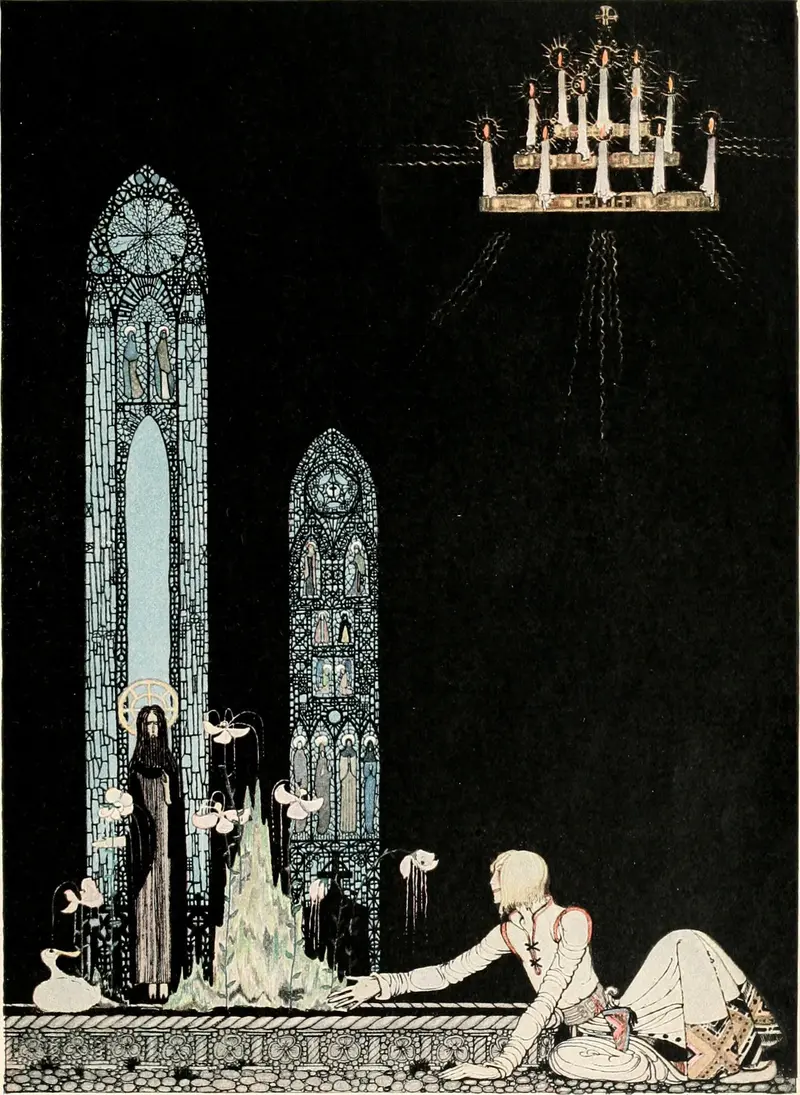
The Widow's Son and the Candles (East of the Sun and West of the Moon)
Kay Nielsen
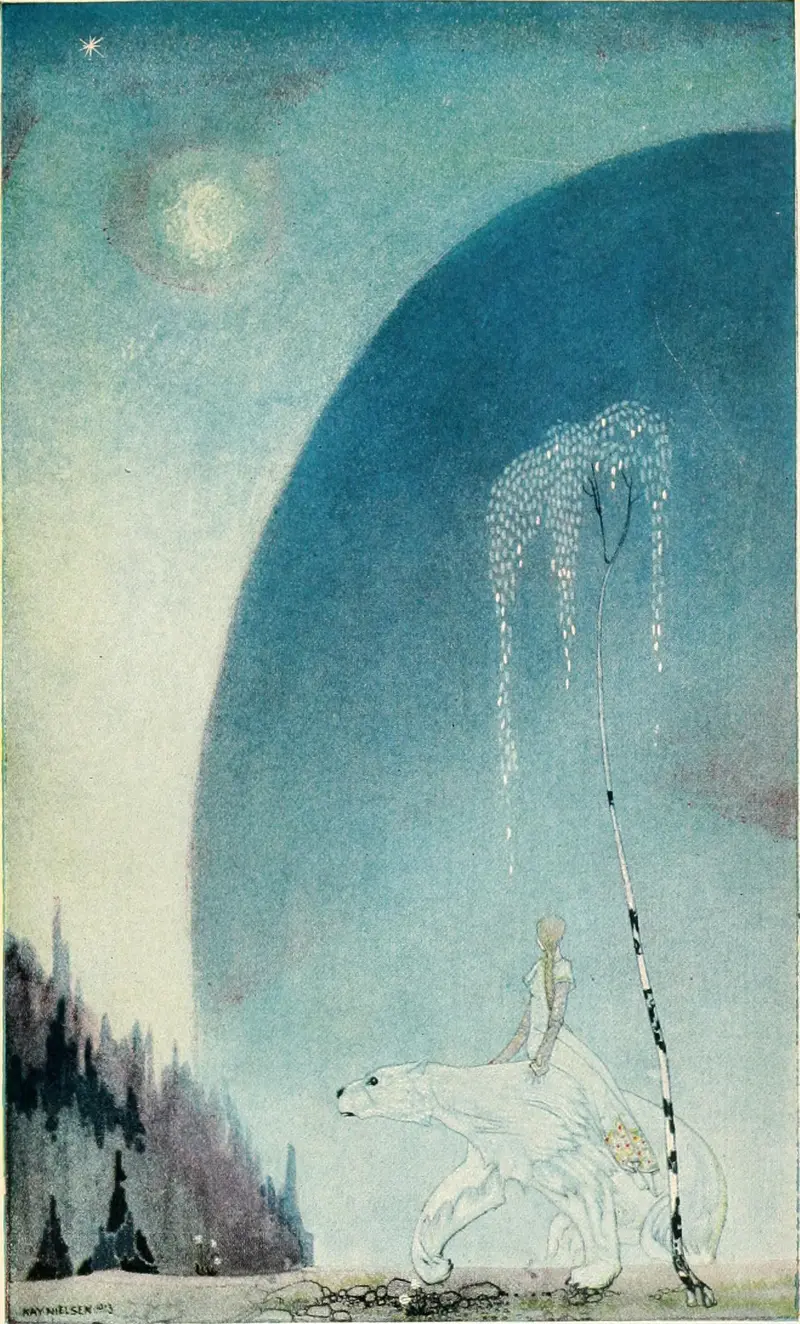
The White Goat Under the Moon (East of the Sun and West of the Moon)
Kay Nielsen

The Cloud Castle (Hansel and Gretel and Other Stories)
Kay Nielsen
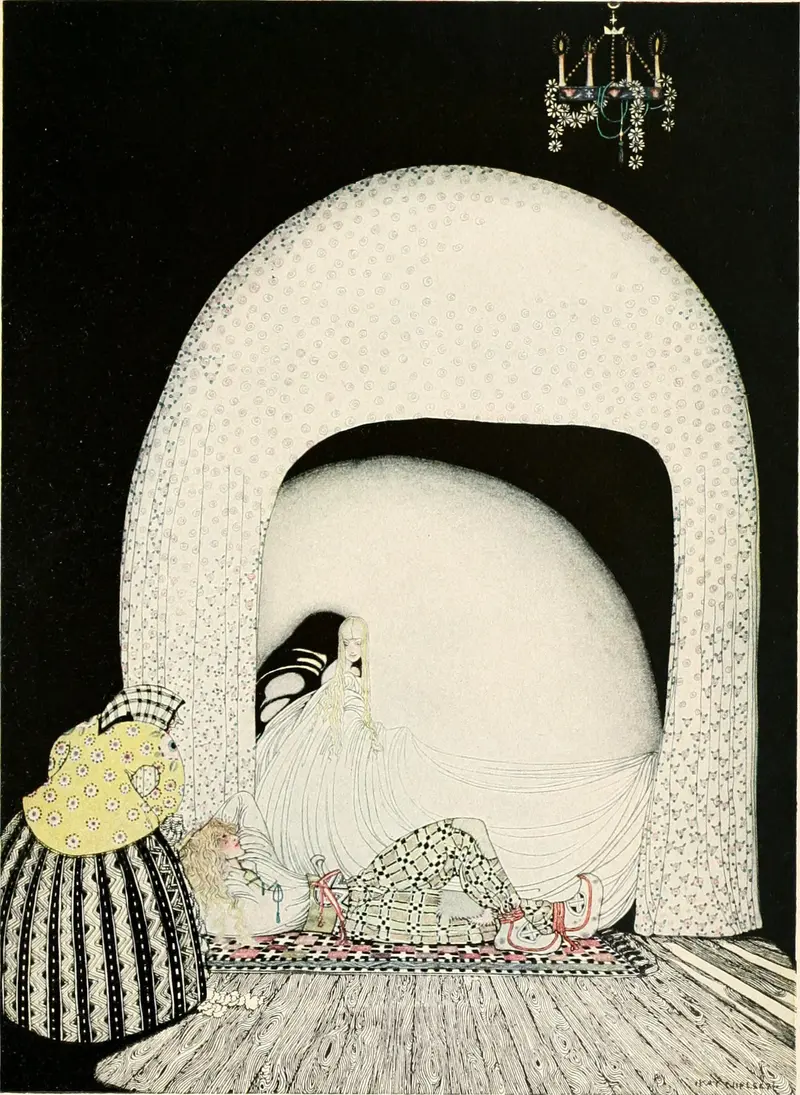
Beneath the White Canopy (East of the Sun and West of the Moon)
Kay Nielsen
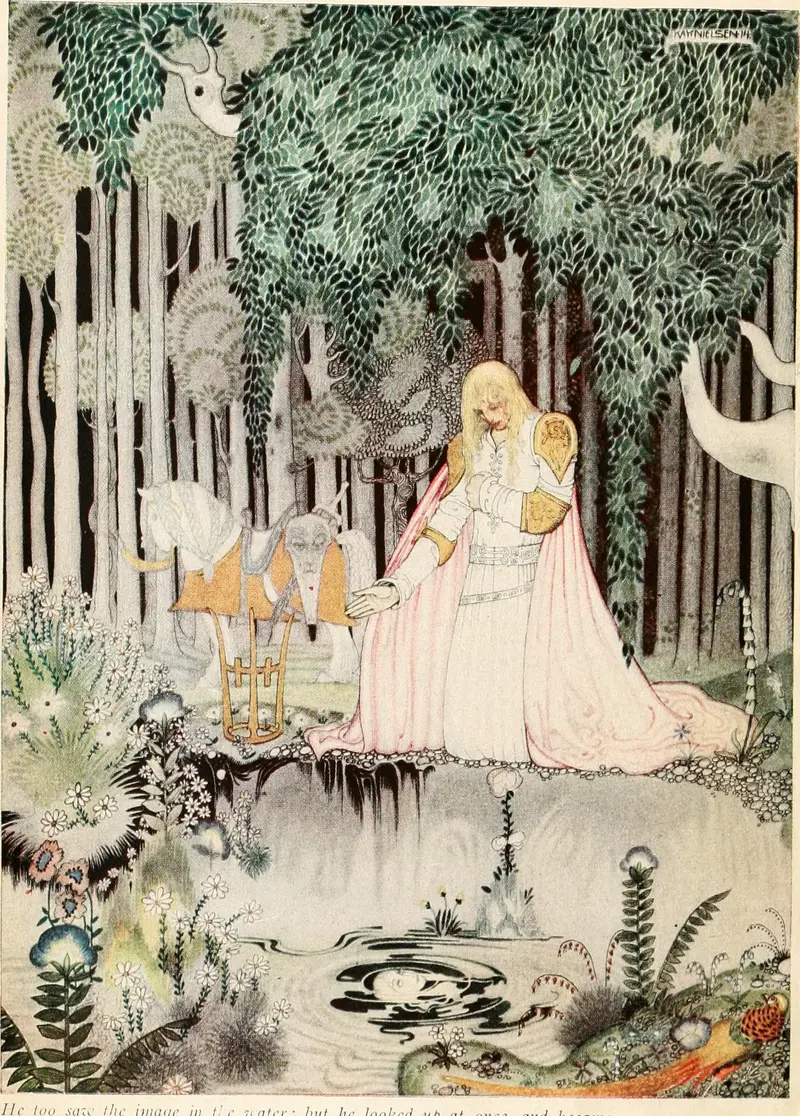
The Princess in the Moonlit Wood (East of the Sun and West of the Moon)
Kay Nielsen
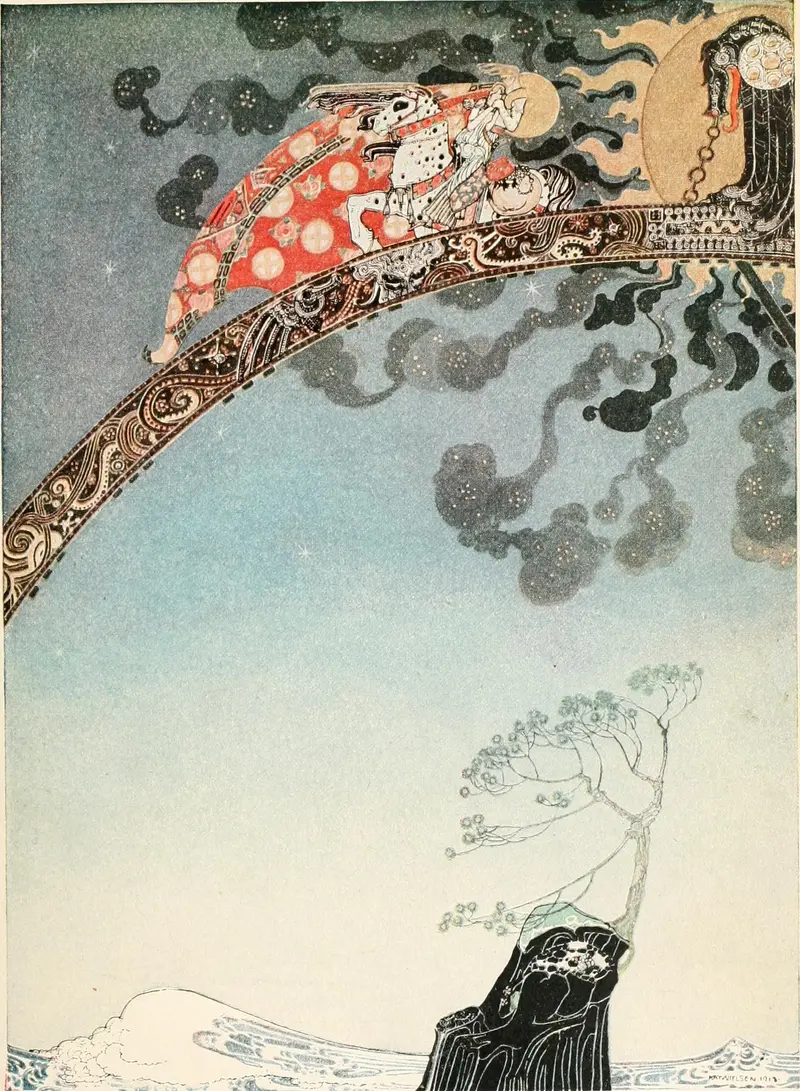
The Bridge Over the Sea (East of the Sun and West of the Moon)
Kay Nielsen
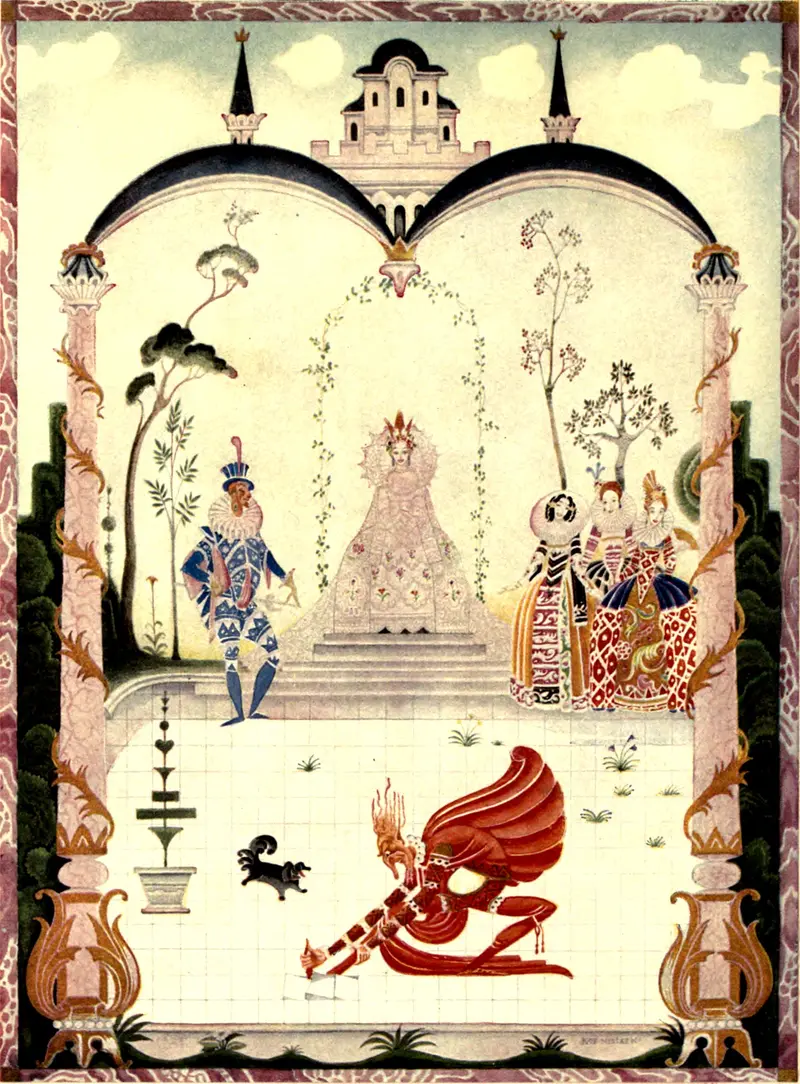
Frontispiece (Hansel and Gretel and Other Stories)
Kay Nielsen
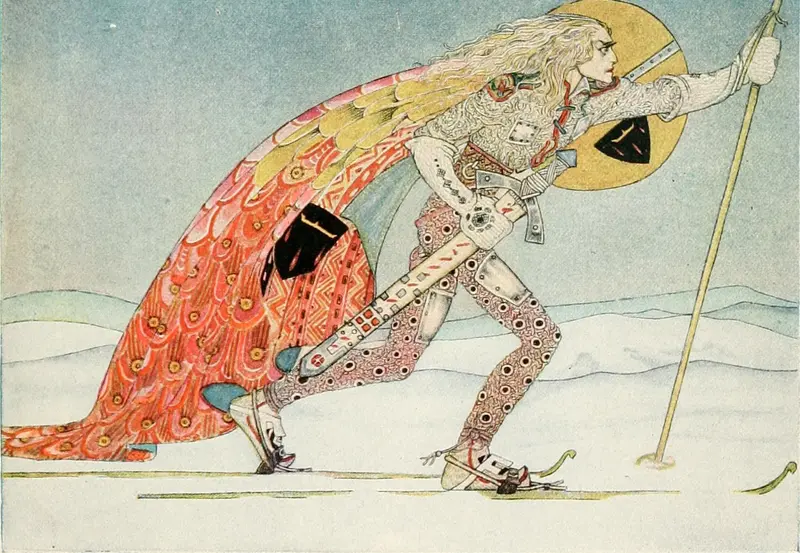
The Princesses of Whiteland (East of the Sun and West of the Moon)
Kay Nielsen





