
The Spirit at the Lighted Door (East of the Sun and West of the Moon) — History & Facts
A pale woman stands poised at the threshold, her form caught between the golden glow of a fantastical doorway and the cold, watchful moon. The most striking detail is the way her breath—or perhaps her very soul—seems to dissolve into a trail of stars, winding upward toward the night sky. The ornate door behind her, with its jewel-like panels and mythic figures, anchors the scene in a world of legend, while the stark wall and bare branches thrust her into isolation.
Every line is deliberate: the vertical pull of the tree mirrors her own yearning posture, and the moon’s circle is echoed in the round fruits and halos within the door. The palette is restrained, almost wintry, but the careful placement of golds and reds draws the eye back again and again to the threshold, as if daring the viewer to step across with her. Created in 1922 for a collection of Norwegian fairy tales, The Spirit at the Lighted Door (East of the Sun and West of the Moon) by Kay Nielsen belongs to a moment when illustration was undergoing a transformation. Artists like Nielsen were commissioned to bring old stories to life for new audiences, blending Art Nouveau’s sinuous lines with the flat planes and decorative detail of early twentieth-century book art.
Such works were often produced for luxury editions, intended as treasures for both children and adults—objects to be read, handled, and admired. History has kept few traces of the individual journeys of these illustrations, but their survival in digitized collections today lets us linger over their mysteries, following the winding path of starlight back into the world of story.
More Artworks by Kay Nielsen
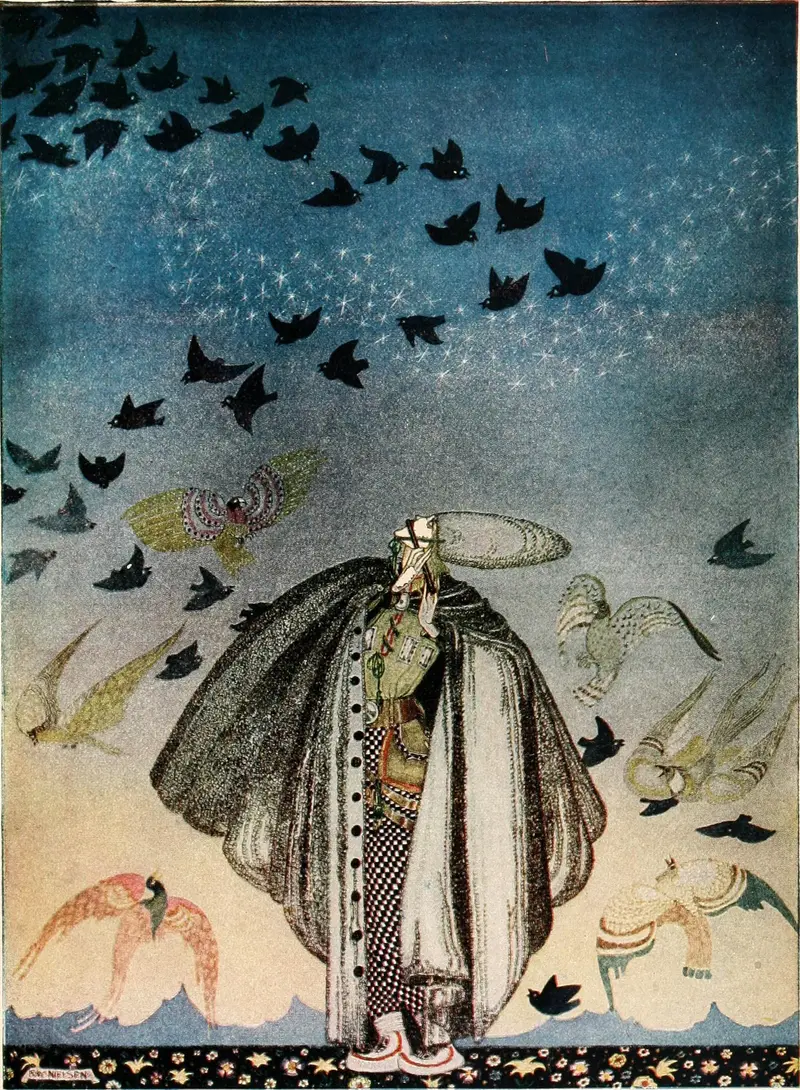
The Cloak of Black Birds (East of the Sun and West of the Moon)
Kay Nielsen
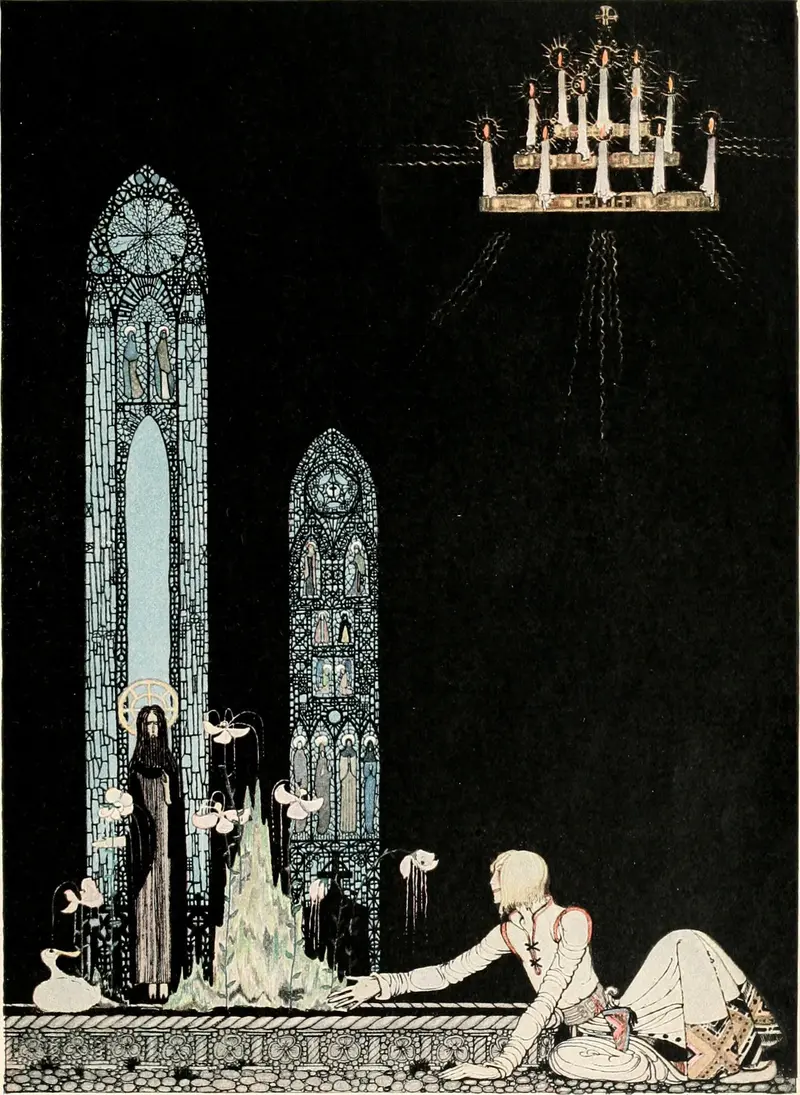
The Widow's Son and the Candles (East of the Sun and West of the Moon)
Kay Nielsen
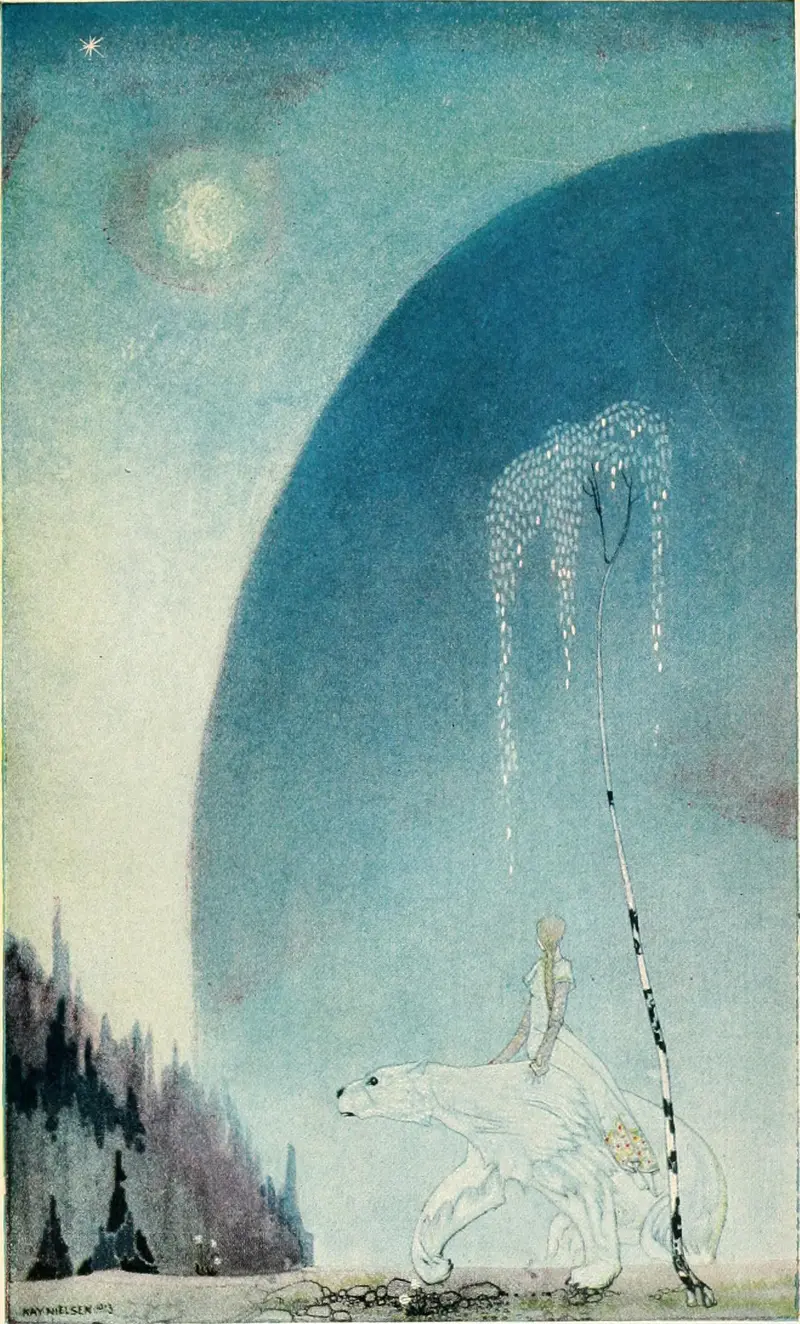
The White Goat Under the Moon (East of the Sun and West of the Moon)
Kay Nielsen

The Cloud Castle (Hansel and Gretel and Other Stories)
Kay Nielsen
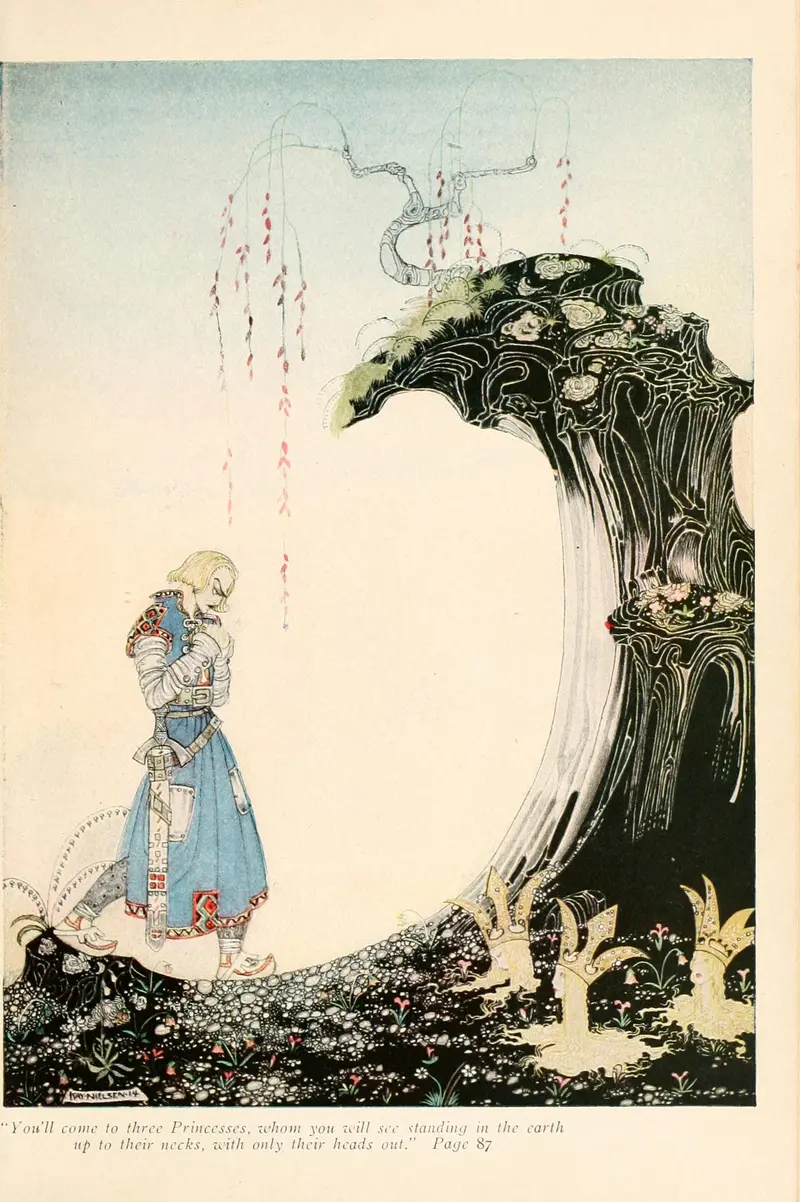
The Enchanted Wave (East of the Sun and West of the Moon)
Kay Nielsen
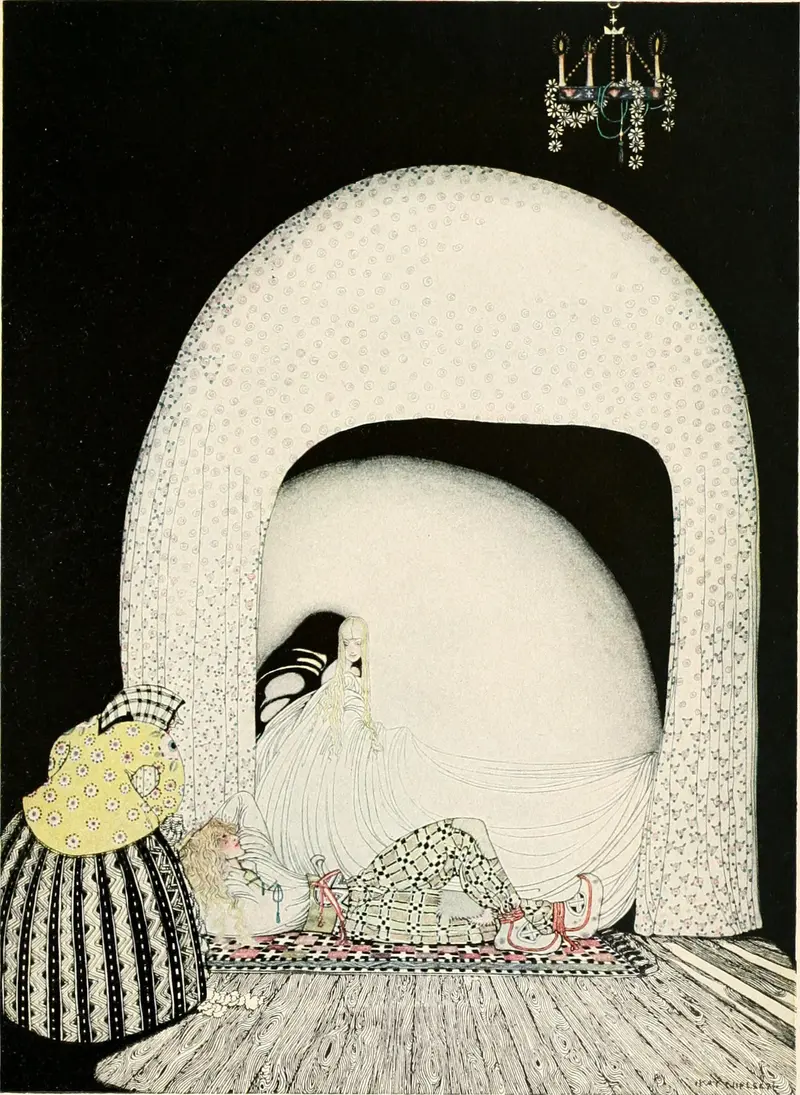
Beneath the White Canopy (East of the Sun and West of the Moon)
Kay Nielsen
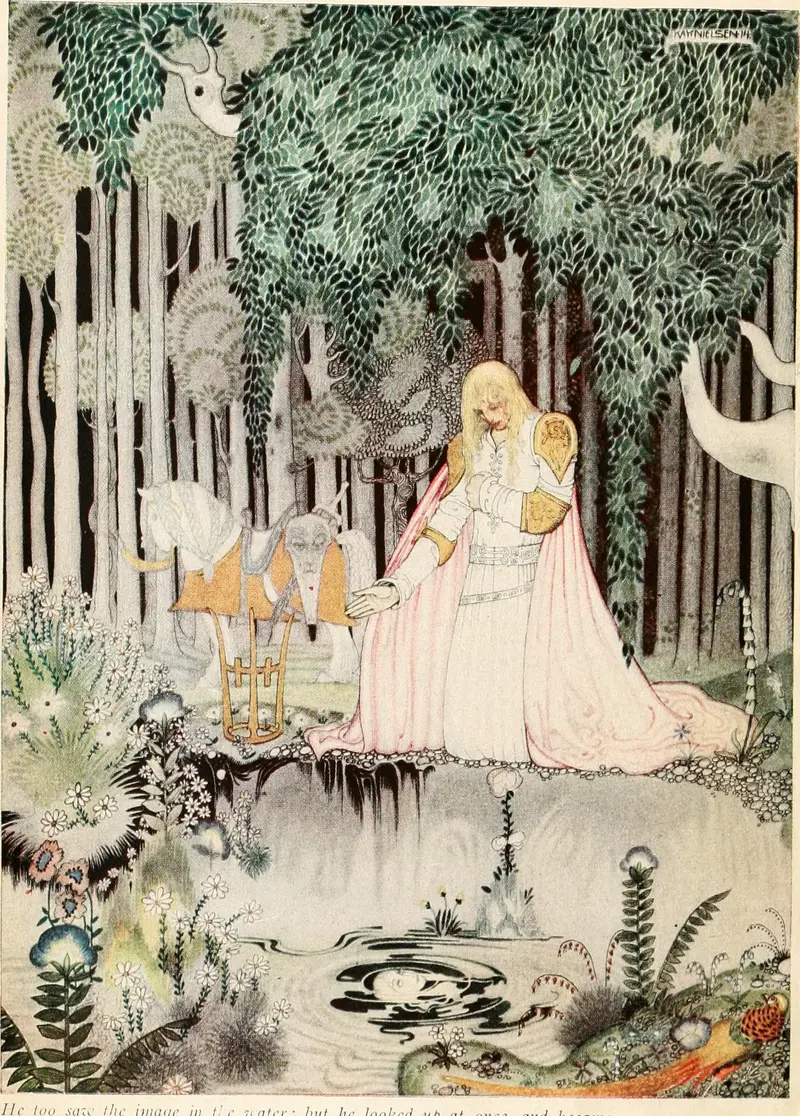
The Princess in the Moonlit Wood (East of the Sun and West of the Moon)
Kay Nielsen
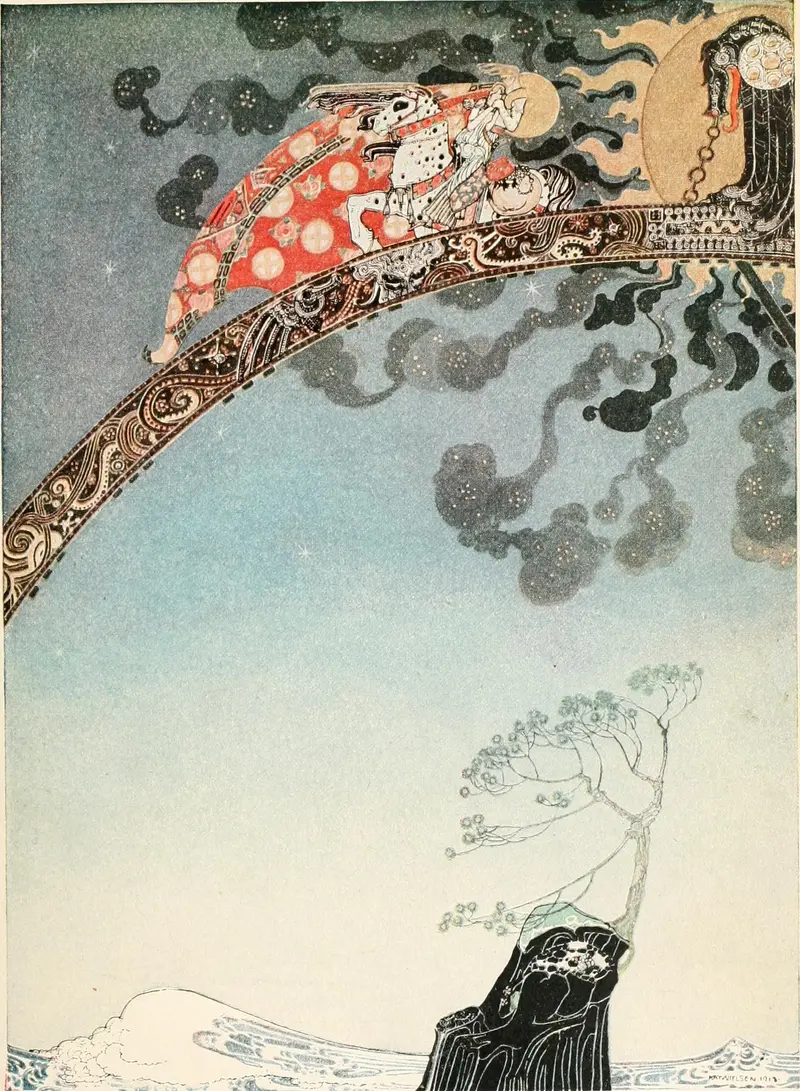
The Bridge Over the Sea (East of the Sun and West of the Moon)
Kay Nielsen
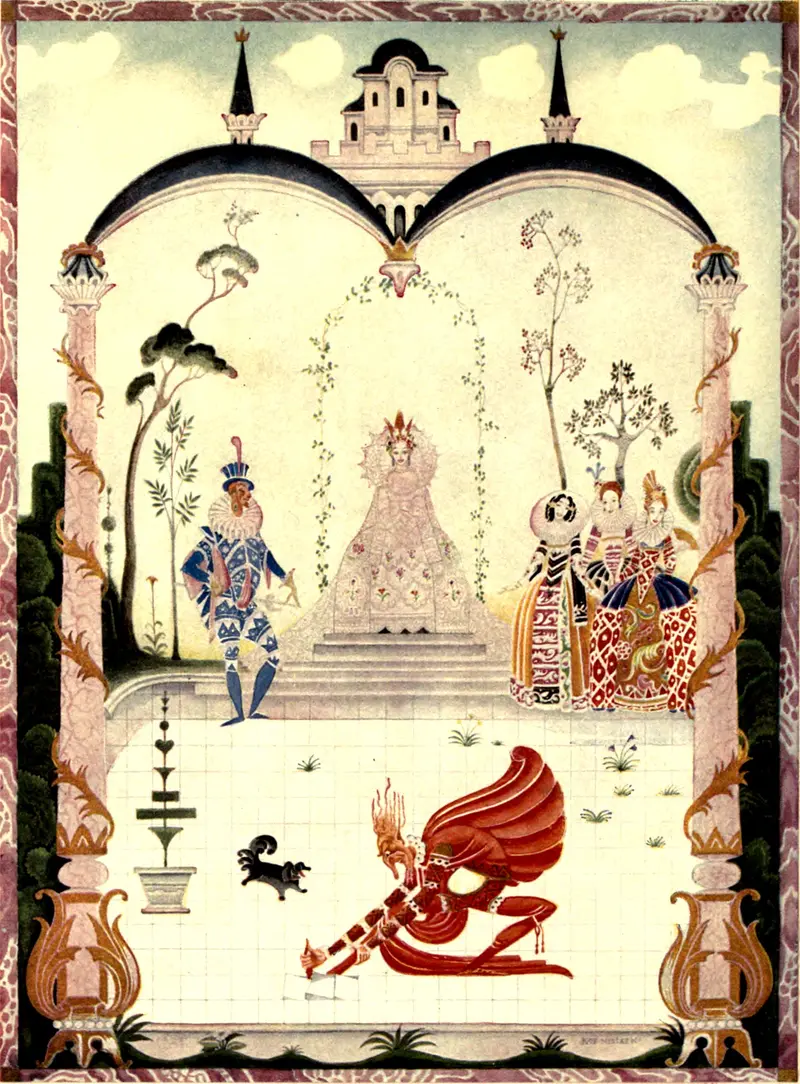
Frontispiece (Hansel and Gretel and Other Stories)
Kay Nielsen
The Princesses of Whiteland (East of the Sun and West of the Moon)
Kay Nielsen





