Bergsee mit Storch — History & Facts
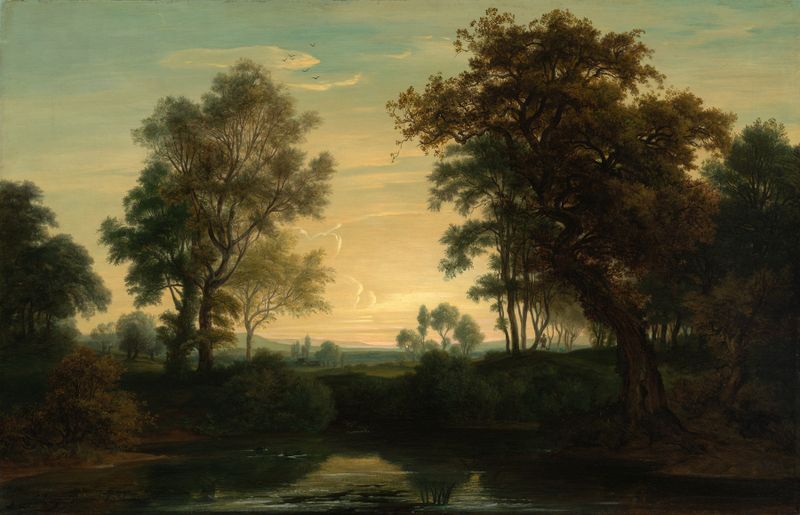
This delicate interplay of light and shadow invites us to traverse the vast expanse of an uncharted landscape where nature sings in hushed tones. Look to the tranquil water that occupies the foreground, its surface a mirror to the soft blues and greens of the surrounding foliage. Notice how the light dances upon these reflections, creating a sense of fluidity that blurs the boundaries between reality and dream. The stork, poised gracefully within this serene tableau, commands attention with its elegant silhouette—its wings poised, ready for movement yet suspended in a moment of contemplation. The silent drama unfolds in the contrasts of the scene.
The striking white of the stork juxtaposes with the deep, rich hues of the water and trees, embodying a tension between the fleeting and the eternal. The gentle ripples in the water suggest life beneath the surface, while the stillness of the bird speaks to a moment of pause, a deep breath in the rhythm of existence. Each brushstroke whispers a story, where light serves not just as illumination, but as a narrative force that guides our emotions. Emil Lugo created Bergsee mit Storch between 1890 and 1900, during a time when artists were increasingly drawn to the natural world as a source of inspiration.
Living in a period where Impressionism was gaining prominence, he was influenced by the exploration of light and color as emotional expressions. This painting reflects not only Lugo's technical skill but also his keen observation of the tranquility found in nature, a moment etched in time amid the changing currents of art history.