
Blackgame — History & Facts
What first catches the eye in Blackgame is the almost electric contrast between the vivid blue-black plumage of the cock birds and the pale, snow-laden highlands that rise behind them. The artist draws us into a moment of stillness and alertness: each bird is caught in a different pose, their red eye-combs vivid against the cool tones, while a distant skein of birds crosses the sky above the frosted landscape. The light falls crisply, picking out the iridescent feathers and rough bark, guiding our gaze from the foreground's tangle of branches to the open, wintry expanse beyond.
Every detail, from the curve of a talon to the subtle dappling on the hen’s back, serves to heighten the sense of watchful presence—these are not generic birds, but individuals, alert to every sound and movement. Painted in 1928, Blackgame belongs to a tradition of British wildlife art that flourished in the late nineteenth and early twentieth centuries, when the country house and sporting estate shaped both landscape and taste. Artists like Archibald Thorburn became renowned for their ability to combine scientific accuracy with a keen sense of atmosphere, producing works that were as much prized by naturalists as by sportsmen. This painting, sold at Bonhams in London, is a testament to that era’s fascination with the wild as both spectacle and study.
History has kept few traces of this particular work’s journey, but its lively immediacy invites us to linger, tracing the artist’s brushwork and the world it so carefully observes.
More Artworks by Archibald Thorburn

The Watchful Hinds
Archibald Thorburn
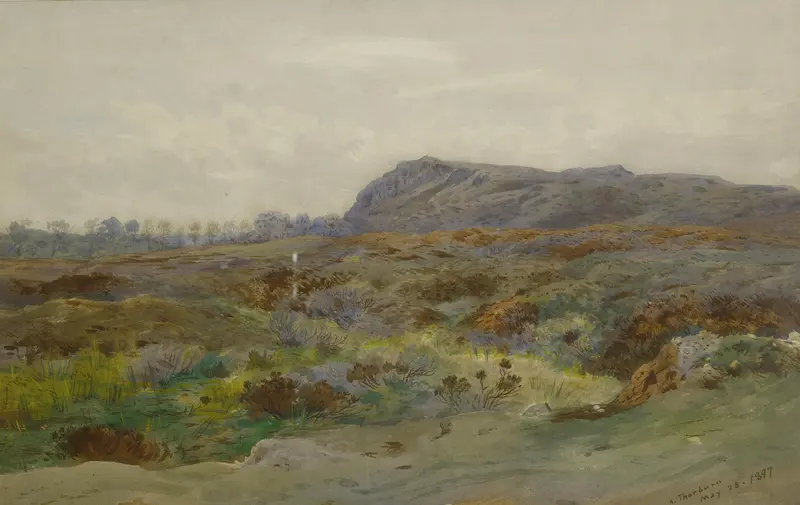
Moorland Landscape
Archibald Thorburn
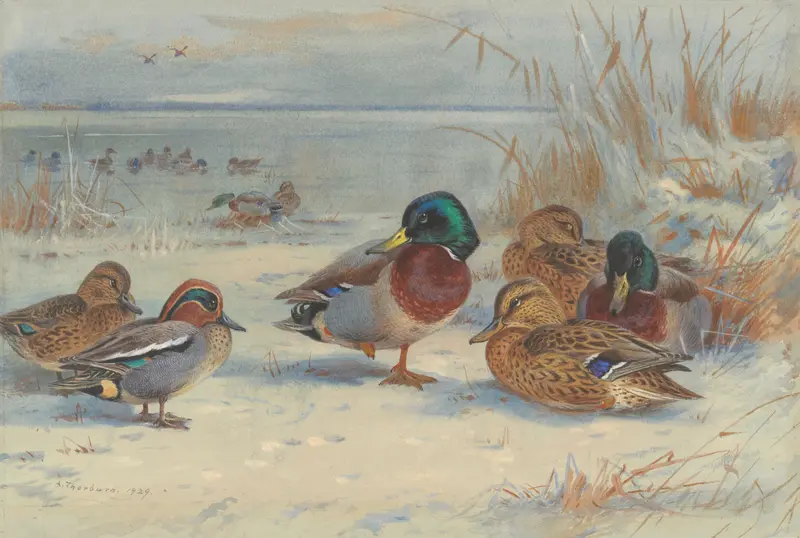
Mallard and teal in the snow
Archibald Thorburn
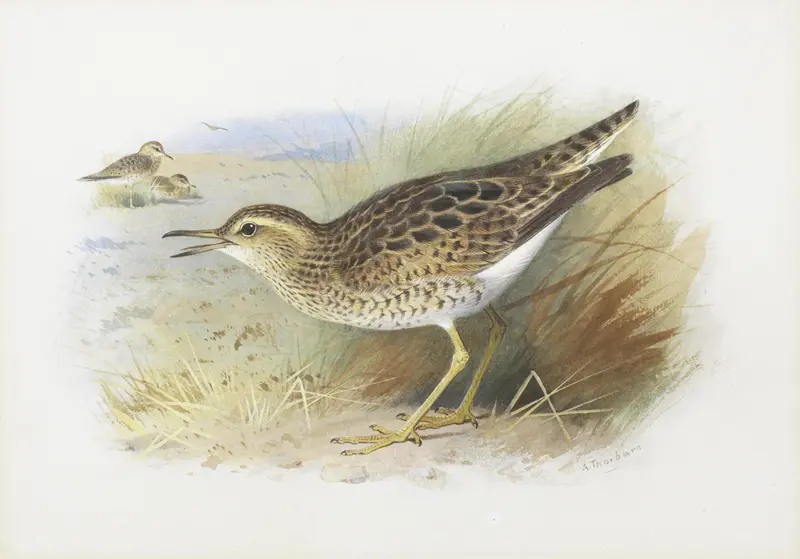
Bartram's Plover
Archibald Thorburn
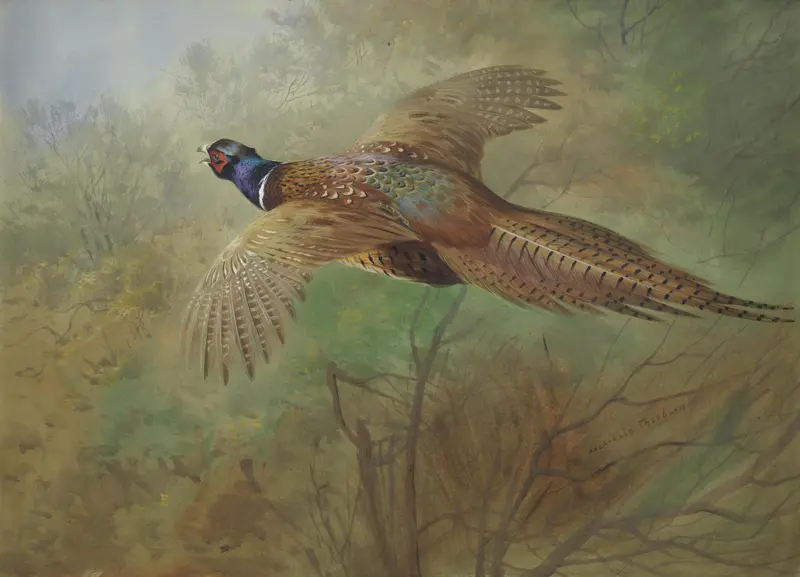
Pheasant in flight
Archibald Thorburn
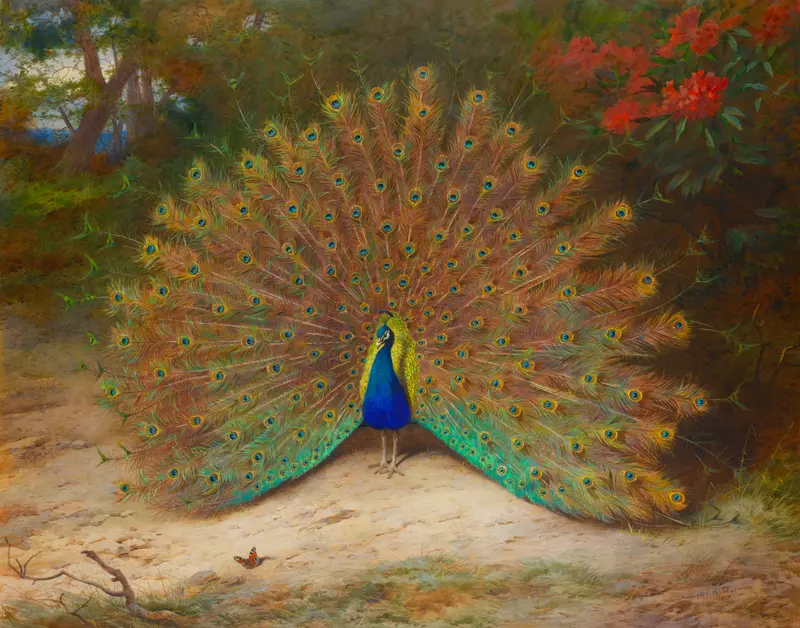
Peacock and Peacock Butterfly
Archibald Thorburn
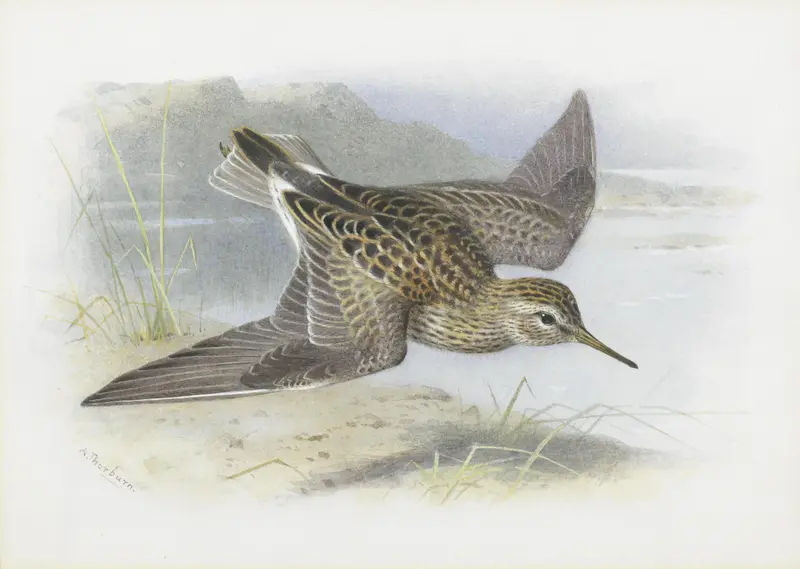
Pectoral Sandpiper
Archibald Thorburn
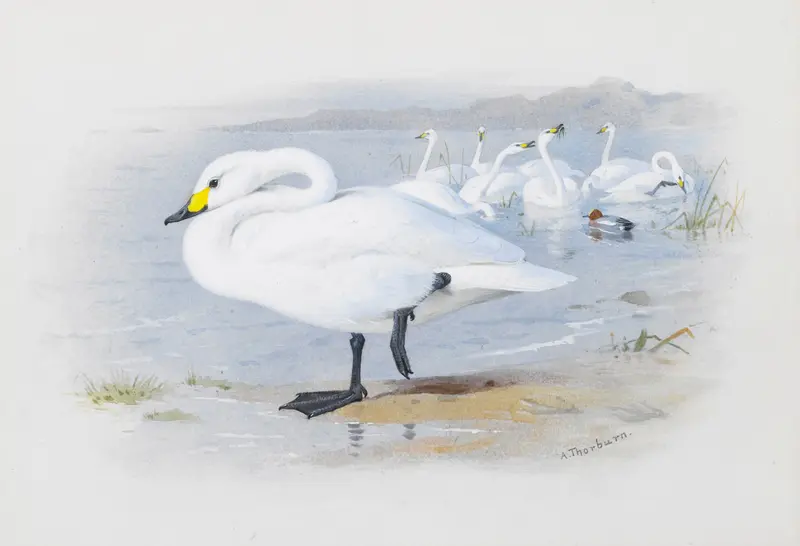
Bewick's swan.
Archibald Thorburn
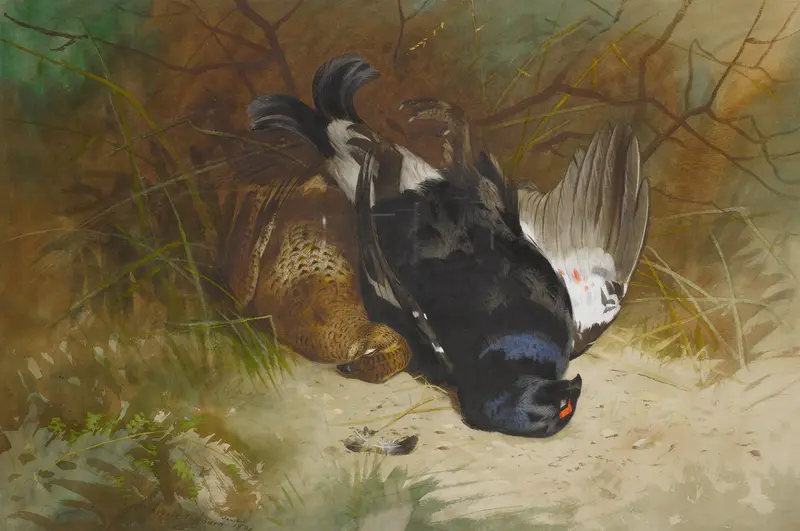
Still life of a pair of Blackgame.
Archibald Thorburn
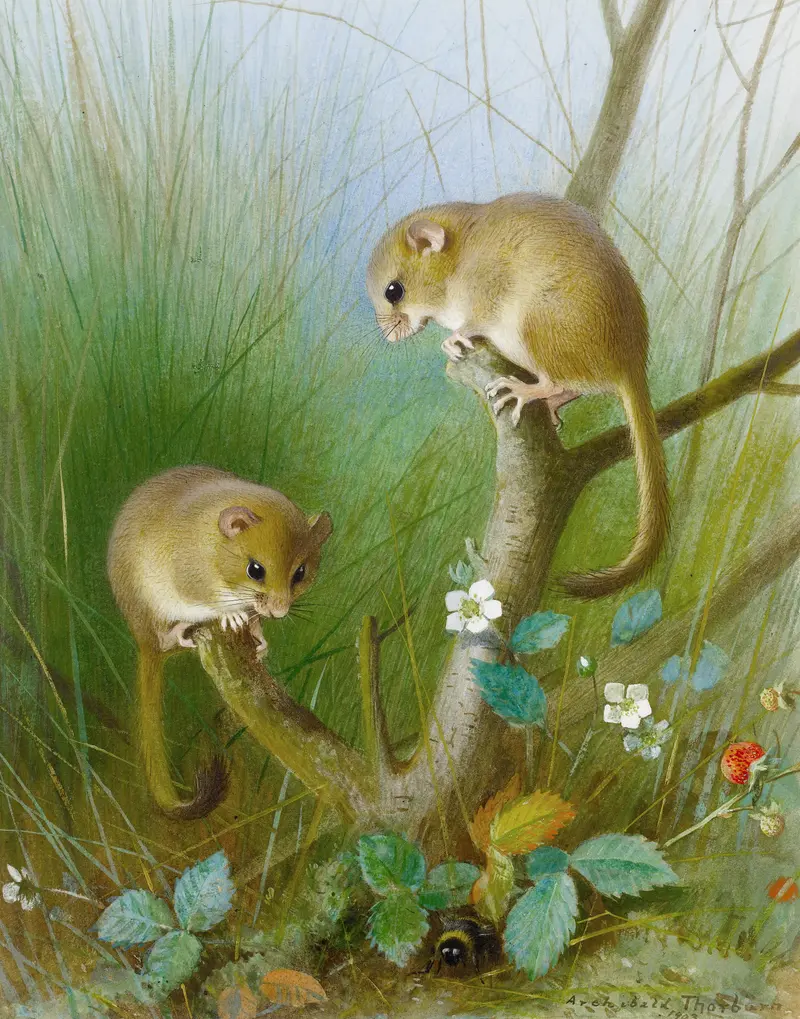
Dormice
Archibald Thorburn





