
Peacock and Peacock Butterfly — History & Facts
What first catches the eye is not just the dazzling fan of feathers but the quiet encounter staged at its base—a peacock, resplendent in a full display, stands almost monumental, while a single butterfly, modest in scale but bold in pattern, rests on the ground before him. The painter draws us into a moment of stillness and spectacle, where the peacock’s train radiates outward in a perfect arc, each feather meticulously rendered, its “eye” catching the light and echoing the butterfly’s own wings. Here, the riot of color is not just decoration; it is a drama of attention, a contest between grandeur and delicacy, the peacock’s proud stance answered by the butterfly’s tentative poise.
The surrounding foliage, deep green and punctuated by red blooms, frames the scene like a stage, while the soft, dappled ground draws us downward to the butterfly’s vantage. Painted in 1917, this work by Archibald Thorburn belongs to a world in which natural history and art were closely entwined. Thorburn, celebrated for his precision and affection for wildlife, worked at a time when such images were prized by collectors, naturalists, and the growing middle class eager to bring the wonders of the natural world indoors. The painting’s presence in the Bonhams collection speaks to this tradition of private collecting, even as history has kept few traces of its individual journey.
In the early twentieth century, as Britain’s countryside was changing and the world was at war, paintings like this offered a vision of order and beauty, a reminder of nature’s persistent splendor. Look again at the butterfly—so easily overlooked—and consider how the artist invites us to weigh spectacle against subtlety, grandeur against grace.
More Artworks by Archibald Thorburn

The Watchful Hinds
Archibald Thorburn
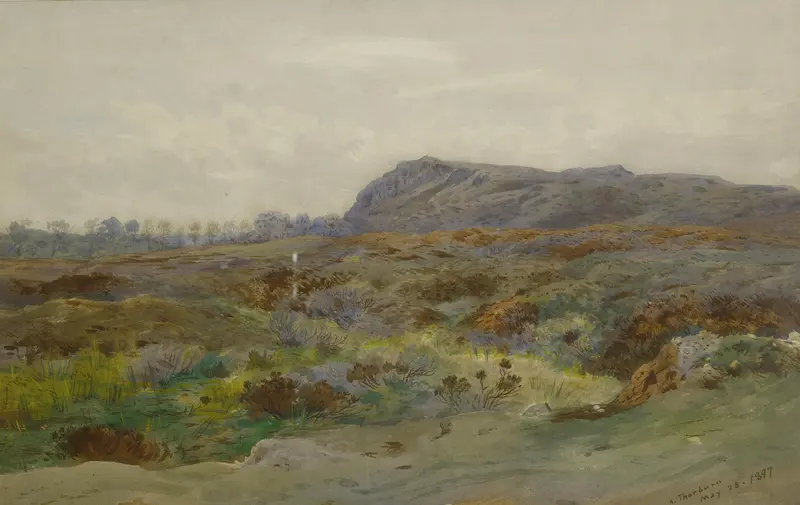
Moorland Landscape
Archibald Thorburn
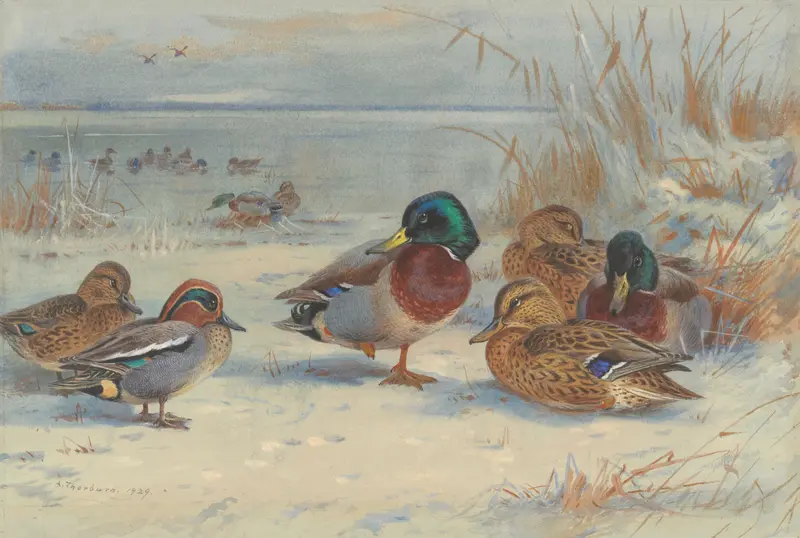
Mallard and teal in the snow
Archibald Thorburn
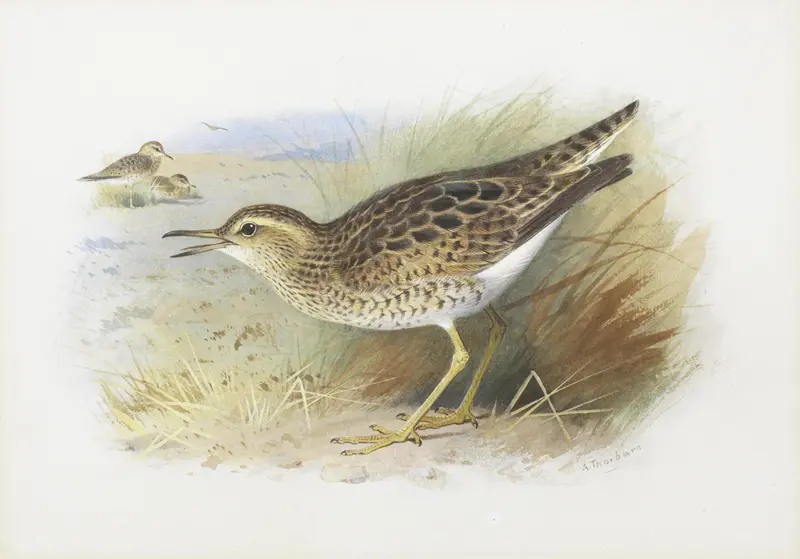
Bartram's Plover
Archibald Thorburn
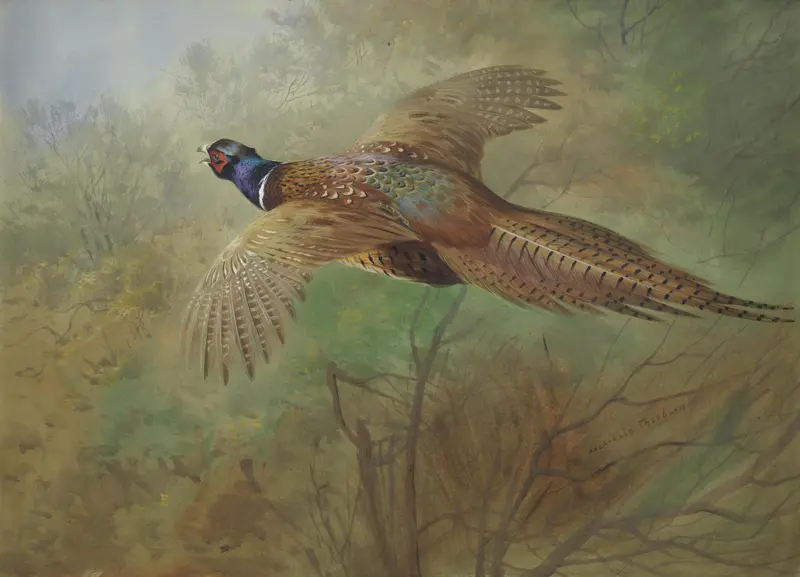
Pheasant in flight
Archibald Thorburn
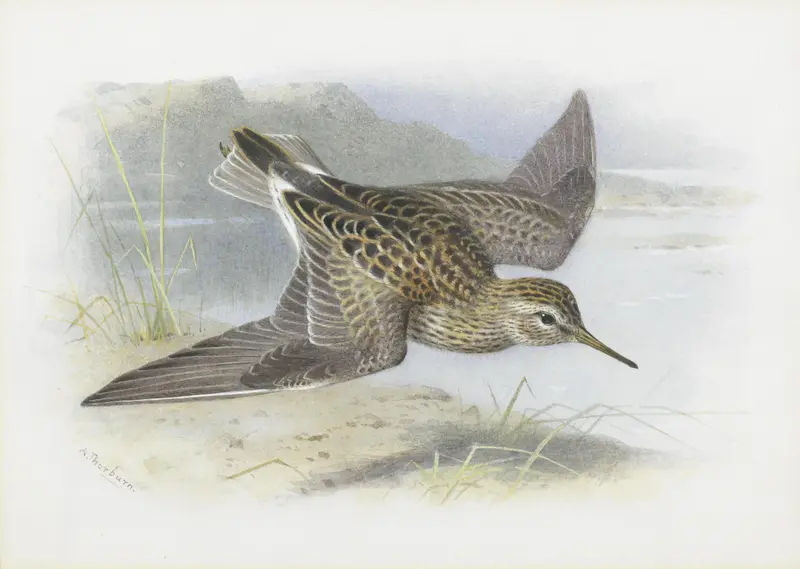
Pectoral Sandpiper
Archibald Thorburn
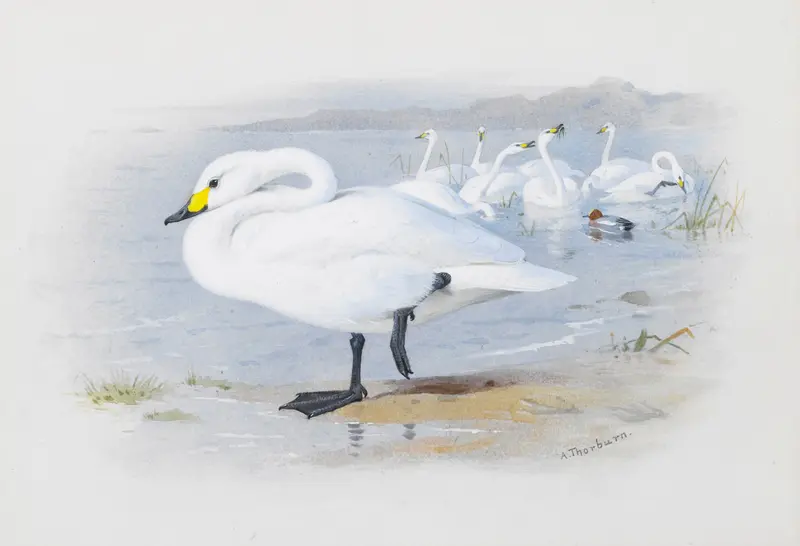
Bewick's swan.
Archibald Thorburn
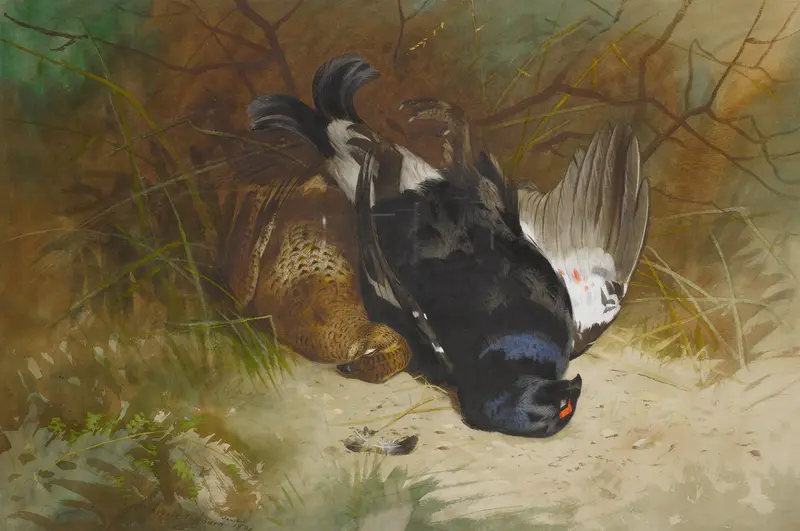
Still life of a pair of Blackgame.
Archibald Thorburn
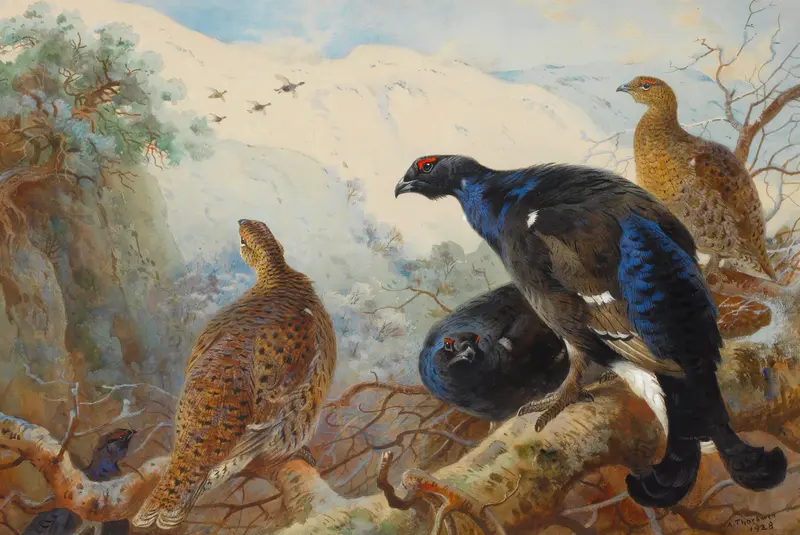
Blackgame
Archibald Thorburn
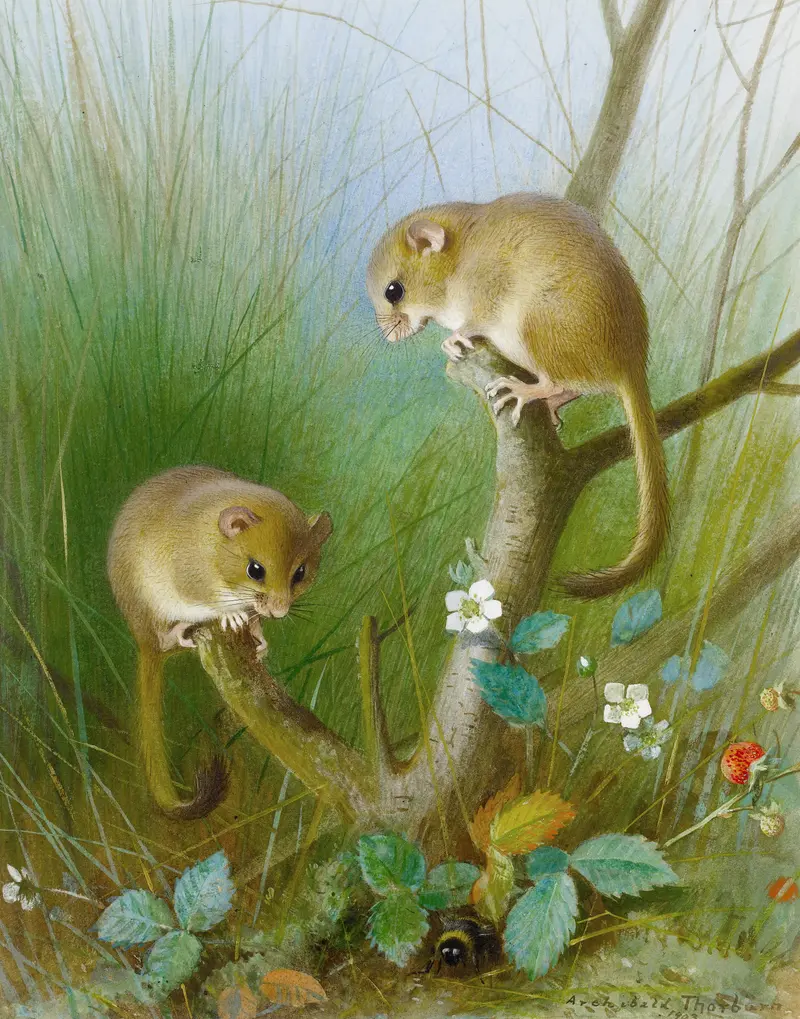
Dormice
Archibald Thorburn





