
Pectoral Sandpiper — History & Facts
The first thing to catch the eye in Pectoral Sandpiper is the bird’s poised, almost breathless moment of arrival—wings outstretched, body angled low, as if it has just swept down from the sky to skim the edge of water and grass. The artist, Archibald Thorburn, draws us into the sandpiper’s world with a clarity that feels both intimate and immediate: every feather is rendered with care, the subtle browns and golds of its plumage set off against the cool, misted background. The bird’s sharp gaze and taut posture suggest alertness, a readiness to dart or feed, while the soft focus of the distant water and hills keeps all attention on this single, vivid life.
Light glances off the bird’s back, guiding the viewer along the curve of its wings and down to the slender beak, which points directly to the earth—a quiet signal of the sandpiper’s endless search. This work belongs to the tradition of 19th-century British impressionist art, a period when natural history and artistic observation often met on the same page. Artists like Thorburn were celebrated for their ability to capture not just the likeness but the living presence of birds, often for scientific illustration or the pleasure of collectors fascinated by the diversity of the British countryside. While little is recorded about this specific painting’s commission or journey, its presence in the Bonhams gallery speaks to the enduring appeal of such works—objects that bridged the worlds of art, science, and the growing Victorian passion for cataloguing nature.
In a time when the wild edges of Britain were being mapped and studied, paintings like this one offered viewers both knowledge and wonder. Let your gaze linger on the sandpiper’s poised wings, and imagine the hush of water and grass around it.
More Artworks by Archibald Thorburn

The Watchful Hinds
Archibald Thorburn
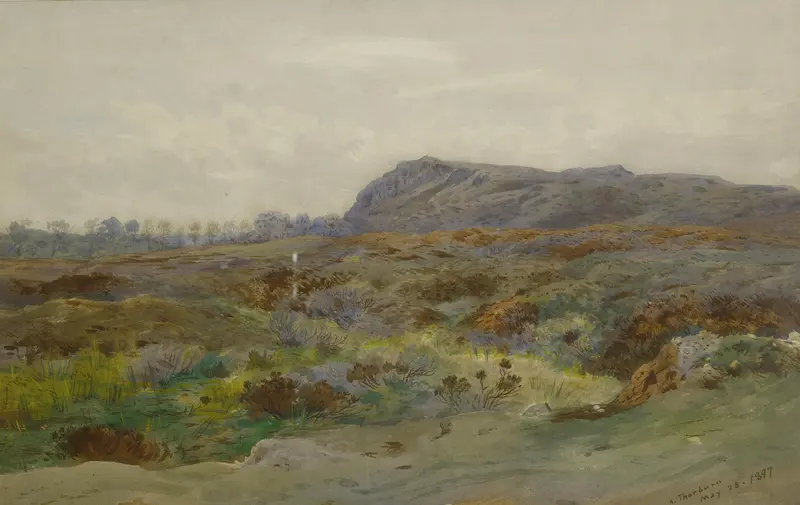
Moorland Landscape
Archibald Thorburn
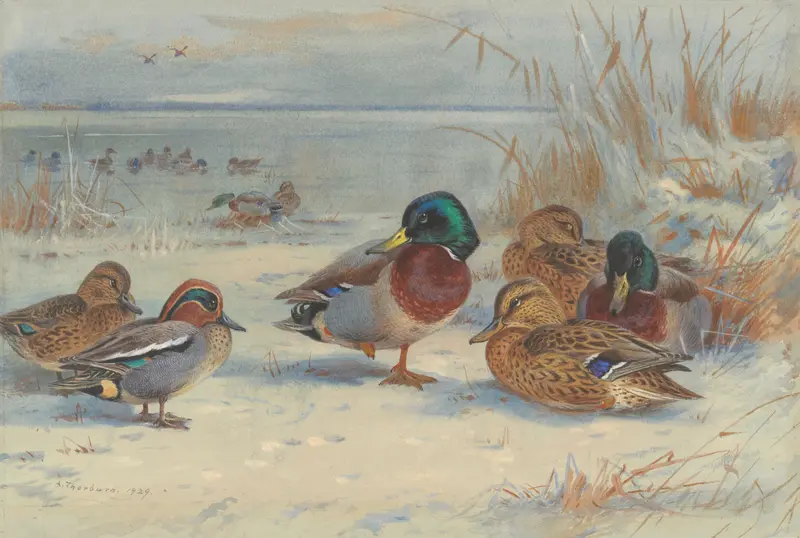
Mallard and teal in the snow
Archibald Thorburn
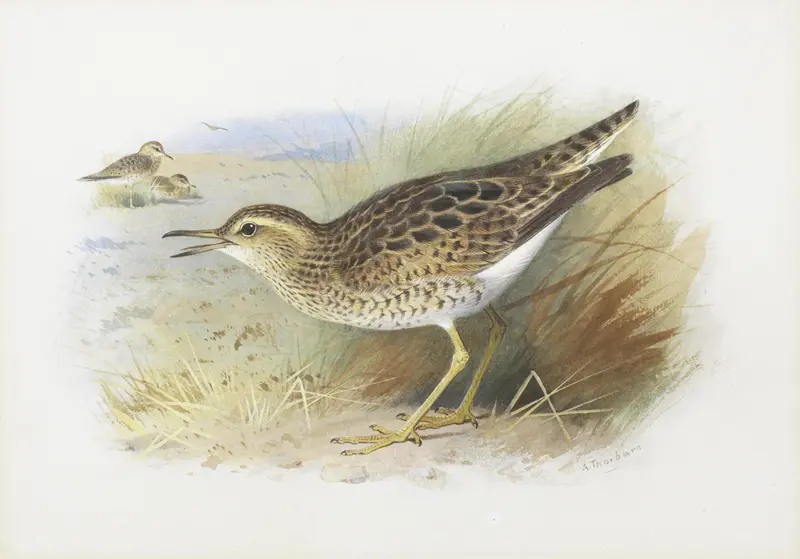
Bartram's Plover
Archibald Thorburn
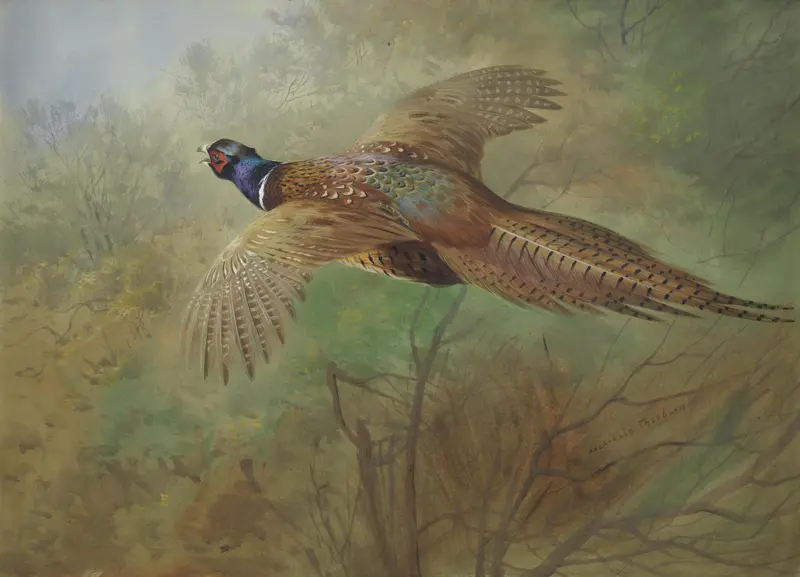
Pheasant in flight
Archibald Thorburn
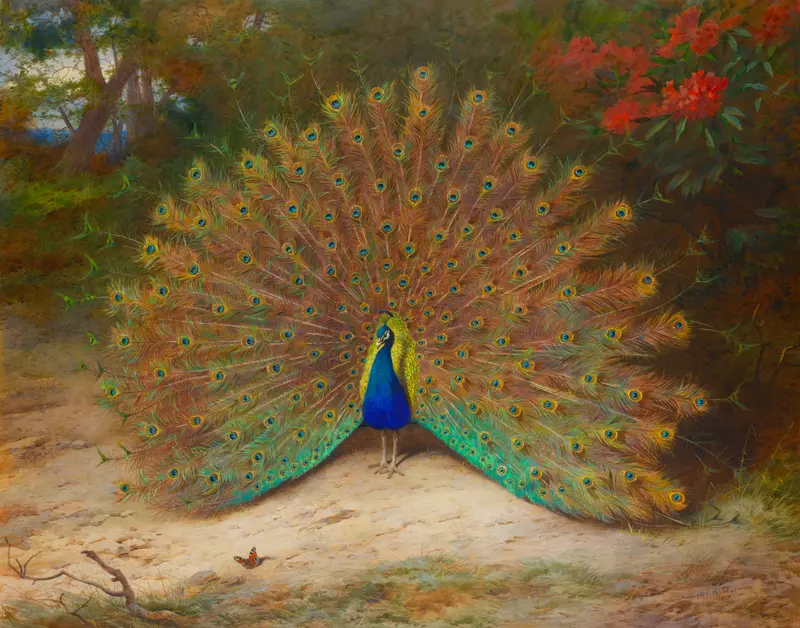
Peacock and Peacock Butterfly
Archibald Thorburn
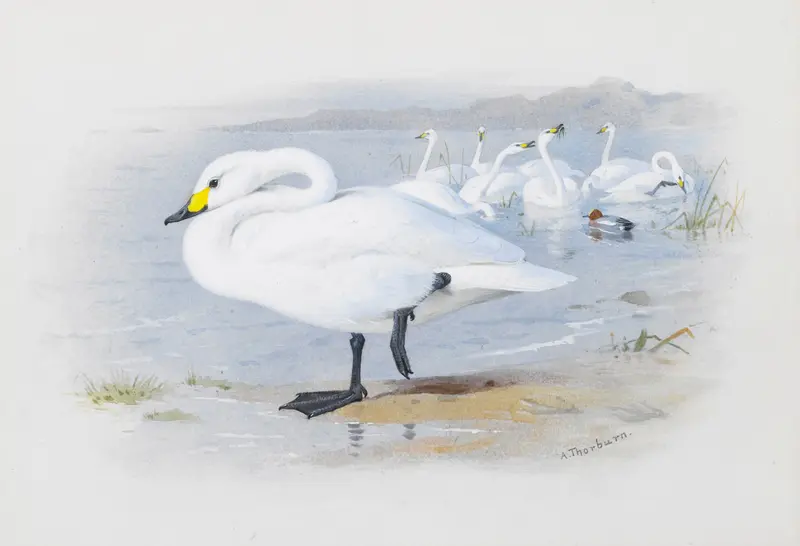
Bewick's swan.
Archibald Thorburn
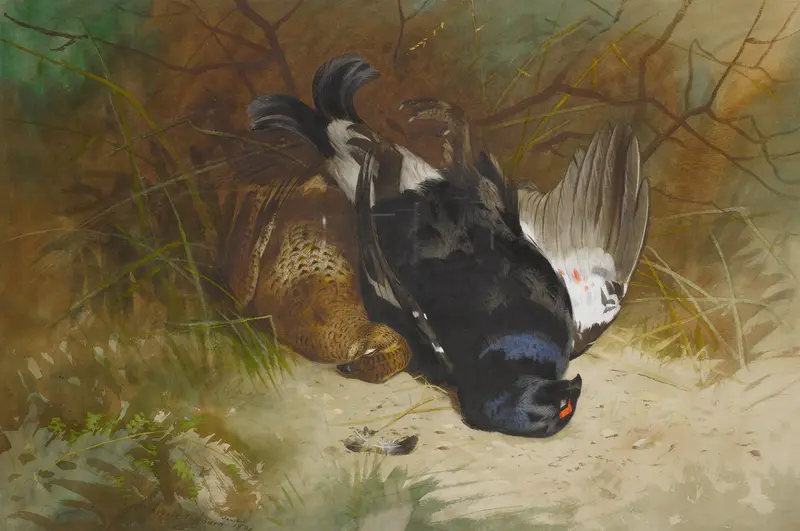
Still life of a pair of Blackgame.
Archibald Thorburn
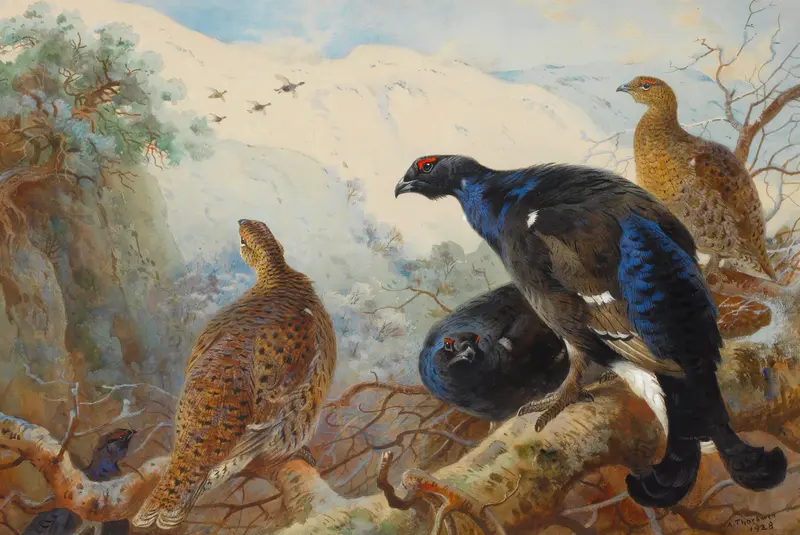
Blackgame
Archibald Thorburn
Dormice
Archibald Thorburn





