
Pheasant in flight — History & Facts
What first catches the eye in Pheasant in flight is the sense of sudden motion, as if the bird has just burst from the underbrush and the air itself is still vibrating with the beat of its wings. The pheasant’s feathers fan out in a perfect arc, each one rendered with meticulous care, while its open beak and alert eye suggest a moment of alarm or calling. The background is a haze of greens and ochres, softly dissolving into mist, so that the pheasant’s vivid plumage becomes the painting’s true subject—its copper, violet, and emerald tones almost glowing against the subdued woodland.
The artist draws the viewer’s gaze along the bird’s outstretched body, from the tension in the wings to the long, elegant tail, inviting us to imagine the rush of wind and the world seen from above. This work belongs unmistakably to the world of late 19th-century British impressionist art, when painters like Archibald Thorburn brought the countryside’s wildlife to life for a public newly fascinated by nature. Such images were often commissioned by landowners, hunters, or collectors, eager to capture the fleeting beauty of game birds and the drama of the sporting landscape. Thorburn’s reputation was built on his ability to combine scientific accuracy with a painter’s feeling for atmosphere, and here, the soft-edged woodland hints at the British tradition of landscape painting while the bird itself is sharply observed.
Though little is recorded about this specific painting, now in the Bonhams gallery, it stands as a vivid reminder of a time when art and natural history were closely entwined—an invitation to linger over every feather and follow the pheasant’s flight back into the painted woods.
More Artworks by Archibald Thorburn

The Watchful Hinds
Archibald Thorburn
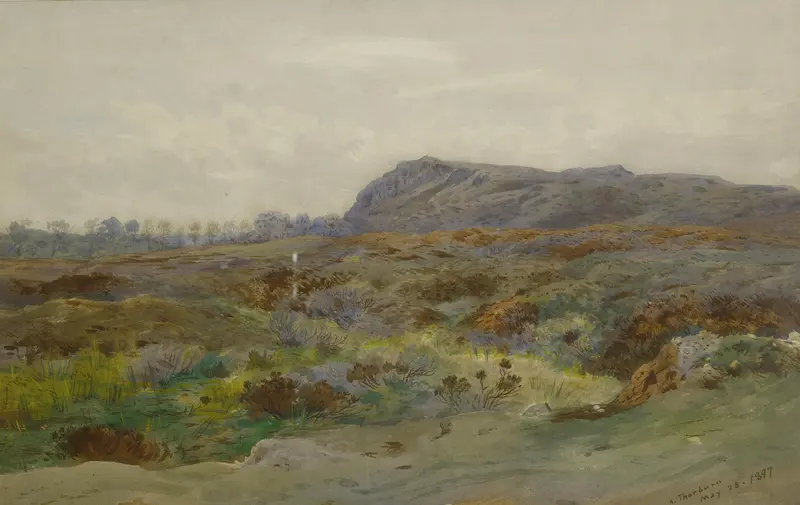
Moorland Landscape
Archibald Thorburn
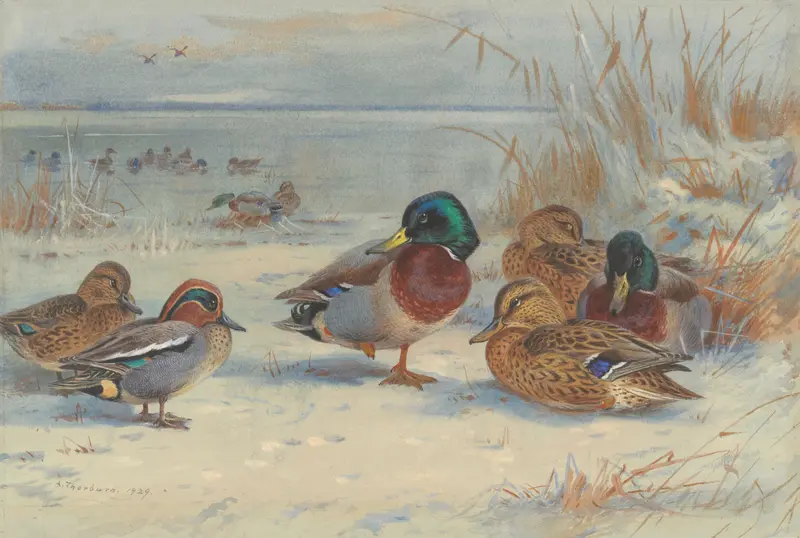
Mallard and teal in the snow
Archibald Thorburn
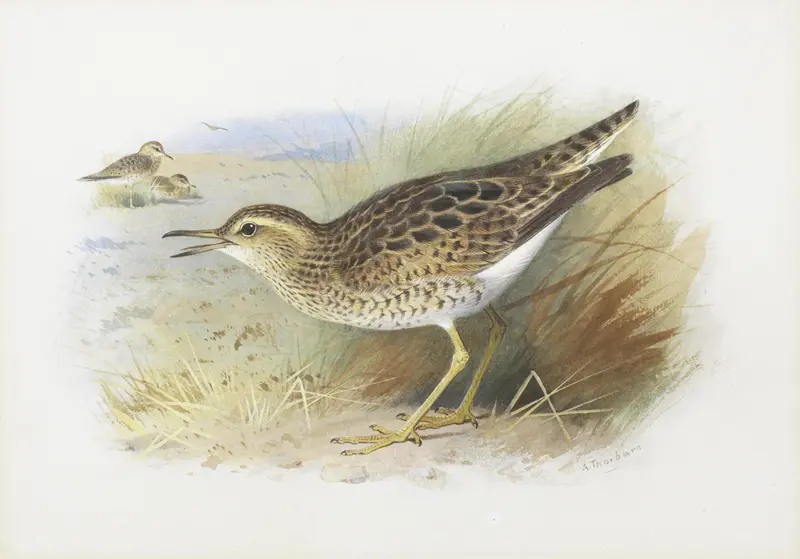
Bartram's Plover
Archibald Thorburn
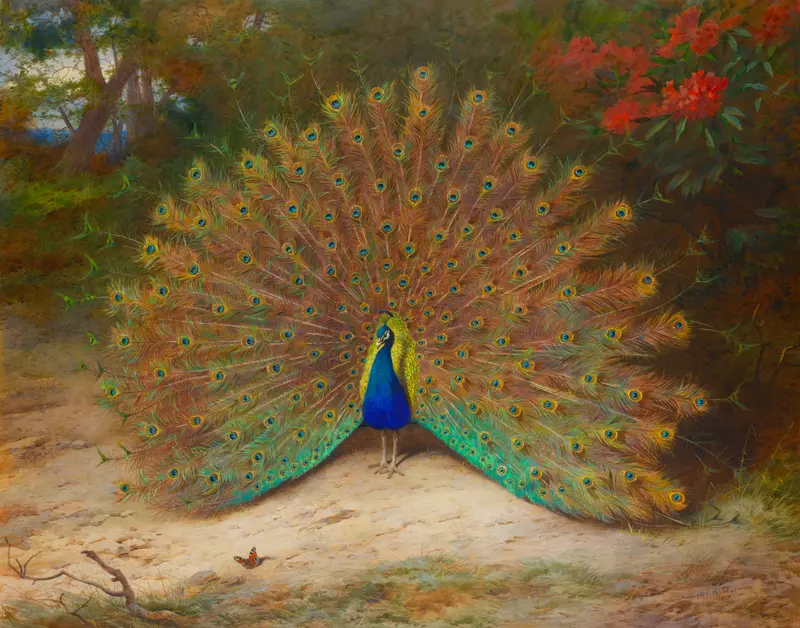
Peacock and Peacock Butterfly
Archibald Thorburn
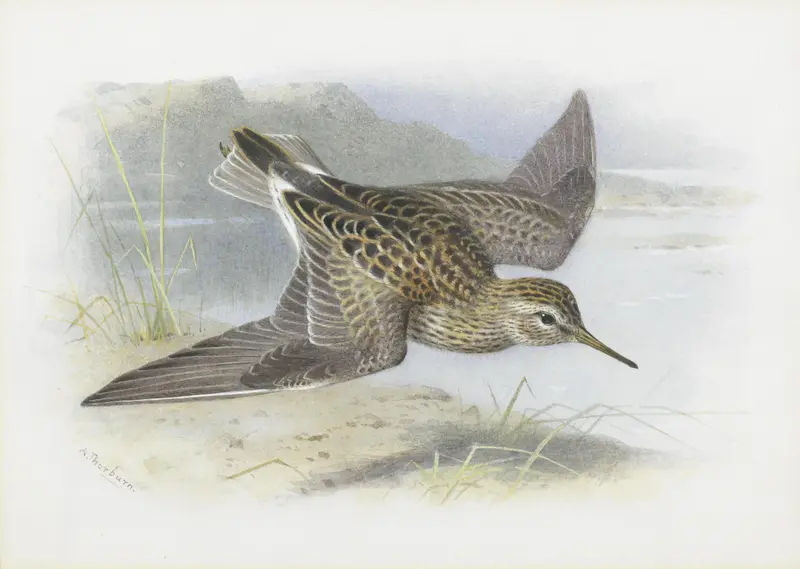
Pectoral Sandpiper
Archibald Thorburn
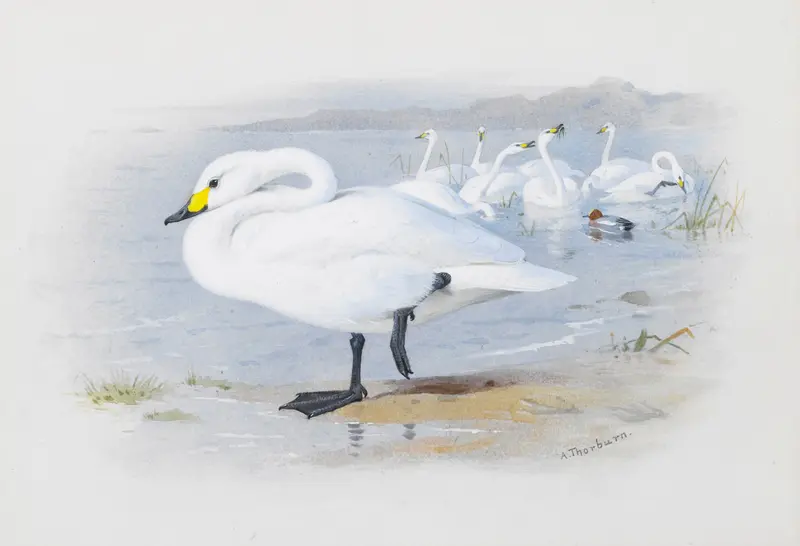
Bewick's swan.
Archibald Thorburn
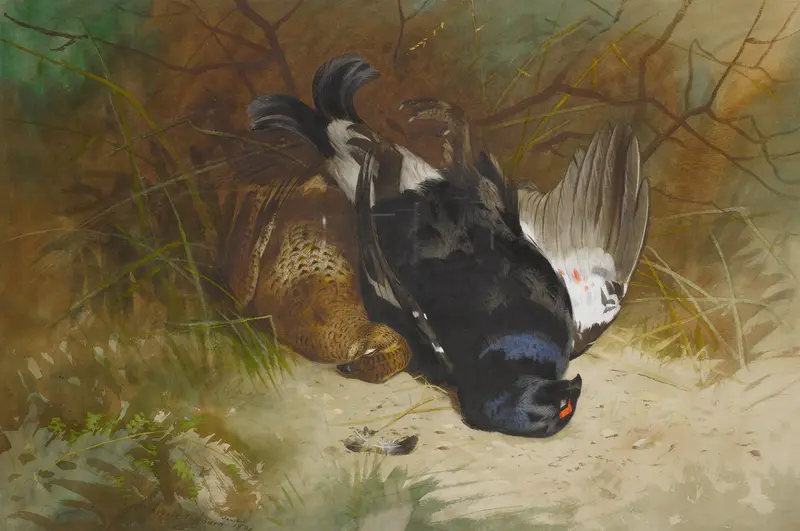
Still life of a pair of Blackgame.
Archibald Thorburn
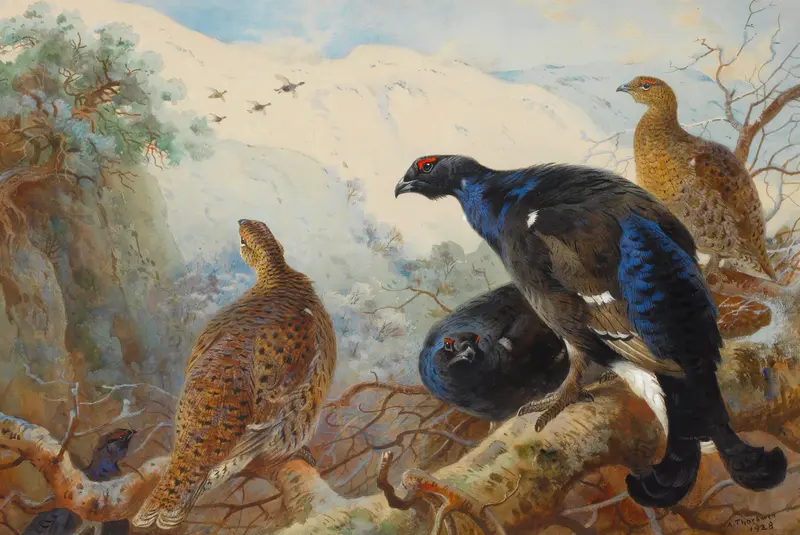
Blackgame
Archibald Thorburn
Dormice
Archibald Thorburn





