
Blastoidea (Sea Buds) — History & Facts
What first catches the eye in Blastoidea (Sea Buds) is the sense of order and wonder that radiates from these ancient sea creatures, their forms arrayed like jewels against a dark, infinite field. The artist, Ernst Haeckel, arranges each specimen with the precision of a jeweler and the imagination of a dreamer, letting the viewer drift from one intricate structure to the next. The golden ridges and silvery lobes seem to glow from within, their symmetry inviting the gaze to linger on every detail: the star-shaped crowns, the delicate brachioles, the honeycomb textures.
Each form is both alien and familiar, echoing the geometry of flowers, snowflakes, or the gears of a clock—nature’s own architecture, frozen in time. Created in 1904 for the legendary Kunstformen der Natur, this plate belongs to a world where science and art were partners in discovery. Haeckel’s illustrations were not mere decoration; they were tools for understanding the diversity and unity of life, commissioned to educate and inspire a public hungry for knowledge about the natural world. The era’s fascination with taxonomy and the hidden worlds of the microscope is everywhere in this image, from the careful labeling of species to the almost theatrical presentation of each organism.
History has kept few traces of the individual journeys of such plates, but their impact is clear: they turned the invisible into the unforgettable, urging us to look again at the silent marvels that shape our world.
More Artworks by Ernst Haeckel
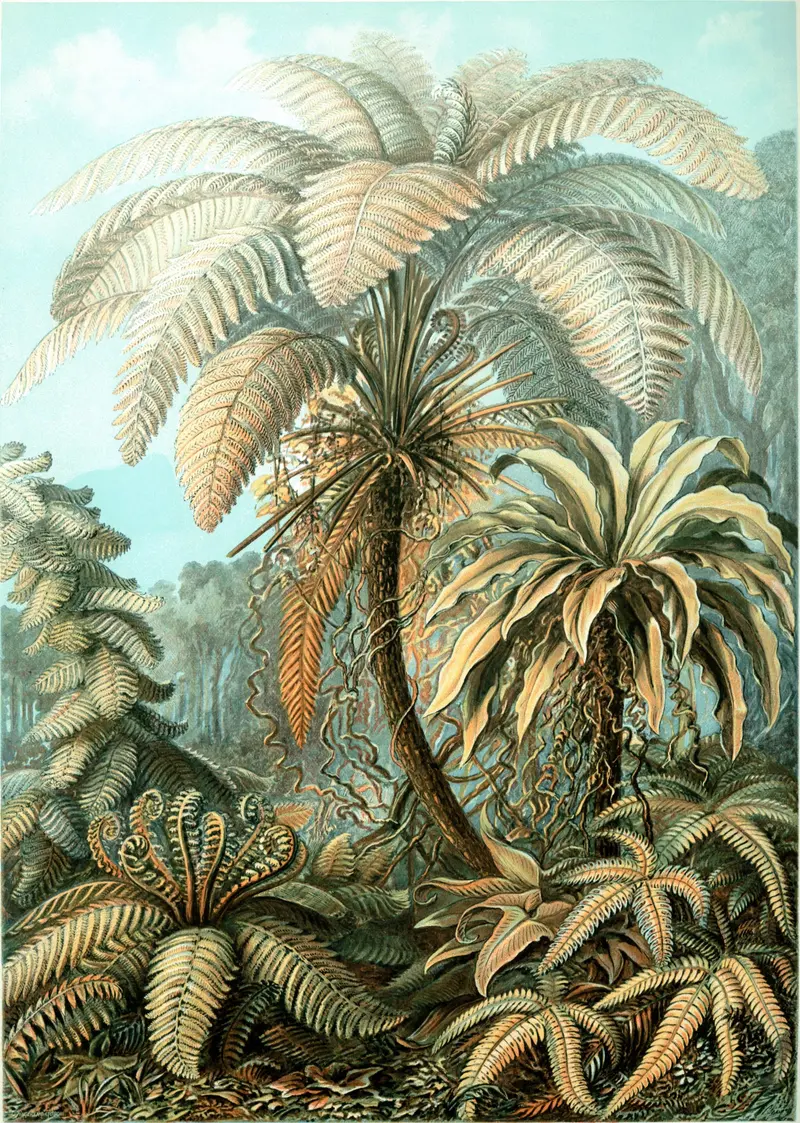
Filicinae (Ferns)
Ernst Haeckel
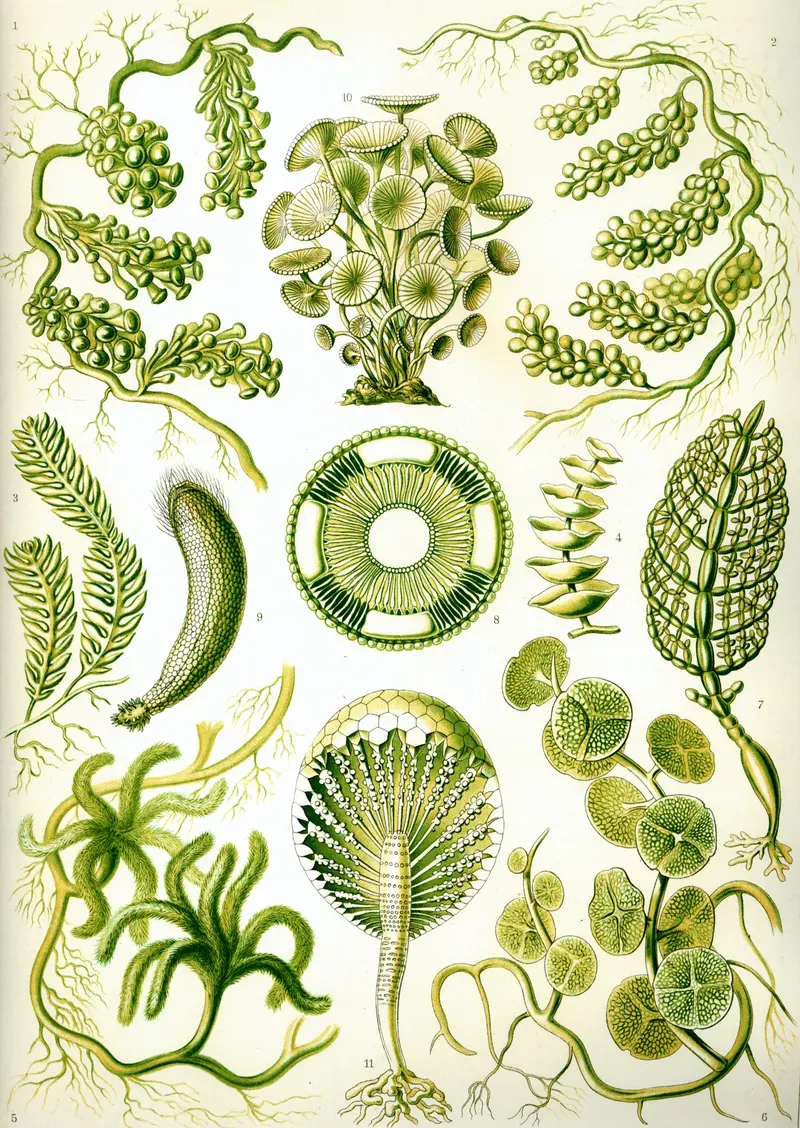
Siphoneae (Green Algae)
Ernst Haeckel

Cirripedia (Barnacles)
Ernst Haeckel

Actiniae (Sea Anemones)
Ernst Haeckel
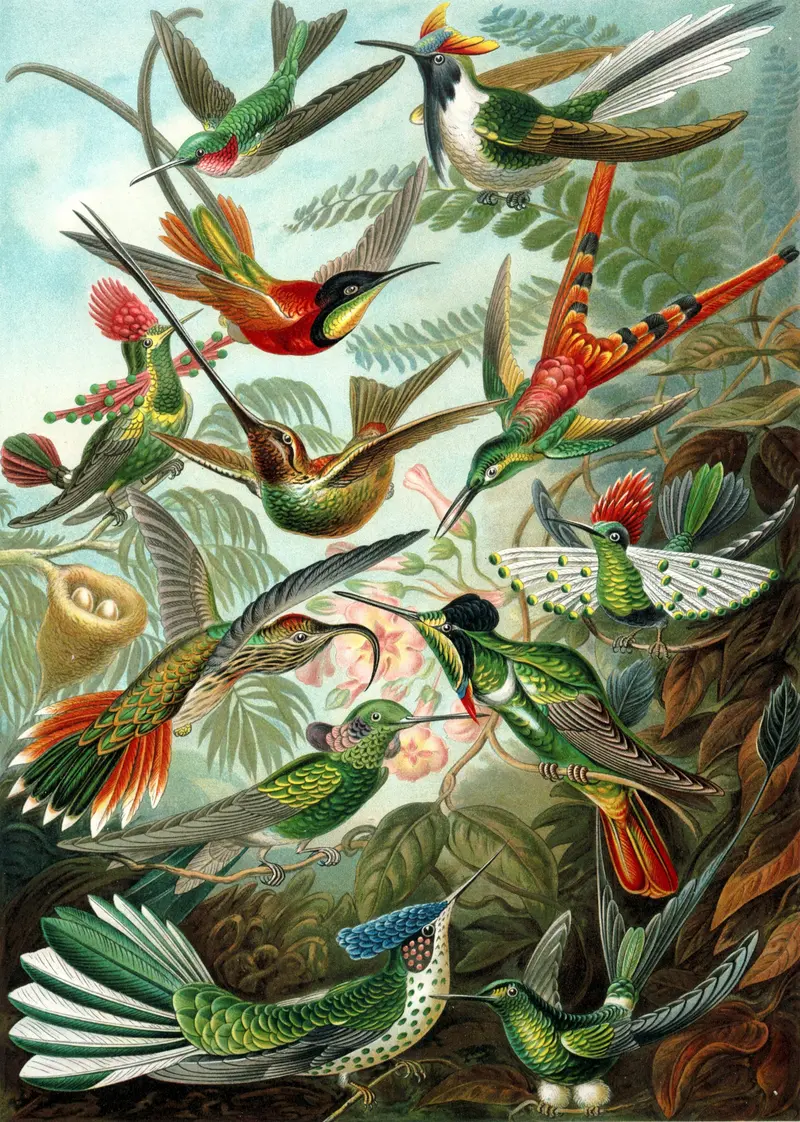
Trochilidae (Hummingbirds)
Ernst Haeckel
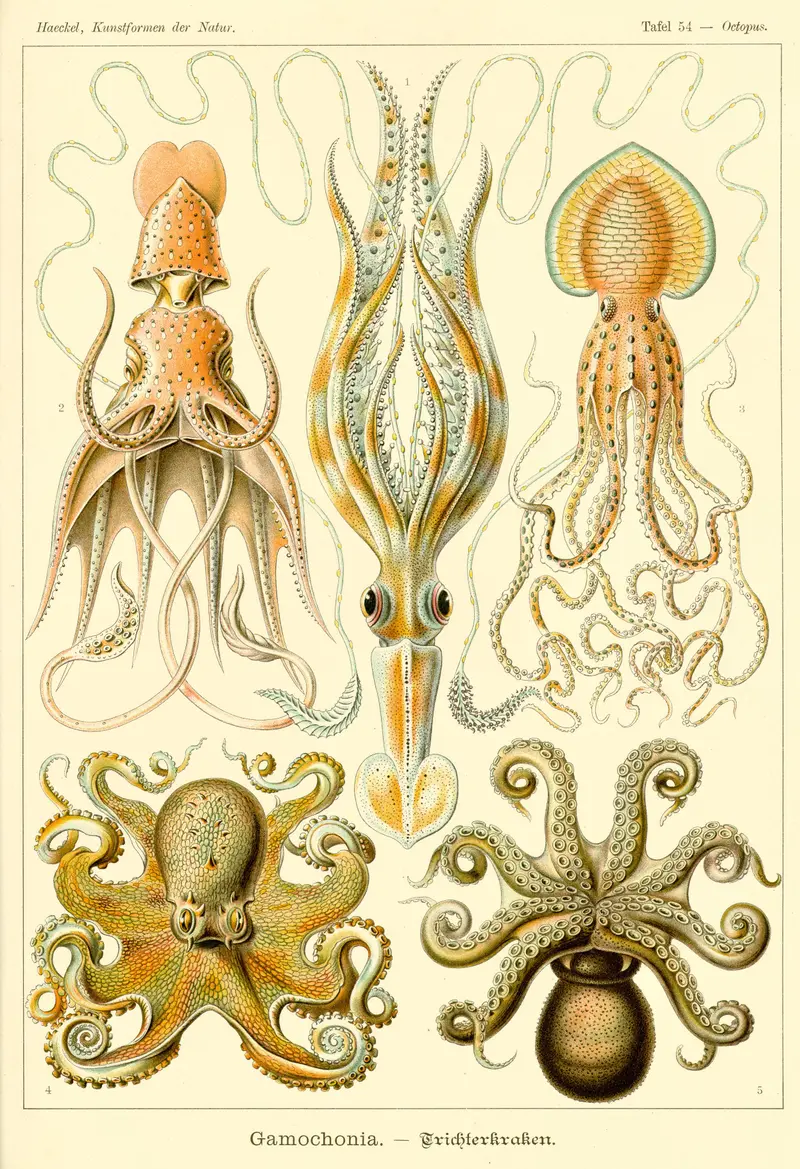
Gamochonia (Cephalopods)
Ernst Haeckel
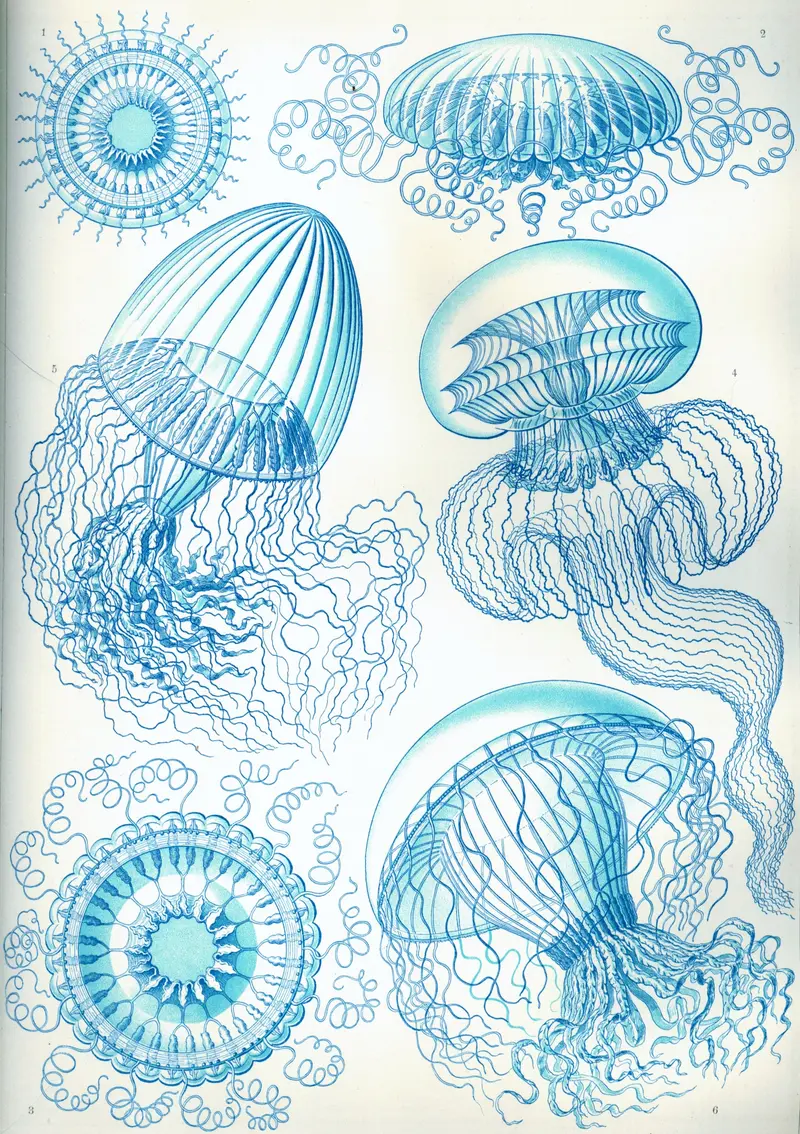
Leptomedusae (Jellyfish)
Ernst Haeckel
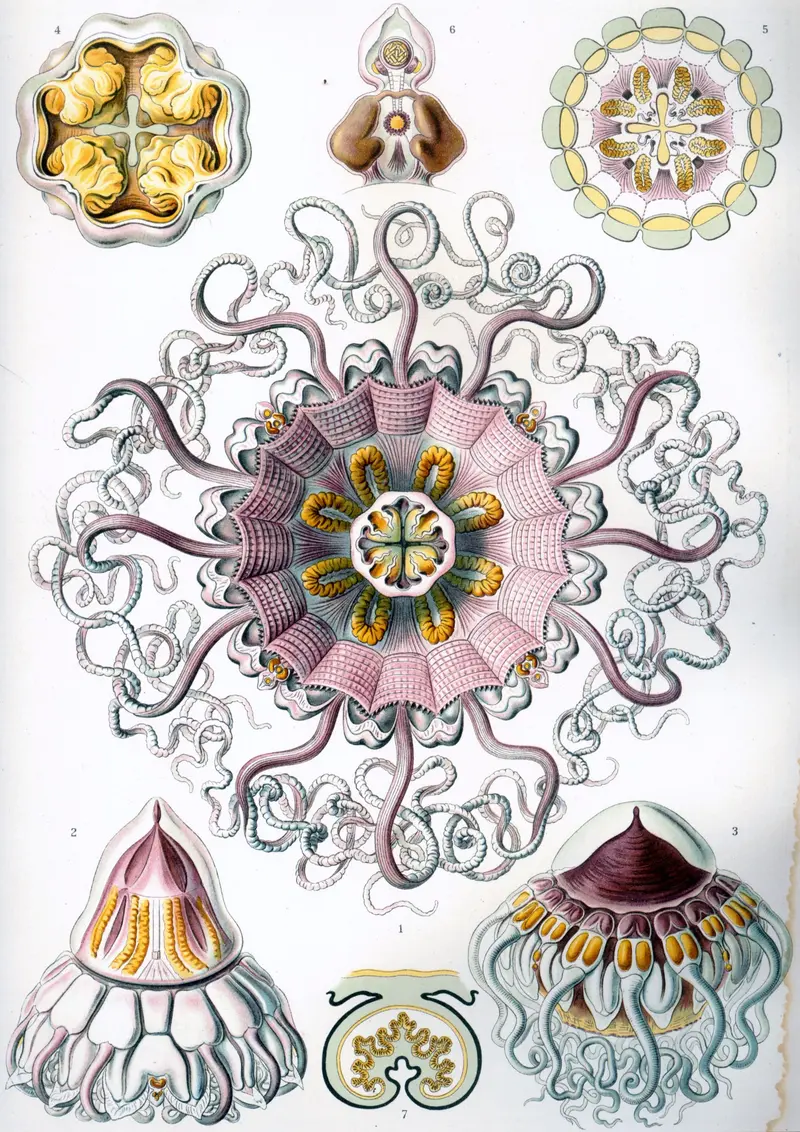
Peromedusae (Jellyfish)
Ernst Haeckel
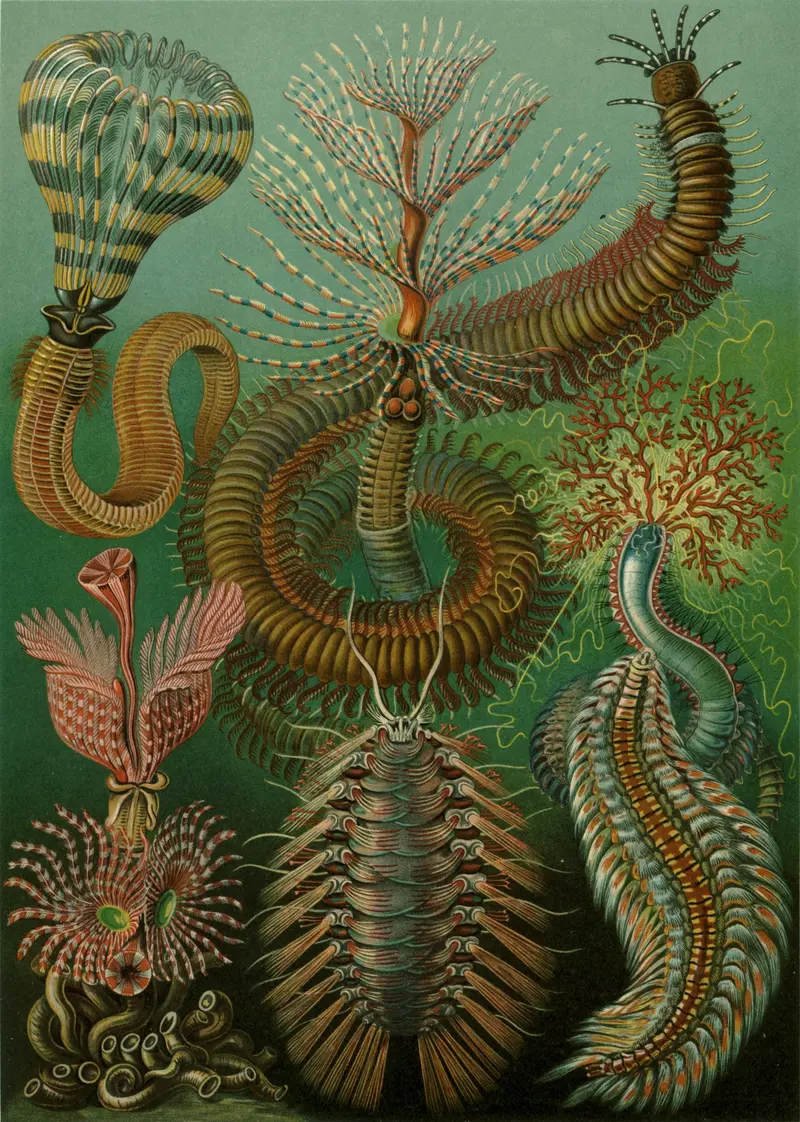
Chaetopoda (Bristle Worms)
Ernst Haeckel
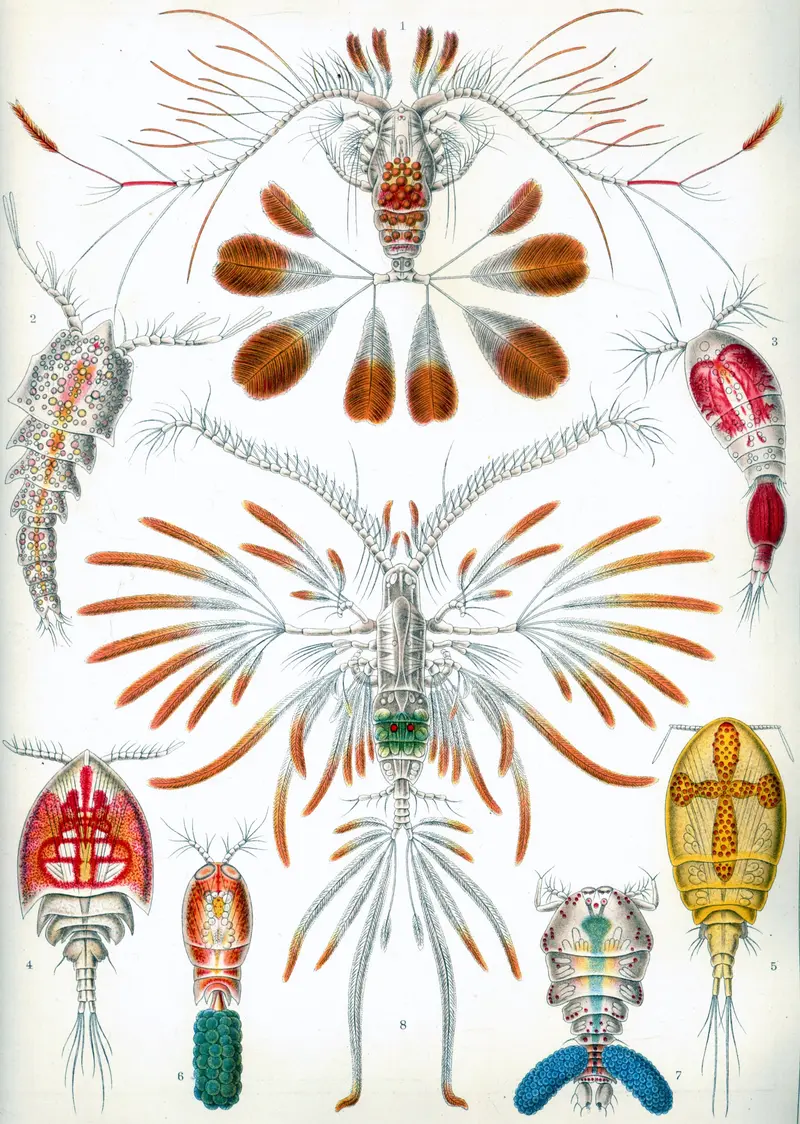
Copepoda (Copepods)
Ernst Haeckel





