
Blick auf Tragöss — History & Facts
In a world often drowned in noise, silence offers a poignant refuge for reflection and nostalgia. Look to the left where the gentle curves of the hills cradle a tranquil village, each building painted in warm, inviting hues. The play of light and shadow dances across the canvas, illuminating the soft greens of the land while the sky, awash in pastel tones, suggests the fleeting embrace of dusk. Notice how the brushwork blends seamlessly, capturing both the vibrancy of nature and the serenity of the scene, as if inviting the viewer into a moment suspended in time. Delve deeper into the composition, where contrasts emerge—the vibrant colors of life juxtaposed against the stillness of the evening.
Each stroke tells a story of longing, perhaps for a simpler time or a place left behind. The winding path leads the eye, suggesting both a journey and an invitation to pause and reflect. Here, nostalgia blooms, evoking a sense of yearning for the past, while the muted tones encourage a contemplative silence that envelops the viewer. In 1928, while painting this piece, the artist found himself amidst a post-World War I Europe, a continent grappling with the remnants of conflict and searching for solace in the beauty of the landscape.
Lach's works during this period often encapsulated the interplay of memory and experience, as he sought to capture the essence of places steeped in personal significance and collective history.
More Artworks by Fritz Lach
Browse all →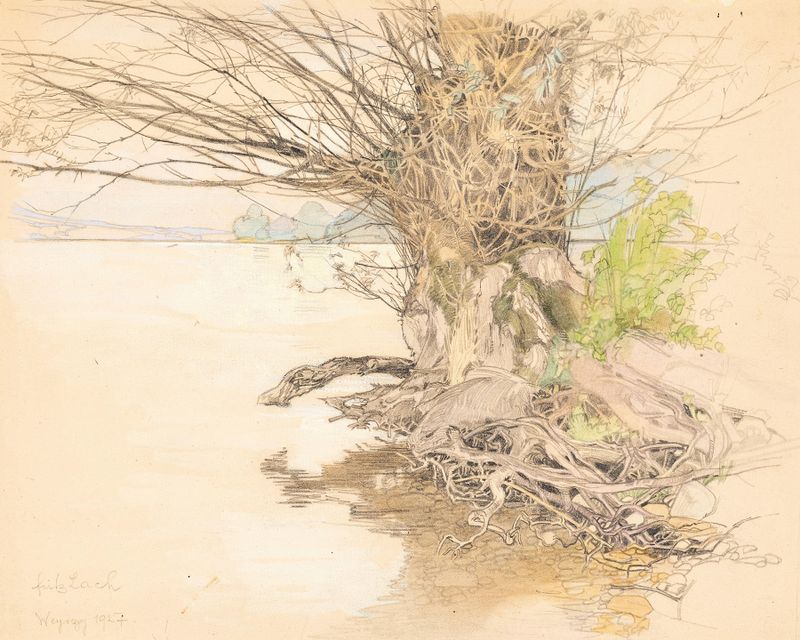
A willow tree at the lake shore
Fritz Lach
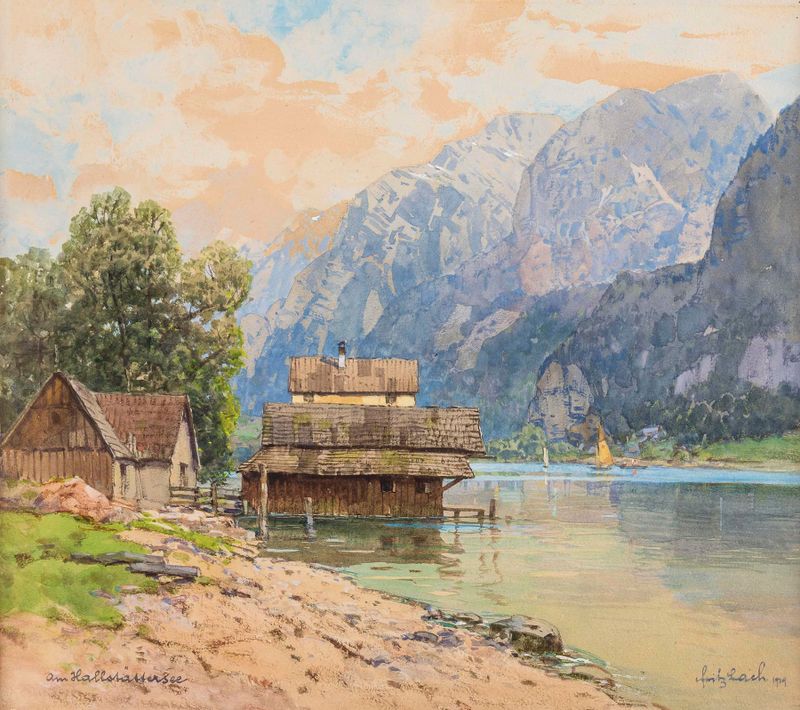
Bootshäuser am Hallstätter See
Fritz Lach
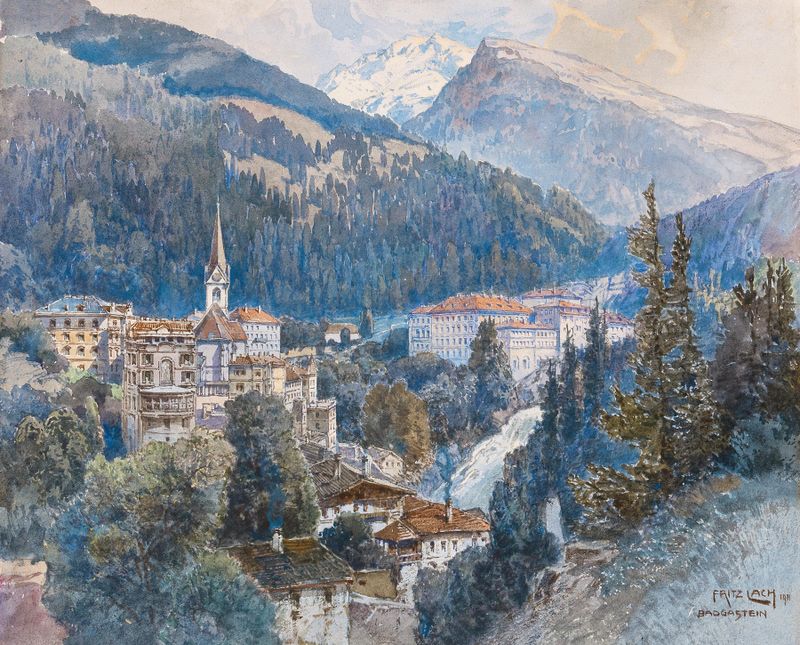
A view of Bad Gastein and the waterfall
Fritz Lach
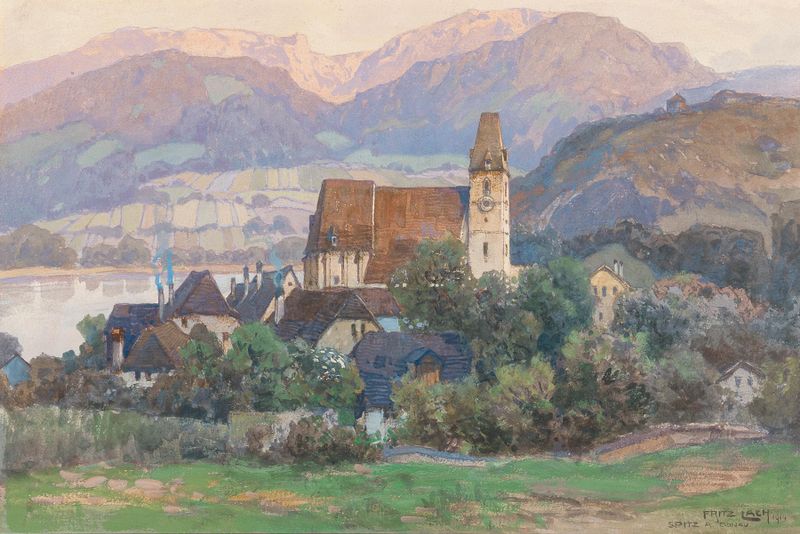
A view of Spitz in the Wachau valley
Fritz Lach
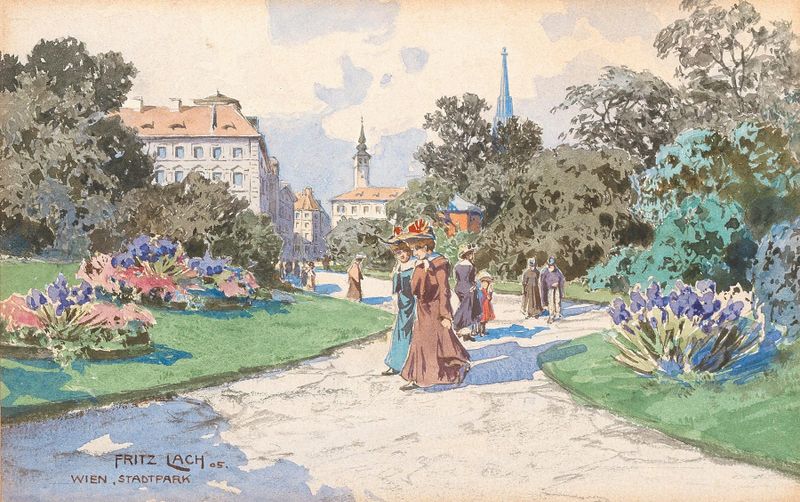
A walk in Vienna’s Stadtpark
Fritz Lach
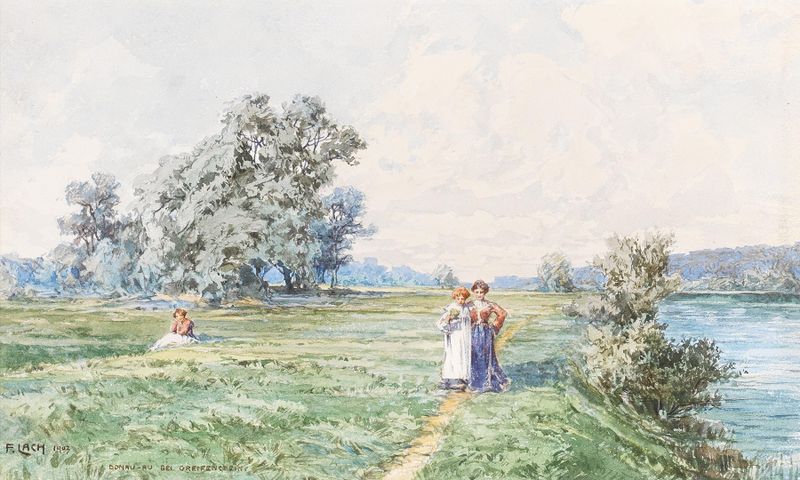
At the Danube near Greifenstein
Fritz Lach
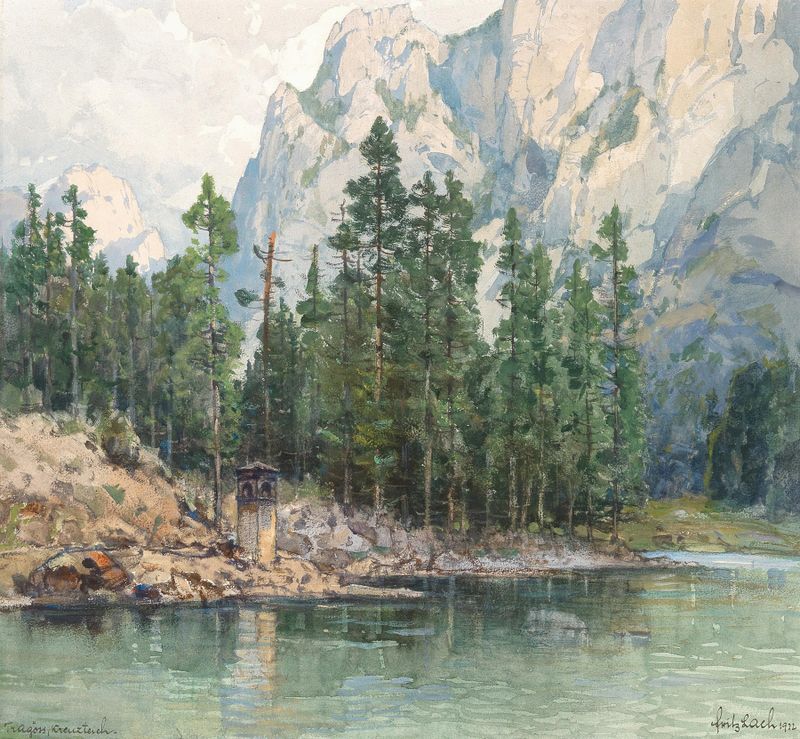
Kreuzteich near Tragöss
Fritz Lach
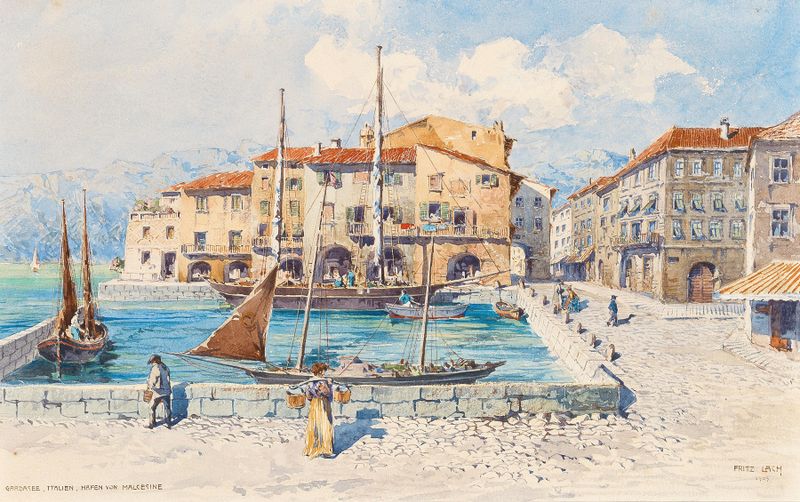
Malcesine near Gardasee
Fritz Lach
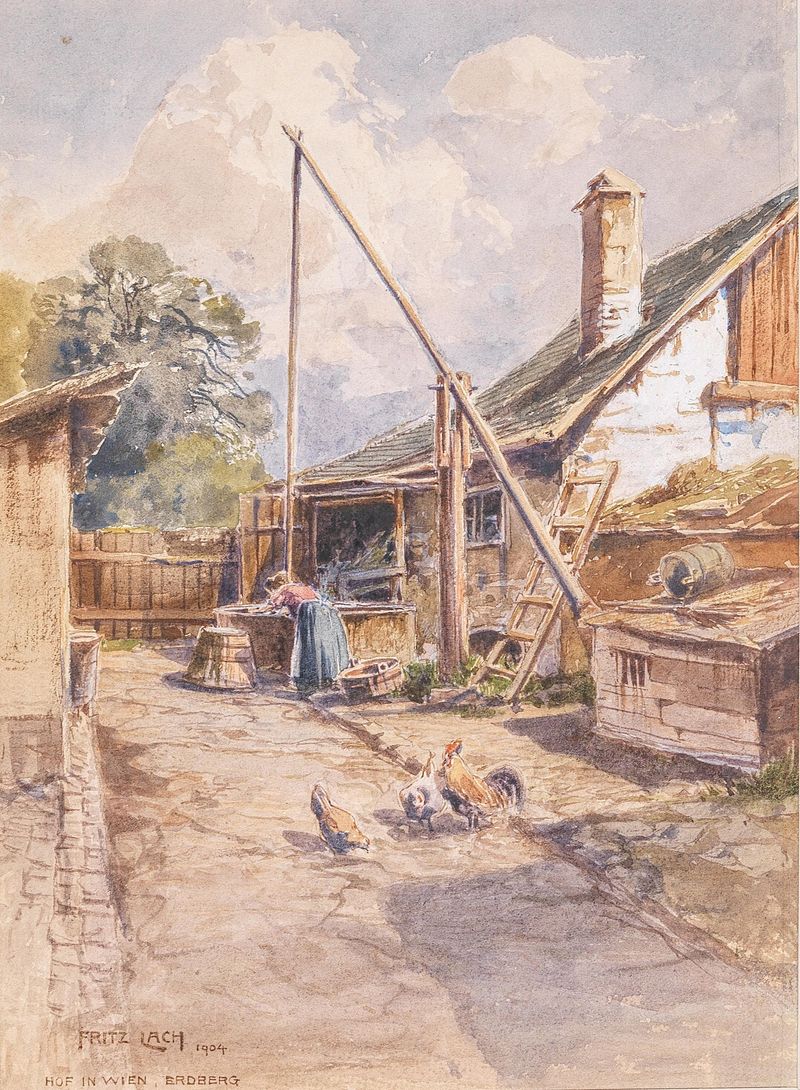
Hof in Wien Erdberg
Fritz Lach
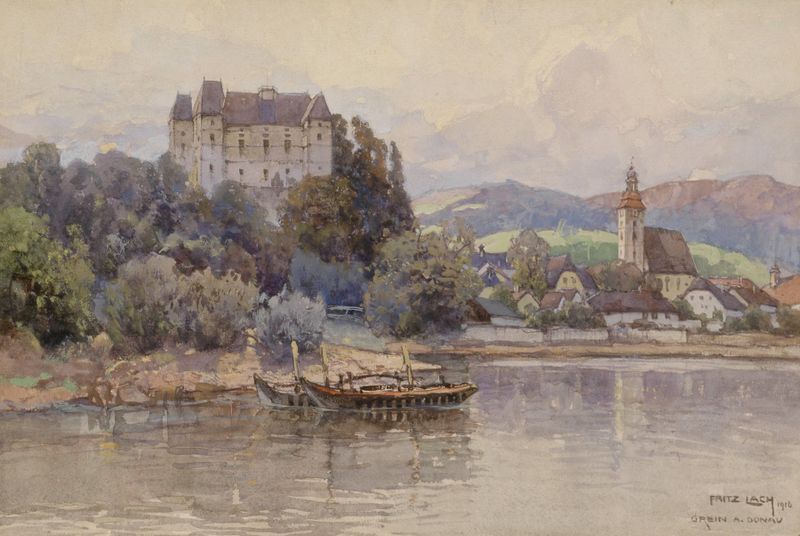
Blick auf Grein an der Donau
Fritz Lach





