
Blossom Child — History & Facts
A child stands at the center of Blossom Child, her small hands clutching delicate sprays of pink blossoms, their color the only vivid note in a world washed with gentle browns and creams. The artist, Helen Hyde, draws our eye to the child’s face, open-mouthed and wide-eyed, as if caught mid-song or surprised by the spring air. The oversized sleeves and sash of her robe seem to weigh her down, yet her stance is lively, feet turned outward in sturdy sandals, the hem of her garment brushing the ground.
The background dissolves into soft, sketch-like forms, suggesting a garden or hillside, but never distracting from the figure herself. Light falls evenly, flattening space and giving the scene the quiet clarity of a memory. Created in 1902, this work belongs to a moment when Western artists were fascinated by Japanese art and aesthetics—a movement known as Japonisme. Helen Hyde was among the few American women of her time to travel to Japan and study traditional printmaking, blending local techniques with her own sensibility.
The Smithsonian American Art Museum now preserves this print, a testament to both cross-cultural curiosity and the era’s hunger for scenes of everyday beauty. History has kept few traces of the individual stories behind such images, but their gentle observation invites us to linger, following the child’s gaze and wondering what she sees beyond the blossoms.
More Artworks by Helen Hyde

Moonlight on the Viga Canal) - HH (monogram) LCCN0065
Helen Hyde
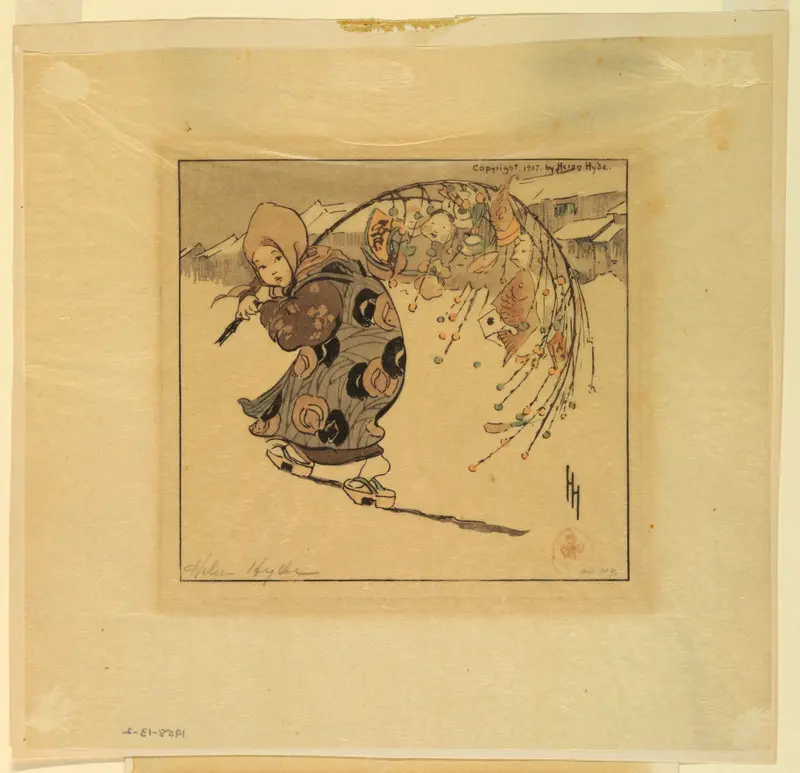
Print, The Good Luck Branch
Helen Hyde
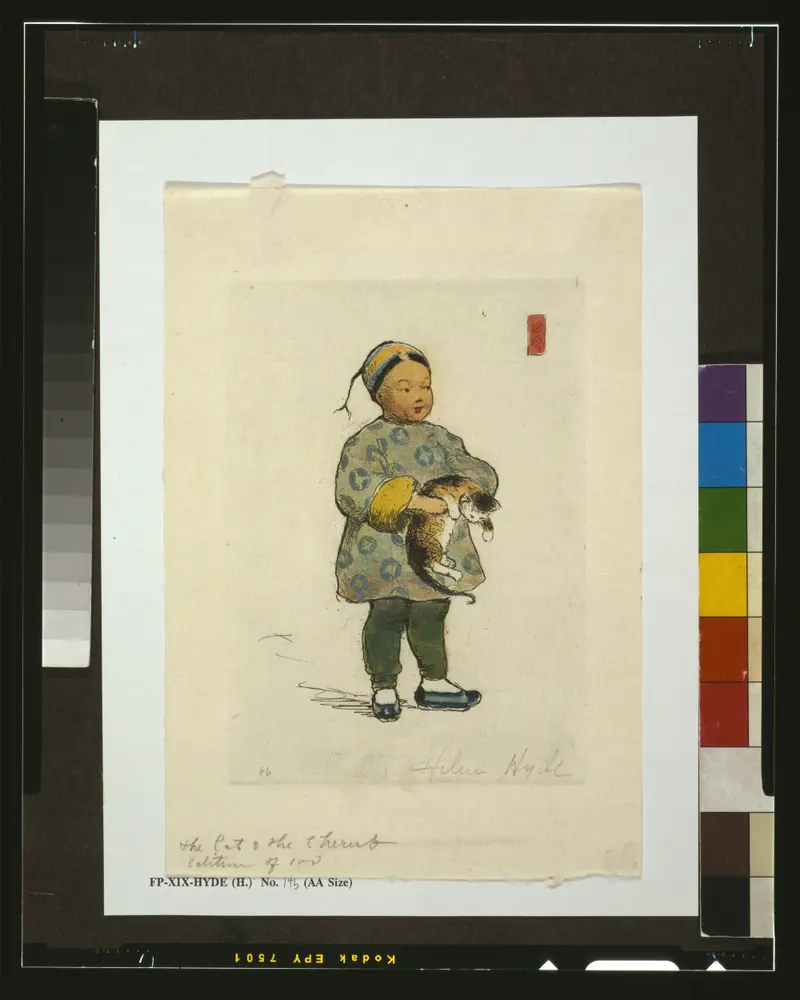
The cat and the cherub LCCN200367
Helen Hyde

Hon(orable Mr) cat - HH (monogram). LCCN200367
Helen Hyde
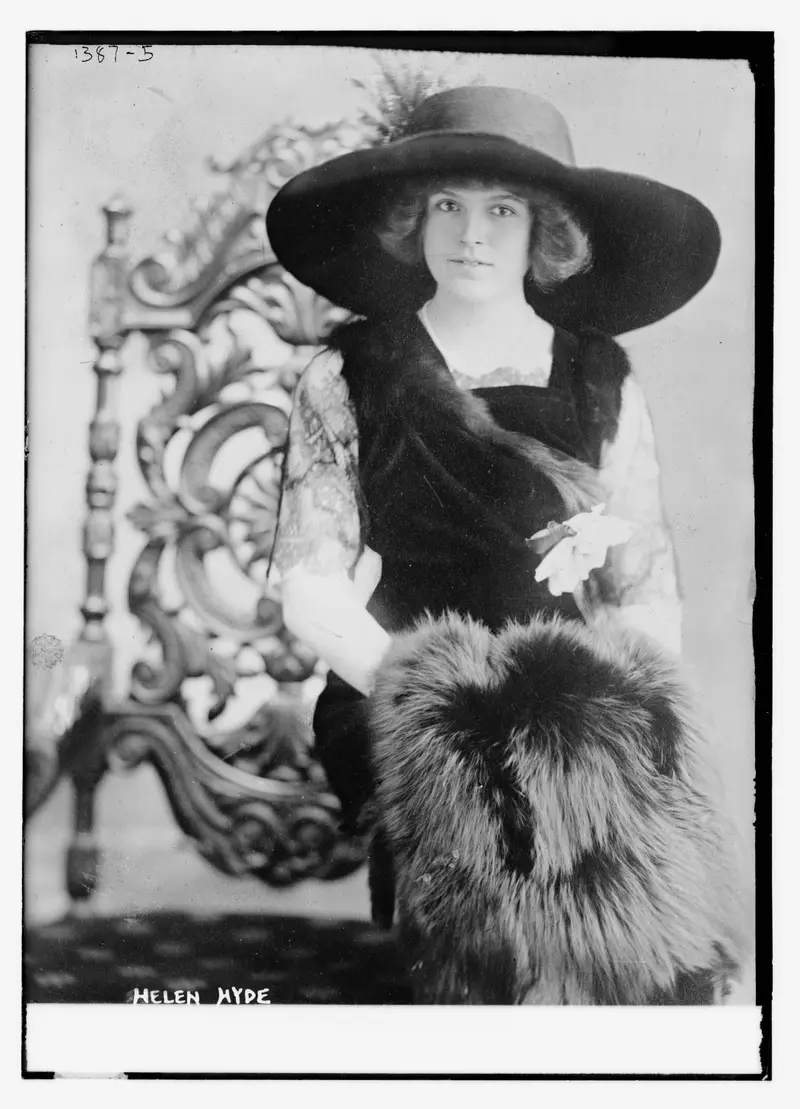
Helen Hyde LCCN201468
Helen Hyde
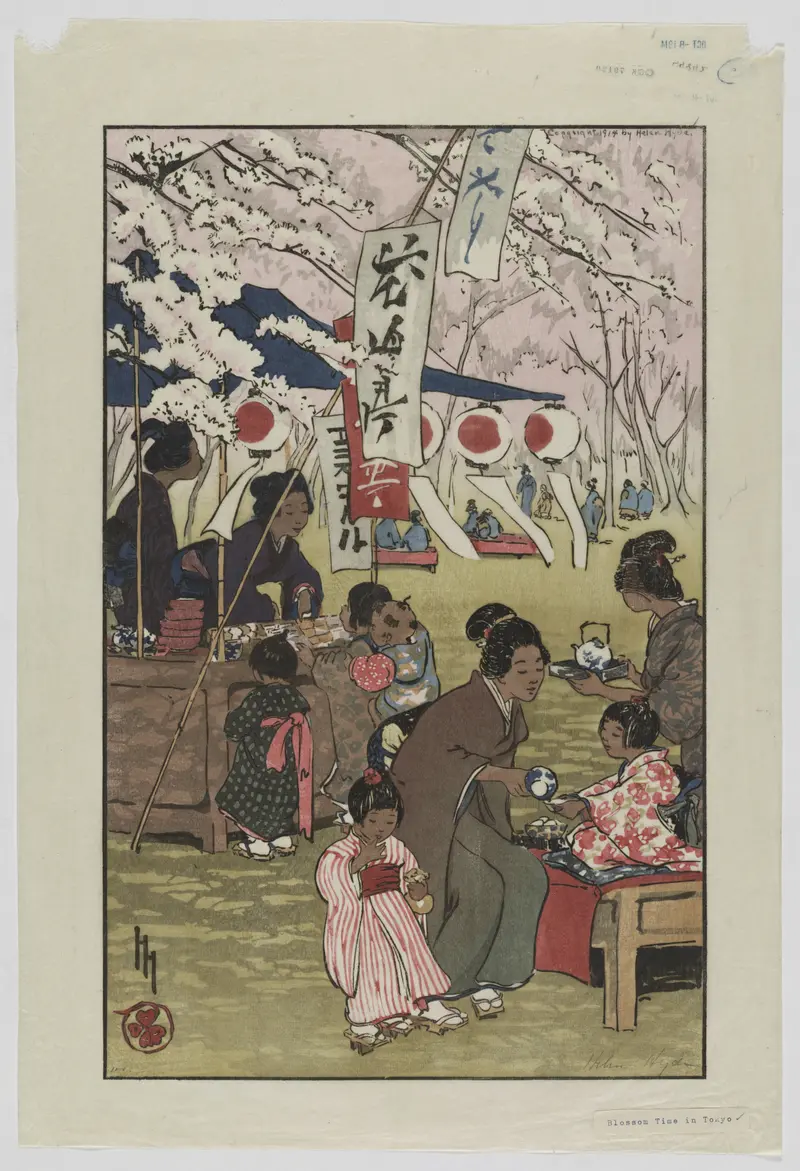
Blossom time in Tokyo) - HH (monogram) LCCN0065
Helen Hyde
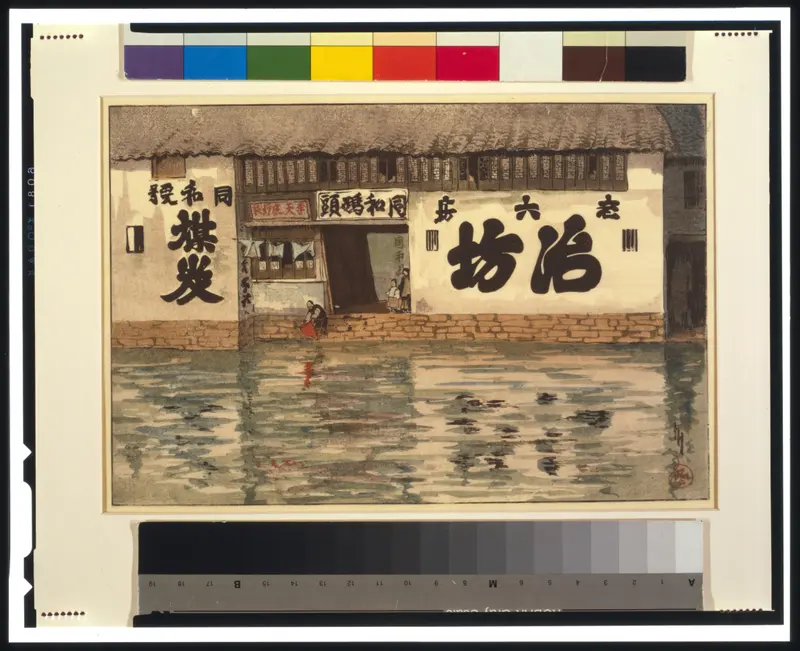
The sauce-pan shop) - HH (monogram) LCCN0065
Helen Hyde

New Year's Day in Tokyo
Helen Hyde
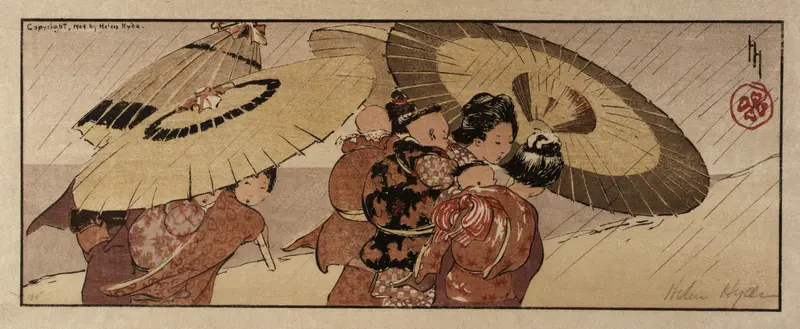
A Summer Shower
Helen Hyde
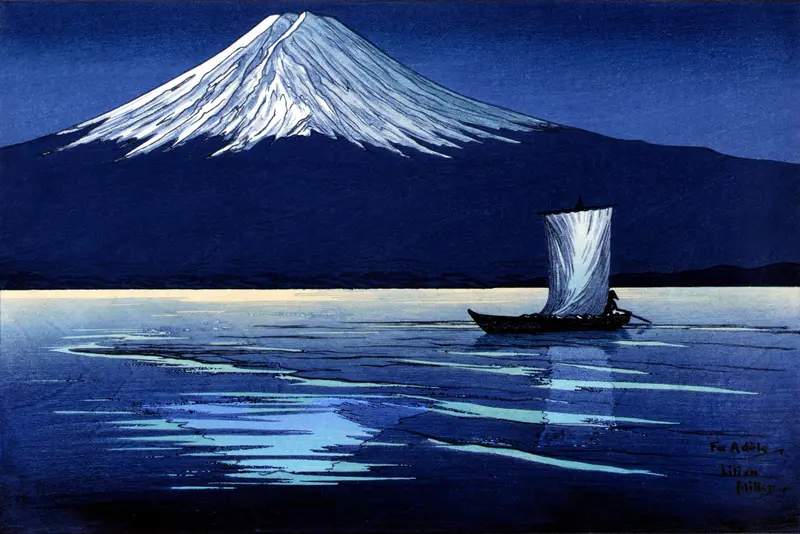
Moonlight on Mt. Fuji
Helen Hyde
More Genre Scene Art

Banquet of the Officers of the St George Civic Guard
Frans Hals

Rembrandt and Saskia in the Scene of the Prodigal Son
Rembrandt van Rijn

Bal du moulin de la Galette
Pierre-Auguste Renoir

Quadrille at the Moulin Rouge
Henri de Toulouse-Lautrec

A Burial at Ornans
Gustave Courbet

When Will You Marry?
Paul Gauguin