Blumenterrasse im Wannseegarten nach Nordwesten — History & Analysis
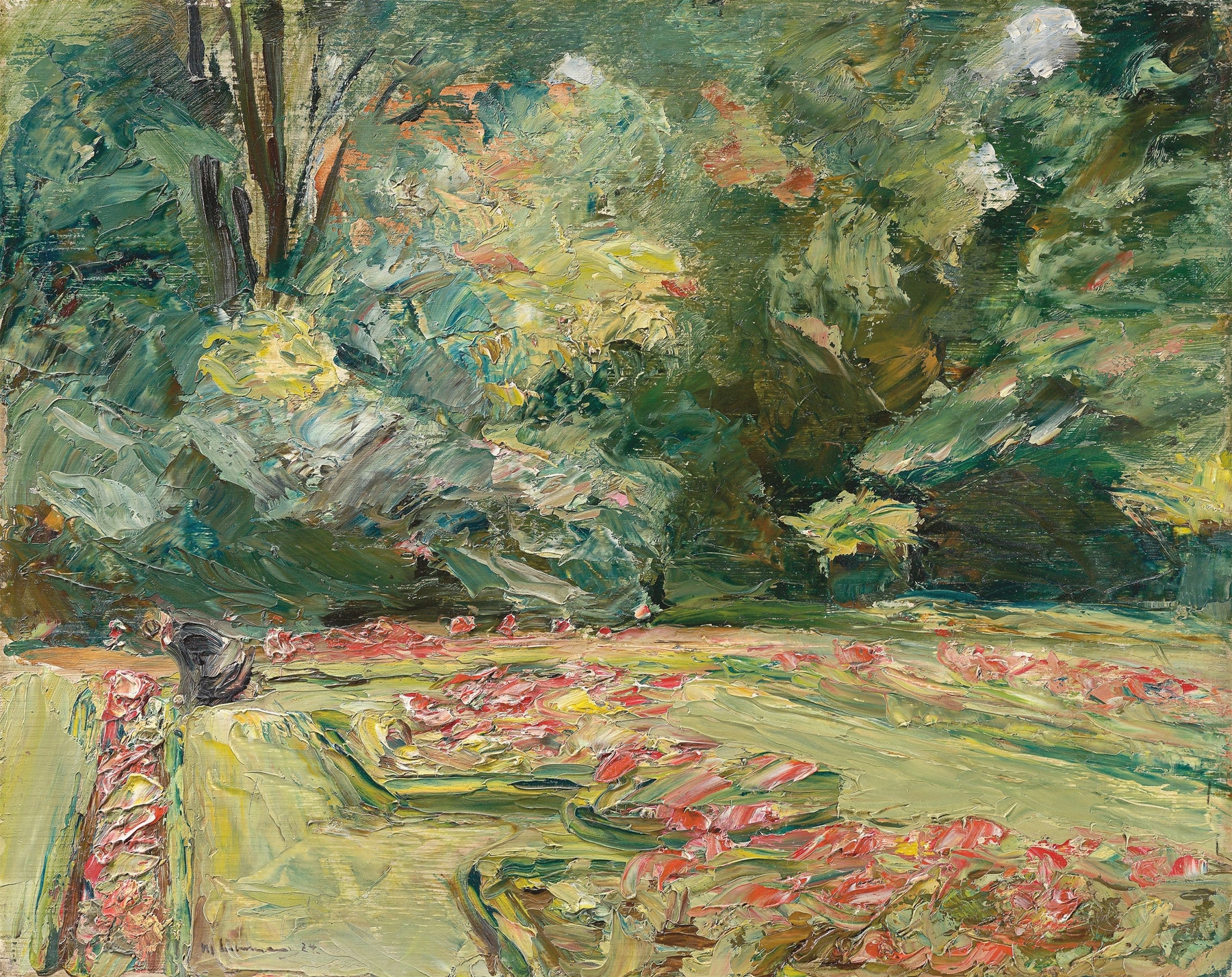
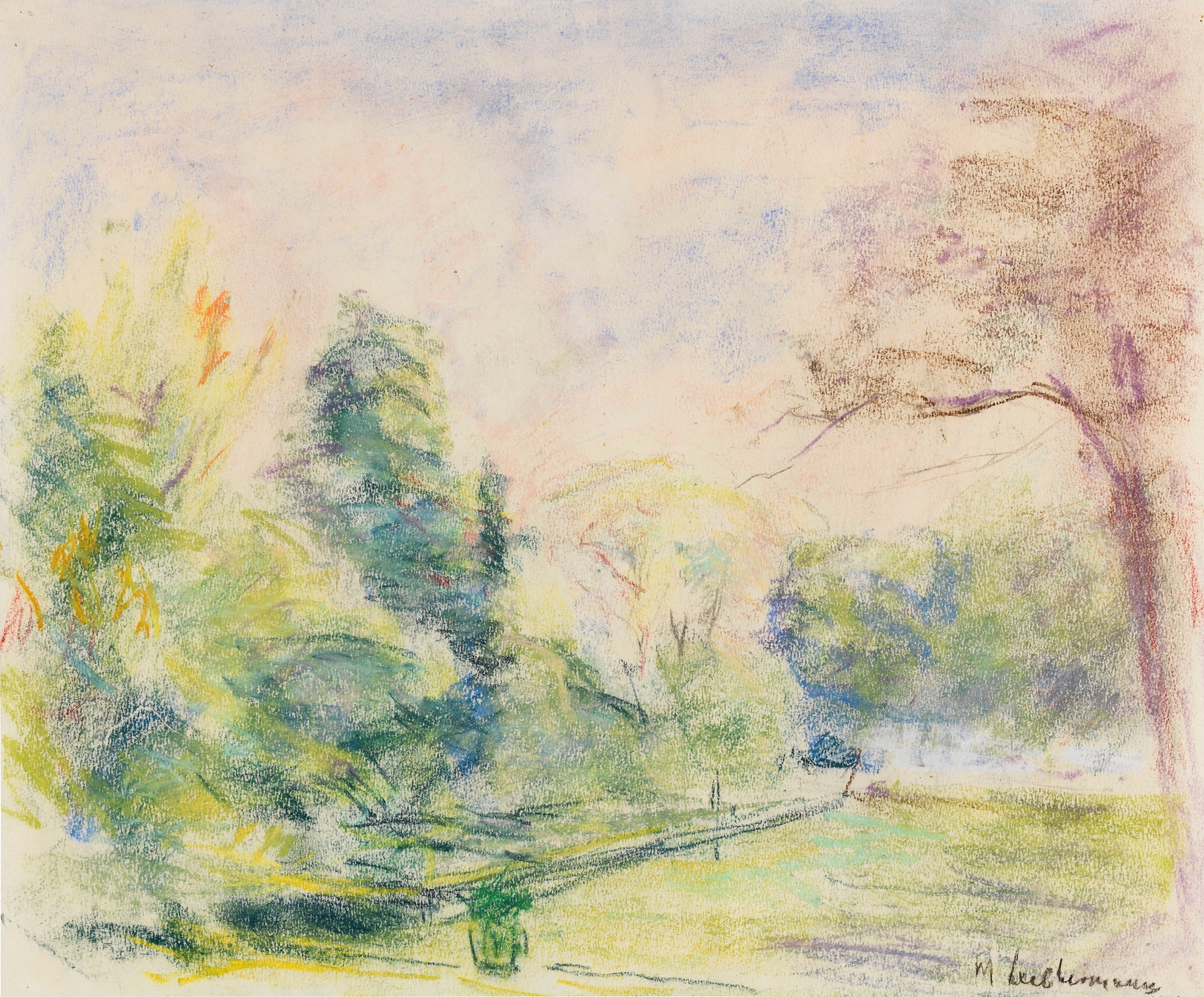
Could beauty survive in a century of chaos? This question echoes through the vibrant hues and tranquil composition of Liebermann's work, inviting contemplation on the fragility of serenity amidst encroaching darkness. Look to the center of the canvas, where lush green foliage spills over the edges, offering a sanctuary from the tumult outside. Notice how the carefully arranged flower beds invite the eye to wander, leading you through a path of vibrant reds, yellows, and whites that punctuate the verdant background.
The play of light filters through the leaves, creating dappled shadows that dance across the ground, suggesting a fleeting moment of peace caught in time, yet also hinting at an underlying tension. As you delve deeper, notice the contrast between the vibrant flowers and the muted tones of the garden furniture. This juxtaposition reflects a struggle between nature's beauty and the encroaching unease of the post-war era. The stillness of the scene stands in stark opposition to the historical context, suggesting that even in a garden filled with life, the specter of fear lingers just beyond the frame.
In 1920, Max Liebermann was painting during a period of significant transition in Weimar Germany, following the devastating consequences of World War I. This era was marked by both an artistic flourishing and a growing sense of uncertainty in society. Known for his impressionistic style, Liebermann sought refuge in the beauty of nature, creating works that encapsulated a yearning for peace even as chaos loomed in the shadows.