
Boating through Yosemite Valley with Half Dome in the Distance — History & Facts
The first thing that pulls the viewer in is the sheer scale of the landscape compared to the tiny canoe gliding across the water. In Boating through Yosemite Valley with Half Dome in the Distance, Albert Bierstadt sets a human presence adrift in a world of monumental stone and shadow. The eye is drawn from the dark, forested banks to the luminous, snow-dusted peaks that catch the last light, with the iconic Half Dome rising like a sentinel at the right.
The canoe, almost lost in the vastness, becomes a quiet punctuation in the valley’s silence, its occupants dwarfed by the ancient geology. Bierstadt’s brushwork is brisk and direct, suggesting the fleeting nature of light and the rawness of the American West before it was fully mapped or settled. Painted in the mid-19th century, this work belongs to a period when American artists and explorers were just beginning to bring images of Yosemite and the Sierra Nevada to the wider public. Such paintings were often intended to stir curiosity and awe, sometimes commissioned by collectors eager to possess a piece of the “new world’s” wonders, sometimes created as studies for larger canvases or engravings.
The date—1850—places it at the dawn of California’s transformation, when gold rush fever and westward expansion were reshaping the land and its stories. Though this particular painting’s journey is only traced to a 2008 auction in Los Angeles, it stands as a quiet witness to an era when artists like Bierstadt helped define how Americans—and the world—would imagine the grandeur of the West. Look again at the tiny boat: it is a reminder of how new, and how overwhelming, this landscape once seemed.
More Artworks by Albert Bierstadt

A Storm in the Rocky Mountains, Mt. Rosalie
Albert Bierstadt
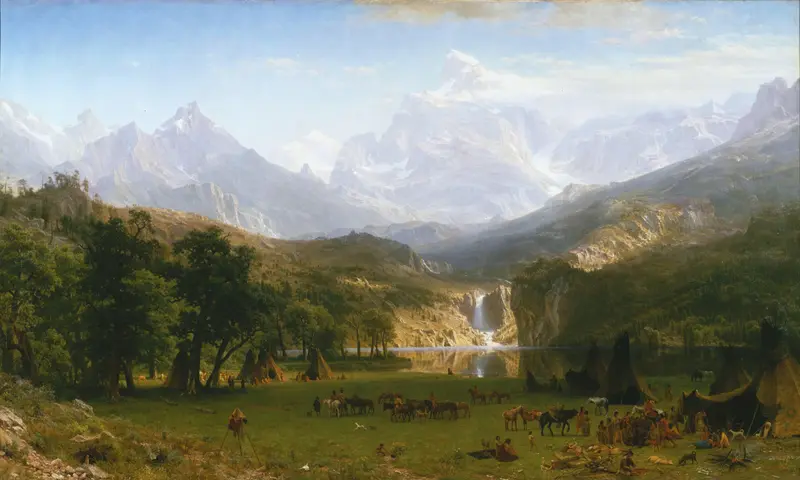
The Rocky Mountains, Lander's Peak
Albert Bierstadt
Niagara from the American Side
Albert Bierstadt
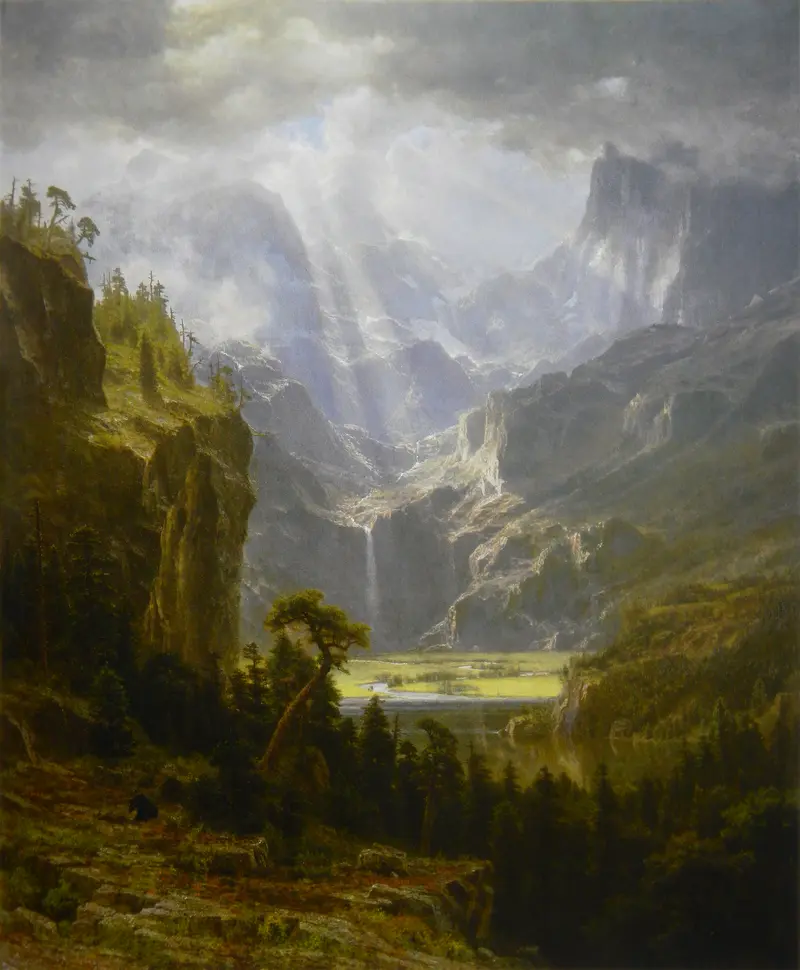
Rocky Mountains, Lander’s Peak
Albert Bierstadt

Valley of the Yosemite
Albert Bierstadt
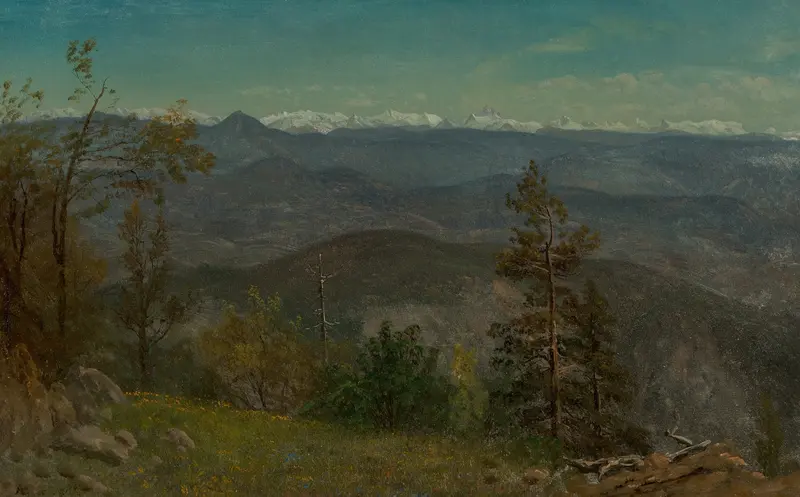
Yosemite Valley, California
Albert Bierstadt
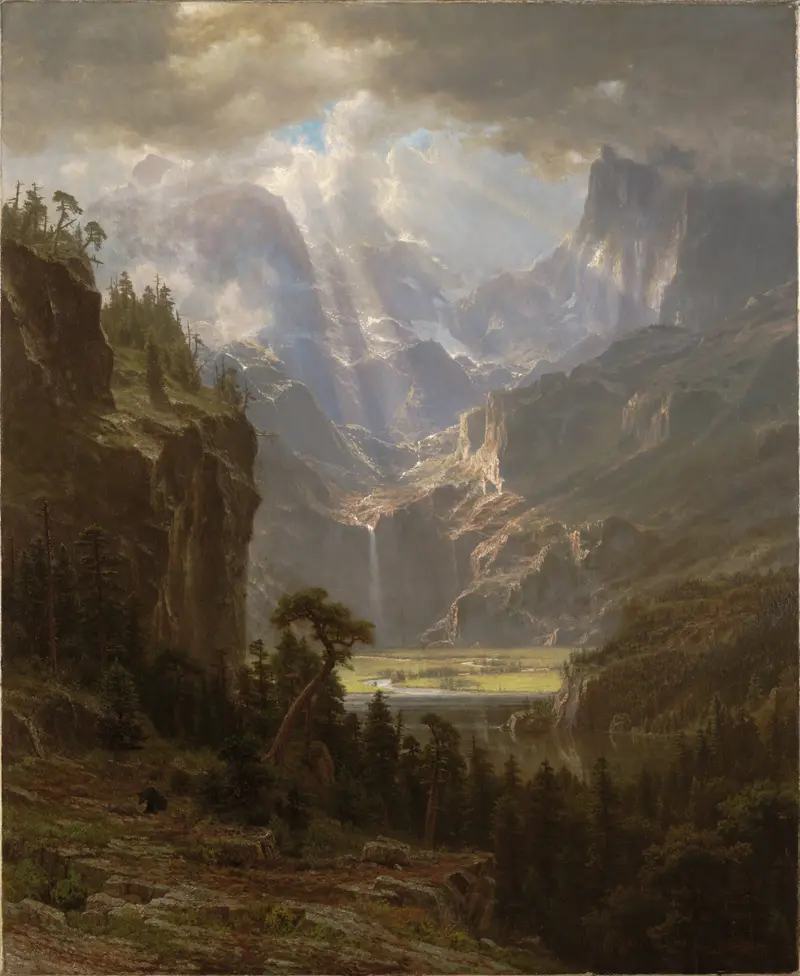
Rocky Mountains, "Lander's Peak"
Albert Bierstadt

Laramie Peak
Albert Bierstadt
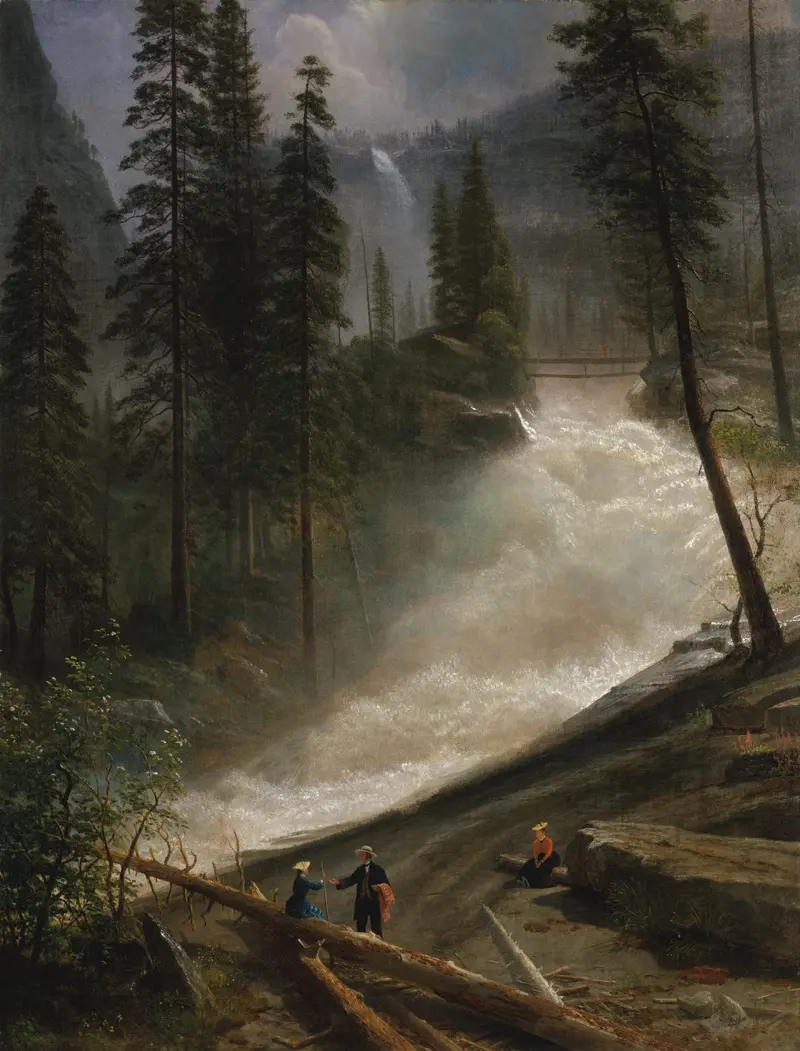
Nevada Falls, Yosemite
Albert Bierstadt
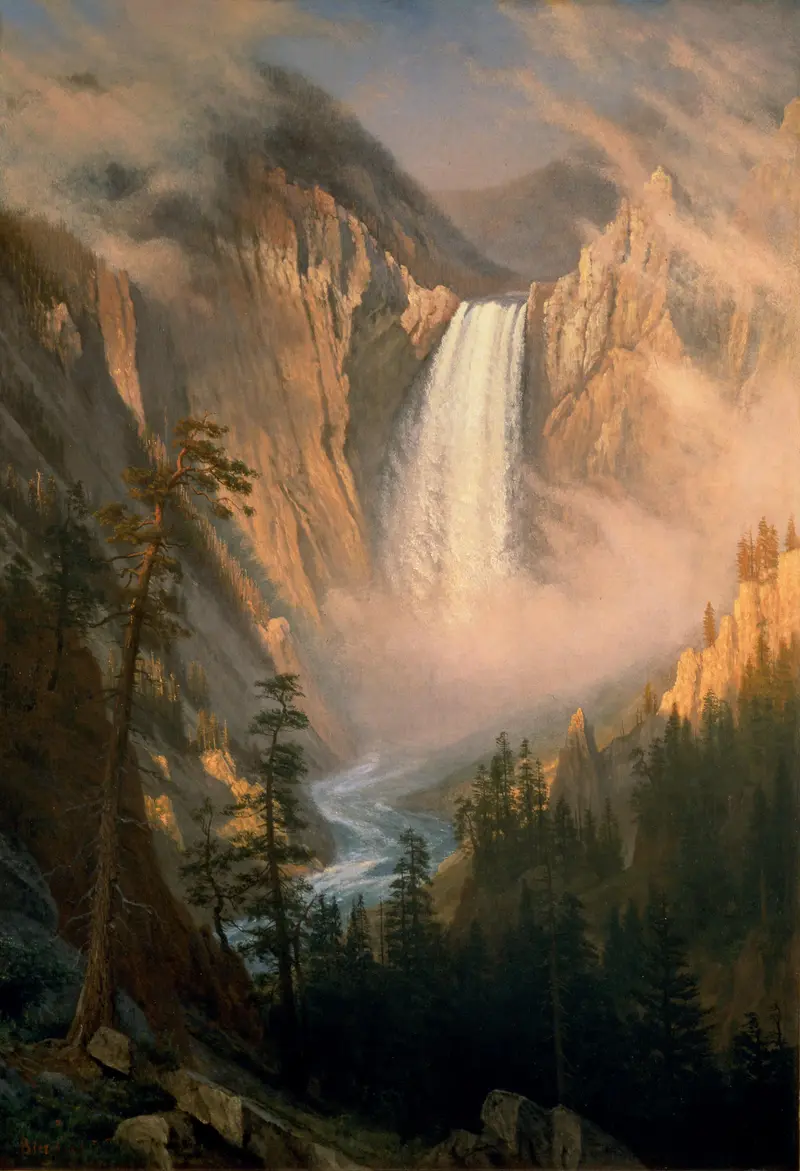
Yellowstone Falls
Albert Bierstadt
More Landscape Art

The Starry Night
Vincent van Gogh

View of Delft
Johannes Vermeer

Water Lilies
Claude Monet

The Grand Canal, Venice, looking north-west from the Ca' Corner to the Ca' Contarini degli Scrigni, with the campanile of Santa Maria della Carità
Canaletto

Windsor Castle
Canaletto

The Grand Canal looking North-East from the Palazzo Dolfin-Manin to the Rialto Bridge
Canaletto