
Boats at a Mooring Place — History & Facts
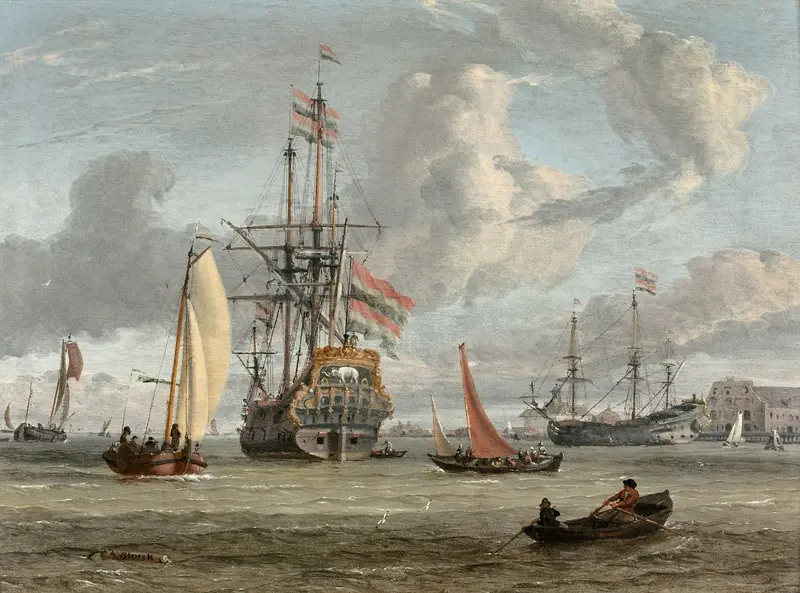
A restless quiet fills the harbor in Boats at a Mooring Place by Abraham Storck, painted in 1683. The eye is drawn first to the luminous sails, some furled, some billowing, catching the last light of day and reflecting it in the glassy water. Figures move with purpose: sailors tending ropes, men unloading cargo, a rowboat gliding toward a waiting ship.
The low horizon grants the sky a commanding role, its heavy clouds echoing the weight of the vessels below. Every post and ripple in the water is a trace of human industry, yet the scene feels suspended, as if the next gust of wind or call from the quay might set everything in motion. This kind of harbor scene flourished in the Dutch Republic of the late seventeenth century, when maritime trade was at its zenith and painters like Storck found eager patrons among merchants and shipowners. Such works were not mere records; they celebrated the lifeblood of a nation tied to the sea, offering pride and reassurance in the face of constant change.
The date, 1683, places this painting squarely in the age of Dutch maritime power, and its presence today in the Mauritshuis is a reminder of the era’s fascination with both the grandeur and the daily labor of the harbor. Look again at the figures along the quay and the distant ships—each detail is a window into the world that shaped the painting’s creation.
More Artworks by Abraham Storck

The Muscovite legation visiting Amsterdam, 29 August 1697
Abraham Storck
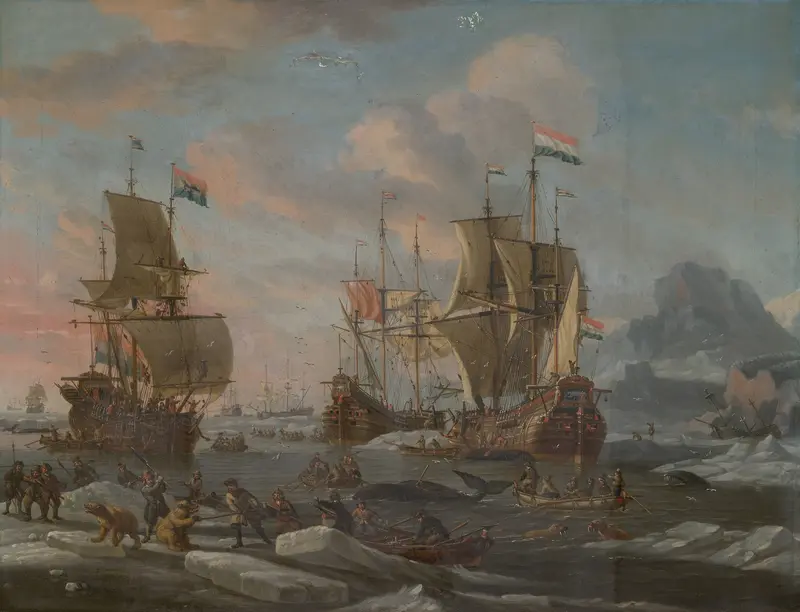
The Dutch Whaling Fleet
Abraham Storck
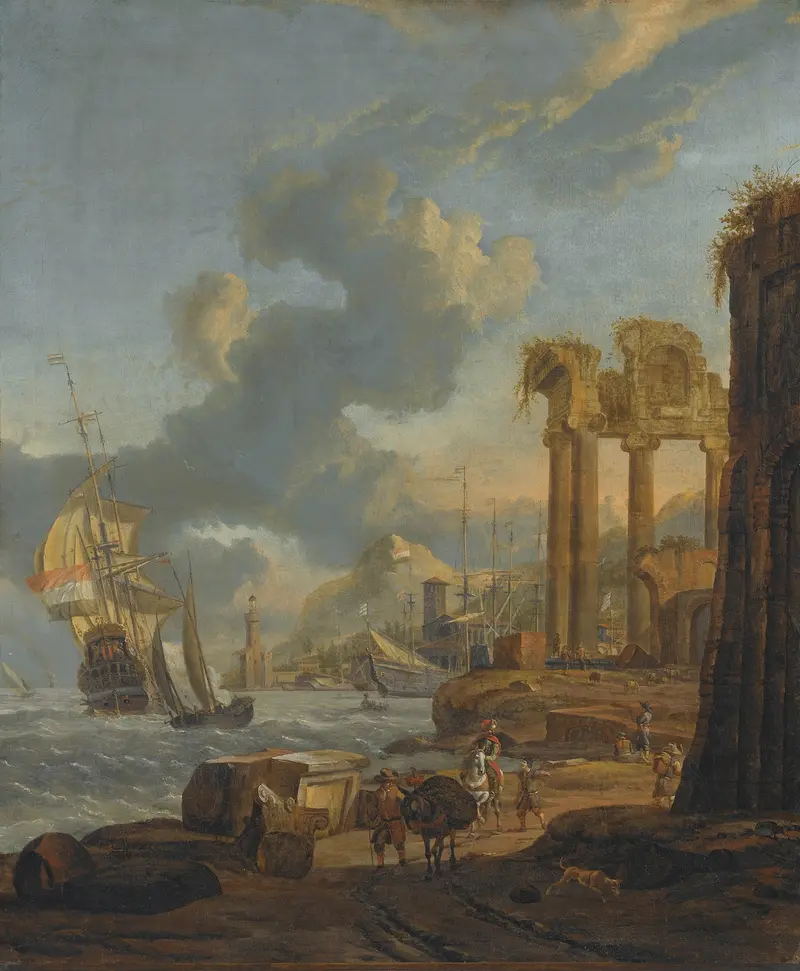
A Mediterranean Harbour Scene With Travellers On The Shore, A Dutch Man-Of-War On The Left
Abraham Storck
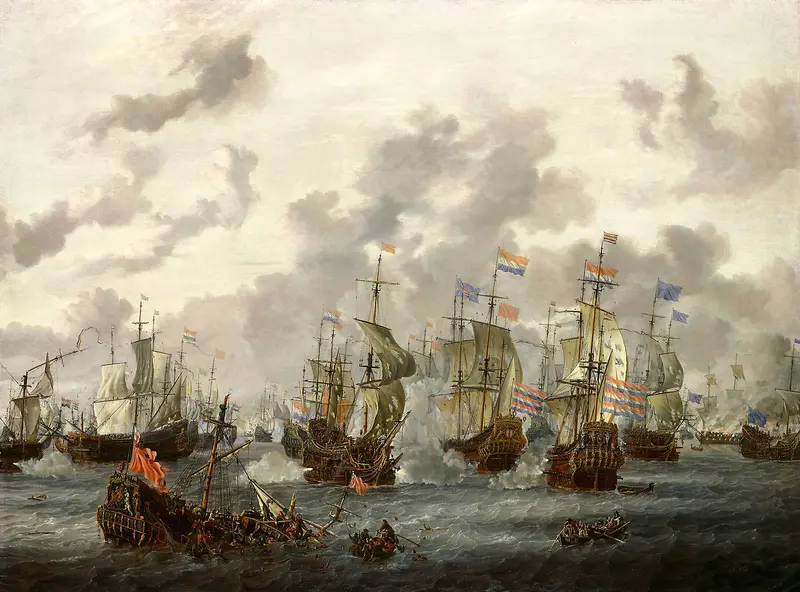
The Four Days’ Battle
Abraham Storck
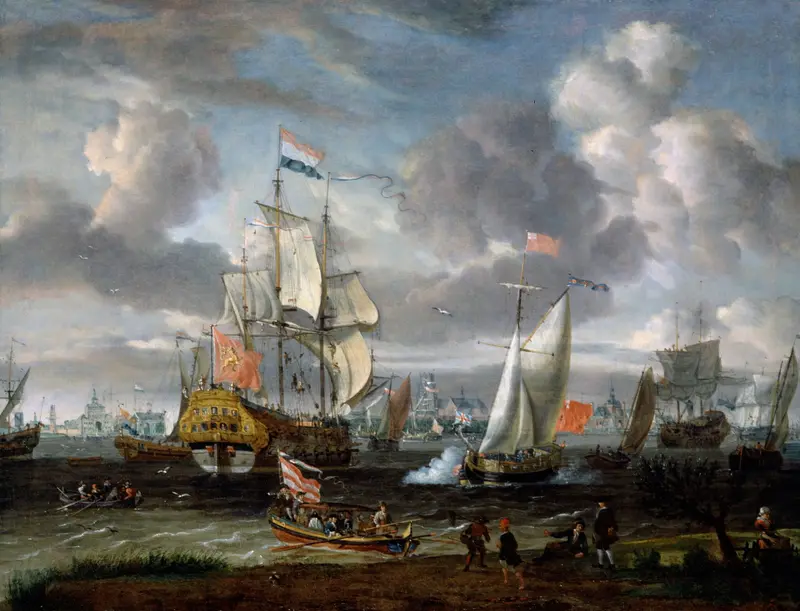
An English Yacht saluting a Dutch Man-of-War in the port of Rotterdam
Abraham Storck
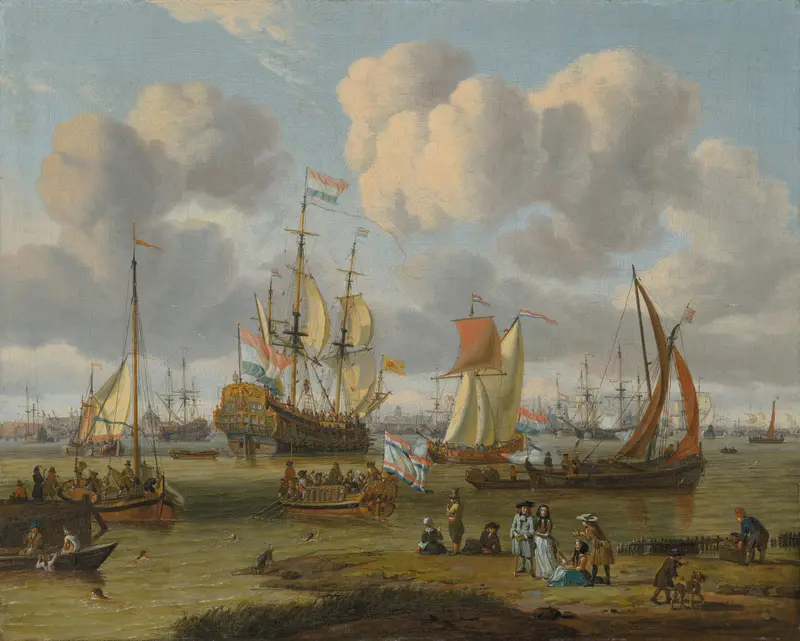
Shipping off Amsterdam with figures on a quay
Abraham Storck
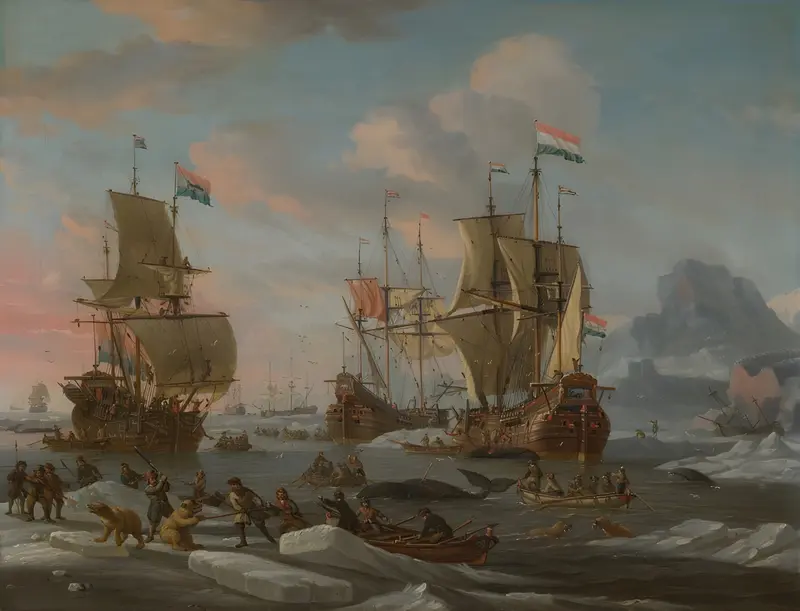
The Dutch Whaling Fleet
Abraham Storck
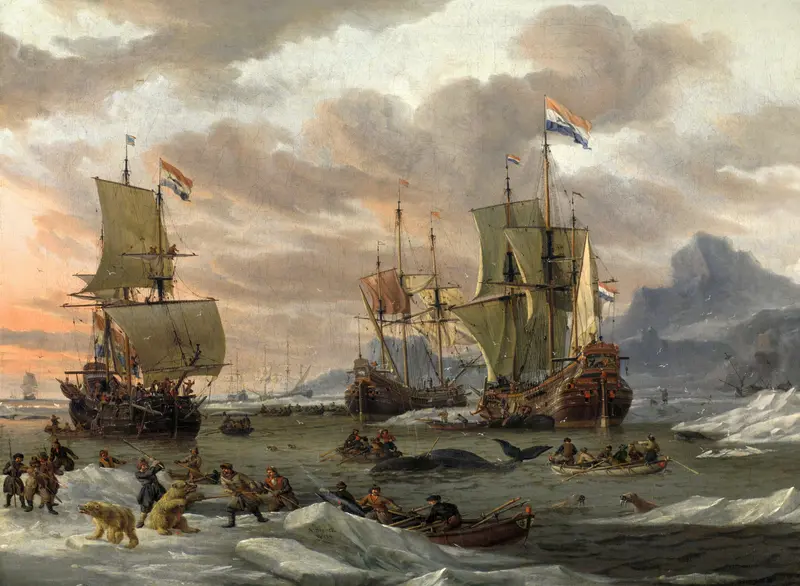
Whaling Grounds in the Arctic Ocean
Abraham Storck
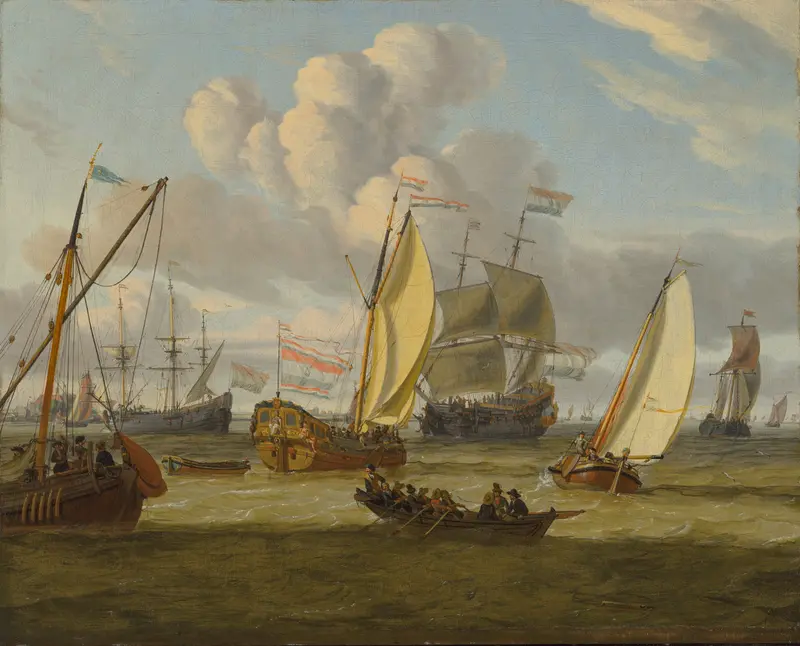
Shipping in an estuary
Abraham Storck
Grand navire de la couronne du Danemark près d’un littoral
Abraham Storck





