
Boetvaardige Petrus — History & Facts
A man kneels in rough sandals, his hands clasped tightly in prayer, his face turned upward with a look of anguished hope. The folds of his garment tumble in heavy lines, echoing the rugged rock behind him, while a pair of keys—small but unmistakable—lie discarded at his feet. Every line in this print by Jusepe de Ribera seems to press the viewer closer to the raw, private moment of remorse and longing.
The light, though spare, falls across his brow and hands, guiding the eye to the intensity of his expression and the humble posture of his body. This is not a grand public drama, but a solitary reckoning, and the landscape recedes into emptiness, as if the world itself has fallen away. Works like this, produced in the early seventeenth century, were often meant for private devotion or collectors seeking images of saints in moments of inner struggle. The subject—Peter in repentance—was a favorite of the Baroque era, when artists like Ribera brought new psychological depth to religious themes.
The keys, a traditional symbol of Peter’s authority, here become a sign of his humanity, set aside as he confronts his failings. Prints such as this, made in 1621 and now in the Rijksmuseum, circulated widely and made the emotional intensity of Ribera’s art accessible beyond the walls of churches. The humility and gravity of this figure invite the viewer to linger, searching his face for the story that unfolds in silence.
More Artworks by Jusepe de Ribera

Saint Francis of Paola
Jusepe de Ribera

Penitent Saint Peter
Jusepe de Ribera
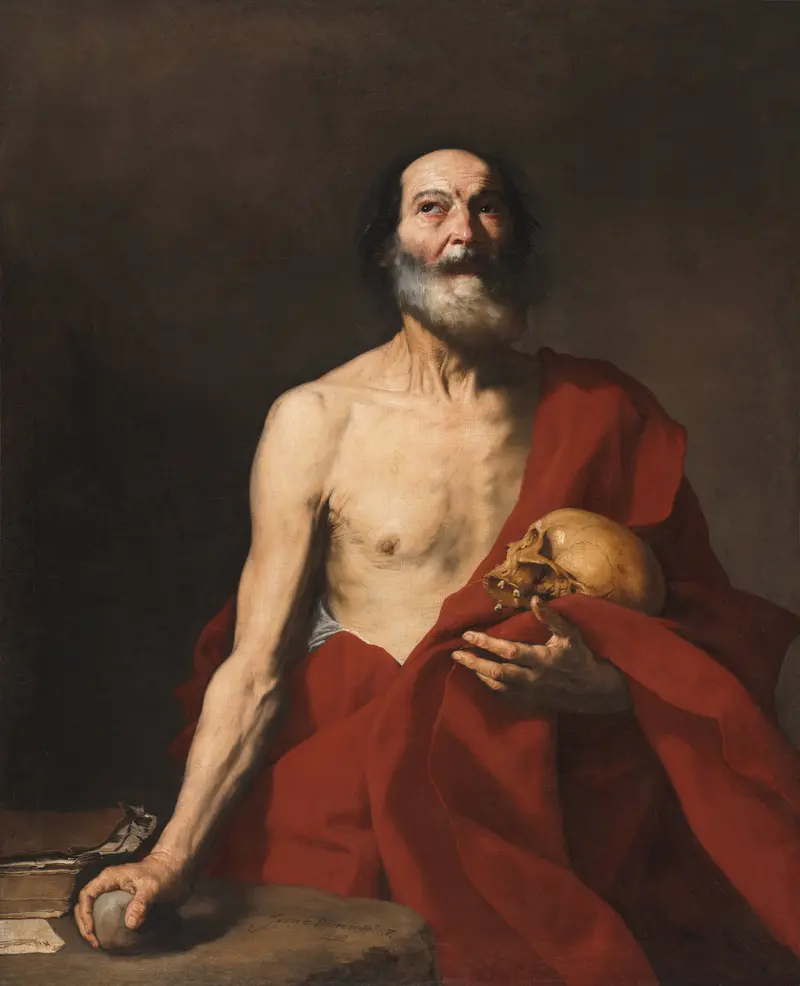
Saint Jerome
Jusepe de Ribera
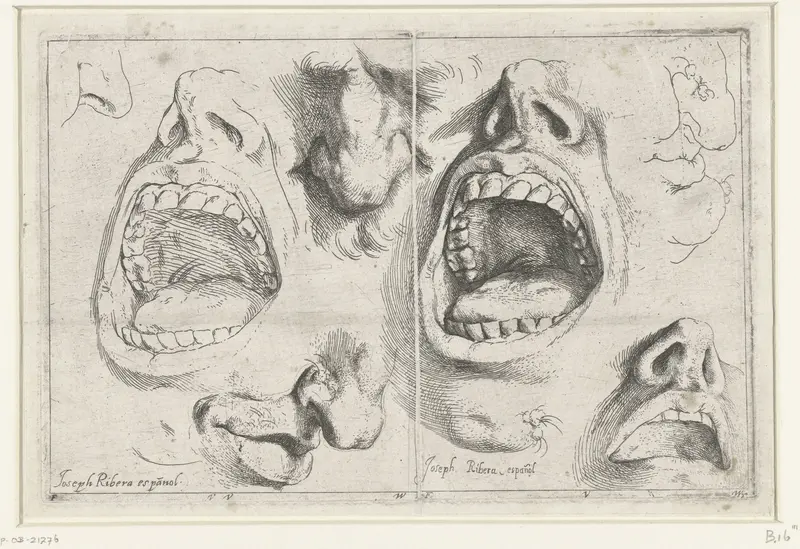
Studies van neus en mond
Jusepe de Ribera
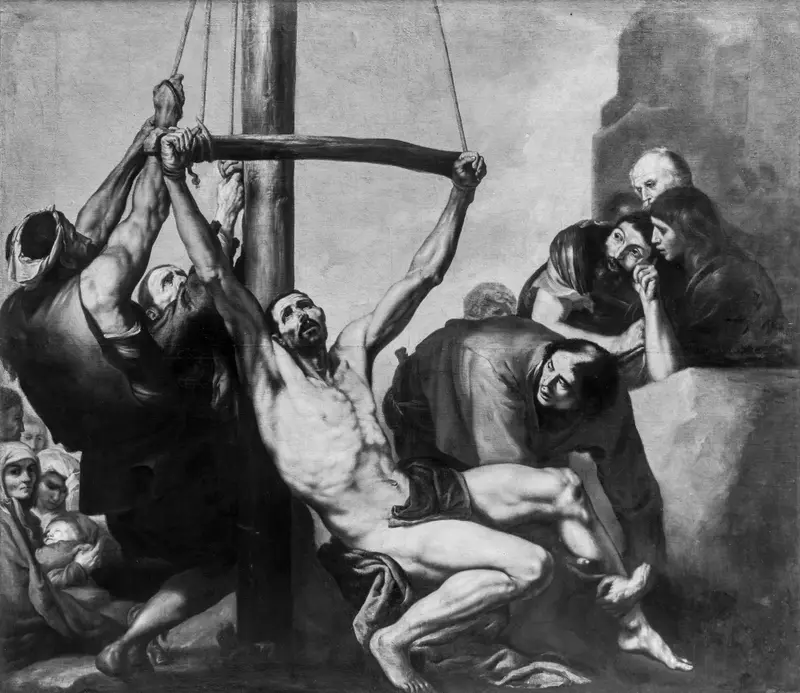
The Martyrdom of Saint Bartholomew
Jusepe de Ribera
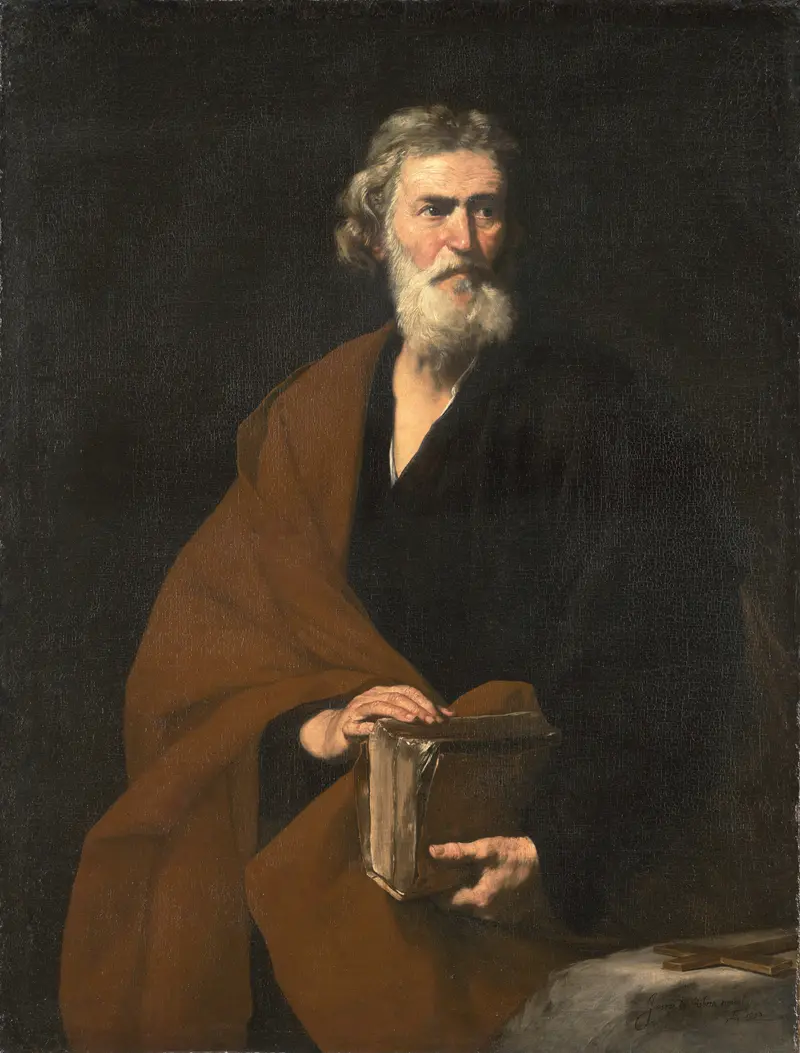
Saint Matthew
Jusepe de Ribera
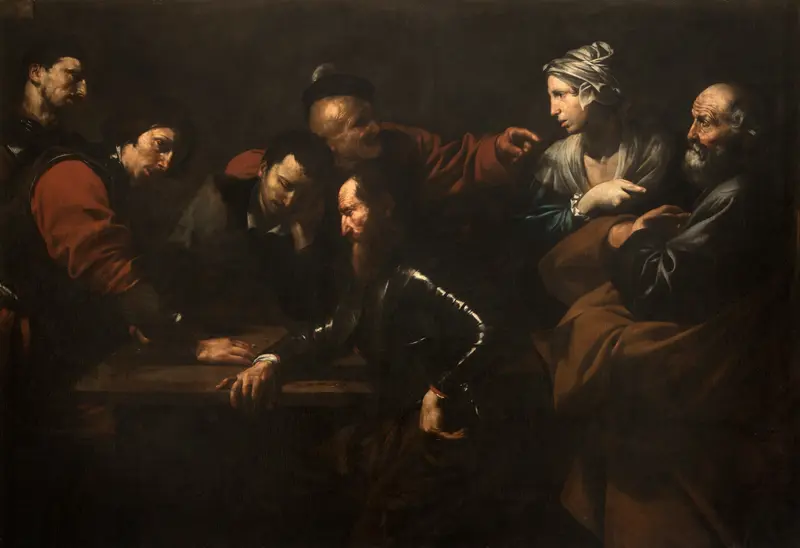
The Denial of Saint Peter
Jusepe de Ribera
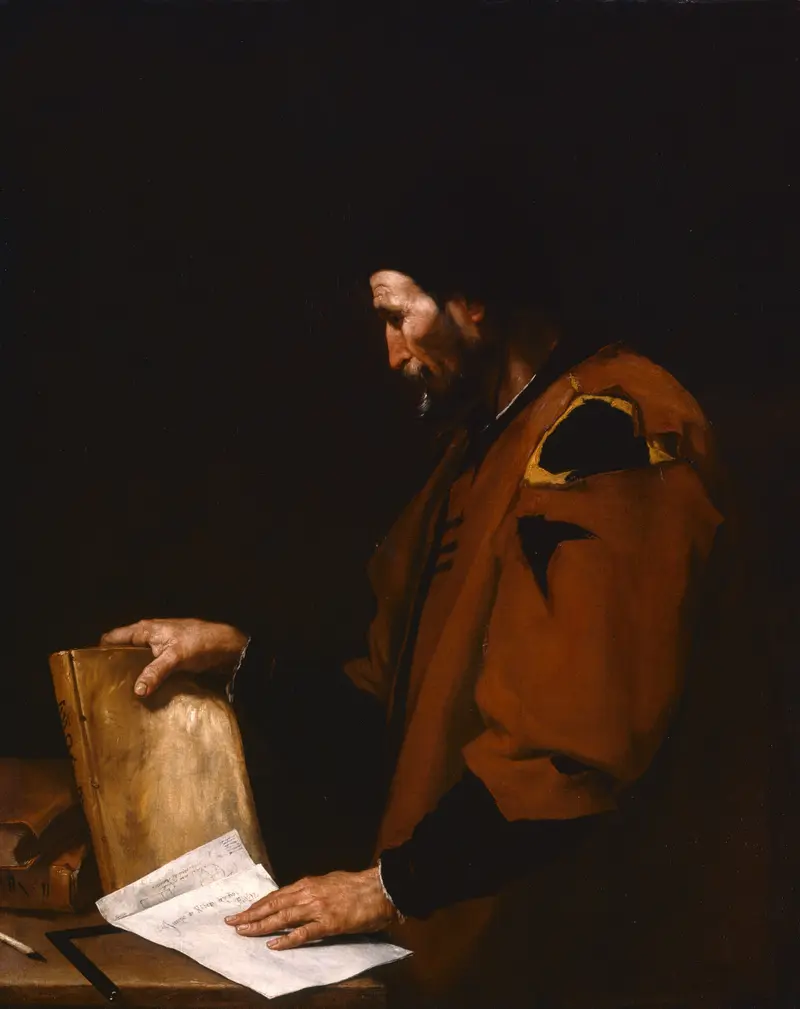
Aristotle
Jusepe de Ribera
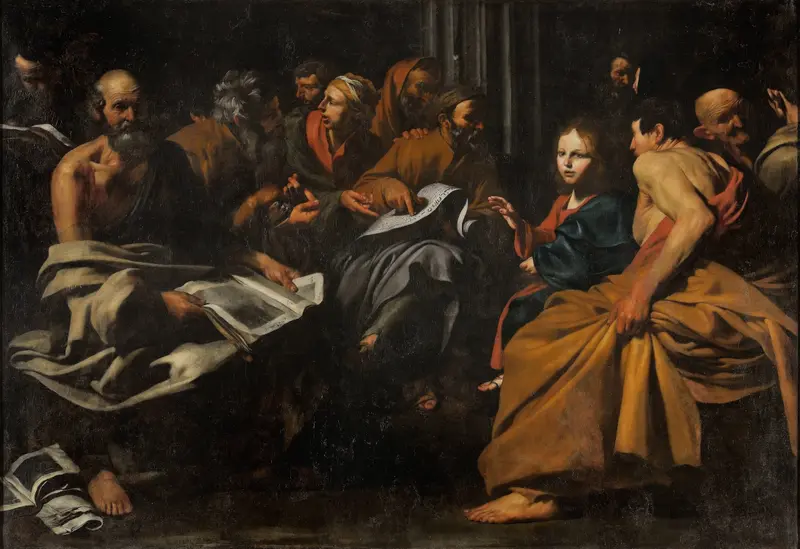
Christ among the doctors
Jusepe de Ribera

Klein grotesk hoofd
Jusepe de Ribera





