Bonelli's Eagle — History & Facts
What first seizes the eye in Bonelli’s Eagle is the bird’s poised alertness, every feather rendered with a precision that almost bristles. The eagle stands on a rocky perch, its talons gripping the surface with a quiet authority, while its head turns slightly, as if catching the scent of prey or surveying its domain. The subtle gradations of brown and cream in the plumage are not just decorative—they guide the viewer’s gaze along the powerful curve of the neck, down to the sharply hooked beak, and finally to the piercing eye that seems to weigh the world.
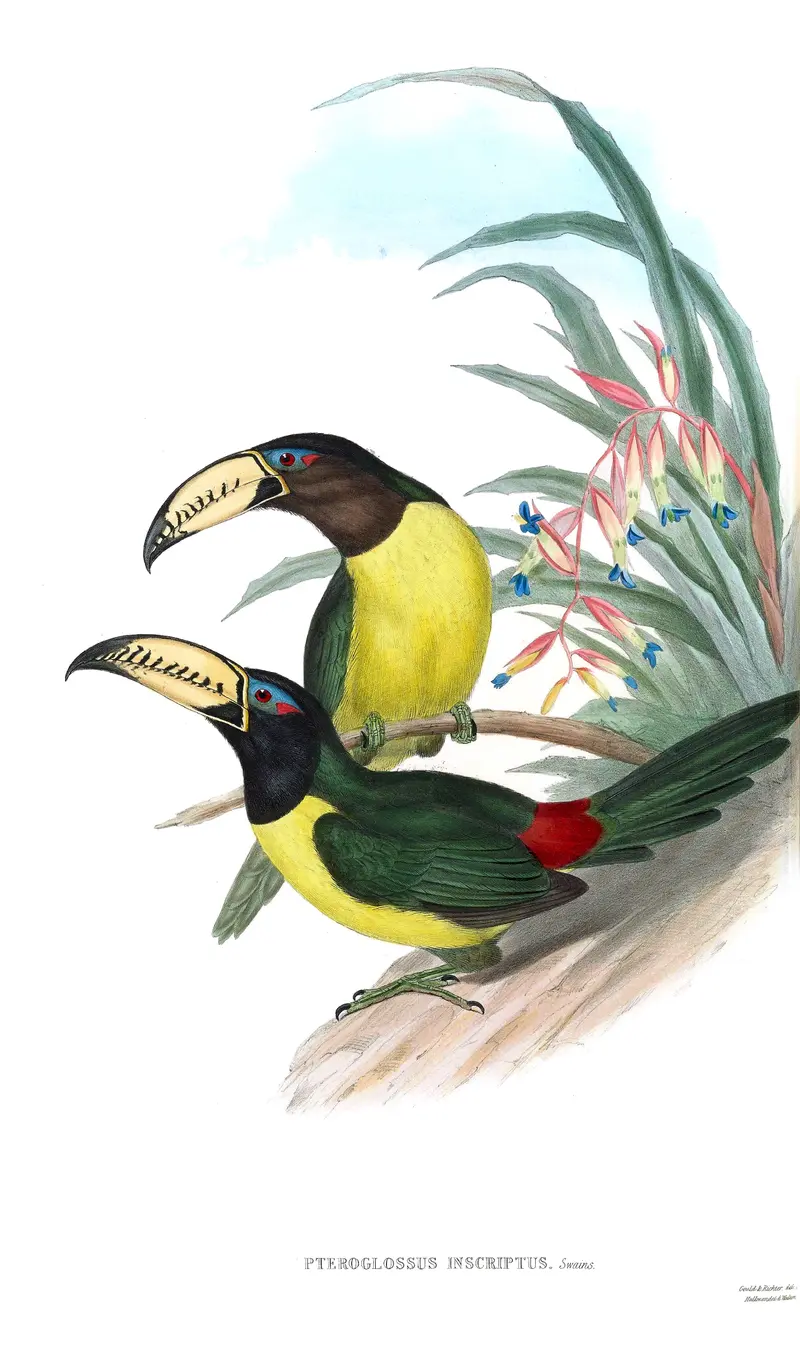
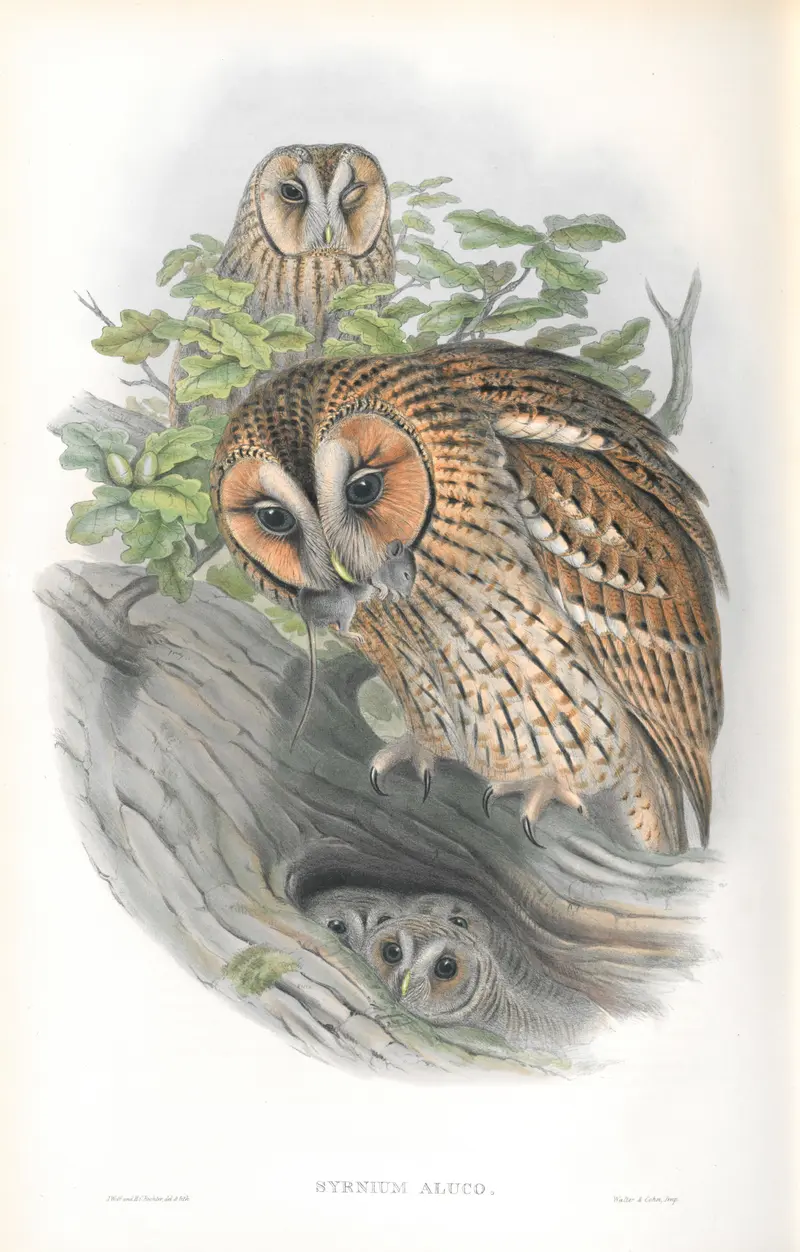
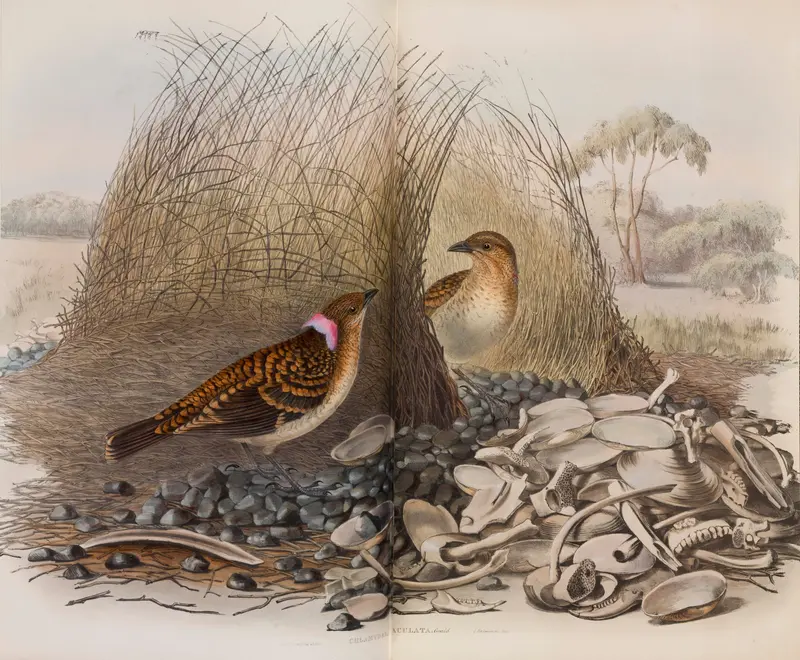
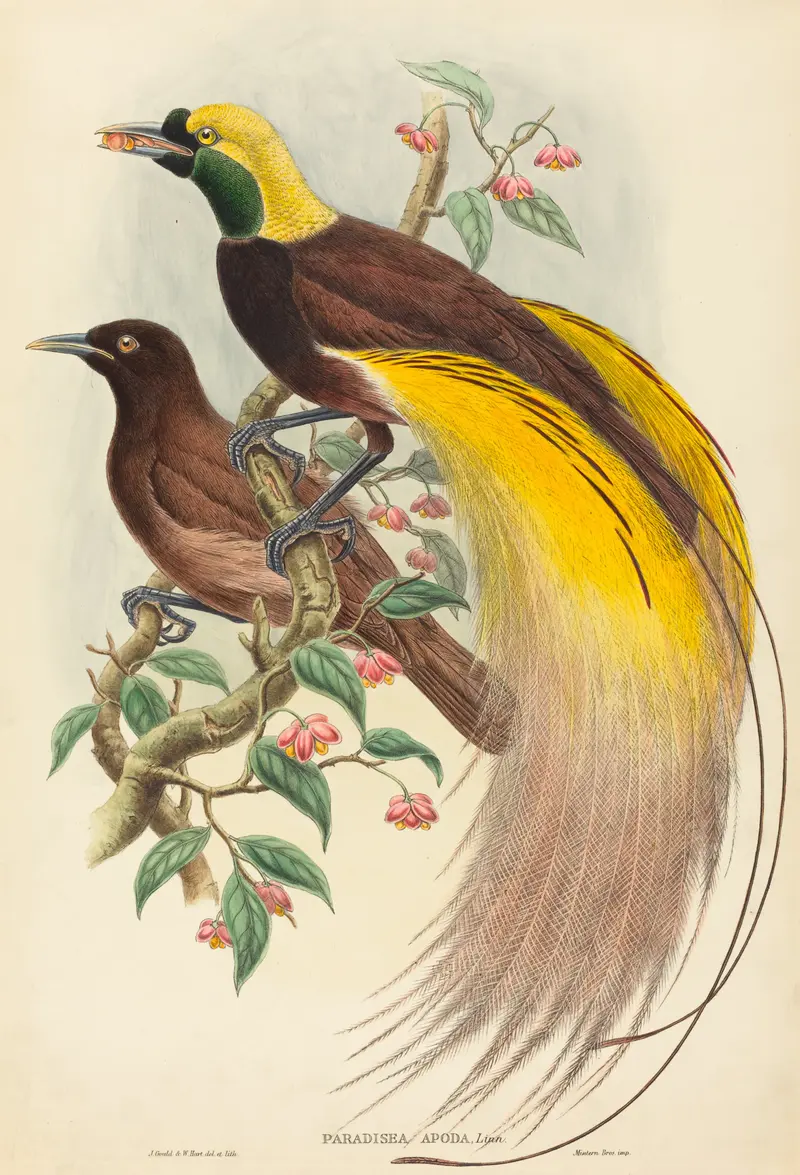
Even the faint, unfinished outlines of distant mountains serve a purpose: they set the eagle apart, making it the undisputed subject, a solitary monarch in a pale, open world. This image belongs to the great flowering of ornithological illustration in the early nineteenth century, when naturalists like John Gould sought to document the birds of Europe with both scientific rigor and artistic ambition. Published in London between 1832 and 1837, Gould’s The birds of Europe was a monumental project, issued in parts for a growing audience of collectors, scholars, and amateur enthusiasts. Such works were not only catalogues of nature but also status symbols and windows onto distant landscapes, at a time when travel was a privilege of the few.
History has kept few traces of the individual copies and their journeys, but the clarity and quiet drama of this eagle remind us why these volumes became treasures in libraries and drawing rooms alike—inviting us, even now, to look closer.