
Bretonne au pardon — History & Facts
In Bretonne au pardon, we see a woman dressed in traditional Breton attire, standing amidst a vibrant festival scene. The colors are rich and warm, with deep reds and earthy tones dominating the composition. The background features a lively crowd, suggesting a communal celebration.
The setting is likely a religious pardon, a traditional Breton festival, which adds cultural significance to the scene. The painting is executed in oil on canvas, a medium that allows for rich texture and depth. Jules Breton's brushwork is detailed, capturing the intricate patterns of the woman's dress and the expressions of those around her. The composition is balanced, drawing the viewer's eye to the central figure while still conveying the bustling atmosphere of the festival.
The use of light enhances the vibrancy of the colors, making the scene feel alive. Jules Breton was a prominent figure in the Realism movement, known for his depictions of rural life and traditional customs. Bretonne au pardon reflects his interest in capturing the essence of Breton culture through art. An interesting fact about this work is that it showcases the importance of community and tradition in Breton society, emphasizing the role of women in these cultural celebrations.
Breton's ability to convey emotion and narrative through his subjects is a hallmark of his artistic style.
More Artworks by Jules Breton

The Song of the Lark
Jules Breton
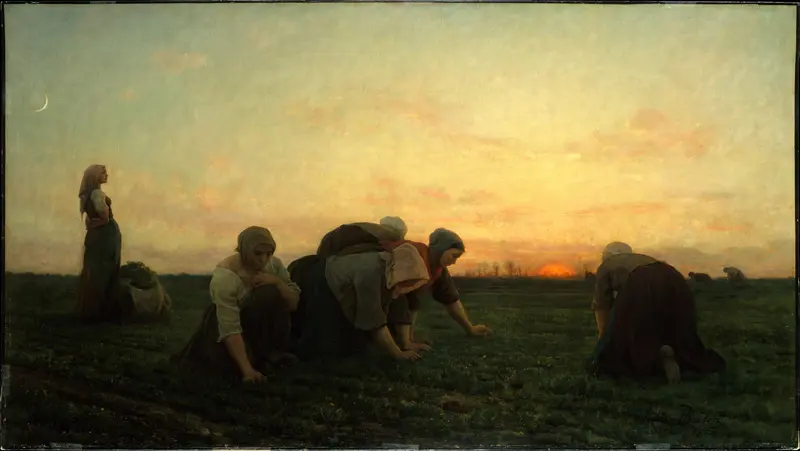
The Weeders
Jules Breton
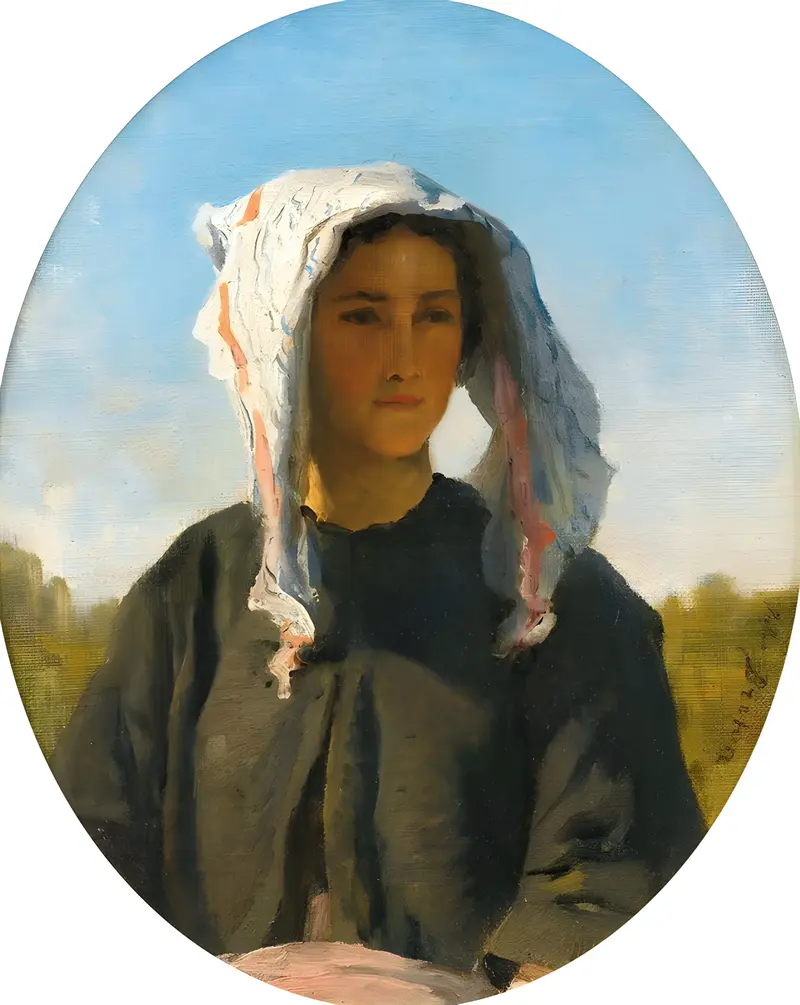
Portrait de jeune Paysanne Bordelaise
Jules Breton
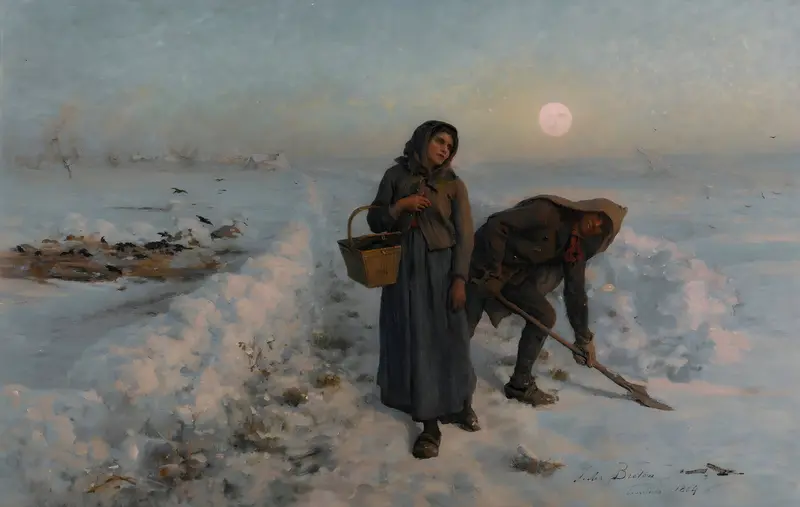
Sur la route en hiver; artois
Jules Breton
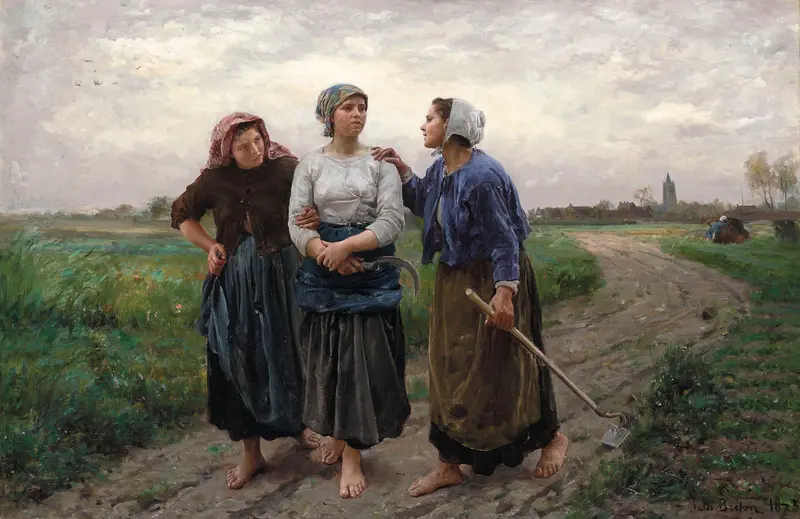
Les amies
Jules Breton
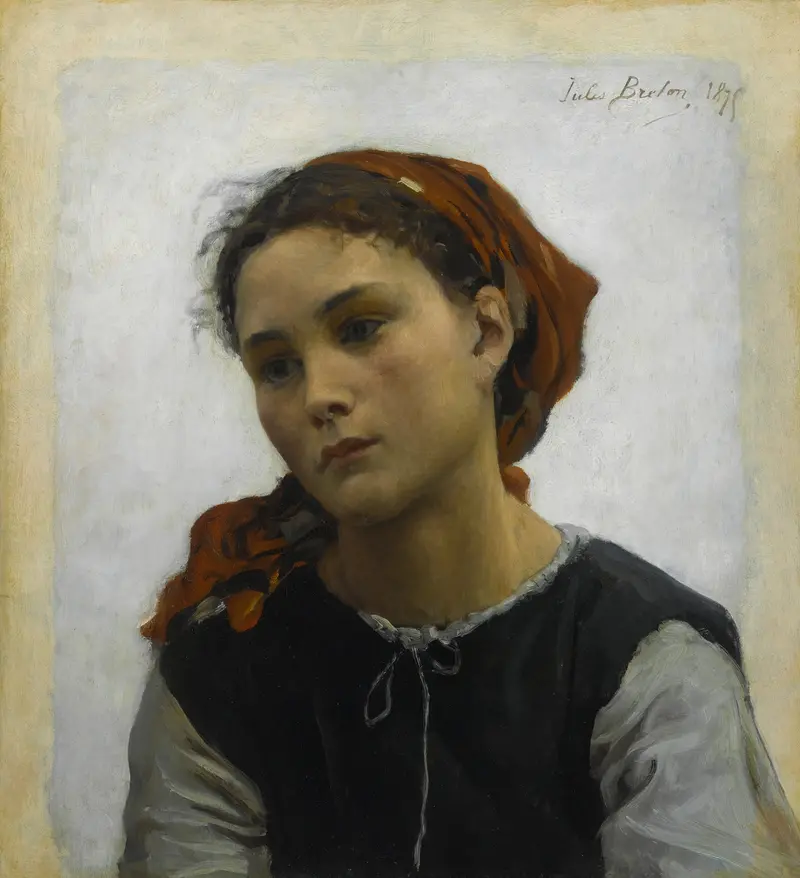
Innocente
Jules Breton
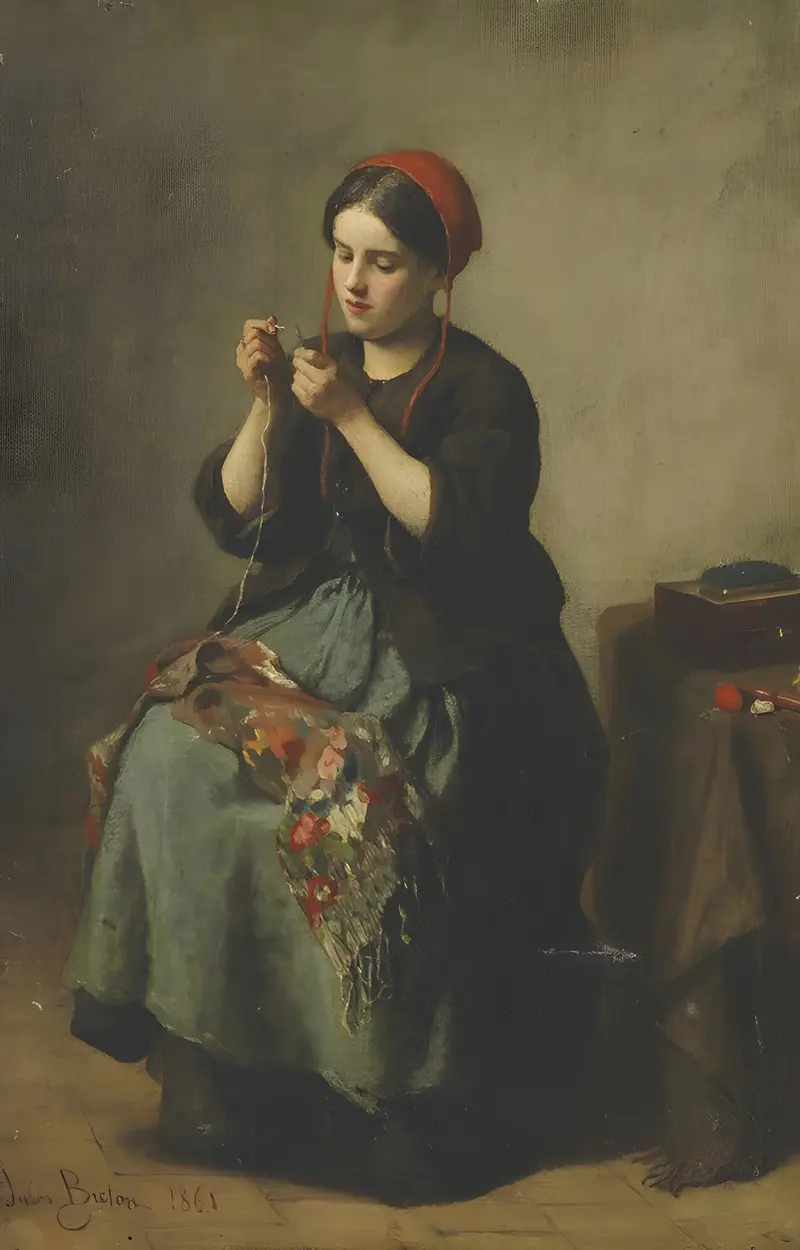
Peasant woman threading a needle
Jules Breton
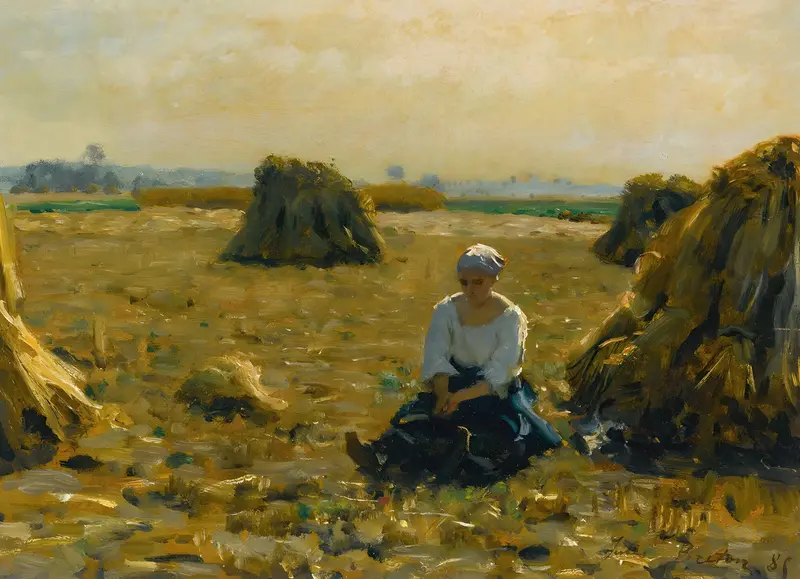
Jeune femme dans les champs
Jules Breton
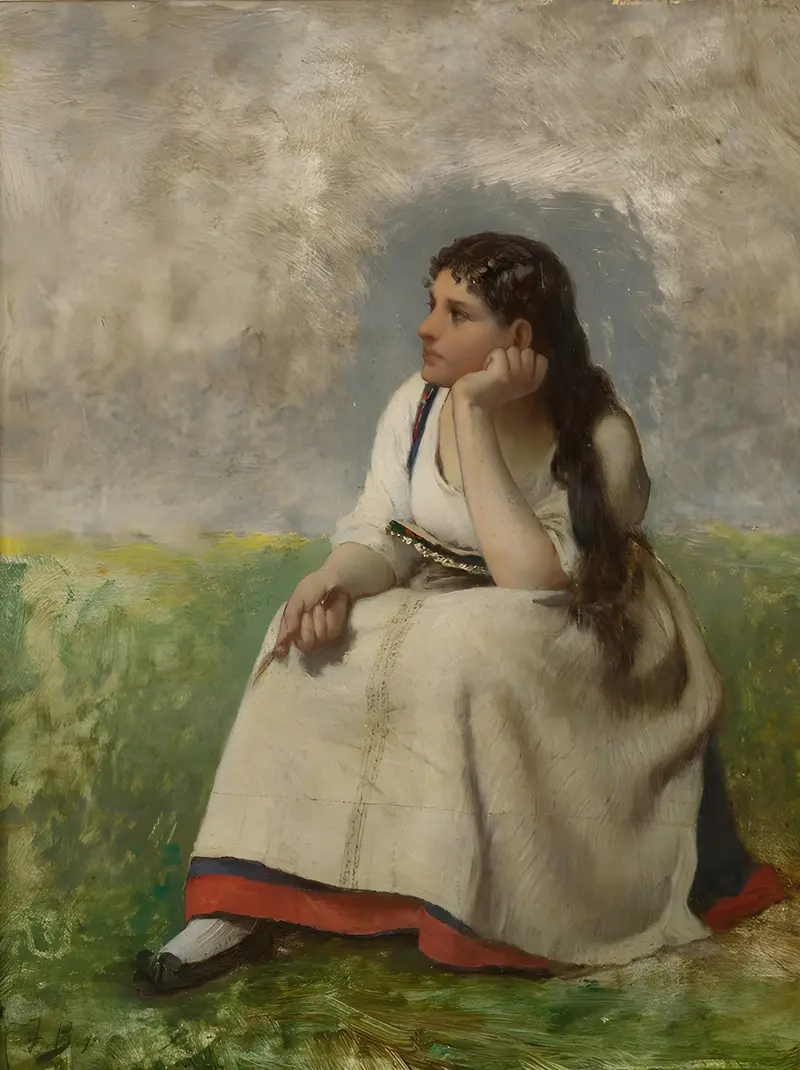
Jeune Fille Pensive
Jules Breton
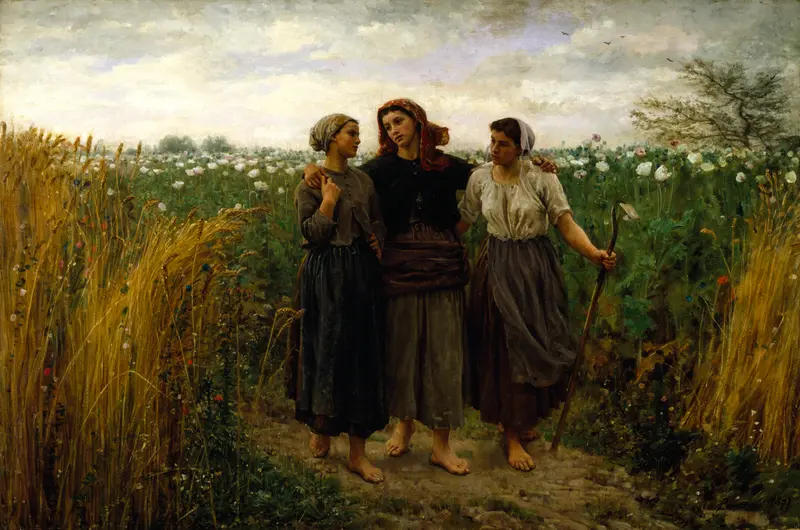
Returning from the Fields
Jules Breton
More Genre Scene Art

Banquet of the Officers of the St George Civic Guard
Frans Hals

Rembrandt and Saskia in the Scene of the Prodigal Son
Rembrandt van Rijn

Bal du moulin de la Galette
Pierre-Auguste Renoir

Quadrille at the Moulin Rouge
Henri de Toulouse-Lautrec

A Burial at Ornans
Gustave Courbet

When Will You Marry?
Paul Gauguin