Brume, vapeur et fumée sur la Tamise — History & Facts
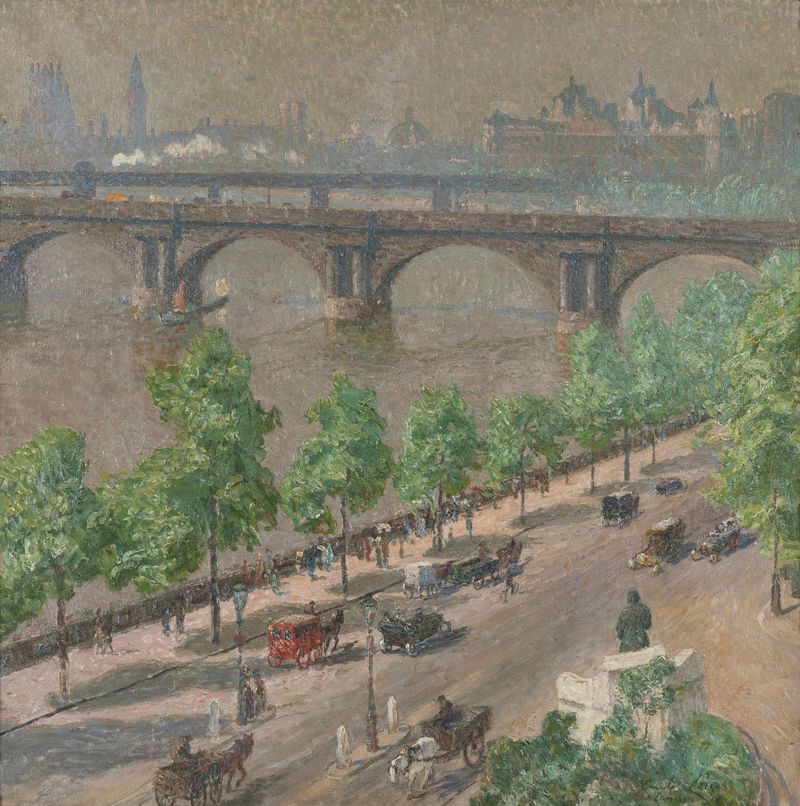
Who listens when art speaks of silence? In Brume, vapeur et fumée sur la Tamise, a haunting stillness envelops the Thames, inviting us to ponder the unseen connections that bind us to our obsessions. Look to the foreground, where gentle waves ripple against the muted colors of the river. The soft palette of grays and blues melds seamlessly with the warm amber of the smoke rising in the distance. Notice how the light filters through the mist, creating a dreamlike quality that obscures the river’s banks, hinting at both beauty and obscurity.
The composition is masterful, with layers of color that evoke a sense of depth, pulling the viewer into this ethereal moment. Within this serene landscape, contrasts emerge—the delicate interplay of tranquility and tension. The ethereal mist symbolizes the impermanence of life, while the lurking shadows hint at the hidden anxieties of the industrial age. It raises questions about our relationship with the natural world, suggesting a struggle between human ambition and nature’s quiet resilience.
These subtle details transform the scene into a meditative reflection on obsession, whether for progress or the essence of life itself. In 1916, Claus was immersed in the art movements of Belgium, balancing his impressionist roots with a growing interest in modernism. This work emerged amidst the tumult of World War I, reflecting not only his personal journey but also the broader societal anxieties of the time. As artists grappled with the chaos of their world, Claus found solace in the calm of a fog-laden river, capturing a moment that resonates with introspection and silence.