
Bruxelles, le canal de l’allée verte — History & Facts
In a world where everything seems ephemeral, the act of capturing movement tranforms mere moments into eternal memories. Look to the center of the canvas, where the canal flows with soft, rippling waves, reflecting the dappled light that dances upon its surface. Notice how the brushstrokes evoke a lively breeze, conveying both the movement of the boats and the whispers of the trees lining the waterway. The palette, a harmonious blend of greens, blues, and soft sunlight, draws us in, inviting us to experience the scene’s serenity and vitality simultaneously. Amidst the tranquility, a subtle tension brews in the juxtaposition of the stillness of nature and the dynamic energy of human activity.
The figures on the banks, engaged in their daily lives, impart a sense of urgency against the calm backdrop—each gesture suggesting stories untold. The gentle contrast between the vibrant colors of the boats and the muted hues of the canal further emphasizes this dance between stillness and movement, capturing a fleeting moment before it slips into memory. Eugène Boudin painted this work in 1872 while living in the vibrant coastal city of Trouville, France. During this period, the artist was deeply immersed in the plein air movement, seeking to capture the natural world with immediacy and sincerity.
As Impressionism began to take hold, Boudin found himself at the forefront of this artistic evolution, focusing on light, atmosphere, and the ephemeral nature of life itself.
More Artworks by Eugène Boudin
Browse all →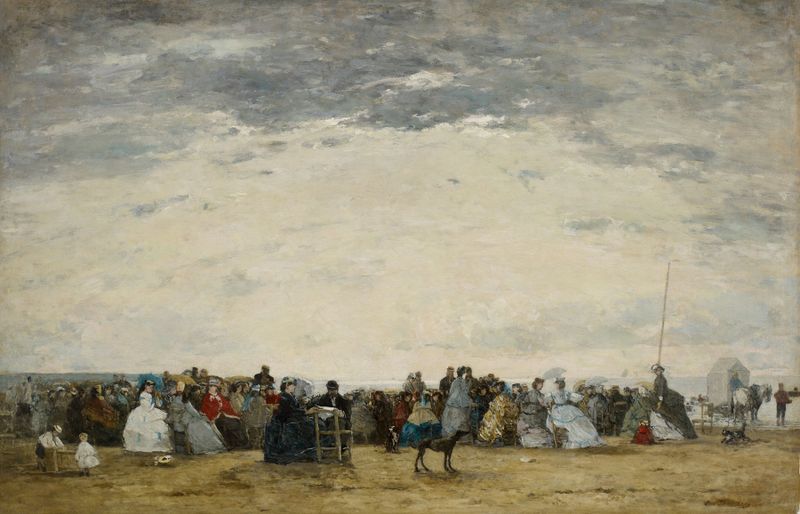
Vacationers on the Beach at Trouville
Eugène Boudin

Washerwoman near Trouville
Eugène Boudin
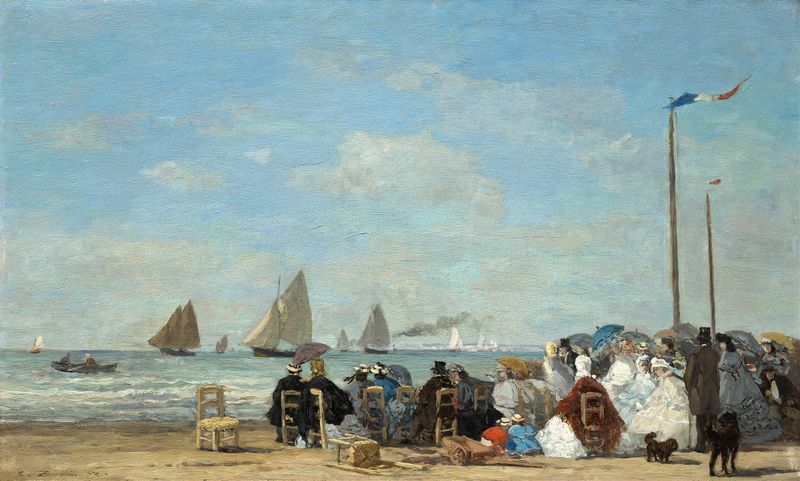
Beach Scene at Trouville
Eugène Boudin

Port aux environs d’Honfleur
Eugène Boudin

Le Faou, un coin du village
Eugène Boudin
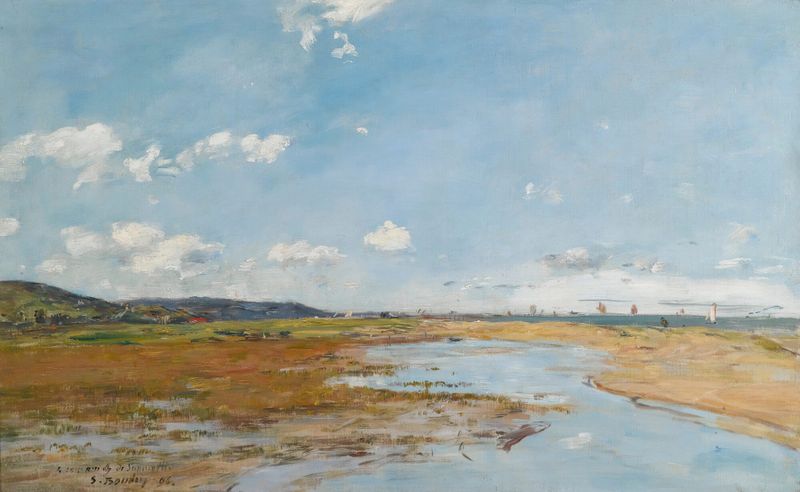
Deauville. Le Rivage
Eugène Boudin
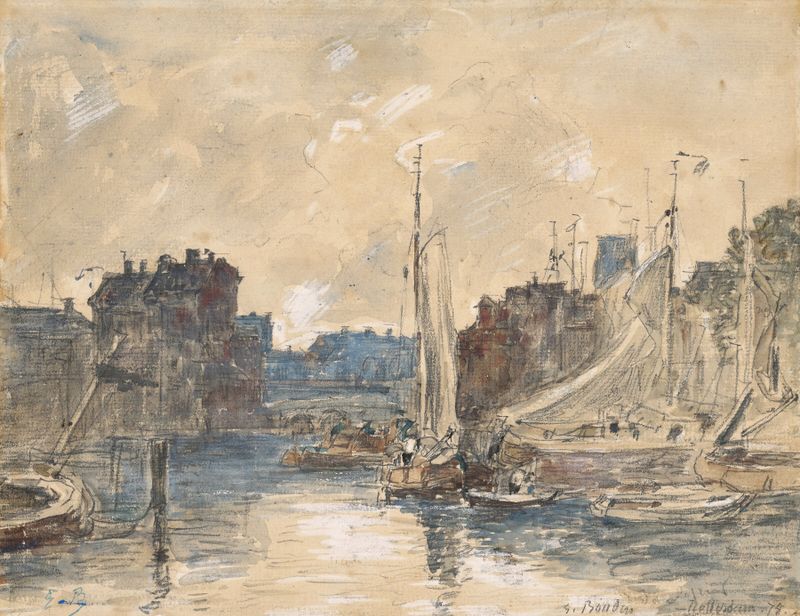
Port de Rotterdam
Eugène Boudin

View of Bordeaux, from the Quai des Chartrons
Eugène Boudin

Trouville, Scène De Plage
Eugène Boudin

Trouville, Le Port
Eugène Boudin





