
Bull in a City Street — History & Facts
A bull stands at the very center of city life, its broad back catching the full weight of the afternoon light, while the rest of the street seems to pause around it. The animal’s gaze meets the viewer’s directly, as if challenging the quiet order of the cobbled lane. A dog sprawls in the foreground, its body relaxed but alert, echoing the tension between domestication and wildness that pulses through the scene.
The painter’s eye for detail is evident in the play of shadow beneath the bull and the crisp geometry of the city’s gabled facades, which rise behind a screen of leafy trees. The palette is rich but restrained, with ochres and greys lending a sense of solidity and calm, while the sky churns with heavy clouds, hinting at the unpredictable nature of both weather and urban life. Painted in 1670, this work belongs to the world of the Dutch Golden Age, when painters like Adriaen van de Velde brought rural animals into urban settings, blurring the lines between city and countryside. Such paintings were prized by a rising merchant class eager to display both their civic pride and their connection to the land.
The careful staging of the bull—neither rampaging nor docile, but simply present—reflects a society negotiating its own balance between progress and tradition. Today, the painting resides in the collection of the Detroit Institute of Arts, a quiet testament to a time when the city street could be a stage for both human and animal drama. The bull’s steady gaze invites you to linger, to imagine what might happen next in this moment of uneasy peace.
More Artworks by Adriaen van de Velde

Staande stier
Adriaen van de Velde
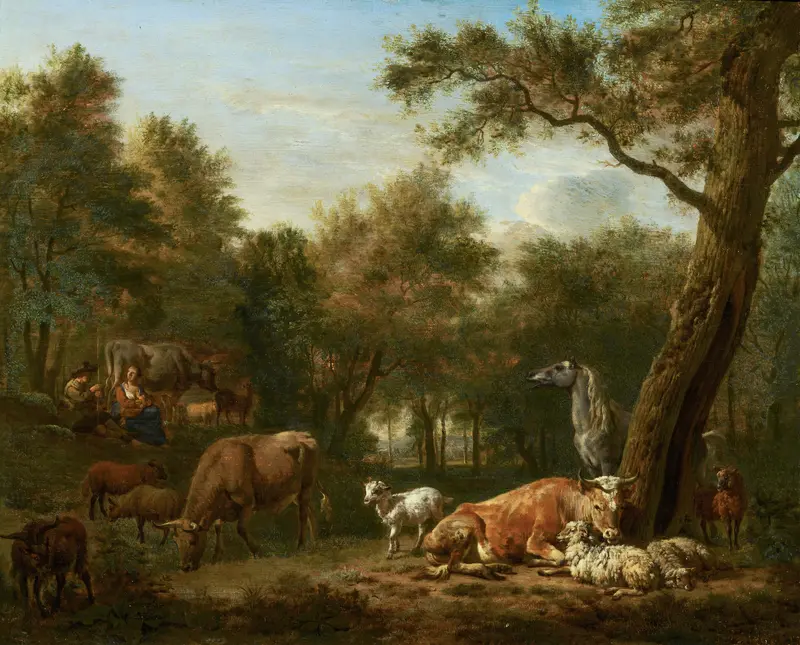
Wooded Landscape with Cattle
Adriaen van de Velde
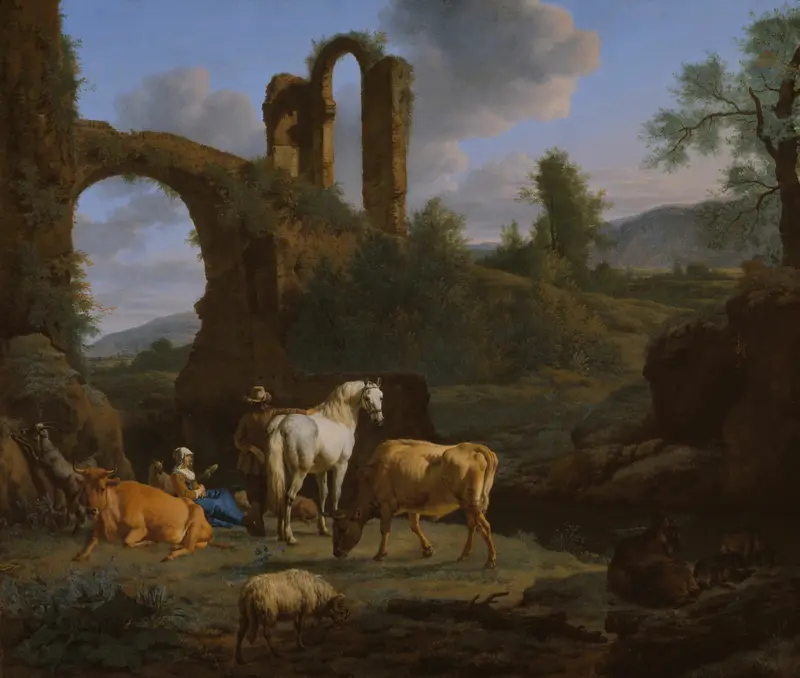
Pastoral Landscape with Ruins
Adriaen van de Velde
Pastoral Landscape with Ruins
Adriaen van de Velde
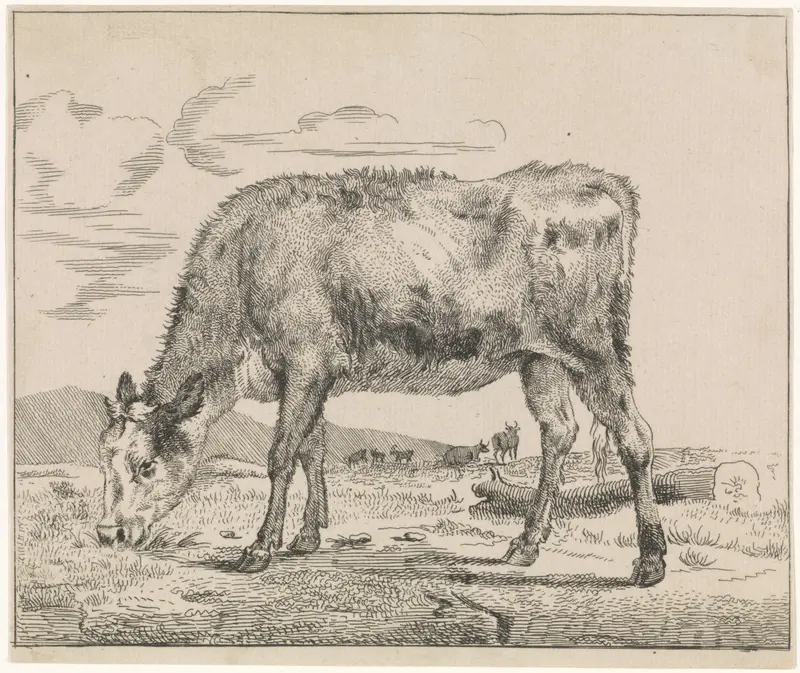
Grazend kalf
Adriaen van de Velde
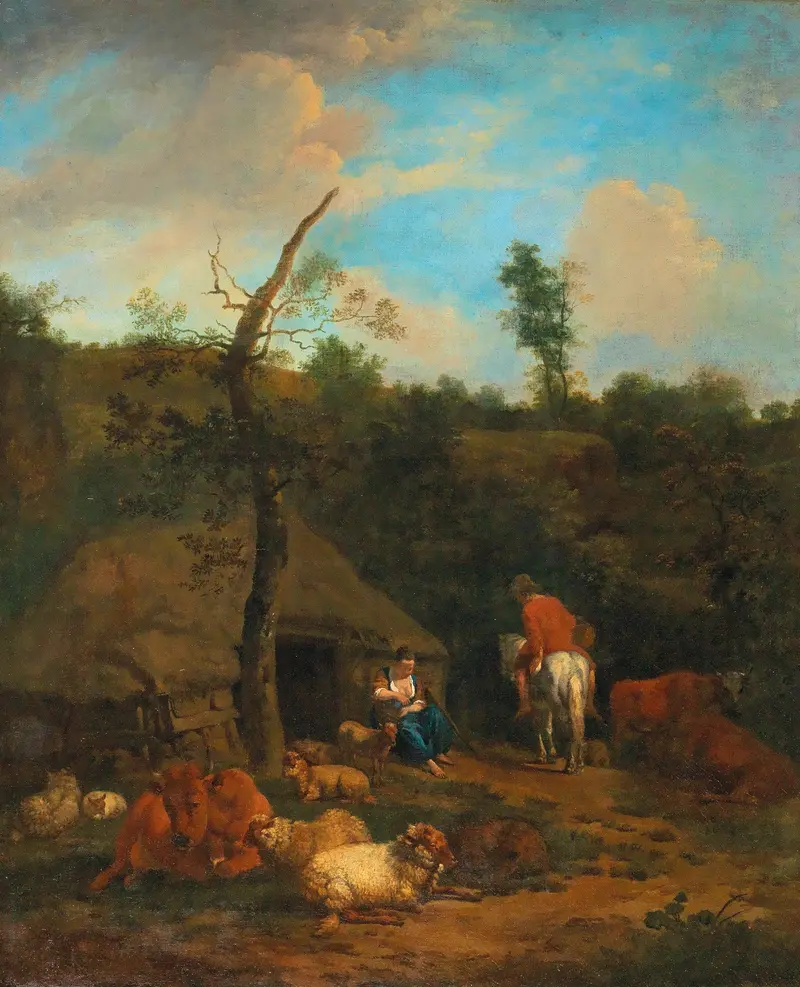
A herdsman and a shepherdess in front of a wooden farmhouse
Adriaen van de Velde
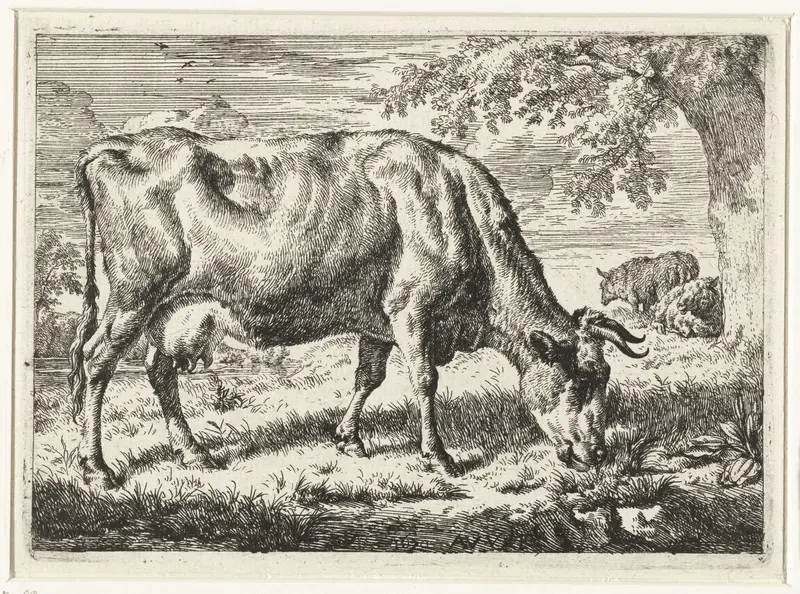
Grazende koe en twee schapen
Adriaen van de Velde
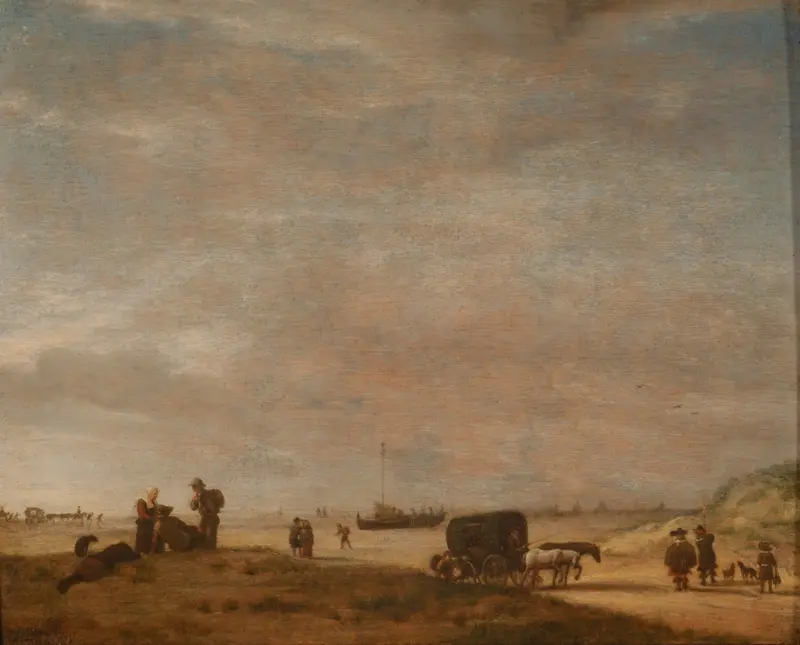
Scheveningen Beach
Adriaen van de Velde
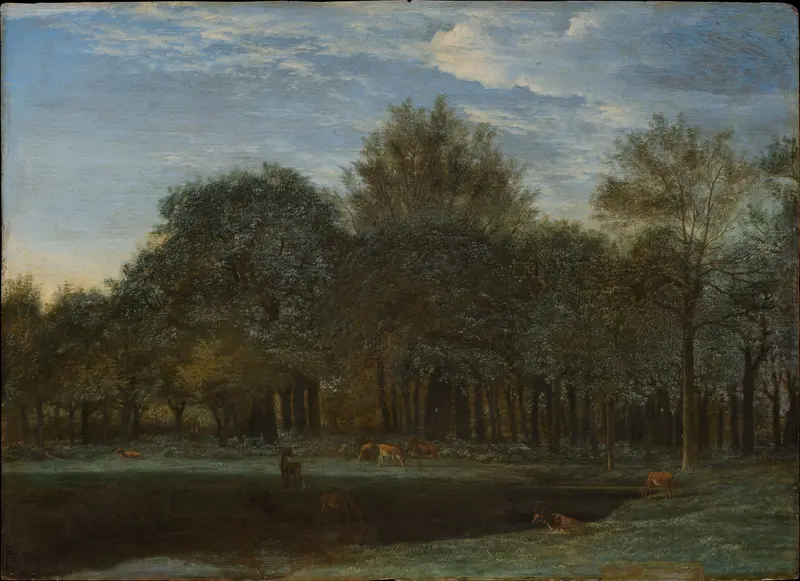
Forest Clearing with Grazing Deer
Adriaen van de Velde
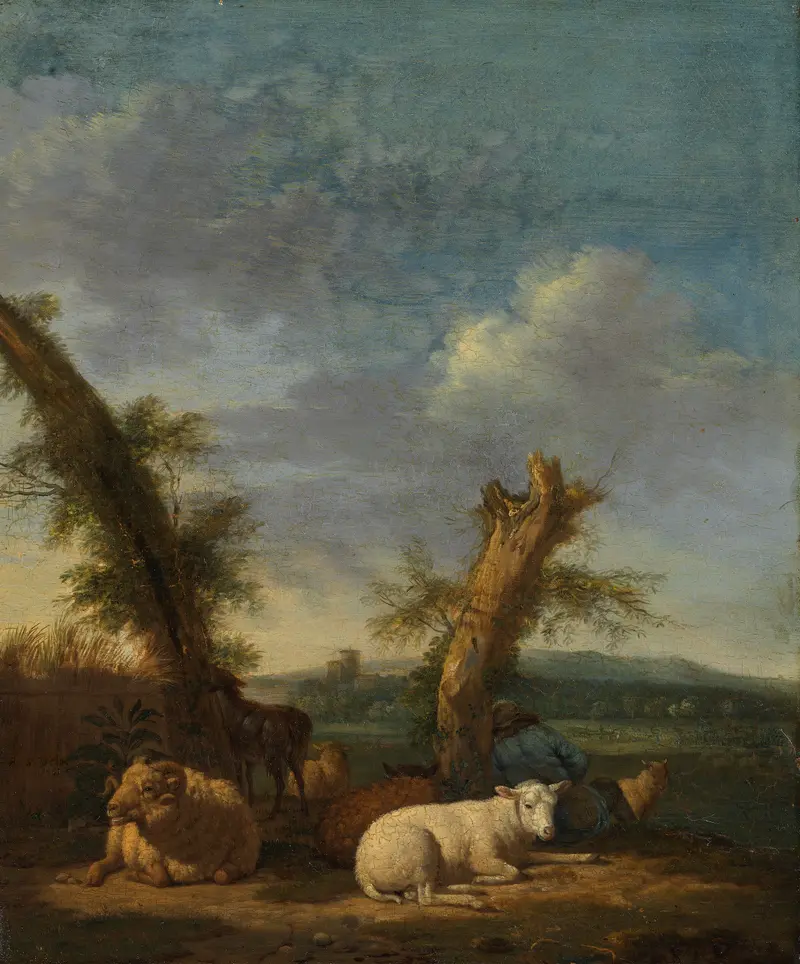
Landscape with Sheep and a Sleeping Shepherd
Adriaen van de Velde





