
Busy Harbour — History & Facts
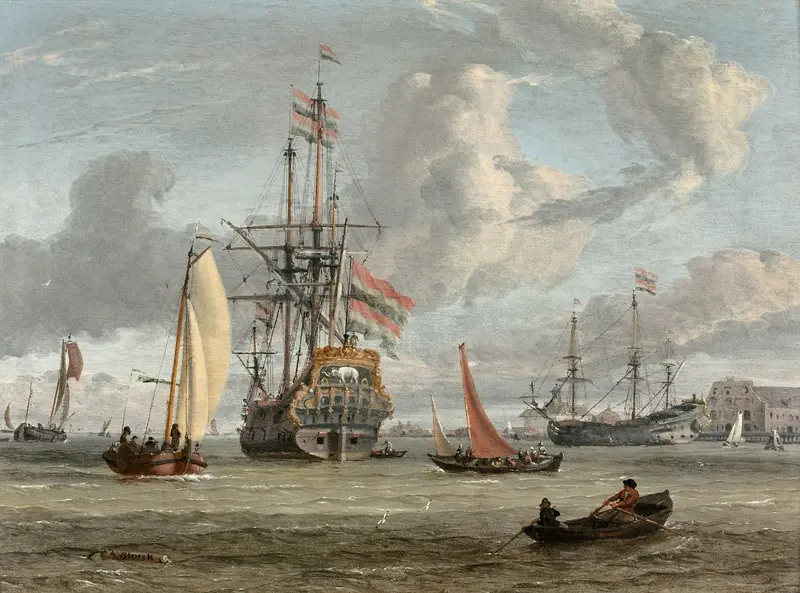
A sky full of billowing clouds stretches above a harbor alive with movement, where the bustle of commerce and daily life unfolds in careful detail. The eye is drawn first to the crisp white sails catching the light, then to the proud Dutch flags fluttering atop every mast—a signal of national pride and maritime dominance. On the shore, a horse-drawn cart rolls steadily past, its passengers deep in conversation, while fishermen and dockworkers go about their business at the water’s edge, their gestures and poses anchoring the scene in the rhythms of work and trade.
The palette is cool and luminous, with soft blues and gentle earth tones that lend the busy port a sense of calm order, even as so many stories cross paths in a single frame. Painted by Abraham Storck around 1690, Busy Harbour belongs to a world where Dutch seaports were the engines of a global trading empire. Scenes like this were prized by merchants and burghers who commissioned such works to celebrate prosperity, commemorate a favorite view, or simply to bring the energy of the waterfront into their homes. The Vallejo Gallery’s record places this example firmly in the late seventeenth century, a time when painters like Storck specialized in capturing the interplay between sea, sky, and the ever-changing life of the harbor.
History has kept few traces of this particular canvas’s journey, but its lively surface invites us to imagine ourselves standing on that shore, watching the ships come and go.
More Artworks by Abraham Storck

The Muscovite legation visiting Amsterdam, 29 August 1697
Abraham Storck
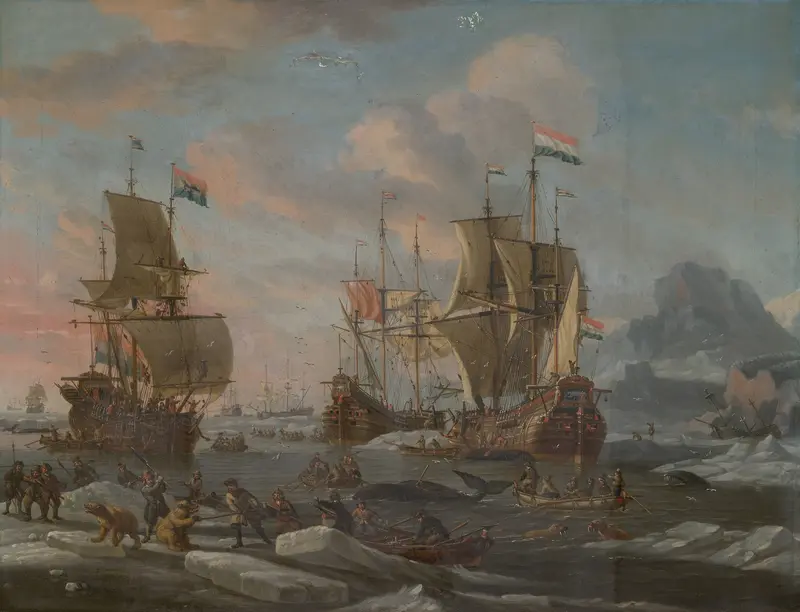
The Dutch Whaling Fleet
Abraham Storck
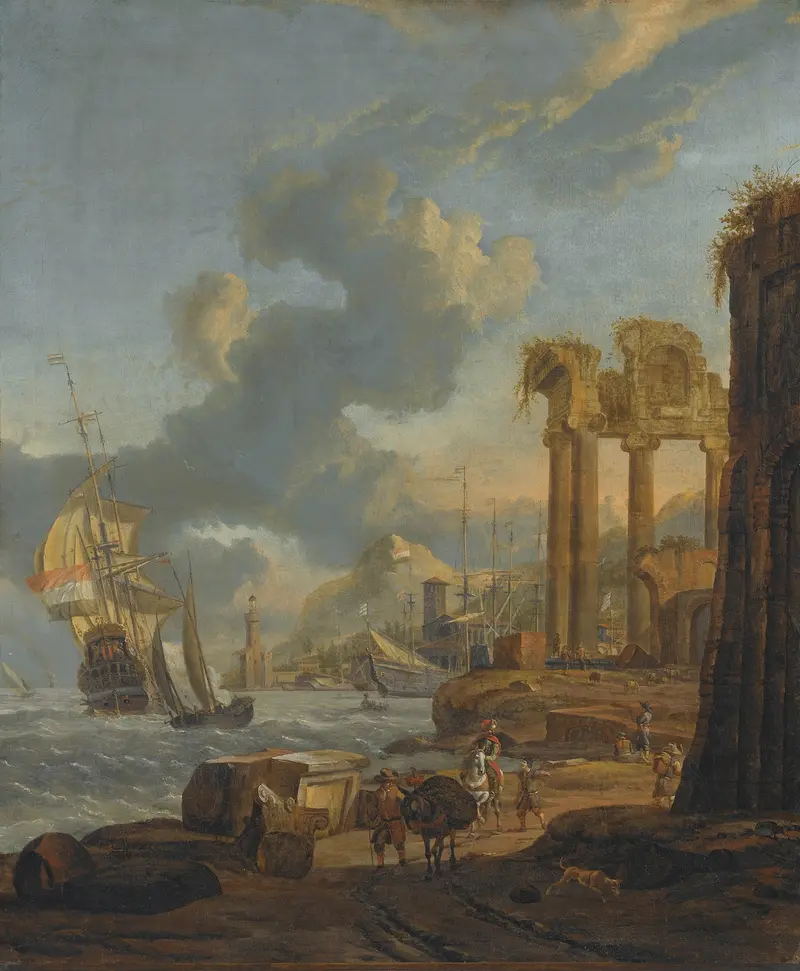
A Mediterranean Harbour Scene With Travellers On The Shore, A Dutch Man-Of-War On The Left
Abraham Storck
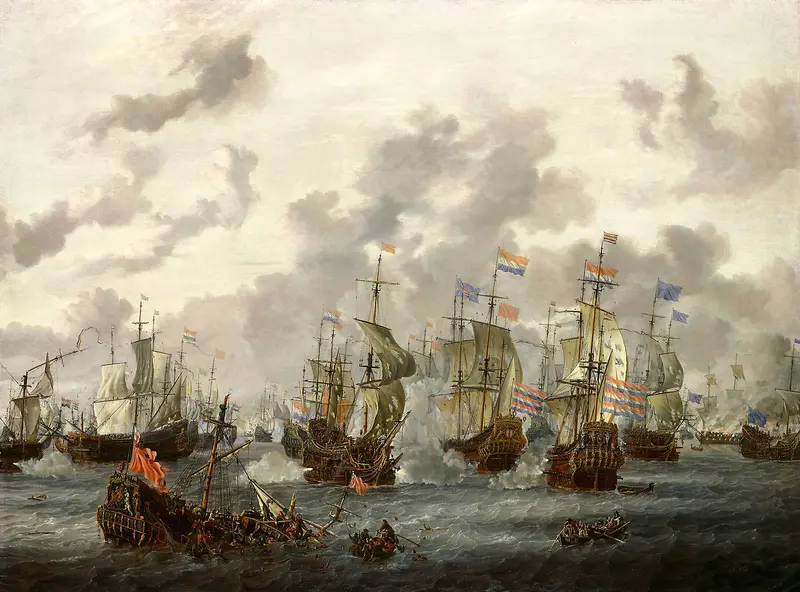
The Four Days’ Battle
Abraham Storck
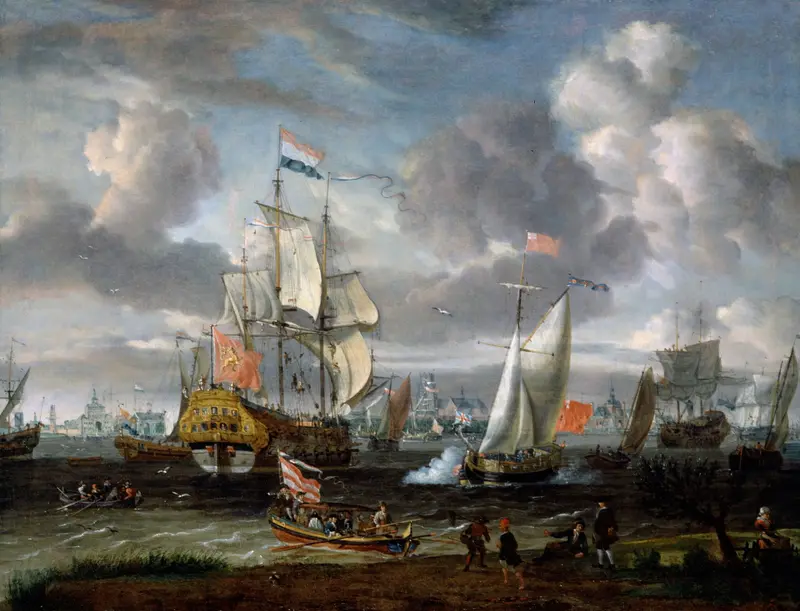
An English Yacht saluting a Dutch Man-of-War in the port of Rotterdam
Abraham Storck
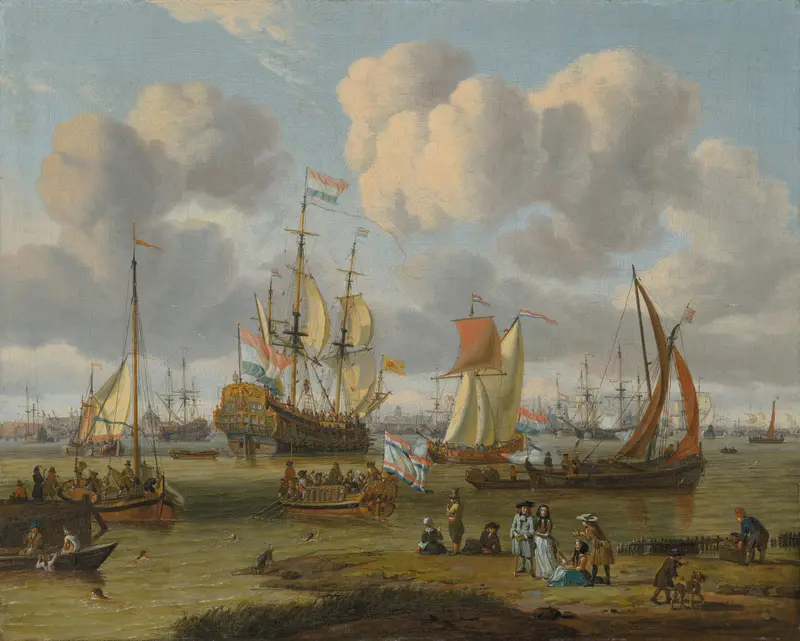
Shipping off Amsterdam with figures on a quay
Abraham Storck
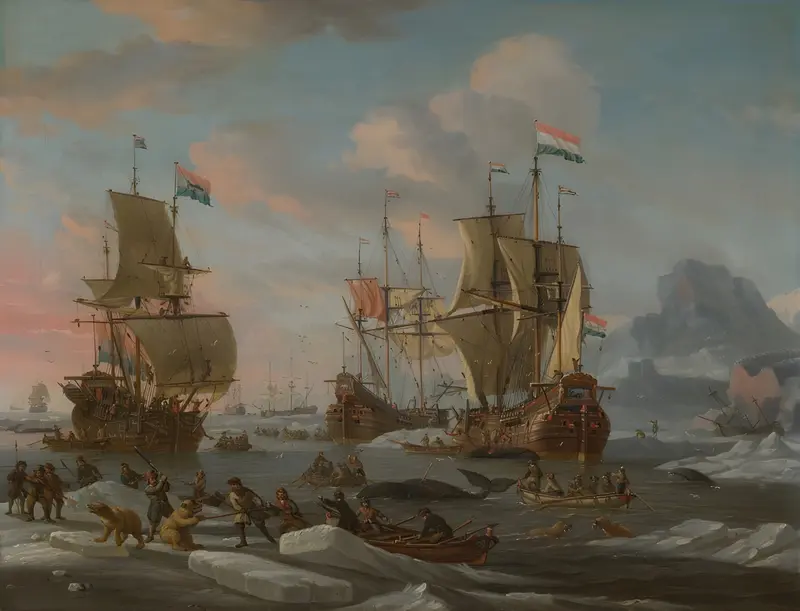
The Dutch Whaling Fleet
Abraham Storck
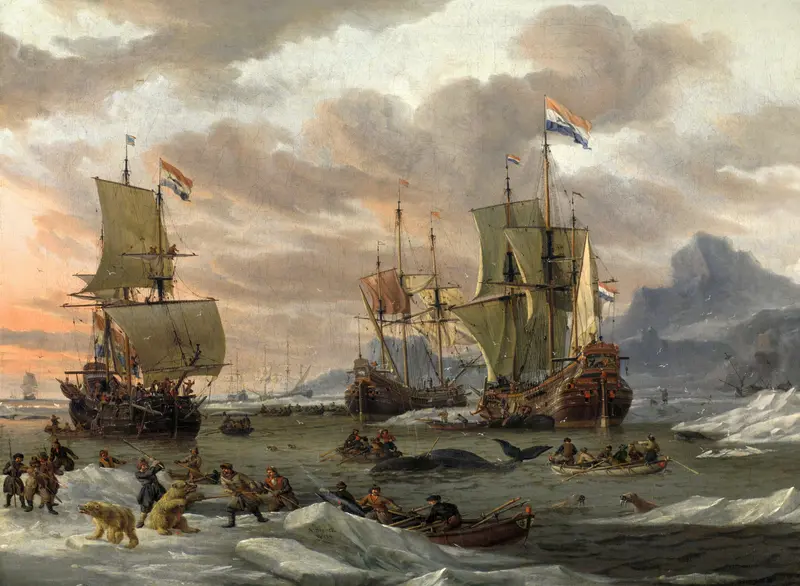
Whaling Grounds in the Arctic Ocean
Abraham Storck
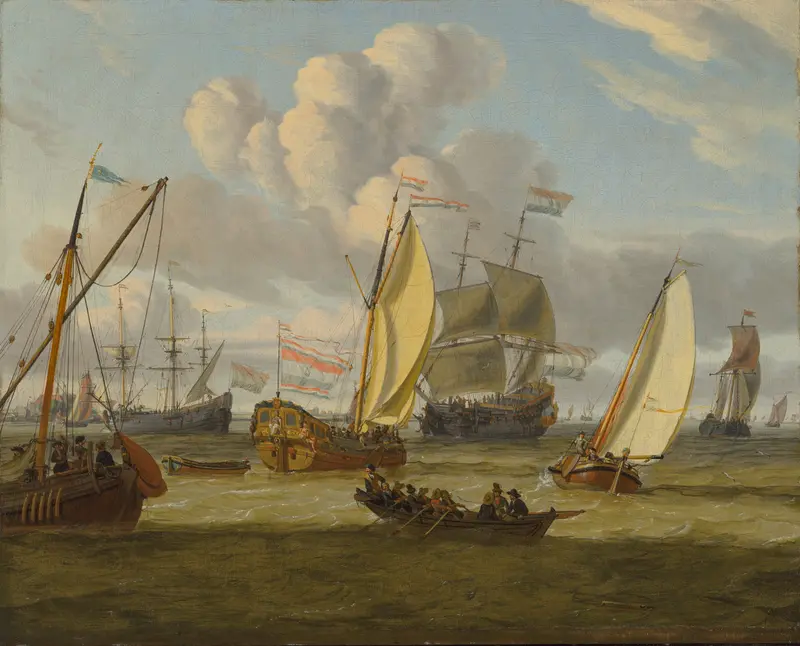
Shipping in an estuary
Abraham Storck
Grand navire de la couronne du Danemark près d’un littoral
Abraham Storck





