
Cabanon près des Colettes — History & Facts
What if silence could speak through light? In Cabanon près des Colettes, the stillness of a sun-drenched afternoon whispers stories of tranquility and legacy, captured in the brushstrokes of a master. Look to the left at the small, rustic cabin nestled among the lush greenery; it invites you into a world where time seems to pause. The delicate play of light and shadow dances across the textured surface, revealing warm hues of ochre and soft greens that evoke a sense of peace. Notice how the light filters through the trees, creating an almost ethereal glow that softens the edges of the composition, inviting an intimate connection to the landscape. Delve deeper into the contrasting elements at play; the sturdy, earthy cabin juxtaposed against the fluidity of nature embodies a tension between permanence and transience.
The interplay of light signifies not just the beauty of the scene, but also a fleeting moment in time—a reminder of the impermanence of life. This piece resonates with the weight of Renoir’s legacy, as it reflects both his distinctive Impressionist technique and the serenity that often eluded him in his later years. Created in 1916 in the south of France, this painting came during a tumultuous time, both in the world and in Renoir's personal life. By then, he had faced significant health challenges, yet his passion for capturing beauty remained undeterred.
The artwork stands as a testament to his enduring spirit and dedication to the art form, encapsulating the quiet strength found in simplicity and legacy.
More Artworks by Pierre-Auguste Renoir
Browse all →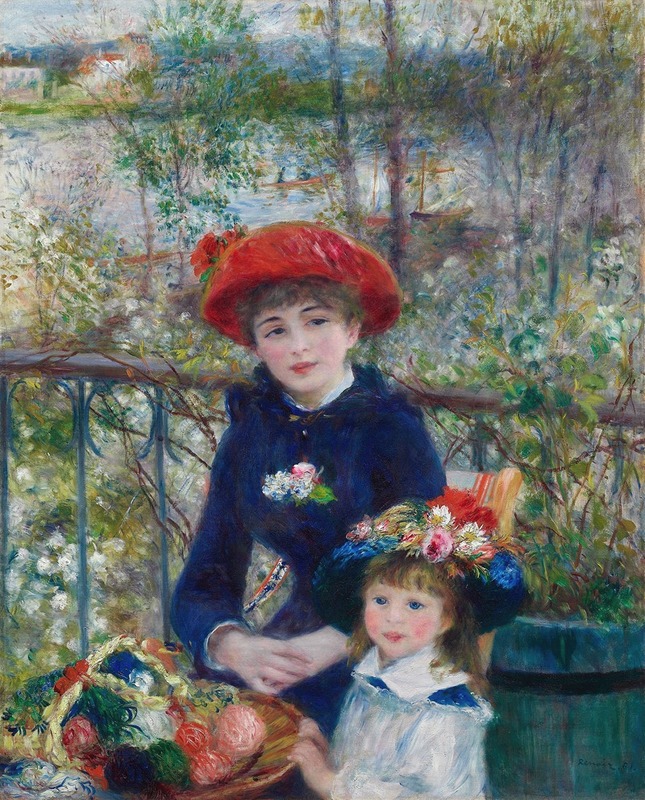
Two Sisters (On the Terrace)
Pierre-Auguste Renoir
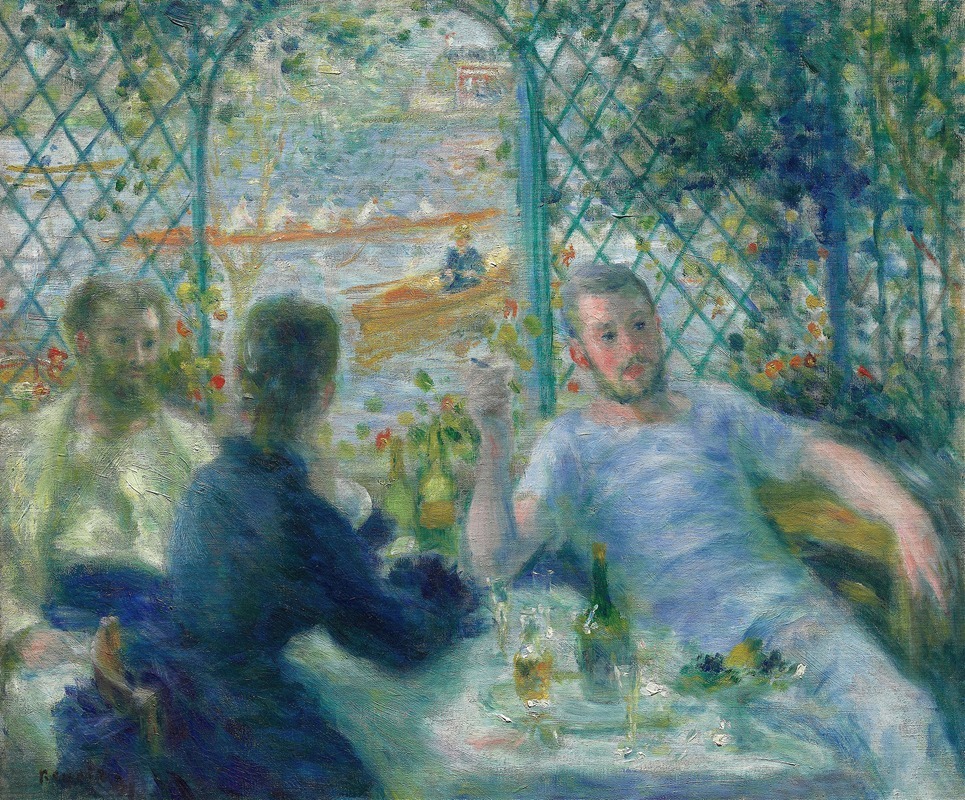
Lunch at the Restaurant Fournaise (The Rowers' Lunch)
Pierre-Auguste Renoir
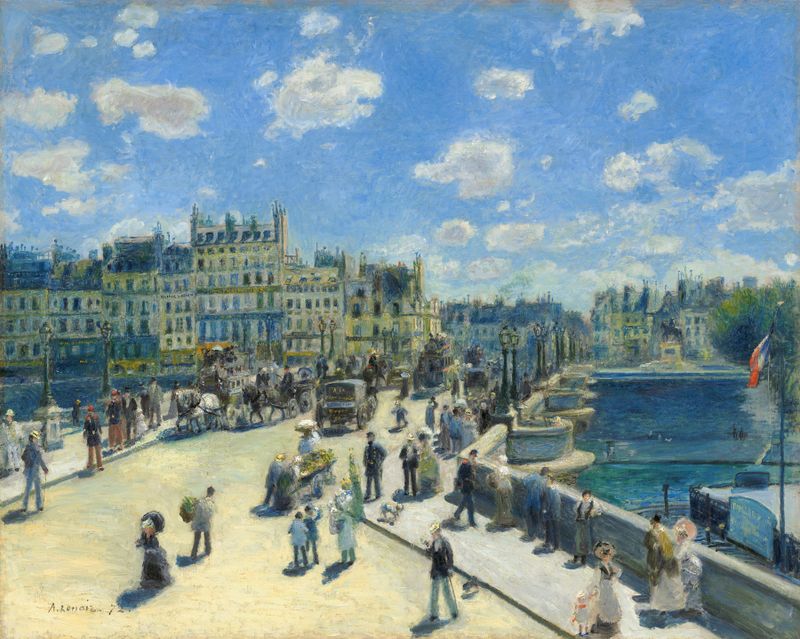
Pont Neuf, Paris
Pierre-Auguste Renoir
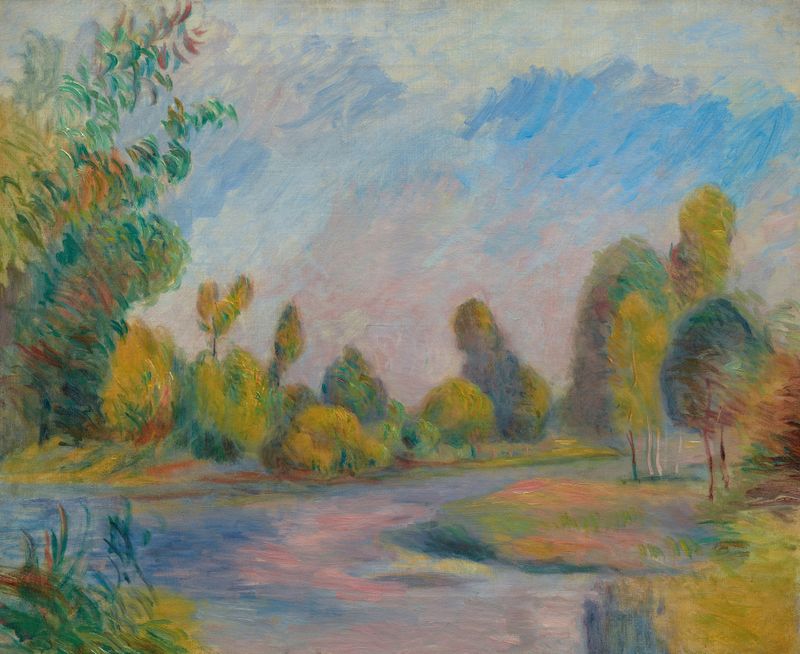
Au bord de la rivière
Pierre-Auguste Renoir

Near the Lake
Pierre-Auguste Renoir
The Mussel Harvest
Pierre-Auguste Renoir

The Seine at Chatou
Pierre-Auguste Renoir
La Grenouillère
Pierre-Auguste Renoir
In Brittany (En Bretagne)
Pierre-Auguste Renoir
Paysage d’Essoyes
Pierre-Auguste Renoir





