
Caernarvon Castle — History & Facts
Can beauty exist without sorrow? The ancient stones of Caernarvon Castle rise defiantly against time, whispering secrets of an era long past, echoing the obsession of those who built and defended it. Look to the left at the weathered, gray stones, intricately detailed with age, which form the imposing structure of the castle. The artist masterfully plays with light, as warm sunlight bathes the castle's battlements, creating a striking contrast with the deep shadows that cling to its base. Notice how the clouds loom heavy above, mirroring the fortress's weighty presence, while the soft greens of the surrounding landscape breathe life into the scene, inviting contemplation of the relationship between nature and human endeavor. Burr captures the tension between permanence and transience, evoking a sense of nostalgia for the past even as the castle stands resilient.
The interplay of light and shadow speaks to the duality of existence—beauty both cloaked in mystery and burdened by history. Each brick, laden with stories, reflects an obsession with legacy and dominance that perhaps ultimately leads to isolation, resonating with the viewer on an emotional level. In 1899, while creating this work, the artist inhabited a world defined by the turn of the century’s shifting artistic movements. Burr was in the midst of his exploration of American landscapes and historic sites, often found in rural Pennsylvania, where the interplay of nature and man’s creation became a defining theme.
This particular piece reflects a period when artists were increasingly drawn to the romanticism of the past, marking a moment of both admiration and introspection in a rapidly changing world.
More Artworks by George Elbert Burr
Browse all →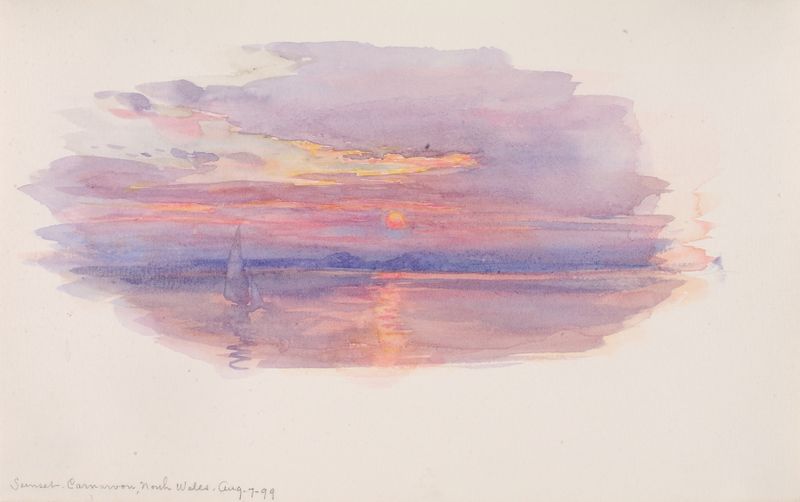
Sunset, Caernarvon, North Wales
George Elbert Burr
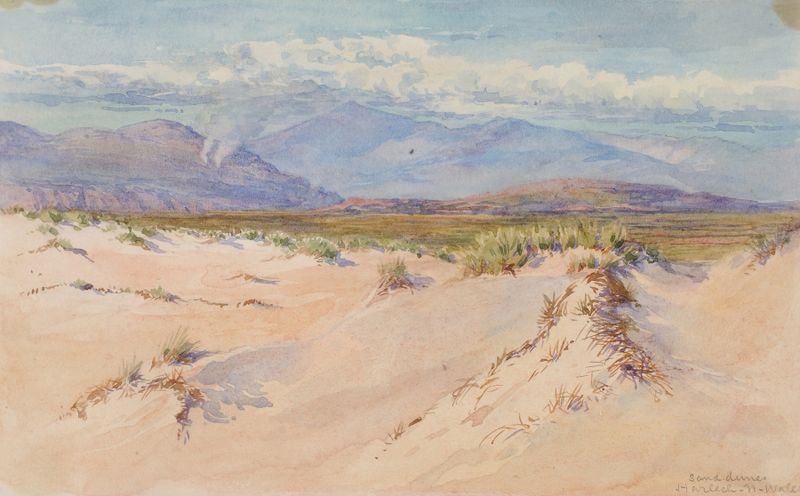
Sand Dunes, Harlech, North Wales
George Elbert Burr

From Pincio, Rome
George Elbert Burr

The Wye near Ross
George Elbert Burr

Venice
George Elbert Burr
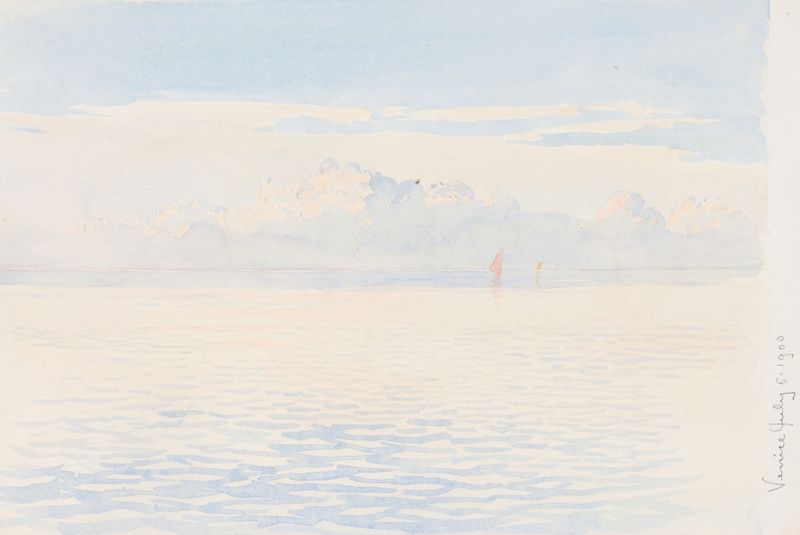
Venice II
George Elbert Burr

Shore at Pwllheli, N. Wales
George Elbert Burr

The Wye at Wilton Castle (Wales)
George Elbert Burr

Venice
George Elbert Burr

Criccieth, N. Wales II
George Elbert Burr
More Architecture Art
Browse all →
The statue of Liberty
Frédéric Auguste Bartholdi

View of Houses in Delft, Known as ‘The Little Street’
Johannes Vermeer

View of Houses in Delft, Known as ‘The Little Street’
Johannes Vermeer

The Cathedral in Rouen. The portal, Grey Weather
Claude Monet

The yellow house
Vincent van Gogh

The Church in Auvers-sur-Oise, View from the Chevet
Vincent van Gogh