
Calcispongiae (Calcareous Sponges) — History & Facts
What first grips the viewer in Calcispongiae (Calcareous Sponges) is the sense of otherworldly architecture—forms that seem at once alien and meticulously engineered, hovering against a pitch-black void. Each organism radiates a quiet complexity, their bodies rendered with a precision that transforms natural science into visual spectacle. The eye is drawn from the clustered tubes and latticed branches at the center, outward to the honeycomb domes and petal-like whorls, each figure isolated yet echoing the others in a silent, underwater conversation.
Fine stippling and delicate shading bring out the texture of every pore and spine, inviting the viewer to imagine the unseen worlds these sponges inhabit. The palette—restrained to shades of cream and sepia—serves to heighten the drama of form, letting structure rather than color carry the narrative. This work belongs to a moment at the dawn of the twentieth century when science and art were not rivals but partners, and the illustrated plate was a bridge between them. Created for Kunstformen der Natur in 1904, Ernst Haeckel’s image stands as both documentation and celebration of marine life’s diversity.
Such plates were commissioned not only for scientific study but also to inspire wonder, appearing in books that reached both scholars and the curious public. Haeckel’s approach—naming and arranging species like Ascandra pinus and Syculmis synapta—reflects the period’s drive to classify the natural world, yet his compositions elevate these creatures beyond mere specimens. History has kept few traces of the individual journeys of these images, but their enduring power lies in how they invite us to see nature’s geometry anew—return to the image and notice how each form balances order and invention.
More Artworks by Ernst Haeckel
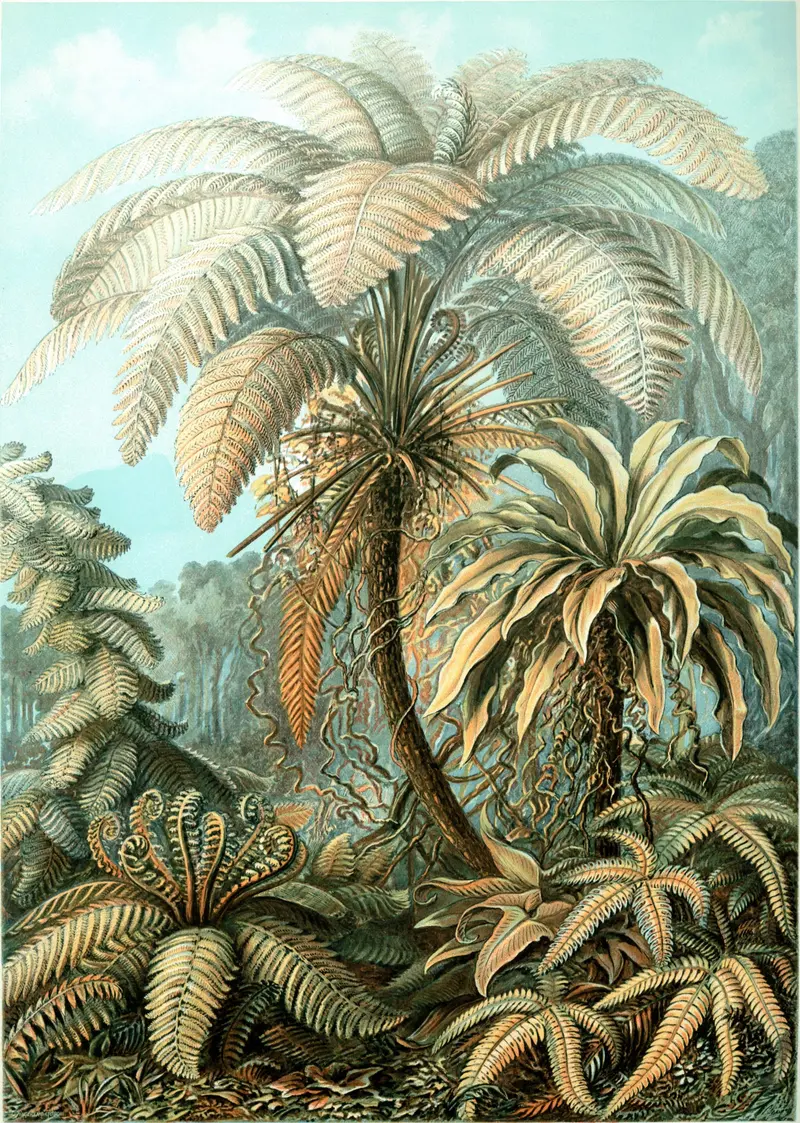
Filicinae (Ferns)
Ernst Haeckel
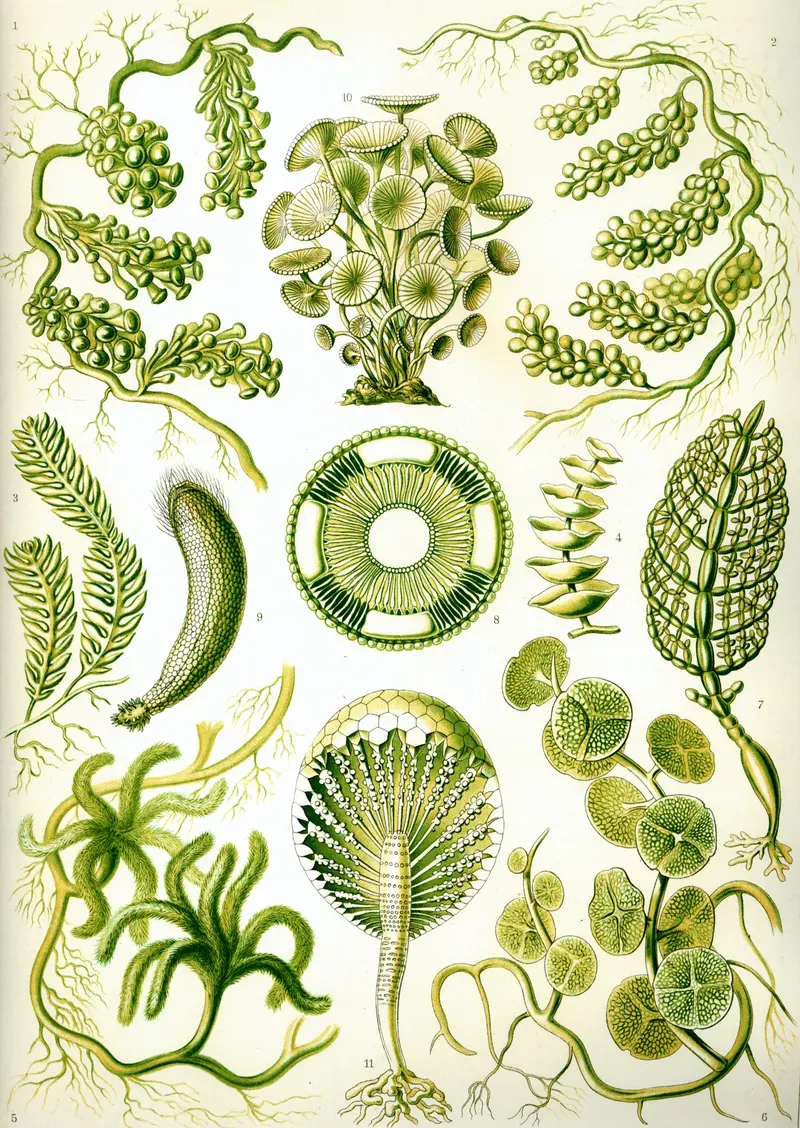
Siphoneae (Green Algae)
Ernst Haeckel

Cirripedia (Barnacles)
Ernst Haeckel

Actiniae (Sea Anemones)
Ernst Haeckel
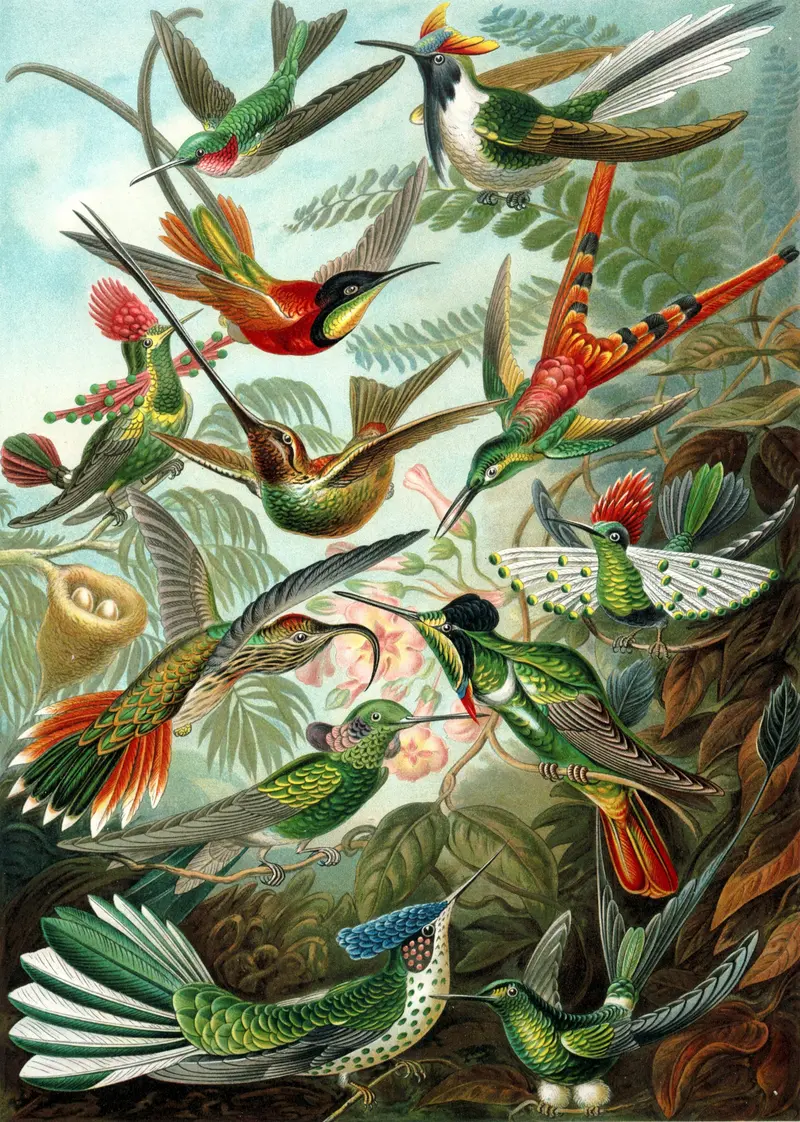
Trochilidae (Hummingbirds)
Ernst Haeckel
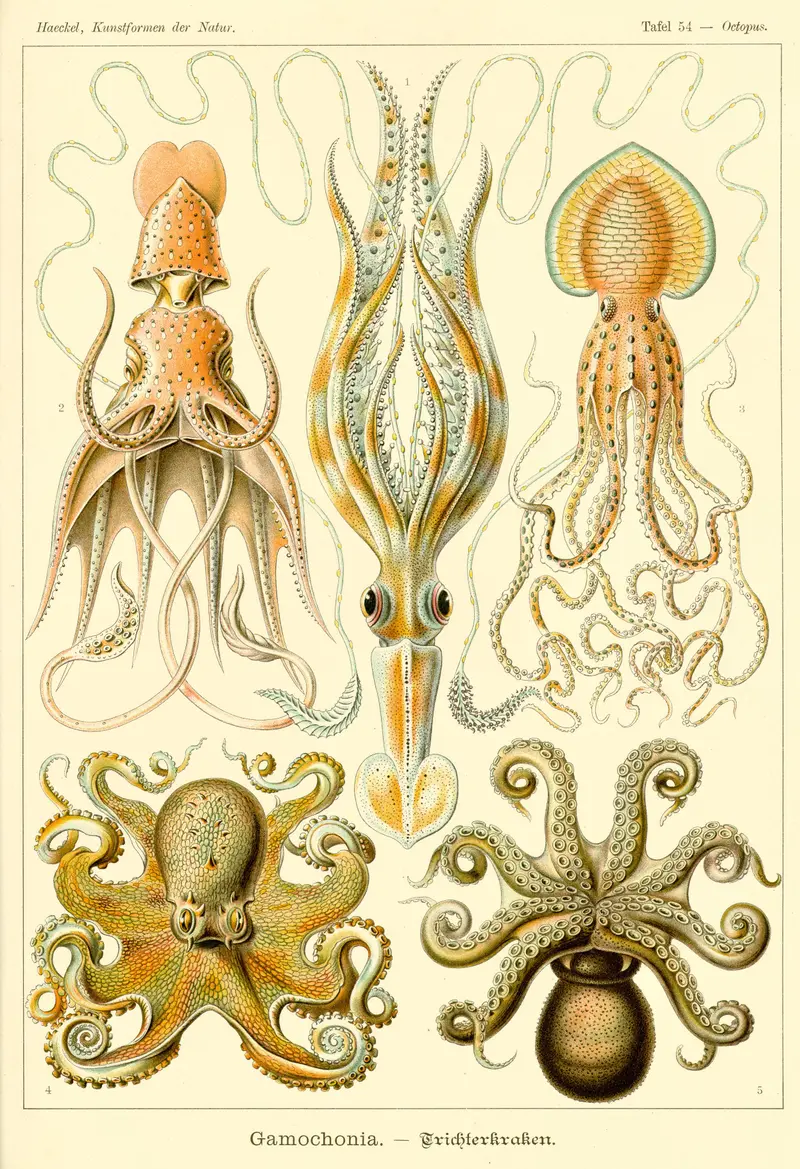
Gamochonia (Cephalopods)
Ernst Haeckel
Leptomedusae (Jellyfish)
Ernst Haeckel
Peromedusae (Jellyfish)
Ernst Haeckel
Chaetopoda (Bristle Worms)
Ernst Haeckel
Copepoda (Copepods)
Ernst Haeckel





