
Calvaire breton — History & Facts
Could a single brushstroke hold eternity? In Calvaire breton, we witness a moment where chaos and tranquility intertwine, revealing the delicate balance of human emotion against nature's vastness. Focus on the tumultuous sky dominating the canvas, where heavy clouds battle the light—swirls of gray and white seem to wrestle with golden beams breaking through. Notice how Boudin's loose brushwork creates a sense of movement, as if the wind itself breathes life into the scene. The figures in the foreground, huddled near a cross, are dwarfed by their surroundings, their solemn gestures illuminated by soft, warm hues contrasting with the stormy backdrop, drawing the eye into their unyielding devotion. Delve deeper into the emotional tension present in the piece; the juxtaposition of the serene yet tumultuous sky reflects the internal struggles of the human spirit.
The cross serves as a poignant symbol, representing faith amid chaos, while the sweeping strokes of the water along the shore suggest a lurking sense of change—a reminder that tranquility is often fleeting. The small details, such as the fishermen’s boats bobbing uneasily in the waves, emphasize the fragility of existence when faced with the uncontrollable forces of nature. Eugène Boudin painted Calvaire breton in the 19th century, during a time when the Impressionist movement was beginning to take shape in France. Working primarily in Normandy, Boudin was influenced by the coastal landscapes and the dynamic weather patterns of the region.
This painting reflects his dedication to capturing the essence of each moment, resonating with the emerging ideals of his contemporaries while still retaining a distinct voice of his own.
More Artworks by Eugène Boudin
Browse all →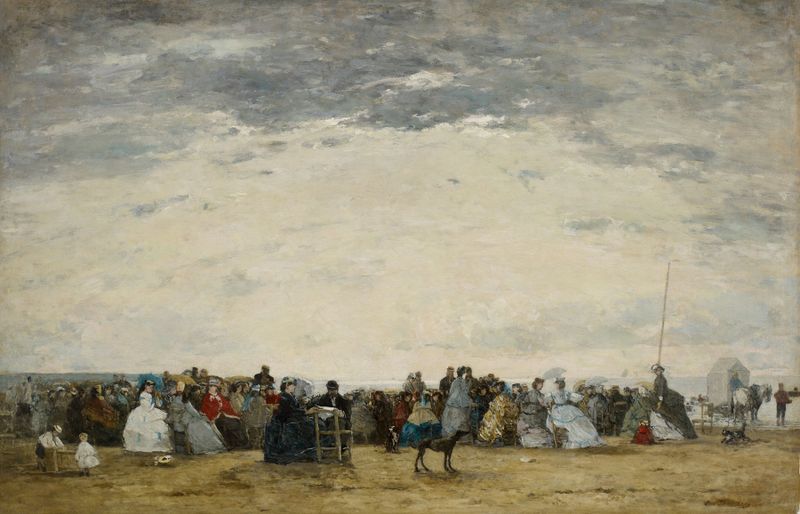
Vacationers on the Beach at Trouville
Eugène Boudin

Washerwoman near Trouville
Eugène Boudin
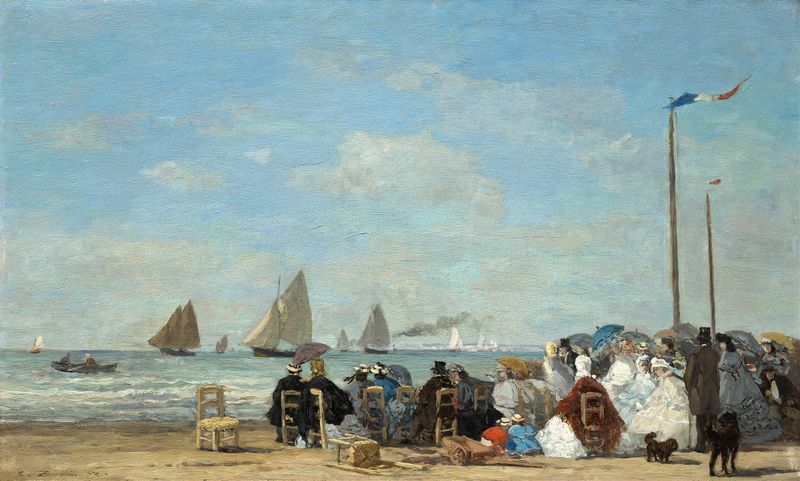
Beach Scene at Trouville
Eugène Boudin

Port aux environs d’Honfleur
Eugène Boudin

Le Faou, un coin du village
Eugène Boudin
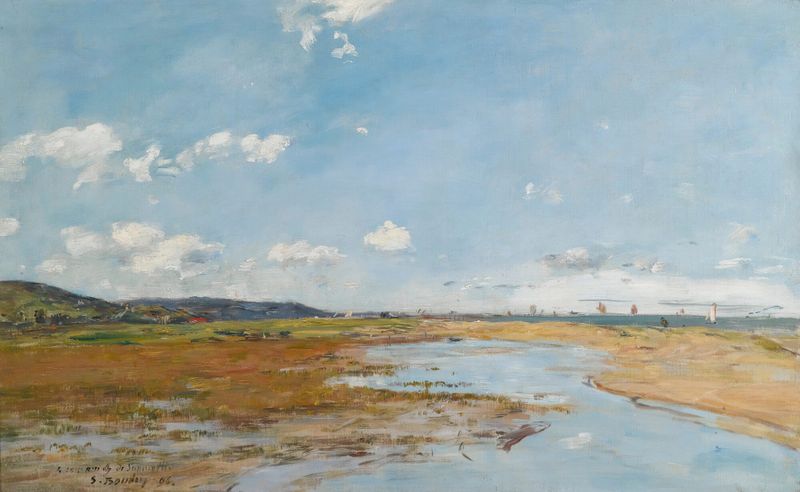
Deauville. Le Rivage
Eugène Boudin
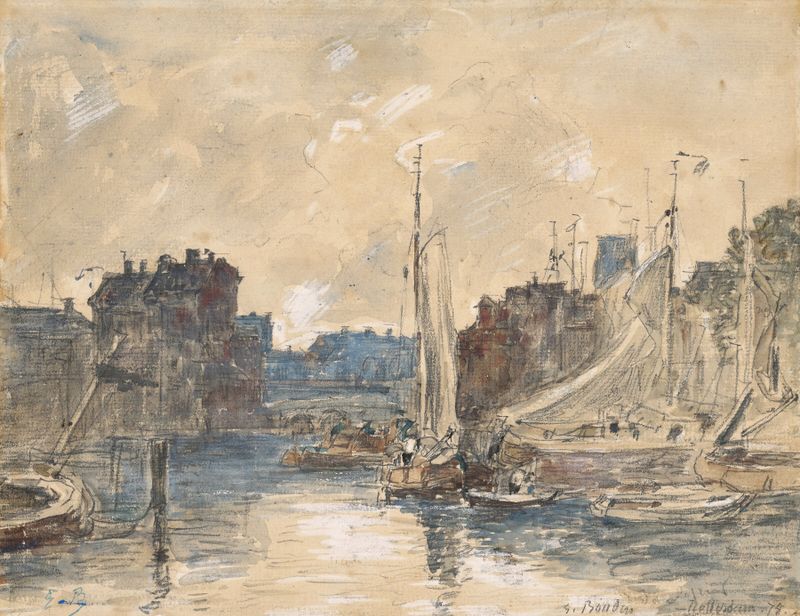
Port de Rotterdam
Eugène Boudin

View of Bordeaux, from the Quai des Chartrons
Eugène Boudin

Trouville, Scène De Plage
Eugène Boudin

Trouville, Le Port
Eugène Boudin





