Calves at a trough — History & Facts
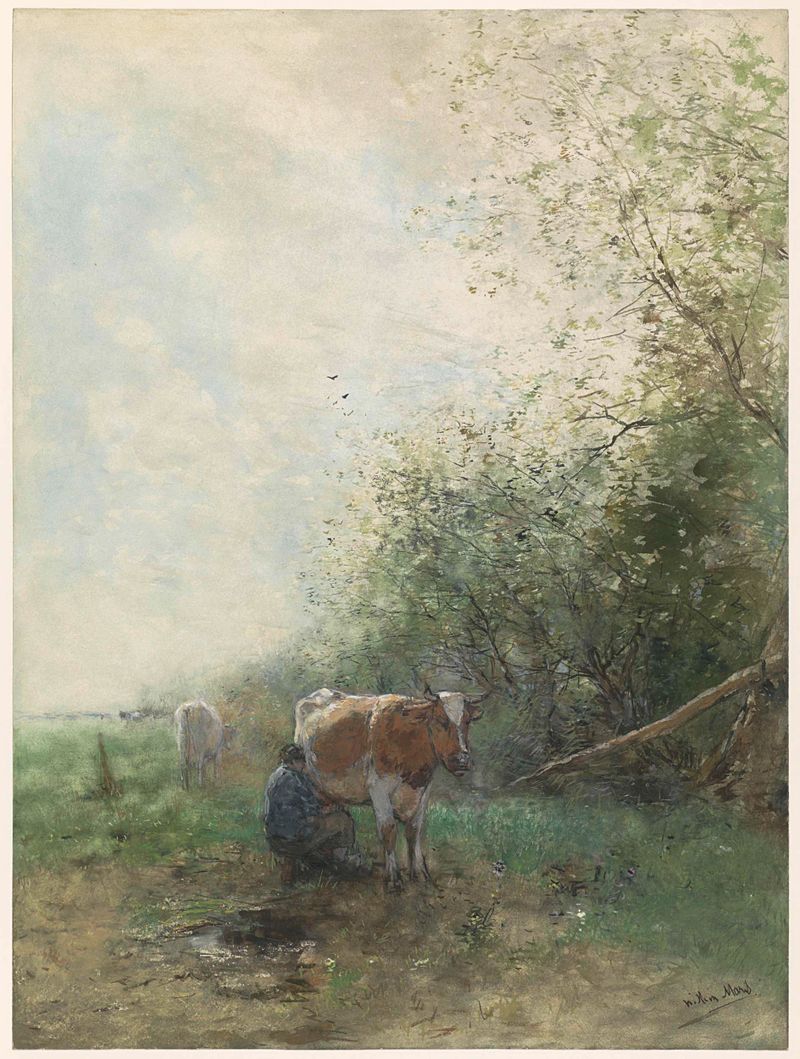
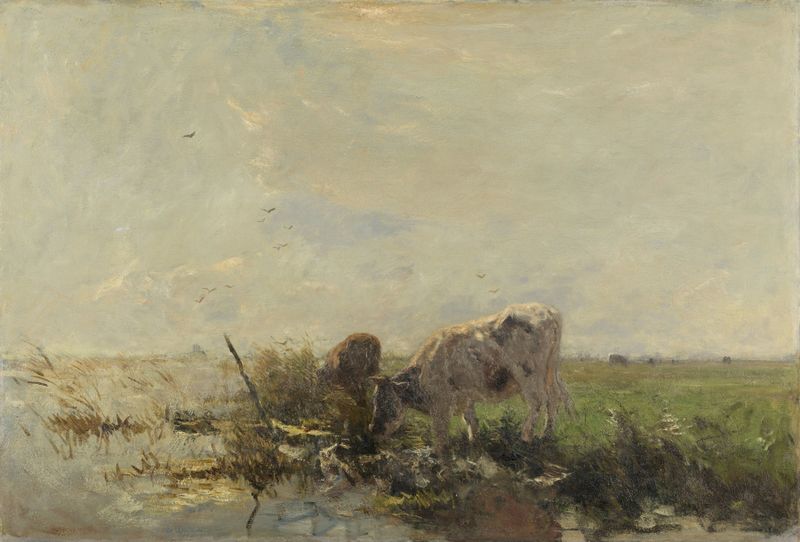
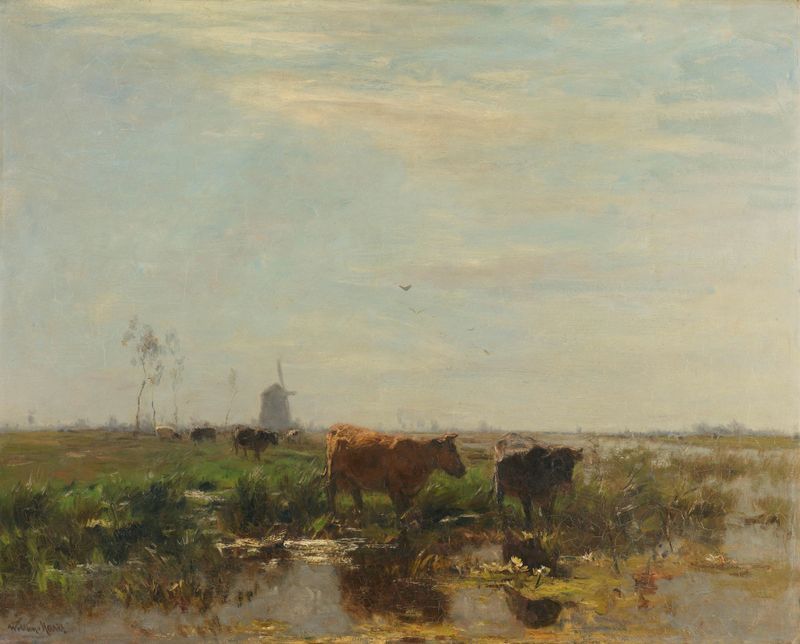
What if silence could speak through light? In the stillness of a forgotten farm, a moment unfolds, layered with unspoken longing and the gentle breaths of nature. Focus on the center of the canvas, where the trough glimmers in soft, reflective hues. Notice how the light bathes the calves, their fur catching the sun, a dance of warm browns and golds that evoke a sense of tranquility. The composition invites you to linger, as the animals appear to pause mid-action, their innocent gaze turned towards something just out of sight.
The painter’s delicate brushwork brings life to the scene, revealing the textures of their coats and the subtle ripples of water. Yet, beyond the pastoral calm, there’s an undercurrent of yearning. The calves, while content in their moment, hint at a deeper connection to the world around them, to a life filled with freedom that lies beyond the fence. The quiet nature of the painting reinforces this tension, each detail—like the simple way the water reflects the surrounding landscape—whispering stories of longing and belonging. Willem Maris painted this work during a period marked by a deep fascination with rural life, reflecting the changing dynamics of the Netherlands in the late 19th century.
In this era, he sought a connection to nature, creating art that spoke to both the beauty and simplicity of pastoral scenes. His work was part of a broader movement that emphasized realism, capturing the essence of everyday moments with sensitivity and grace.