Koeien aan een plas — History & Facts
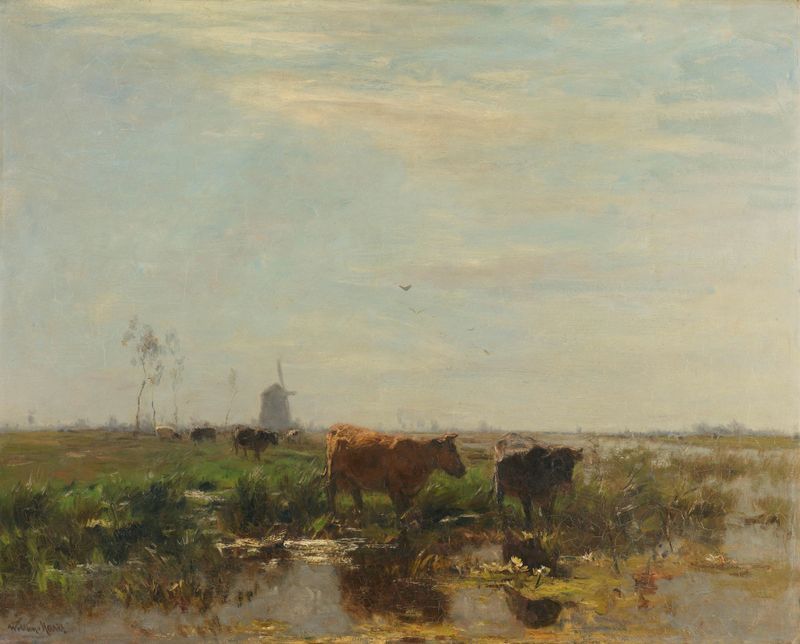
What secret hides in the quiet of the canvas? In Koeien aan een plas, the stillness of the water reflects a world both serene and laden with unspoken stories, inviting the viewer to ponder the depth of emptiness. Focus on the left side of the painting, where a gentle slope leads your gaze to a pair of cows standing peacefully by a tranquil pond. Notice how the lush greens of the landscape seamlessly blend with the soft blues of the water, creating a harmonious symphony of color. The light dances across the surface, illuminating the cows’ quiet majesty while casting soft shadows that suggest an underlying tension in their stillness.
Each brushstroke whispers of a moment frozen in time, pulling you deeper into this pastoral scene. Look closely at the way the cows are positioned, appearing almost statuesque against the backdrop of nature. This juxtaposition evokes a sense of isolation, as if they exist in a world at once vibrant yet hauntingly empty. The delicate play of light unveils the subtleties in their textures, hinting at a connection between the animals and their environment that transcends mere observation.
One may feel a longing within that emptiness, a reminder of the solitude found in the most serene moments. Painted between 1880 and 1910, this work emerged during a period when Willem Maris was deeply exploring pastoral themes and the Dutch landscape. At that time, he was residing in The Hague, influenced by the natural beauty surrounding him and the burgeoning movement of realism in art. His dedication to capturing the essence of rural life and its quietude resonated with the broader artistic currents of the day, placing him firmly within the tradition of Dutch landscape painting.