Melktijd — History & Facts
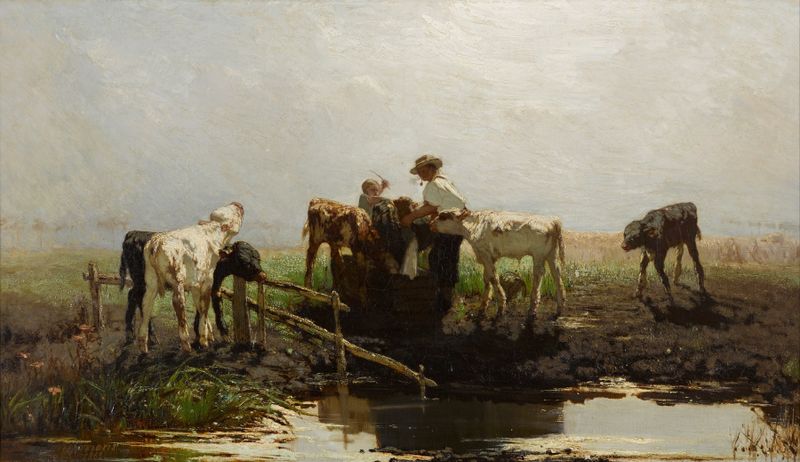
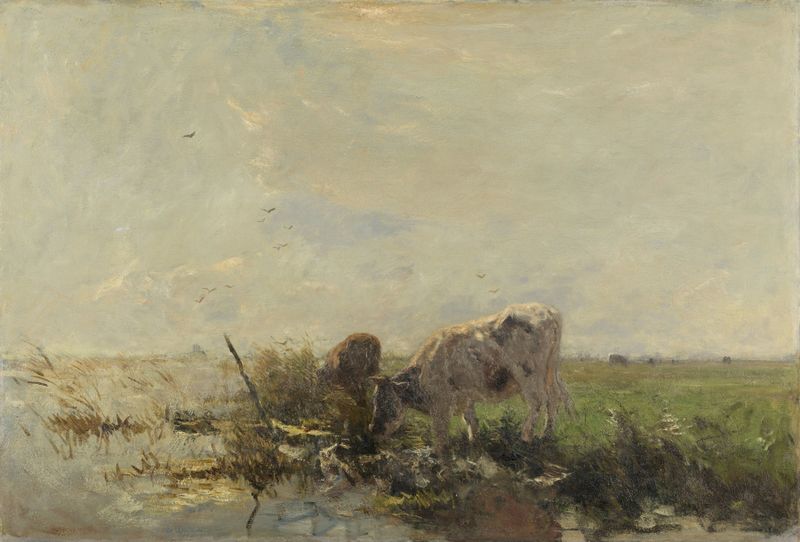
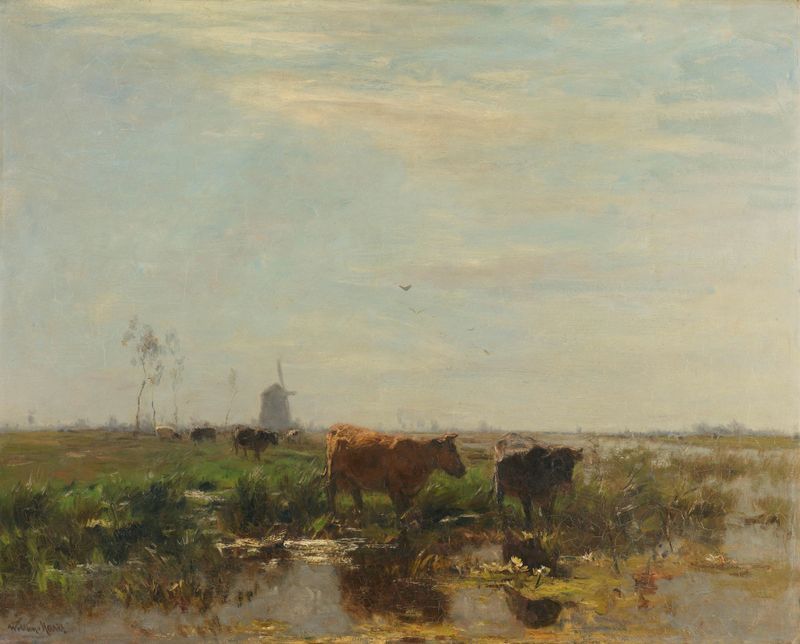
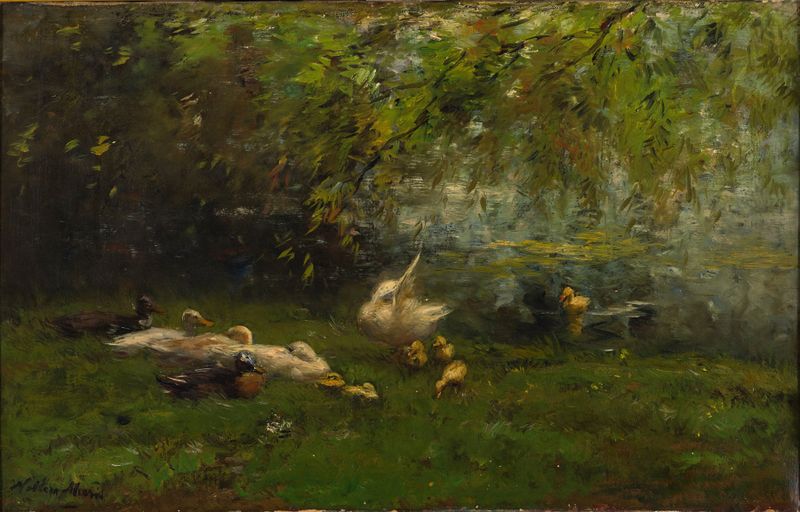
Who listens when art speaks of silence? Within the delicate strokes of paint lies a world steeped in fragility, where moments are suspended in time, and the soft whisper of nature beckons. Look closely at the center of the canvas, where a tranquil cow stands, its sleek body illuminated by a gentle light that bathes the scene in an ethereal glow. The muted, earthy palette grounds the cow in its surroundings, while the lush green grass stretches outward, softening the boundaries of reality. Notice how the fading sunlight filters through leaves, creating a dappled effect that dances on the animal’s hide, enriching the scene with a sense of peace and serenity. Yet, beyond its pastoral beauty, the artwork captures a deeper narrative of life’s fragility.
The cow, with its calm demeanor, symbolizes sustenance and nurturing, while the tranquil setting hints at the fleeting nature of rural existence. The stillness invites contemplation, encouraging the viewer to reflect on the balance between life and the inevitability of change, as the serene moment may be but a breath before the day's end. Willem Maris created this piece during a time of burgeoning realism, reflecting a fascination with the simplicity of rural life. Painted between 1844 and 1910, his work emerged from the Netherlands, at a period marked by industrial evolution and societal transformation, which encouraged artists to look back at nature and its subtle intricacies.
Through this painting, he articulates not merely a scene but an emotion — the poignant awareness of both beauty and transience.