Weide met koeien — History & Facts
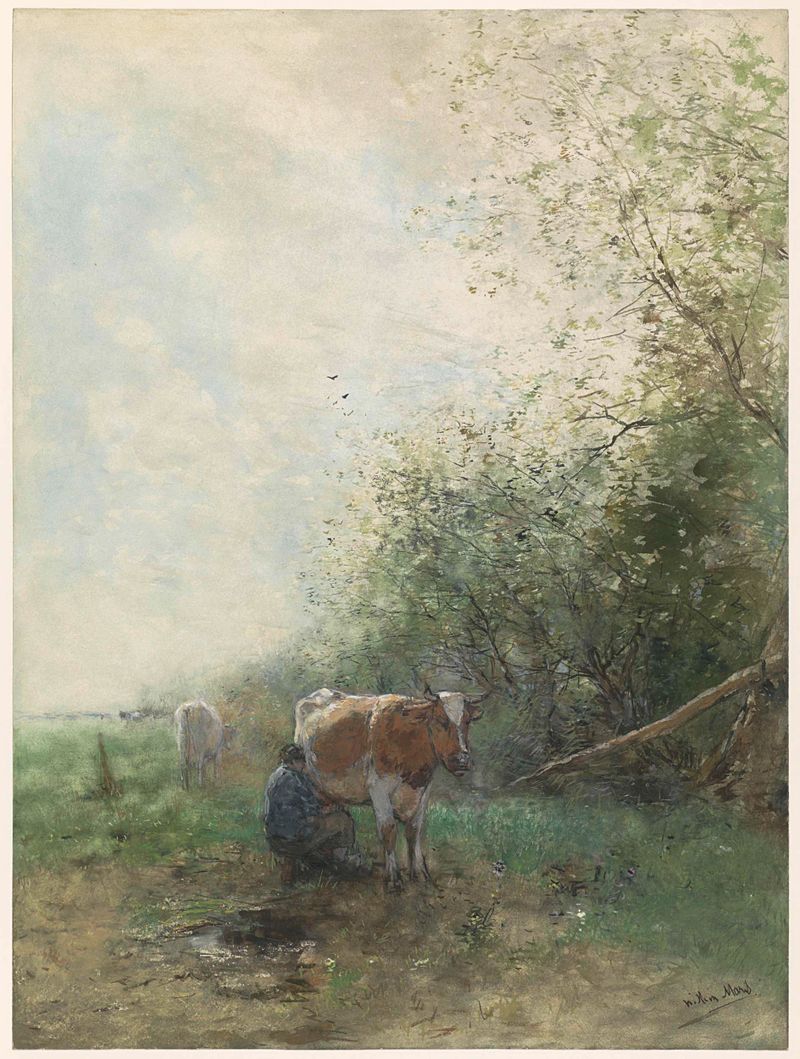
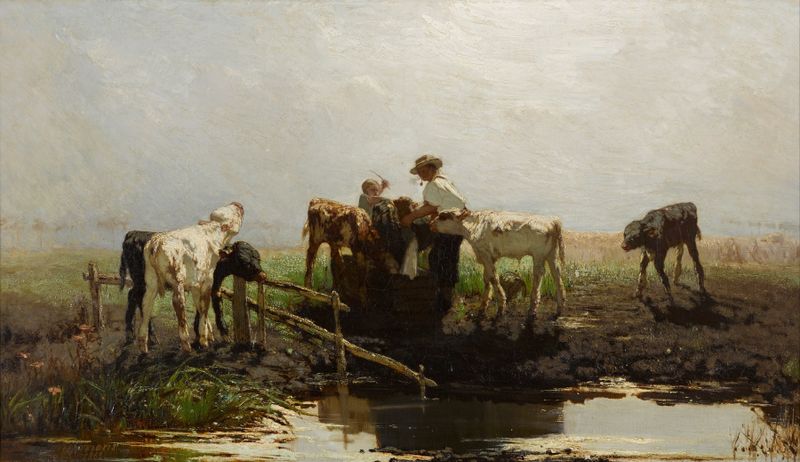
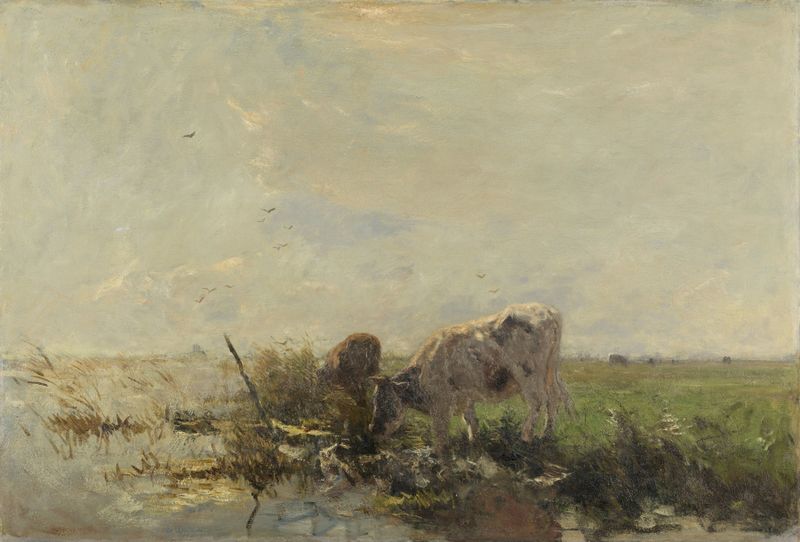
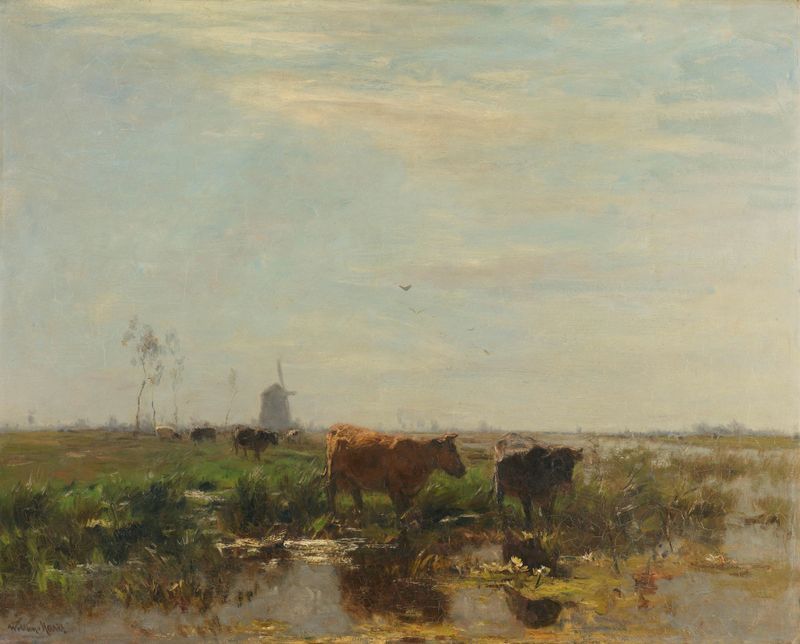
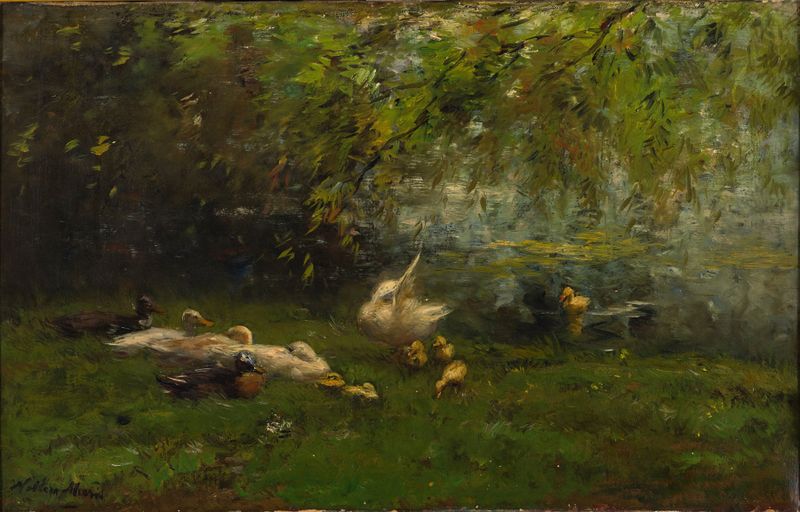
Could beauty survive in a century of chaos? In Weide met koeien, the pastoral tranquility stands as a poignant reminder of nature’s resilience amid life's turmoils. Look to the left at the gentle curve of the meadow, where cows graze peacefully under the soft embrace of dusk. Notice how the light filters through the clouds, casting a warm glow that bathes the scene in golden hues. Each brushstroke reveals careful attention to detail; the cows, robust and serene, create a harmonious balance against the lush green landscape, inviting the viewer to breathe in the serenity of rural life.
The painter’s technique of blending colors with a soft palette emphasizes the calmness that envelops the scene. Yet, beneath this idyllic surface lies a profound tension between nature's beauty and the inexorable passage of time. The cows, symbols of sustenance and life, remind us of both the fragility and the continuity of existence. The quietude of the meadow contrasts sharply with the chaotic backdrop of the era in which it was painted, suggesting a longing for simpler times even as modernity encroached.
Each element within the composition whispers of fleeting moments, urging us to reflect on what is permanent and what is ephemeral. Willem Maris created Weide met koeien between 1880 and 1910, a period characterized by profound shifts in society and art. At the time, he was deeply entrenched in the Dutch Impressionist movement, exploring the beauty of rural landscapes in an increasingly industrialized world. This painting reflects both his dedication to capturing nature and the broader search for solace in an age marked by rapid change and uncertainty.