Meadow with Cows by the Water — History & Facts
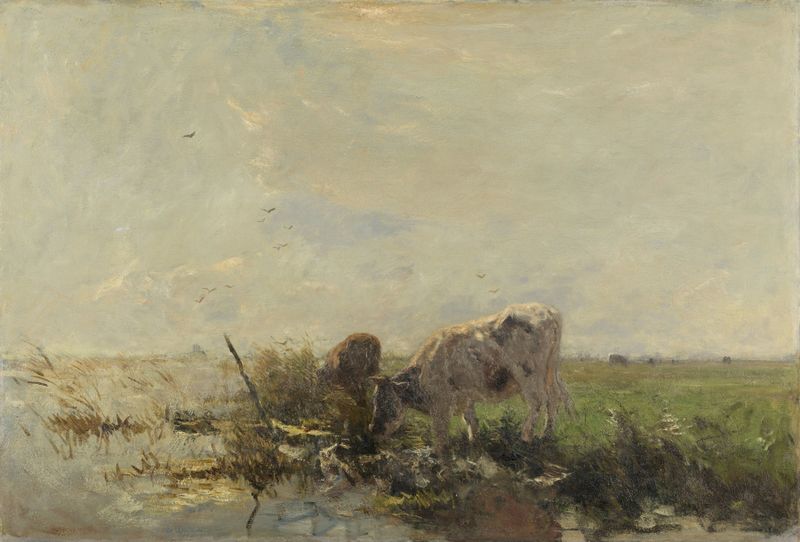
In the quiet embrace of nature, grief often blooms unspoken, flourishing beneath the surface of the everyday. Look to the left at the gentle swell of the meadow, where rich greens unfurl into a tapestry of life. The cows, poised at the water’s edge, reflect a serene stillness that contrasts sharply with the rippling surface beside them. Notice how the brushwork breathes life into the scene — the delicate strokes of white and cream encapsulate the cows' fur, while the dappled sunlight dances across the water, creating a shimmering illusion that captures both tranquility and a hint of melancholy. In this idyllic landscape, there’s an undercurrent of loss, as if the mundane beauty belies an emotional depth.
The soft horizon draws the eye upward, evoking a sense of longing that is palpable, while the cows are tethered to the earth, burdened by their stillness. The interplay of light and shadow suggests the fleeting nature of joy — a reminder that melancholy often lingers, even in the brightest moments of life. Created between 1895 and 1904, the artwork emerged during a time of personal and artistic transition for the painter. Living in the Netherlands, he navigated the post-impressionist movement, where landscape painting became a profound exploration of emotion and experience.
In this period, as he engaged with nature’s beauty, he also confronted the complexities of human feelings, capturing the essence of solitude in the vibrant yet reflective strokes of his brush.