Melktijd — History & Facts
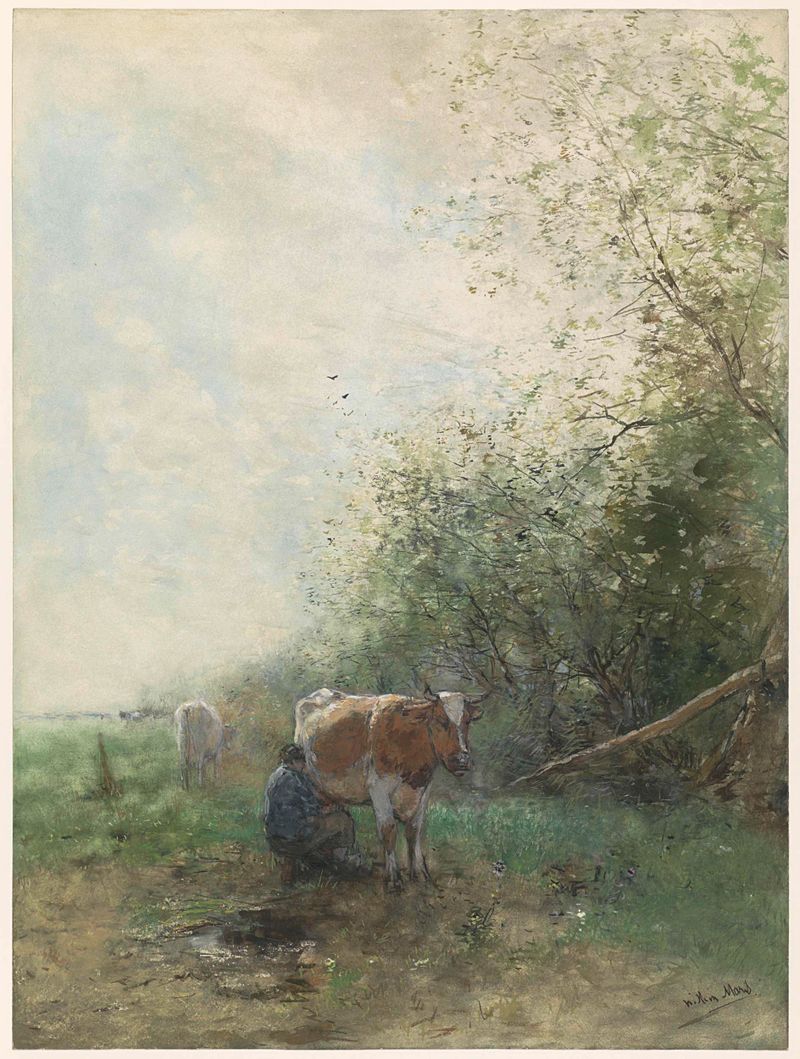
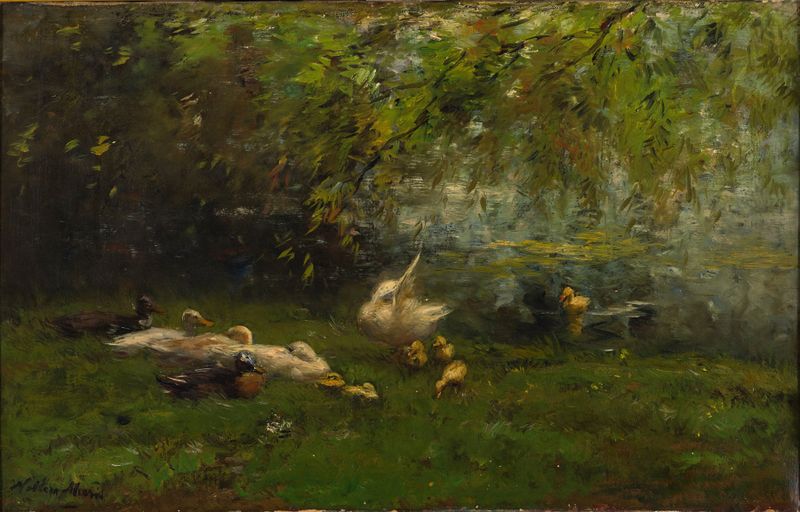
In Melktijd, the stillness envelops a solitary moment, poised delicately between the mundane and the profound. Focus on the gentle hues that blend into one another; the soft palette of earth tones draws your eye to the serene landscape. Notice how the golden light bathes the grazing cows, casting long shadows that stretch lazily across the ground. The composition leads your gaze to the tender interaction between the cows, their forms crystallizing in the tranquil air, while the subtle strokes evoke a sense of quietude and simplicity. Within the scene, a profound emptiness emerges—a poignant contrast between the bustling life of the farm and the stillness of nature.
Each cow, with its soft gaze, seems to carry an unspoken story, highlighting the weight of solitude in pastoral life. The juxtaposition of light and shadow encapsulates both the tranquility and the isolation inherent in rural existence, imbuing the canvas with a silent resonance that lingers in the mind. Willem Maris painted Melktijd during a period when the Dutch art scene was embracing naturalism and the intimate portrayals of rural life. Created between 1844 and 1910, Maris was a prominent figure in the Hague School, where he focused on landscapes that captured the essence of everyday life.
This work reflects not only his mastery of light and color but also a personal exploration of the quiet moments that often go unnoticed.