Roeiboot in een sloot — History & Facts
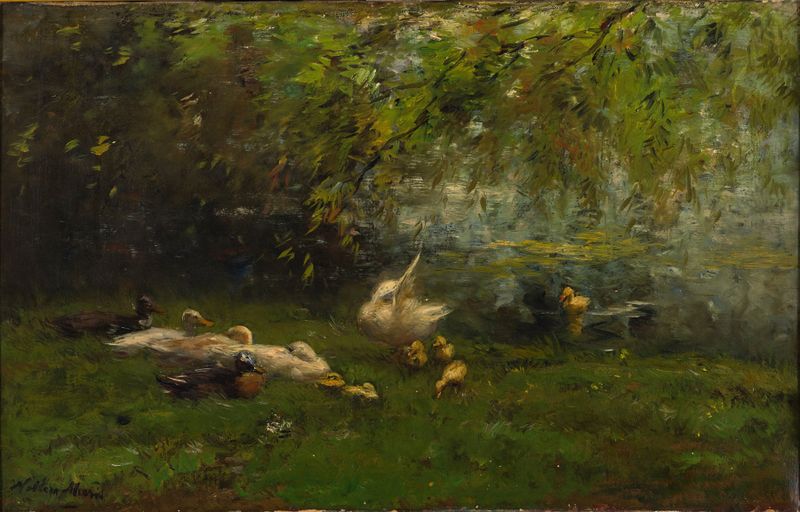
Did the painter know this moment would outlive them? In Roeiboot in een sloot, a serene and tranquil scene unfolds, encapsulating the delicate interplay between nature and human endeavor. Focus on the soft ripples on the water, where a rowboat glides gently through a quiet canal. The light dances across the surface, reflecting hues of blue and green, while the lush, verdant banks cradle the boat like an embrace. Notice how Maris employs delicate brush strokes to create a sense of movement in both the water and the surrounding foliage, fostering an ambiance of harmony and calm.
The muted palette evokes a feeling of nostalgia, inviting viewers to linger in this ephemeral moment. Yet, beneath the surface lies a deeper tension—an exploration of solitude entwined with connection. The solitary figure in the boat, engaged in quiet rowing, hints at personal introspection, contrasting with the vibrant life of the landscape that thrives around them. The untouched nature serves as a reminder of the fleetingness of existence, suggesting that the act of creation itself is a glimpse of permanence in an ever-changing world. Willem Maris painted this work during the late 19th century, a period rich with the rise of Dutch Impressionism.
At this time, he was immersed in the plein air movement, capturing the essence of the natural world with immediacy. His focus on light and atmosphere reflected both his personal artistic journey and the broader shift towards celebrating nature in its most intimate and serene forms.