Koeien bij een plas — History & Facts
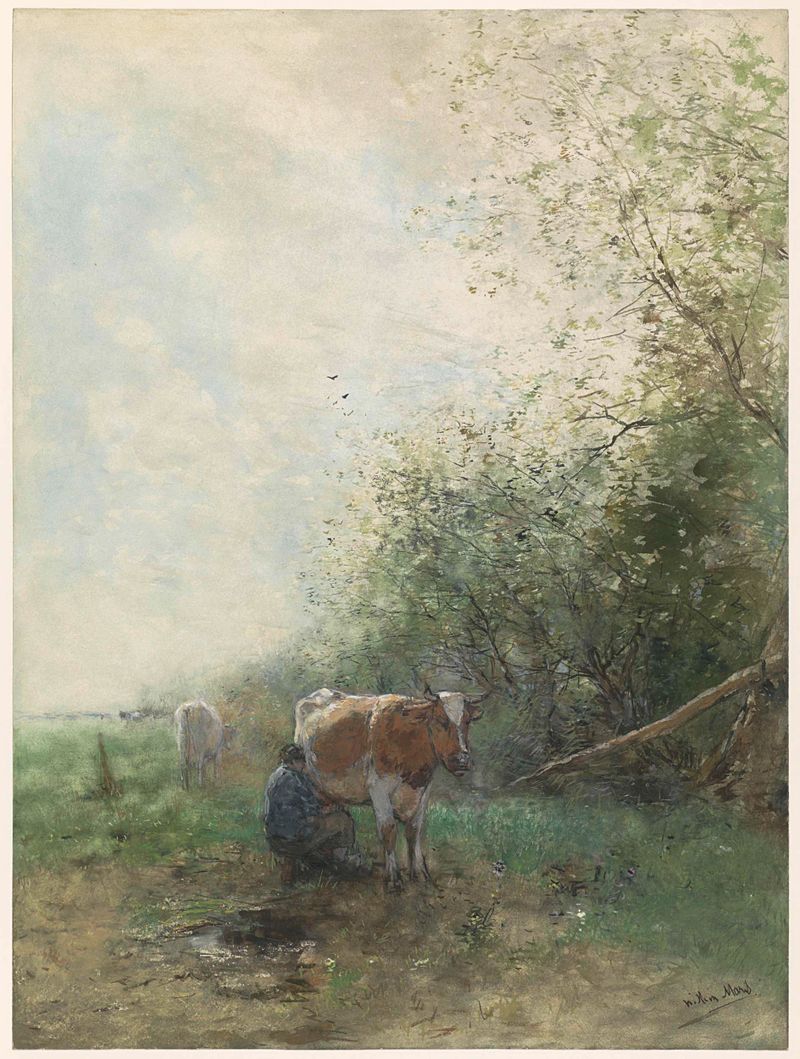
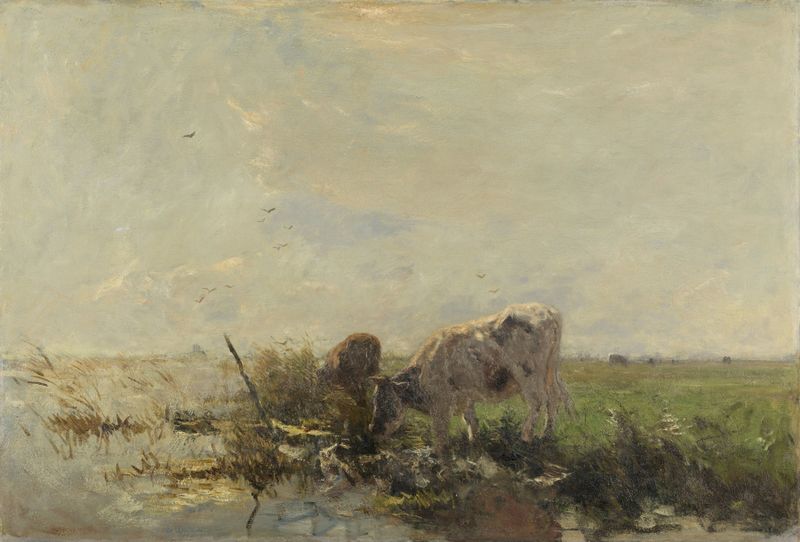
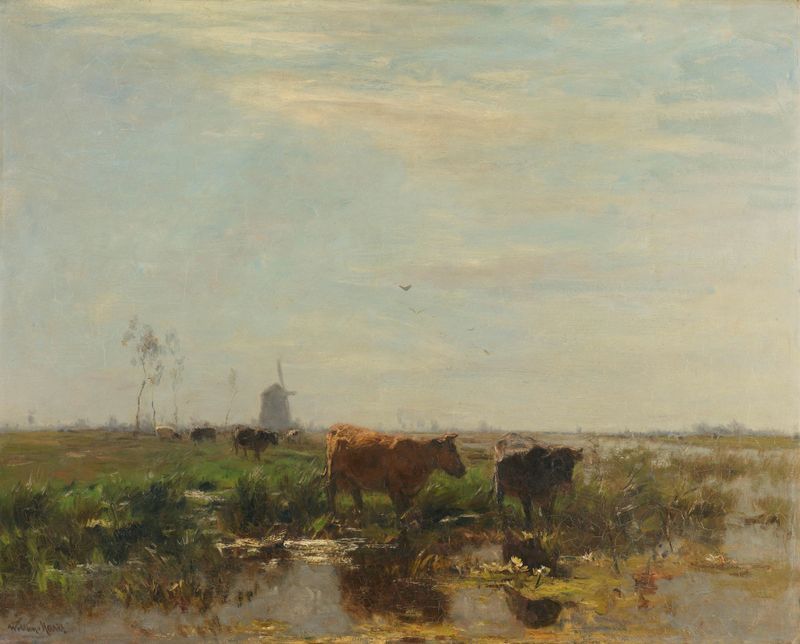
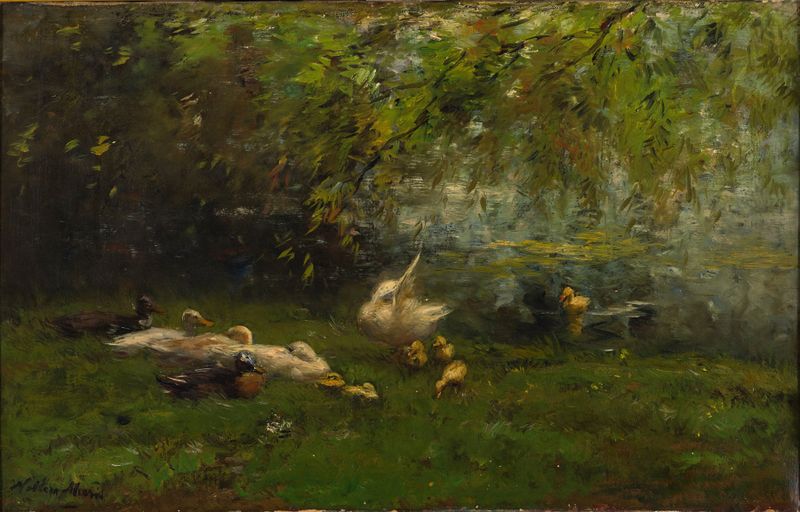
In the stillness of nature, where life and death dance in delicate balance, we find the essence of mortality captured in art. Notice how the eye is drawn to the gentle slopes of the verdant pasture, where cows graze quietly near a shimmering pond. The artist employs soft, muted greens and blues, subtly reflecting the tranquility of the scene while evoking a sense of fleeting time. The light dapples through the trees, casting delicate reflections on the water, revealing the interplay between nature and the ever-present cycle of life. Beneath the seemingly serene surface lies a profound contemplation of existence.
The cattle, with their calm demeanor, embody the simplicity of rural life, yet they also serve as reminders of life’s transience. The still pond not only mirrors their figures but also hints at deeper waters—perhaps representing the unknown depths of mortality. Here, the natural world feels timeless and yet achingly ephemeral, urging viewers to reflect on their connection to life itself. Willem Maris created this piece during a period of artistic exploration in the late 19th century, when the Hague School was blossoming in the Netherlands.
His focus on natural landscapes was a response to the industrialization of Europe, emphasizing a simpler, more connected way of life. As he painted, he was deeply influenced by the changing world around him, grappling with the implications of modernity and its effect on nature, making this work a poignant capture of both beauty and impermanence.