
Camaret. L’Estuaire — History & Facts
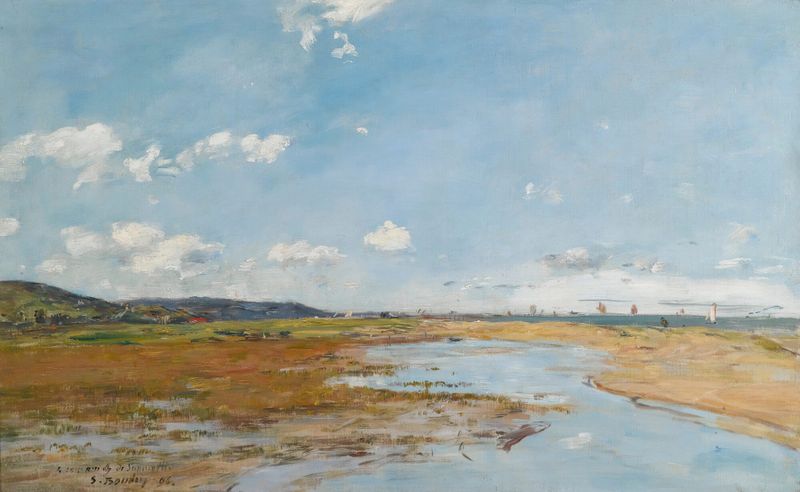
In Camaret. L’Estuaire, the tumult of the world flirts with madness, inviting contemplation in the viewer’s heart. Look to the left at the gentle ripples of the estuary, where soft blues and greens meld into one another, illuminating the water’s surface. The horizon is punctuated by fleeting clouds caught in a dance of sunlight, casting ephemeral shadows on the land.
Boudin’s brushwork, light and fluid, allows the viewer to almost hear the whispers of the wind and the gentle lapping of the waves, effectively animating the tranquil scene. Yet beneath this serene façade lies an underlying tension. The juxtaposition of the calm waters against the bustling, tumultuous sky evokes a sense of madness, a reminder of nature’s unpredictable temperament. Each stroke reveals hidden depths; the fragmented reflections hint at the chaos beneath the surface, suggesting that all beauty carries the weight of uncertainty.
This duality invites one to ponder the fragility of peace in a world rife with turmoil. In 1873, Boudin painted this work while in the throes of his emerging reputation as a master of plein air painting. Living in France, he was inspired by the coastal landscapes and the challenges of capturing fleeting moments of light and atmosphere. At this time, the Impressionist movement was gaining momentum, shaping not only his artistic approach but also the broader landscape of the art world, as traditional boundaries began to dissolve, allowing for new expressions of beauty and madness alike.
More Artworks by Eugène Boudin
Browse all →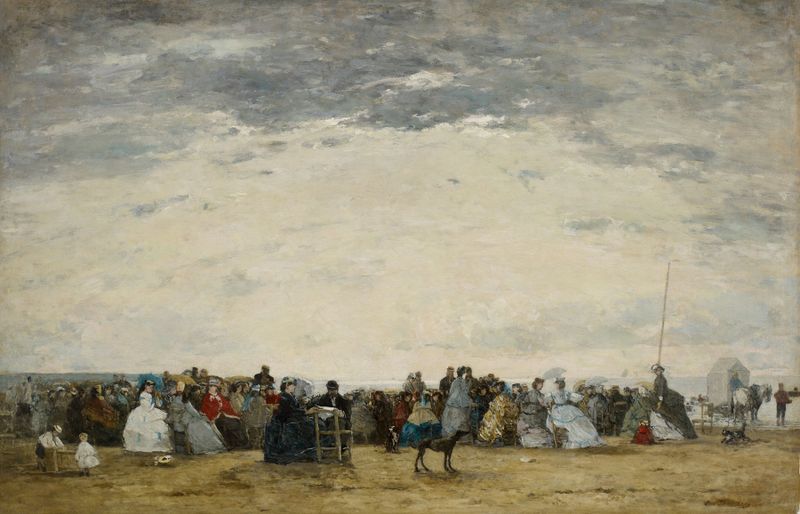
Vacationers on the Beach at Trouville
Eugène Boudin

Washerwoman near Trouville
Eugène Boudin
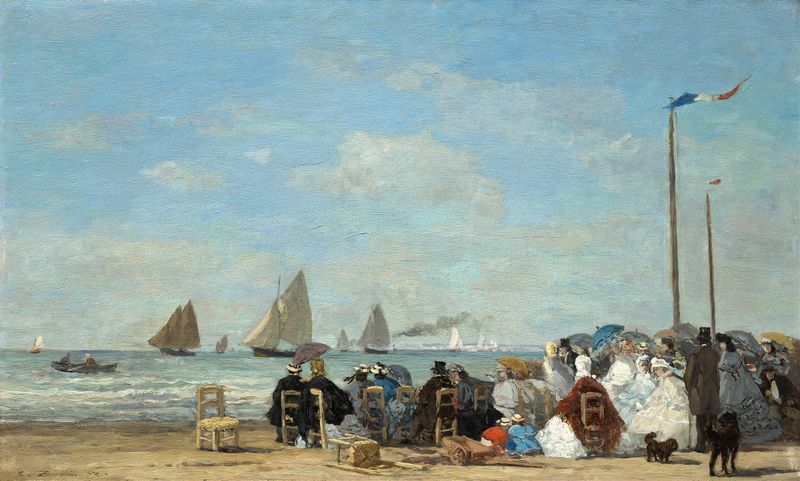
Beach Scene at Trouville
Eugène Boudin

Port aux environs d’Honfleur
Eugène Boudin

Le Faou, un coin du village
Eugène Boudin
Deauville. Le Rivage
Eugène Boudin
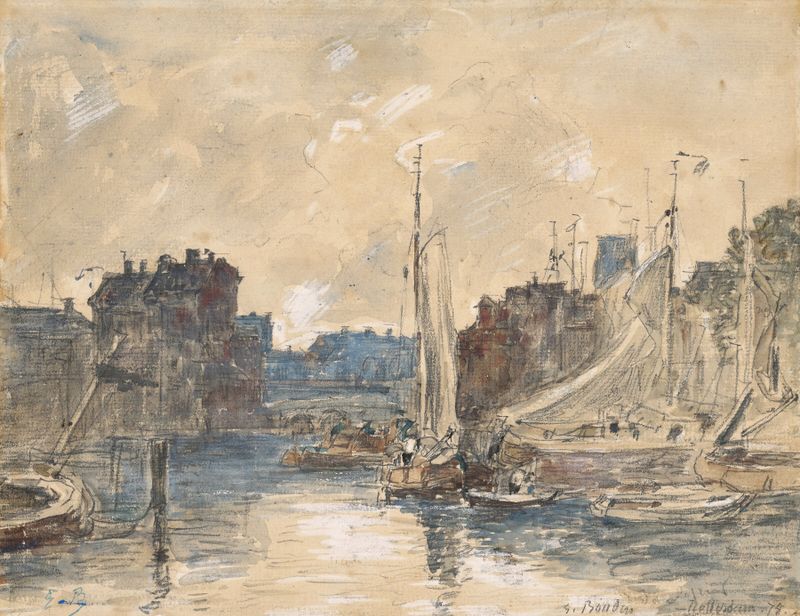
Port de Rotterdam
Eugène Boudin

View of Bordeaux, from the Quai des Chartrons
Eugène Boudin

Trouville, Scène De Plage
Eugène Boudin

Trouville, Le Port
Eugène Boudin





