
Cambridge — History & Facts
In a world where time slips through our fingers like sand, what remains for us to hold onto? Look closely at the soft hues of the sky, where warm oranges and cool blues dance together in a delicate embrace. The serene landscape, punctuated by the gentle curves of the river, invites the viewer’s gaze to linger on the horizon, where distant trees stand as silent sentinels. Each brushstroke captures a fleeting moment in time, a reminder of life’s ephemeral nature, and the way shadows play across the water reflects the passage of days, subtly intertwining tranquility with the underlying tension of mortality. In this composition, contrasts abound: the vibrancy of nature against the quiet stillness of the scene evokes both peace and an unsettling sense of transience.
The distant figures, dwarfed by the expanse of the landscape, embody humanity's fleeting presence within the vastness of time. The river, often a symbol of life, flows inexorably forward, hinting at the inevitable progression towards endings and new beginnings, ensuring that every glance at this work stirs up a profound reflection on existence itself. Painted in 1892, the artist found inspiration in the picturesque landscapes of New England while living in California. At that time, the art world was transitioning into modernism, and Peixotto, influenced by both impressionist techniques and the academic traditions, sought to capture the ephemeral beauty of life.
His work reflects a personal exploration of mortality and the passage of time, resonating deeply with the cultural shifts of his era.
More Artworks by Ernest Peixotto
Browse all →
Fort Moultrie on the Site of Old Fort Sullivan
Ernest Peixotto
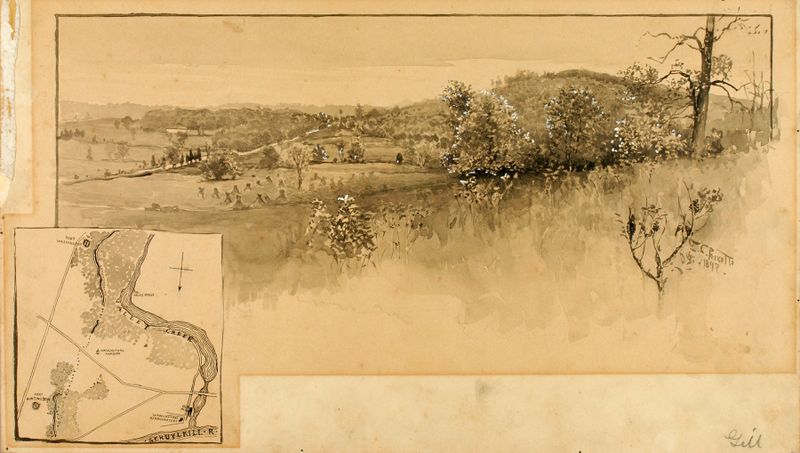
Valley Forge
Ernest Peixotto
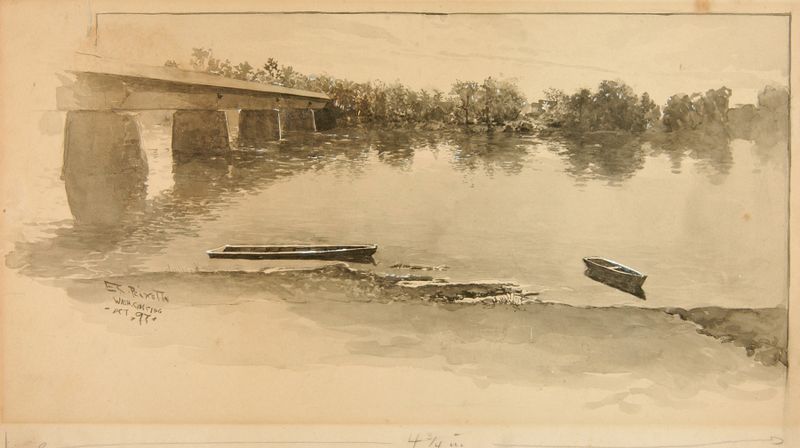
Washington Crossing
Ernest Peixotto

Ticonderoga
Ernest Peixotto
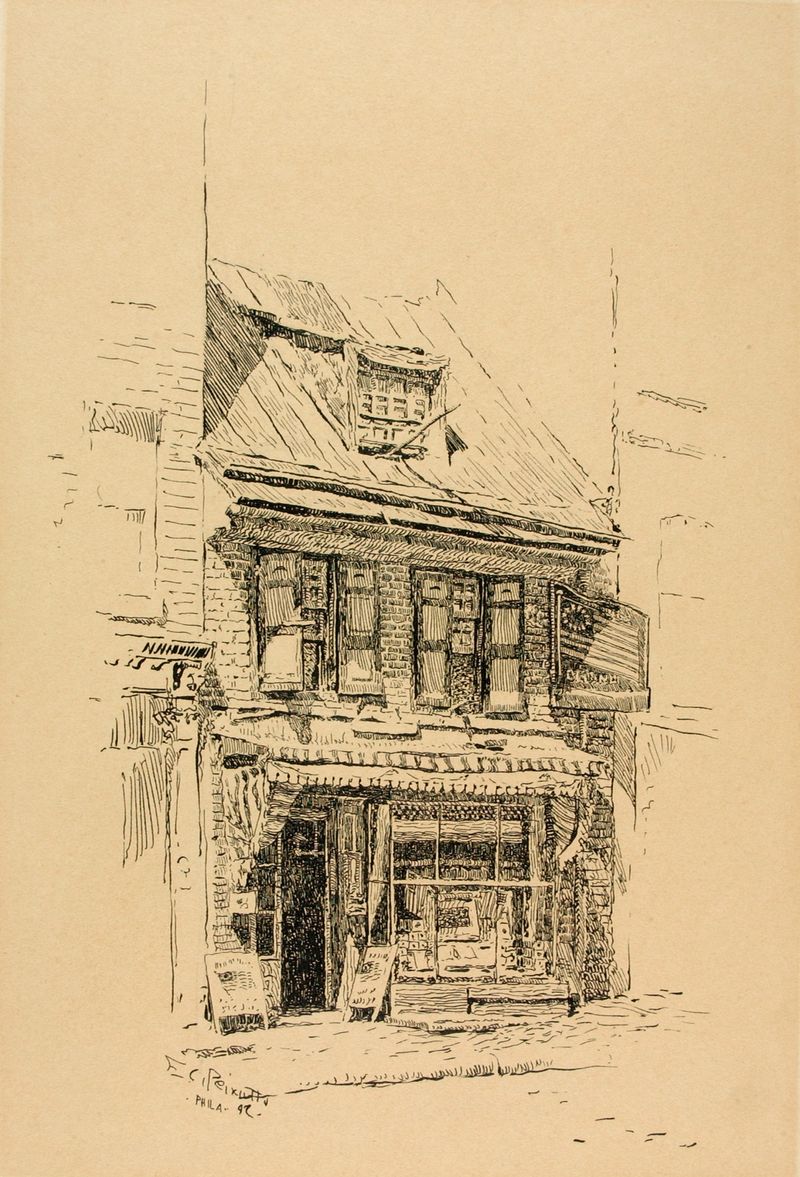
House Where First American Flag Was Made
Ernest Peixotto
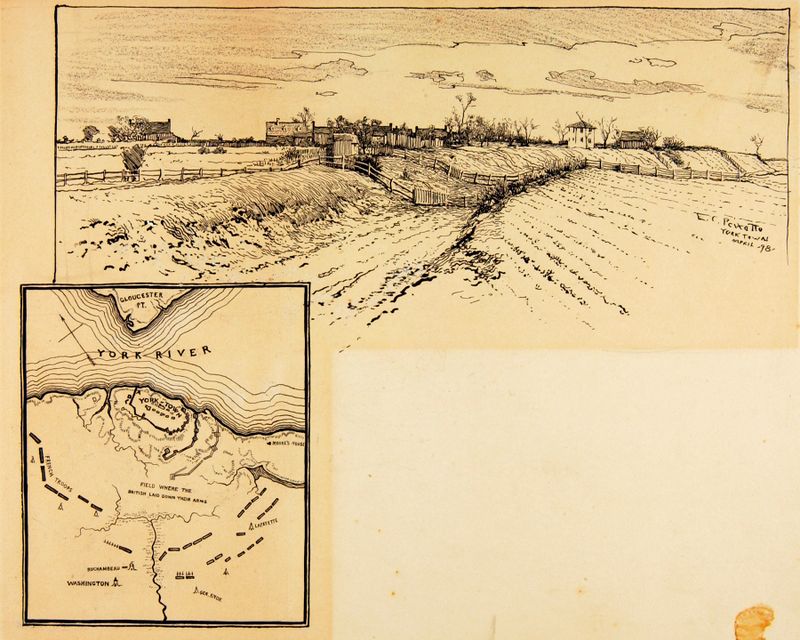
Present Appearance of British Entrenchment, Yorktown
Ernest Peixotto
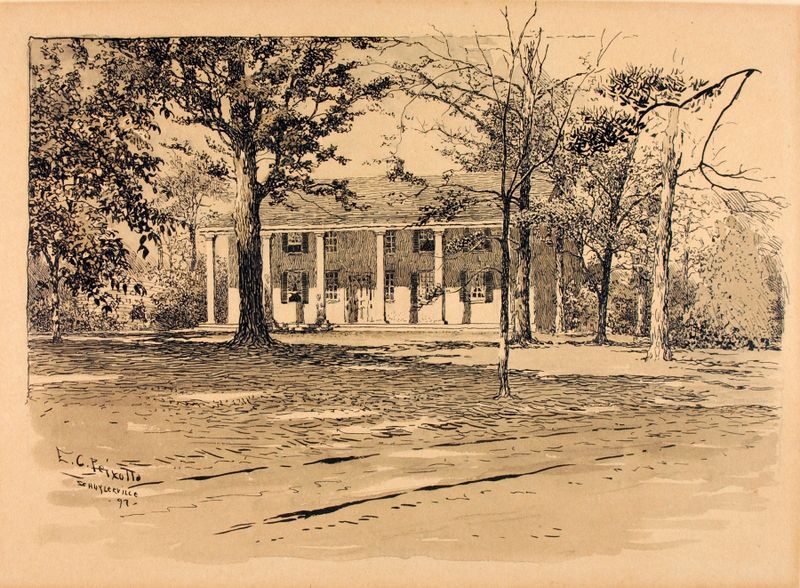
Saratoga. General Schuyler’s House
Ernest Peixotto
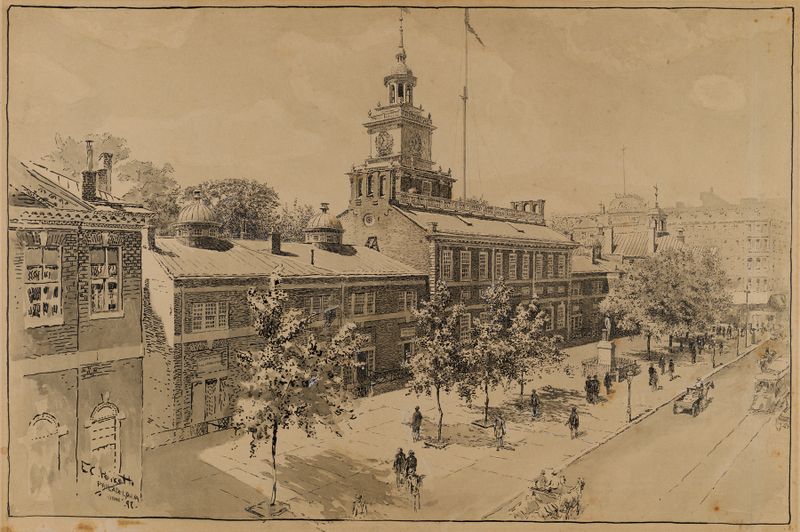
Philadelphia, Independence Hall, Chestnut Street
Ernest Peixotto
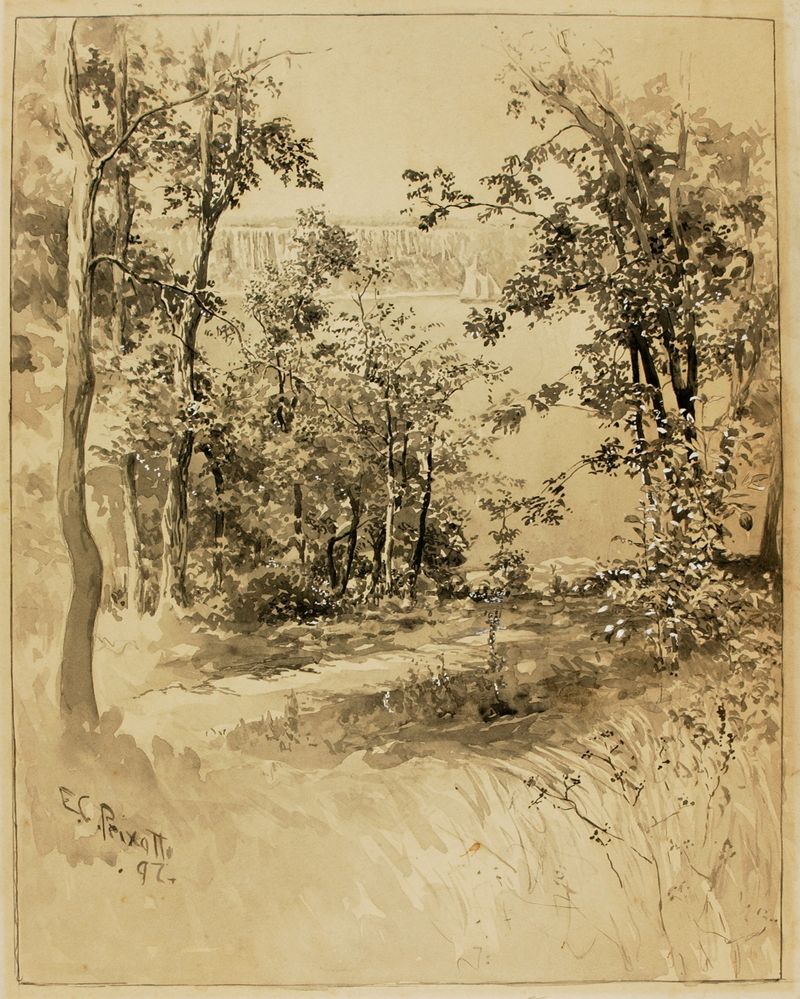
New York, Site of Fort Washington, Looking at Fort Lee
Ernest Peixotto

Capture of Fort Ticonderoga
Ernest Peixotto





