
Campanariae (Hydroids) — History & Facts
What first seizes the eye in Campanariae (Hydroids) is the sense of otherworldly architecture: each organism unfurls like a living cathedral, every tendril and cup rendered with a precision that feels both scientific and ornamental. The artist, Ernst Haeckel, guides us through a miniature cosmos where the boundaries between plant and animal blur, and the forms seem to pulse with quiet intelligence. Look closely at the branching colonies, the trumpet-shaped hydranths, the delicate threads radiating from each structure—these are not mere decorations, but clues to the hidden strategies of life in the sea.
The subtle interplay of sea-green and ochre leads the eye from one specimen to the next, suggesting both kinship and variety among these creatures. This plate, published in 1904 as part of the celebrated Kunstformen der Natur, embodies a moment when science and art moved hand in hand. In Haeckel’s time, such illustrations were more than records—they were invitations to marvel, tools for both education and inspiration. The hydroids shown here, identified by their Latin names and numbered for reference, reflect a world in which taxonomy was a grand adventure, and the mysteries of the ocean were just beginning to yield to human curiosity.
Though history has kept few traces of the individual stories behind each plate, works like this remind us how the act of seeing—careful, attentive, and full of wonder—can itself be a form of discovery.
More Artworks by Ernst Haeckel
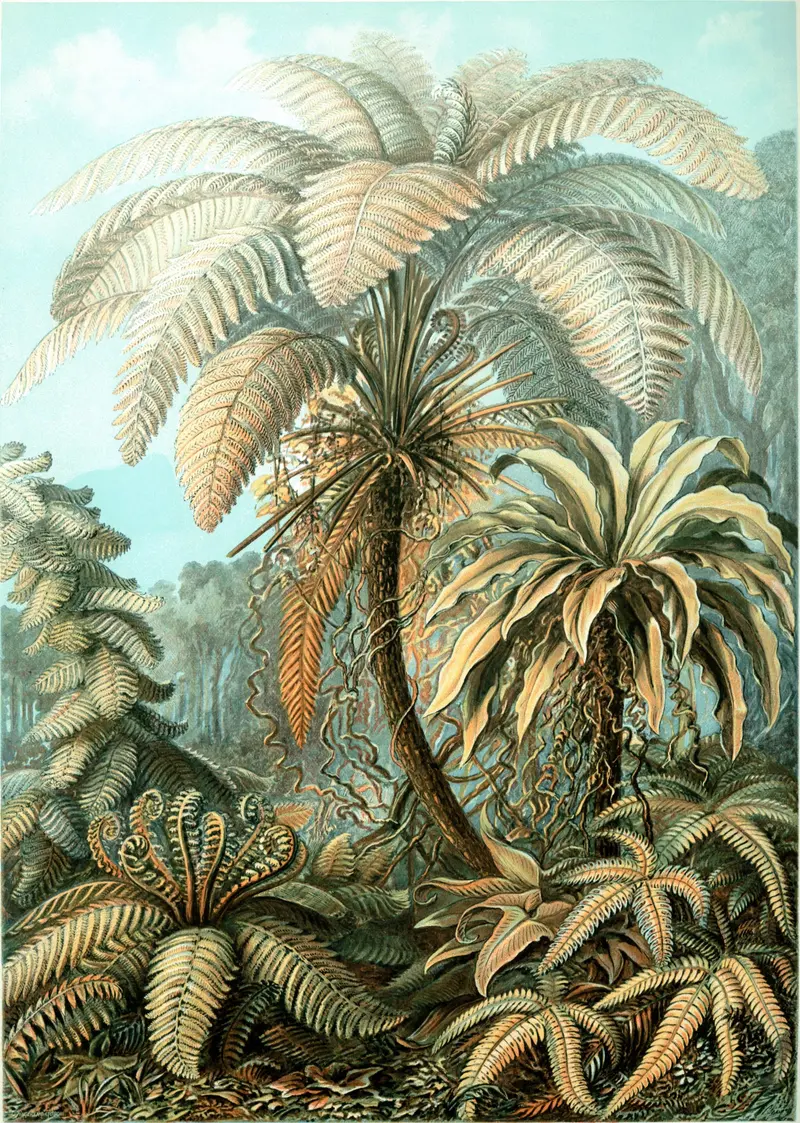
Filicinae (Ferns)
Ernst Haeckel
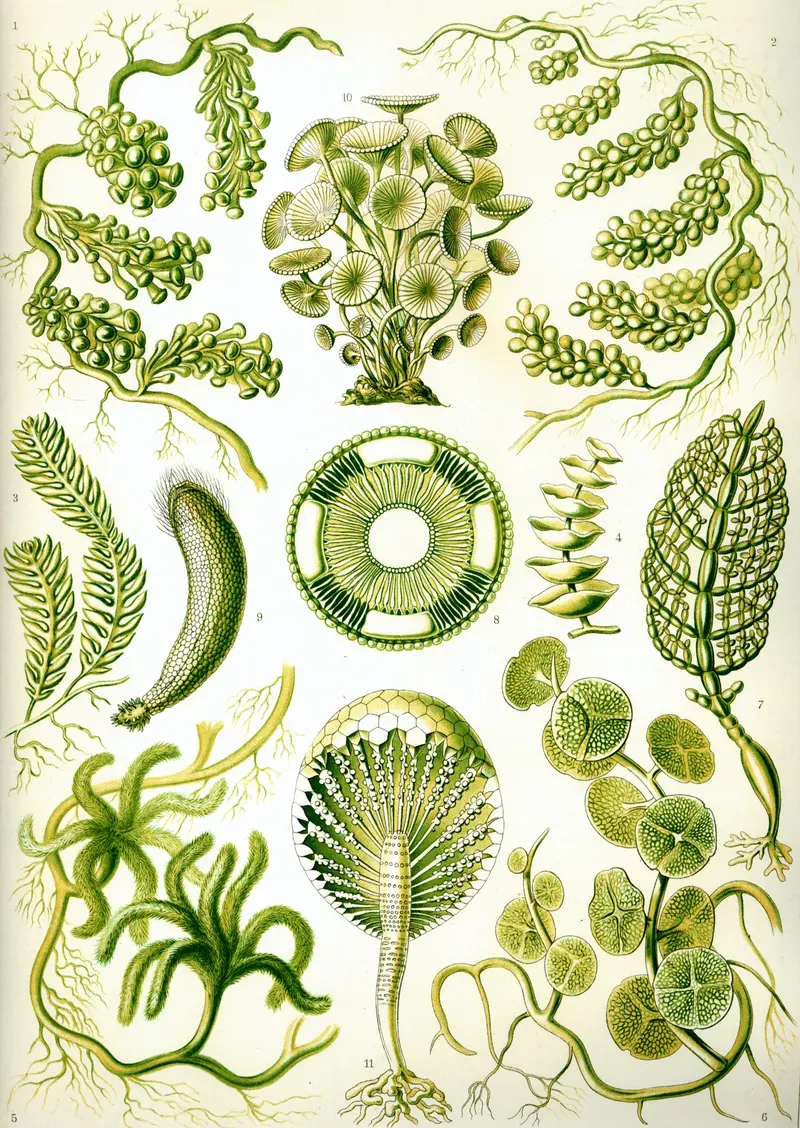
Siphoneae (Green Algae)
Ernst Haeckel

Cirripedia (Barnacles)
Ernst Haeckel

Actiniae (Sea Anemones)
Ernst Haeckel
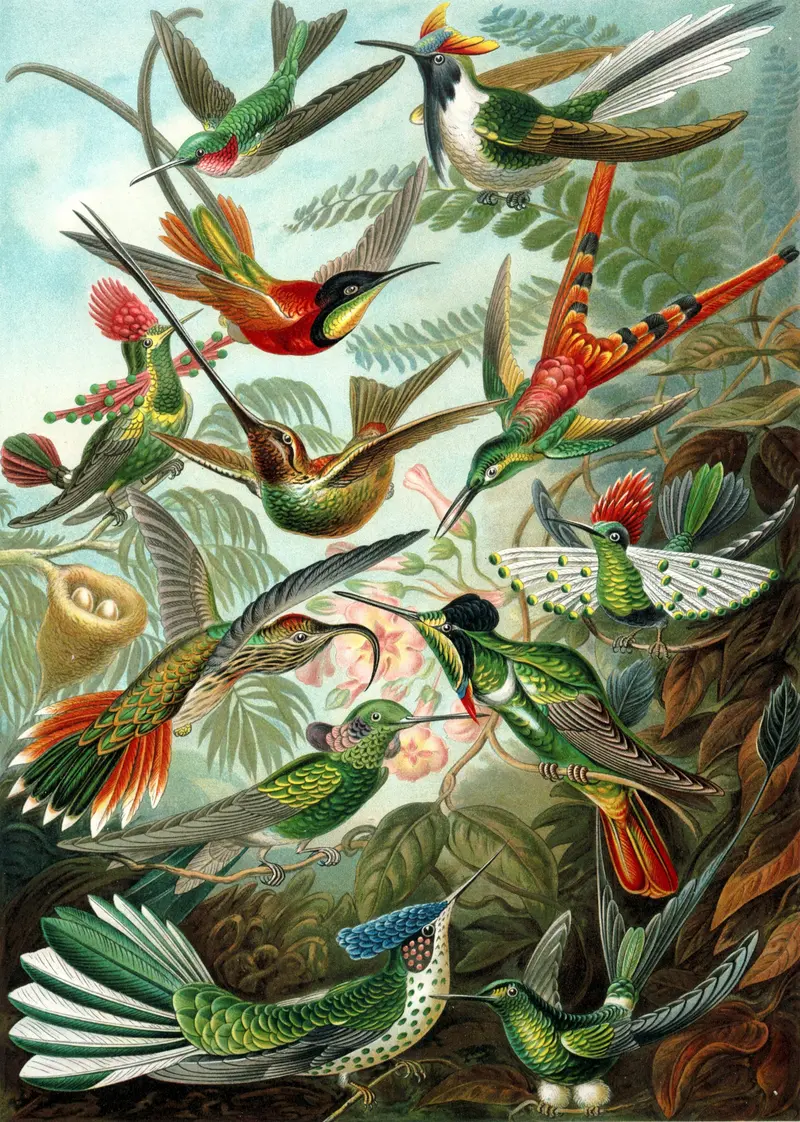
Trochilidae (Hummingbirds)
Ernst Haeckel
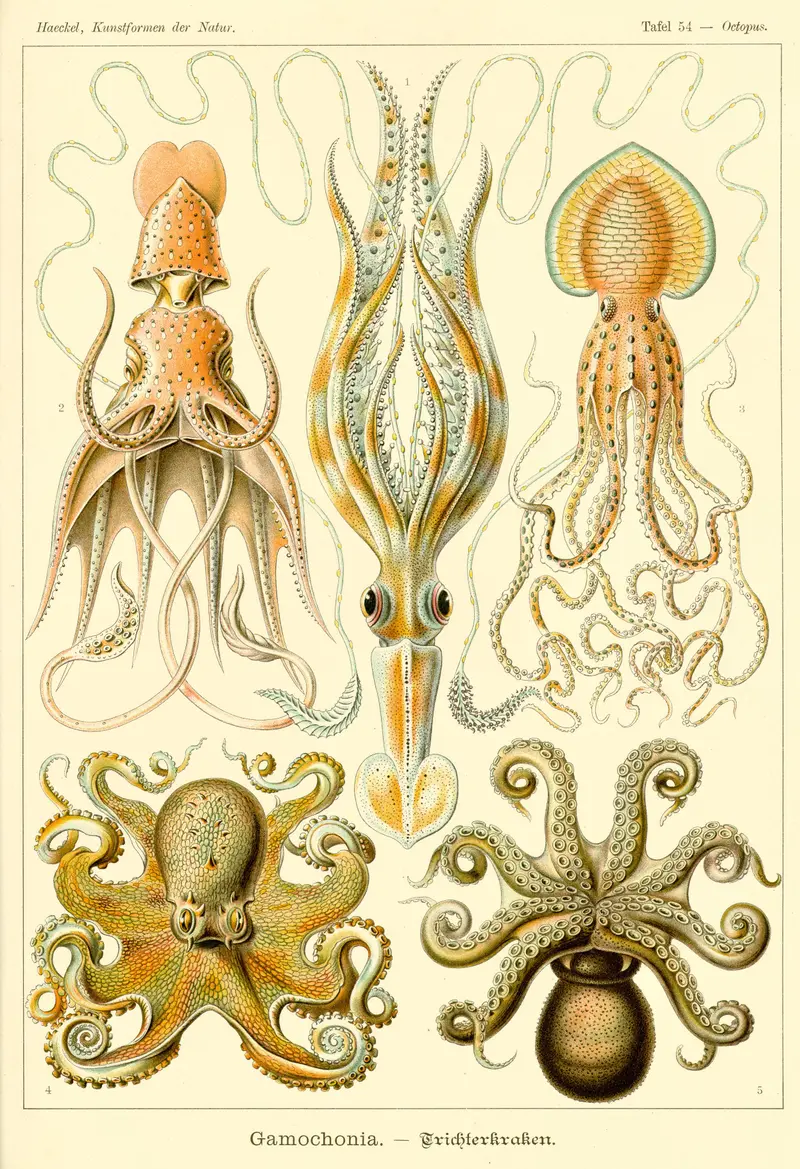
Gamochonia (Cephalopods)
Ernst Haeckel
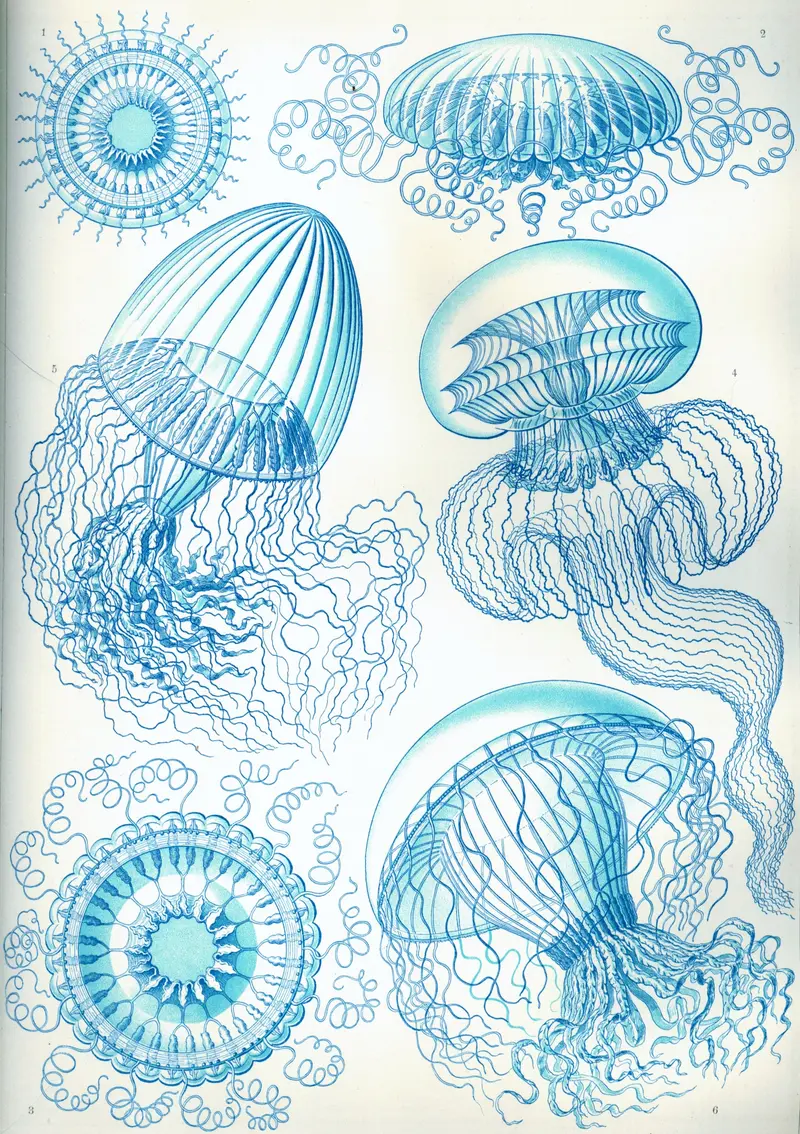
Leptomedusae (Jellyfish)
Ernst Haeckel
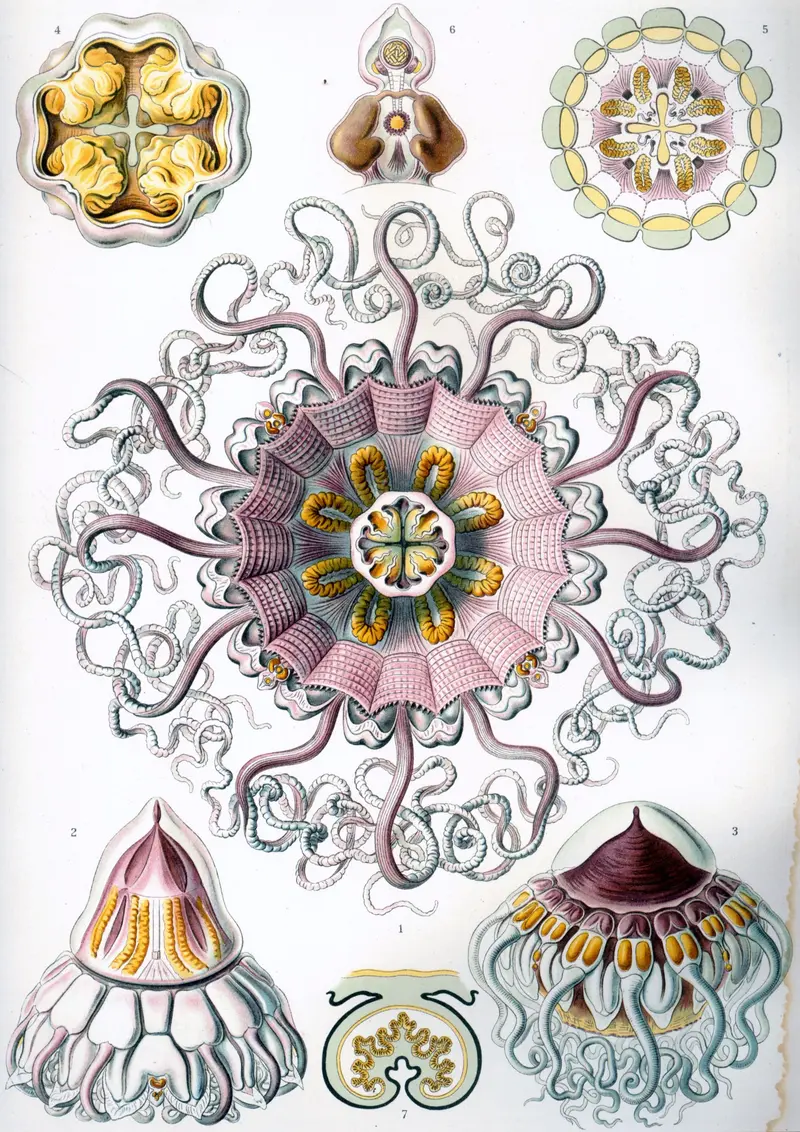
Peromedusae (Jellyfish)
Ernst Haeckel
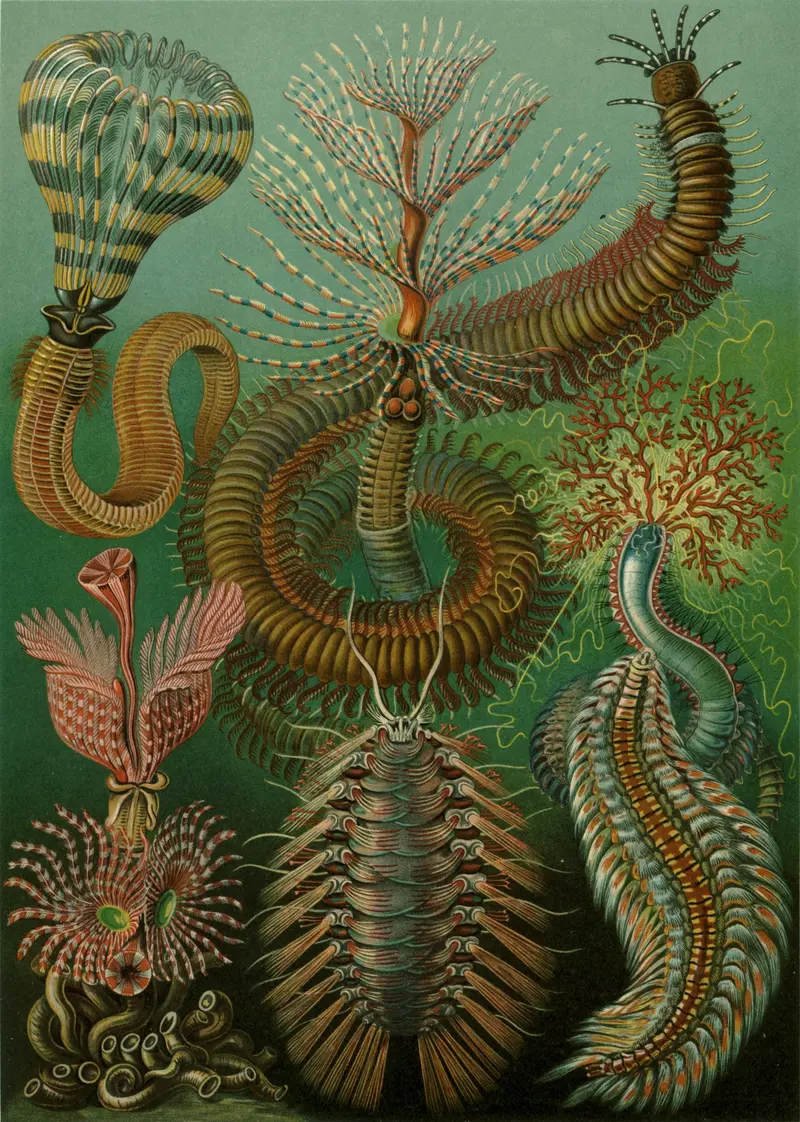
Chaetopoda (Bristle Worms)
Ernst Haeckel
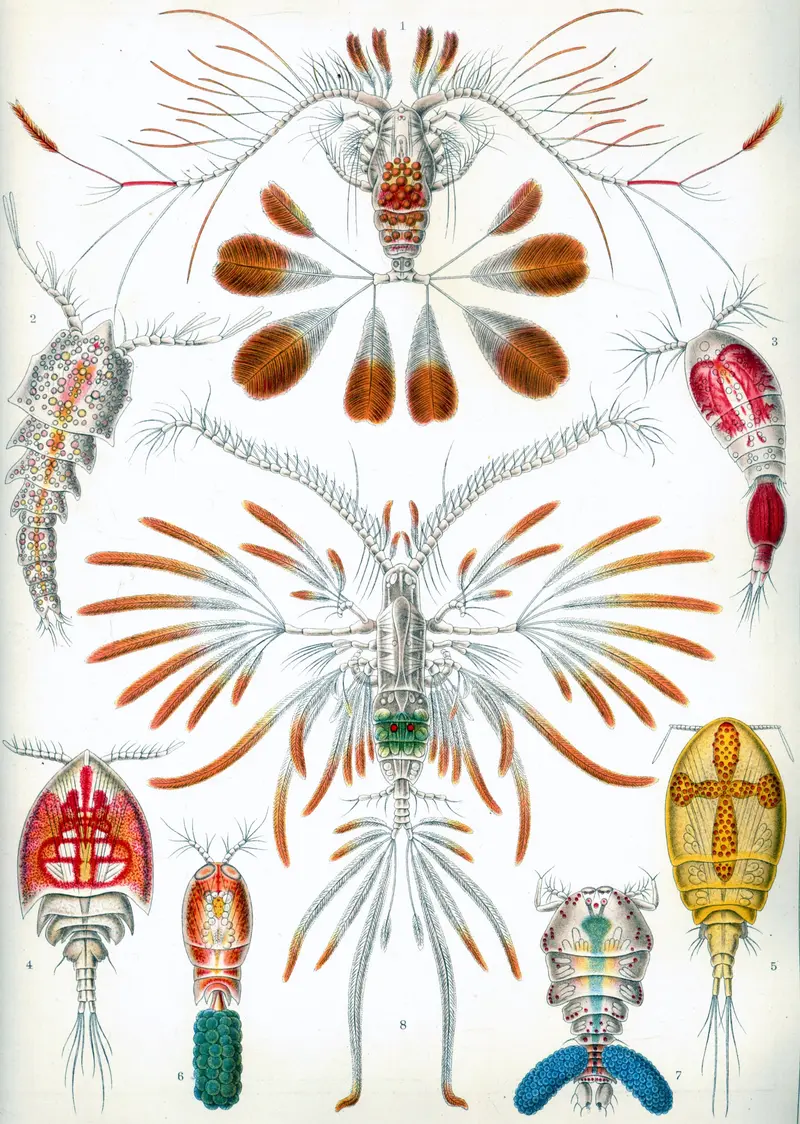
Copepoda (Copepods)
Ernst Haeckel





