
Canal aux environs de Bruxelles — History & Facts
Can beauty exist without sorrow? The shimmering surface of the water beckons contemplation, mirroring life’s poignant reflections. Look to the foreground, where the tranquil canal unfurls, framed by delicate willows and adorned with rustic boats. The muted palette of soft blues and earthy browns invites you to linger, while dappled sunlight dances across the water, creating fleeting moments of brilliance. Notice how the brushwork lends a sense of fluidity to the scene, as if the very air vibrates with the gentle rustle of leaves. Yet, beneath the idyllic surface lies a tension between serenity and transience.
The boats, seemingly still, hint at journeys either begun or left behind, evoking a sense of longing. The surrounding landscape, lush yet quiet, carries an undercurrent of nostalgia, as if whispering stories of the past to those who pause to listen. Each stroke captures not just the beauty of the moment, but also the impermanence that inevitably colors our memories. In 1871, while residing in the coastal town of Trouville-sur-Mer, the artist sought to capture the essence of nature in his work.
This period was marked by a growing interest in plein air painting, a technique that celebrated the immediacy of the outdoors. Boudin’s exploration of reflection and light in Canal aux environs de Bruxelles aligns with the broader movement toward Impressionism, which was beginning to take shape in the art world, setting the stage for future artistic revolutions.
More Artworks by Eugène Boudin
Browse all →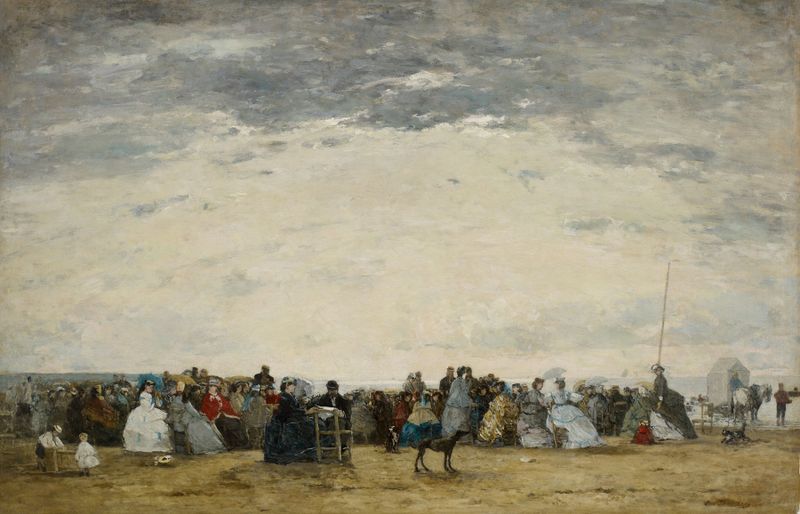
Vacationers on the Beach at Trouville
Eugène Boudin

Washerwoman near Trouville
Eugène Boudin
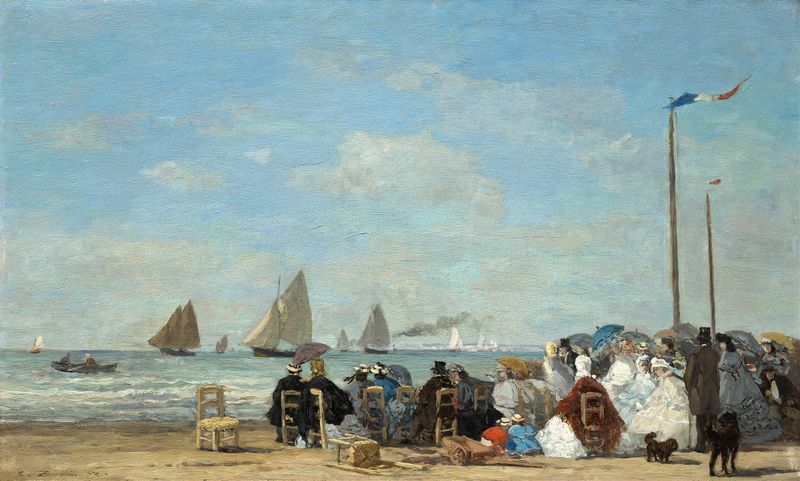
Beach Scene at Trouville
Eugène Boudin

Port aux environs d’Honfleur
Eugène Boudin

Le Faou, un coin du village
Eugène Boudin
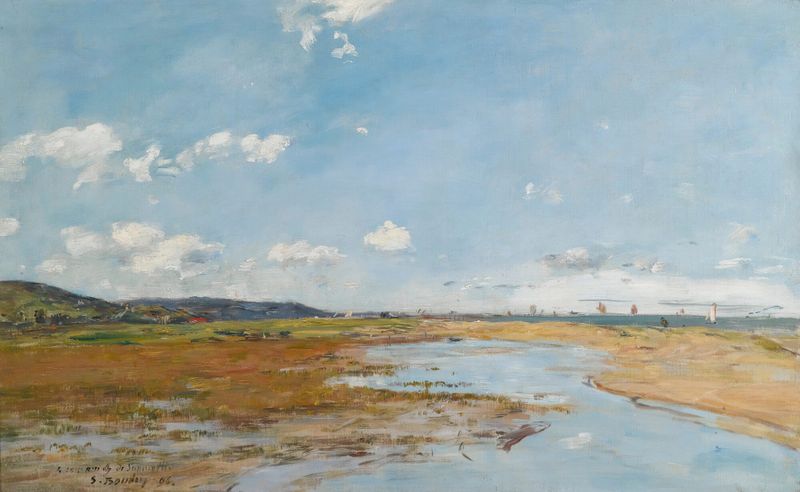
Deauville. Le Rivage
Eugène Boudin
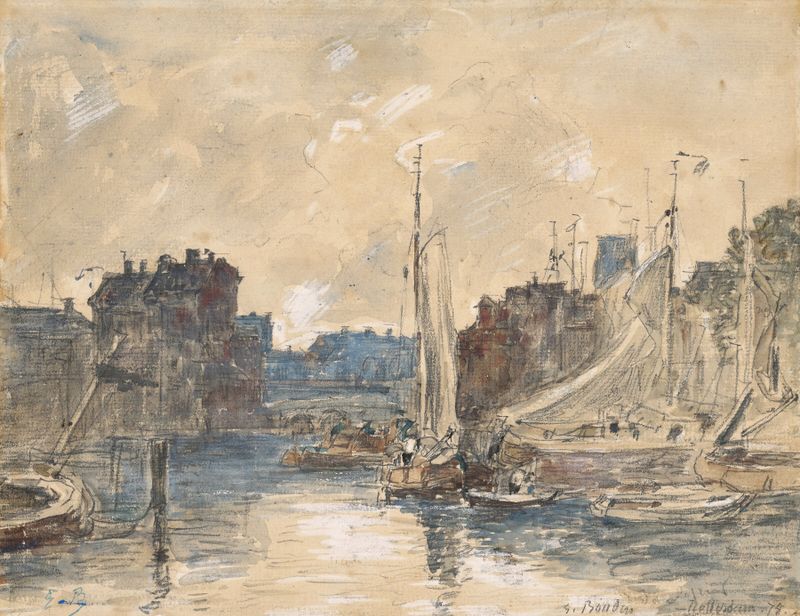
Port de Rotterdam
Eugène Boudin

View of Bordeaux, from the Quai des Chartrons
Eugène Boudin

Trouville, Scène De Plage
Eugène Boudin

Trouville, Le Port
Eugène Boudin





