
Canal en Hollande — History & Facts
Who listens when art speaks of silence? In Canal en Hollande, light becomes both a subject and a medium, inviting reflection on the delicate interplay between nature and human endeavor. Look to the center of the canvas, where the tranquil water mirrors a sky painted in soft hues of blue and gold. Notice how the light dances across the surface, creating ripples that seem to whisper secrets of the day. To the right, a solitary boat glides through the scene, its silhouette stark against the shimmering reflection, while the surrounding trees frame the composition, guiding the eye into the depth of the landscape.
The loose brushwork evokes a sense of spontaneity, as if the moment is captured on the cusp of change. The emotional tension lies in the contrast between the serenity of the water and the dynamic energy of the sky. The subtle blending of colors suggests the fleeting nature of time, hinting at the transition from day to evening. Jongkind’s choice of palette not only evokes a sense of calm but also hints at the complexities of life, where beauty coexists with impermanence.
The lone figure in the boat appears both connected to and isolated from the vastness surrounding them, embodying the solitude that often accompanies contemplation. In 1869, while living in France, Jongkind was at a pivotal point in his career, having moved from his native Netherlands to pursue inspiration in landscapes reminiscent of his childhood. This period was marked by artistic experimentation and a growing fascination with light and atmosphere, elements that would later influence Impressionism. His work, including this piece, reflects a deep appreciation for the interplay of natural elements, culminating in a serene yet thought-provoking exploration of the world.
More Artworks by Johan Barthold Jongkind
Browse all →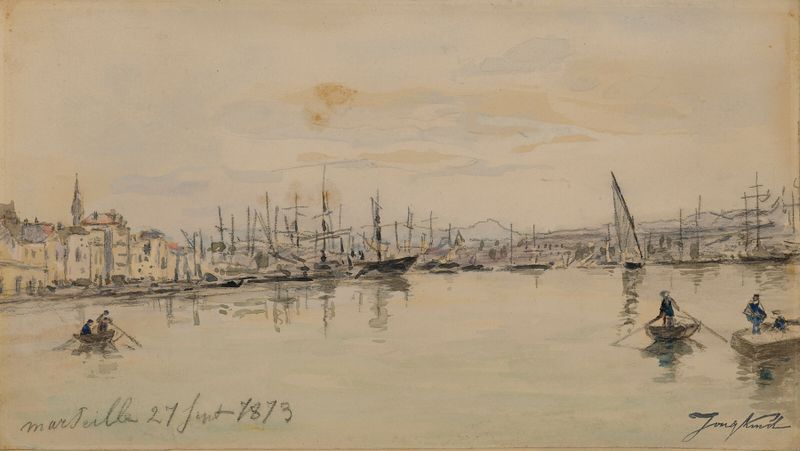
Le Port de Marseille
Johan Barthold Jongkind

Canal Saint-Martin
Johan Barthold Jongkind

Countryside near Brezins, between Grenoble and Vienne
Johan Barthold Jongkind

Notre-Dame vue du quai de la Tournelle
Johan Barthold Jongkind

Environs de Grenoble
Johan Barthold Jongkind

Clair de lune à Overschie (environs de Rotterdam)
Johan Barthold Jongkind

Port de Honfleur
Johan Barthold Jongkind
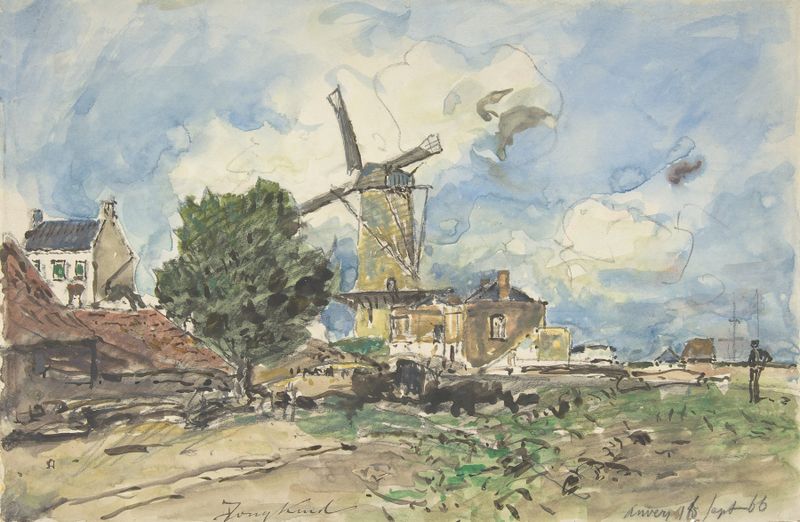
Wind Mill at Antwerp
Johan Barthold Jongkind

Le Havre
Johan Barthold Jongkind

The Church of Overschie
Johan Barthold Jongkind





