
Cannon Rock — History & Facts
In a world often clouded by chaos, true beauty emerges from simplicity, inviting us to pause and reflect. Look to the sweeping horizon in Cannon Rock, where a gentle blend of blues and greens breathes life into the seascape. The painter's deft brushwork reveals the tumultuous waves crashing against the rugged rocks, showcasing the power of nature. Notice how the sunlight filters through the clouds, casting soft highlights on the water and illuminating the shoreline, thereby creating a sense of movement and depth that captivates the viewer's eye. In the foreground, the interplay of light and shadow evokes a harmonious tension.
The contrast between the dark, jagged rocks and the bright, foamy surf symbolizes a balance between strength and fragility. Furthermore, the solitary figure on the distant shore reflects humanity's insignificance against nature's grandeur, yet also represents the innate desire for connection with the sublime. This delicate dance of elements suggests not only the eternal struggle between man and nature but also an underlying beauty in the coexistence of both. Winslow Homer painted Cannon Rock in 1895 during a period of personal solitude following the death of his beloved mother.
This loss profoundly affected his outlook, driving him to seek solace in nature. At this time, the art world was transitioning through Impressionism and the advent of modernism, yet Homer remained rooted in a realist tradition that emphasized the raw beauty of the American landscape. The painting stands as a testament to both his artistic evolution and the timeless allure of the natural world.
More Artworks by Winslow Homer
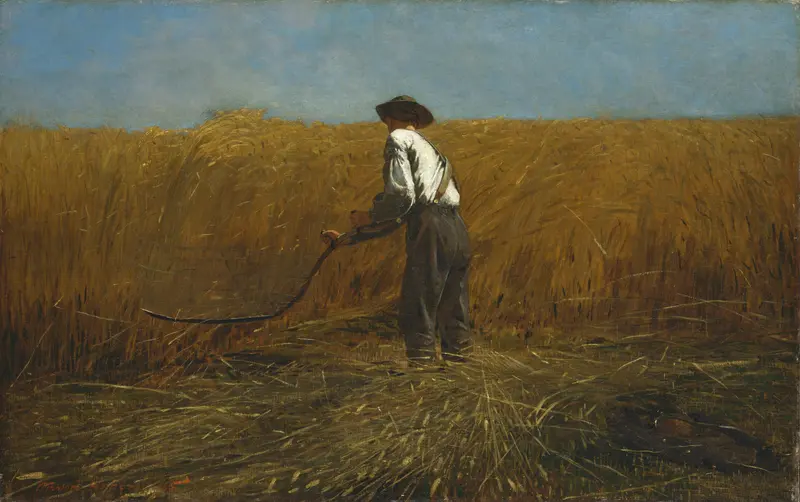
The Veteran in a New Field
Winslow Homer
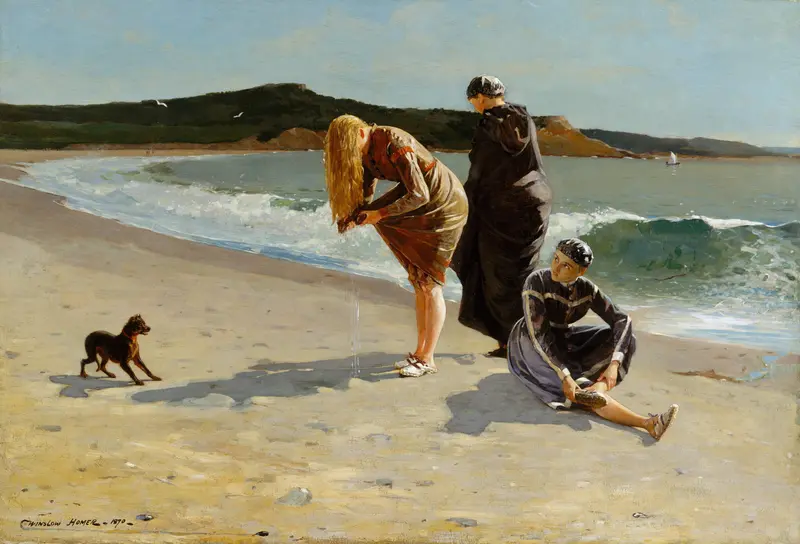
Eagle Head, Manchester, Massachusetts (High Tide)
Winslow Homer
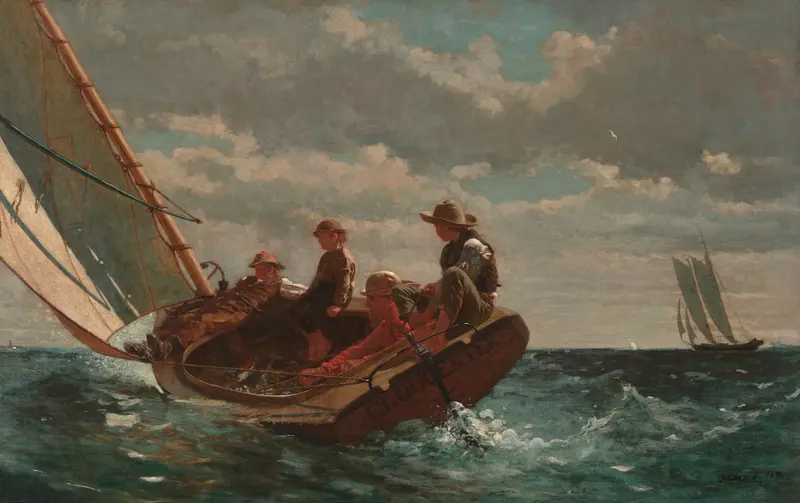
Breezing Up (A Fair Wind)
Winslow Homer
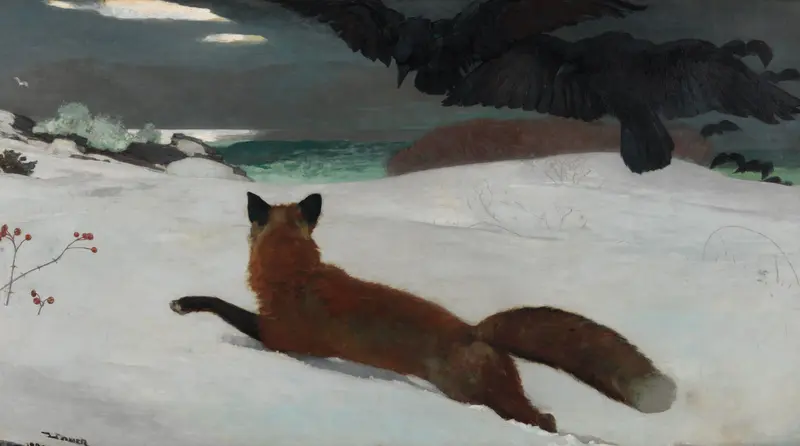
The Fox Hunt
Winslow Homer
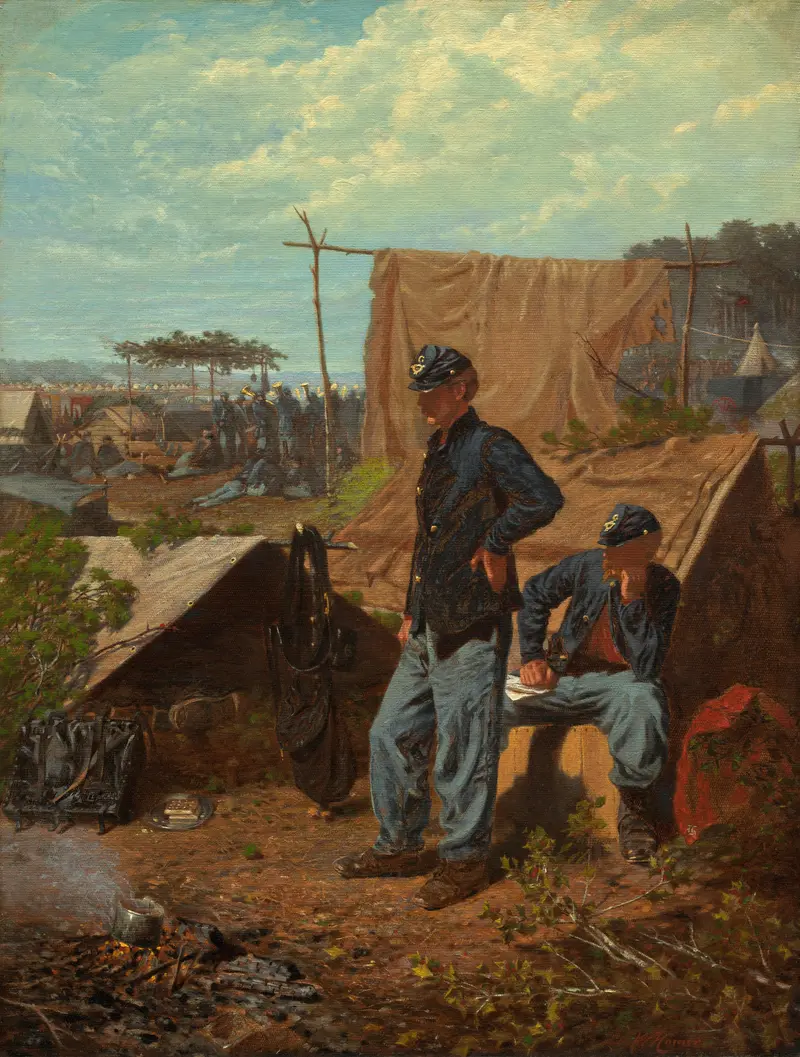
Home, Sweet Home
Winslow Homer
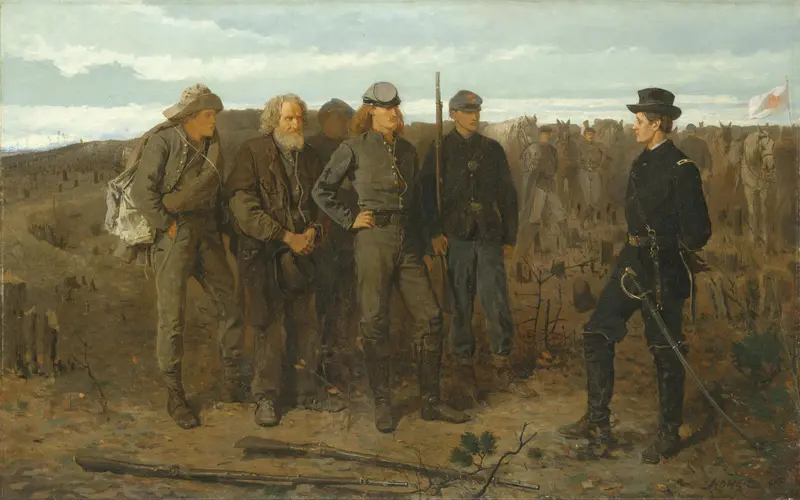
Prisoners from the Front
Winslow Homer
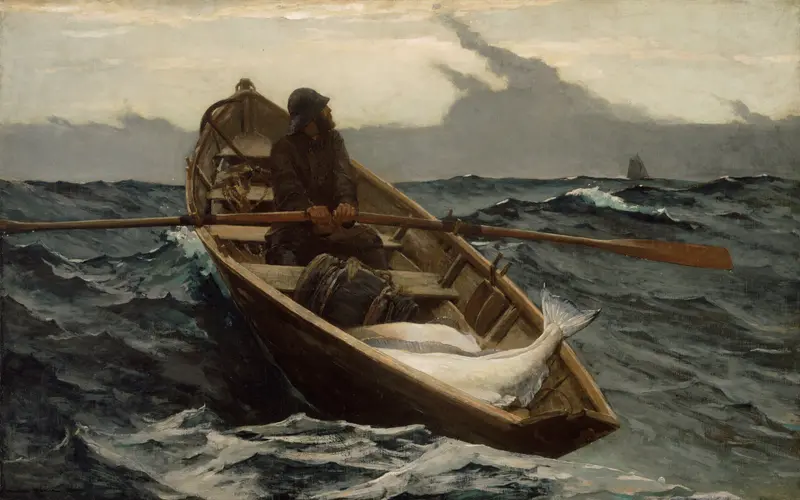
The Fog Warning
Winslow Homer
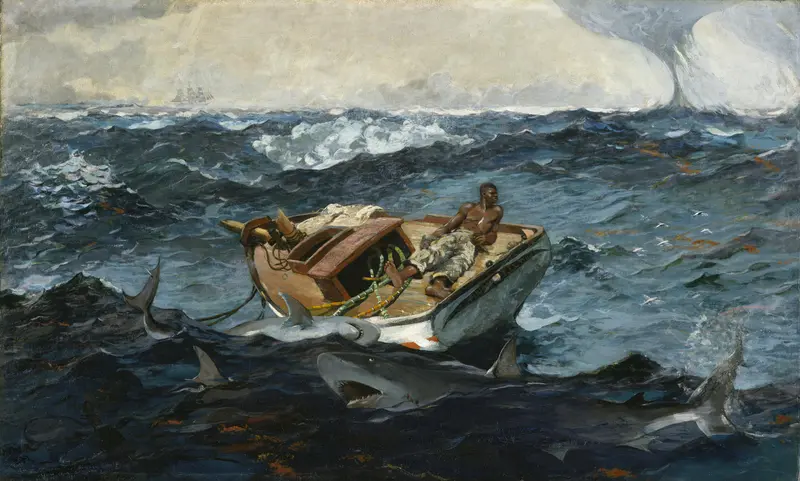
The Gulf Stream
Winslow Homer
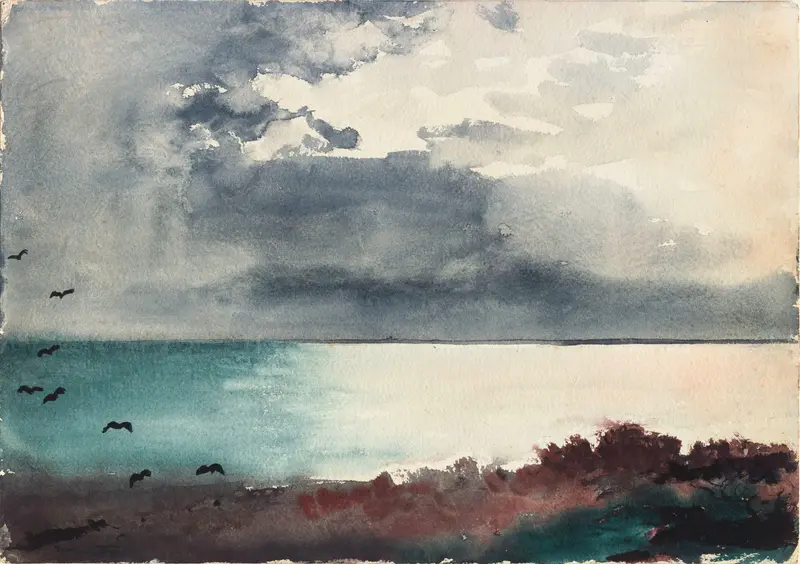
Breaking Storm, Coast of Maine
Winslow Homer
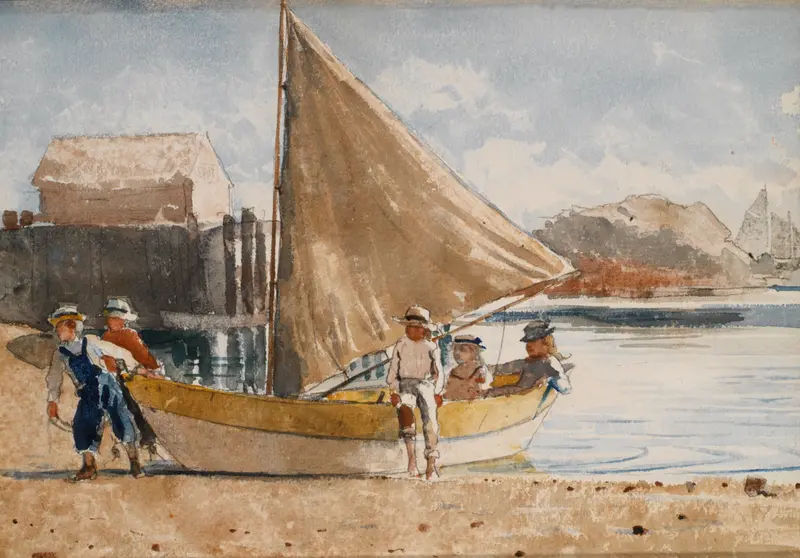
Summertime
Winslow Homer





