
Capriccio: A Circular, Domed Church — History & Facts
No single church like the one at the heart of Capriccio: A Circular, Domed Church ever stood in Venice, yet the building feels familiar. That is the caprice, or "capriccio," of Canaletto: a fantasy architecture conjured from fragments of real Venetian landmarks, composed into a scene that is both possible and impossible. In the 18th century, such paintings were prized by British Grand Tourists, who sought souvenirs of Italy that were more imaginative than literal.
This work belongs to a tradition of architectural invention that delighted collectors with its blend of memory and dream. The scene unfolds beneath a luminous sky, where a grand domed church rises at the center, its columns and drum recalling the Roman Pantheon as well as Venetian icons like Santa Maria della Salute. Figures stroll and converse in the wide piazza, their everyday activity grounding the fantastical architecture in lived experience. The play of light across the stone facades and the careful recession of space draw the viewer into this invented world, blurring the line between reality and fantasy.
Unlike Piranesi, whose capricci often veer into the ruinous and dramatic, Canaletto offers an inviting, orderly vision, celebrating the harmony of classical forms. The precise origin of this painting remains uncertain, as does its original patron, but works of this type were frequently made for the export market in the 1740s, when Canaletto was at the height of his fame. Many such capricci traveled to England, shaping British taste for Italianate architecture. Over the centuries, Capriccio: A Circular, Domed Church has been admired for its technical skill and imaginative composition, and it is now recognized as a fine example of Canaletto's inventive spirit.
The painting's current location in a public collection ensures that viewers can continue to puzzle over its hybrid forms and the artist's playful vision.
More Artworks by Canaletto

The Grand Canal, Venice, looking north-west from the Ca' Corner to the Ca' Contarini degli Scrigni, with the campanile of Santa Maria della Carità
Canaletto

Venice, Bacino di San Marco on Ascension Day
Canaletto

Windsor Castle
Canaletto

The Grand Canal looking North-East from the Palazzo Dolfin-Manin to the Rialto Bridge
Canaletto

Venice: The Campo SS. Giovanni e Paolo
Canaletto

Venice: The Grand Canal from the Rialto to the Palazzo Foscari
Canaletto
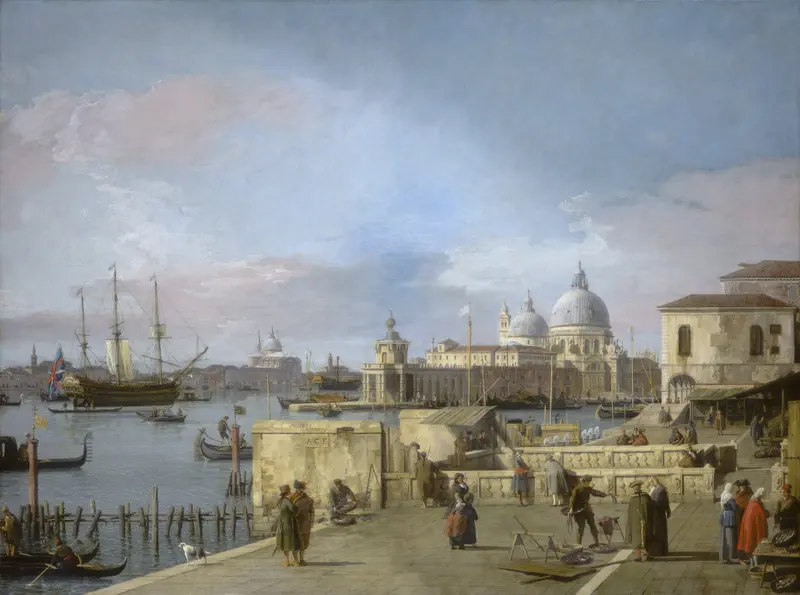
Venice: The Molo towards the Dogana and Santa Maria della Salute
Canaletto

Venice: The Piazzetta
Canaletto
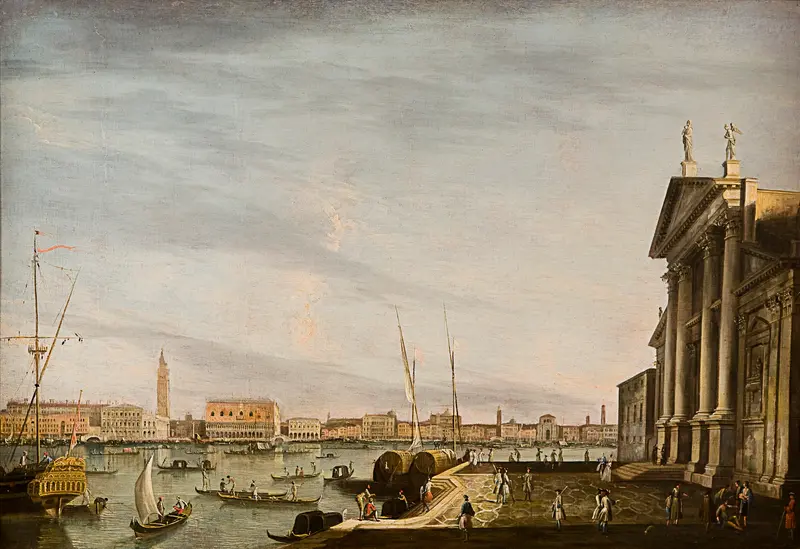
Venice, View of San Giorgio Maggiore
Canaletto

London: The Thames from Somerset House Terrace towards Westminster
Canaletto


