
Capriccio with a Pointed Arch — History & Facts
No Venetian scene by Canaletto has sparked more curiosity among art historians than Capriccio with a Pointed Arch. Unlike his celebrated views of real landmarks, this painting invents a grand architectural fantasy, blending fragments of actual Venetian buildings with imagined ruins. The pointed arch at its center is especially striking, as it stands out from the classical round arches that dominate most of Canaletto's cityscapes.
Scholars have long debated whether this arch alludes to Venice’s Gothic heritage or serves as a playful challenge to the conventions of architectural painting in the early eighteenth century. Within the frame, time and place seem suspended. Sunlight pours through the soaring arch, illuminating a crumbling façade and casting long shadows across a stone terrace. Figures in contemporary dress linger at the threshold, dwarfed by the scale of the architecture, while a solitary dog sniffs at the base of a column.
The juxtaposition of ruin and daily life hints at the passage of centuries, as if Venice’s past and present coexist in a single moment. Unlike Giovanni Paolo Panini, whose capricci teem with classical ruins and bustling crowds, Canaletto here creates a quieter, more contemplative scene, inviting the viewer to wander through a city that exists only in the imagination. The exact origins of Capriccio with a Pointed Arch remain uncertain, as no definitive record of its commission survives. Works of this type were highly sought after by British Grand Tourists, who prized Canaletto’s ability to conjure both real and fantastical visions of Venice.
The painting’s medium is not securely documented, though most of Canaletto’s capricci are in oil on canvas. Today, it stands as a testament to the artist’s inventive spirit during the 1730s, a period when he was refining his approach to both topographical and imaginary views. Its journey through collections is less well-known than that of his famous vedute, but its blend of fantasy and precision continues to intrigue viewers and scholars alike.
More Artworks by Canaletto

The Grand Canal, Venice, looking north-west from the Ca' Corner to the Ca' Contarini degli Scrigni, with the campanile of Santa Maria della Carità
Canaletto

Venice, Bacino di San Marco on Ascension Day
Canaletto

Windsor Castle
Canaletto

The Grand Canal looking North-East from the Palazzo Dolfin-Manin to the Rialto Bridge
Canaletto

Venice: The Campo SS. Giovanni e Paolo
Canaletto

Venice: The Grand Canal from the Rialto to the Palazzo Foscari
Canaletto
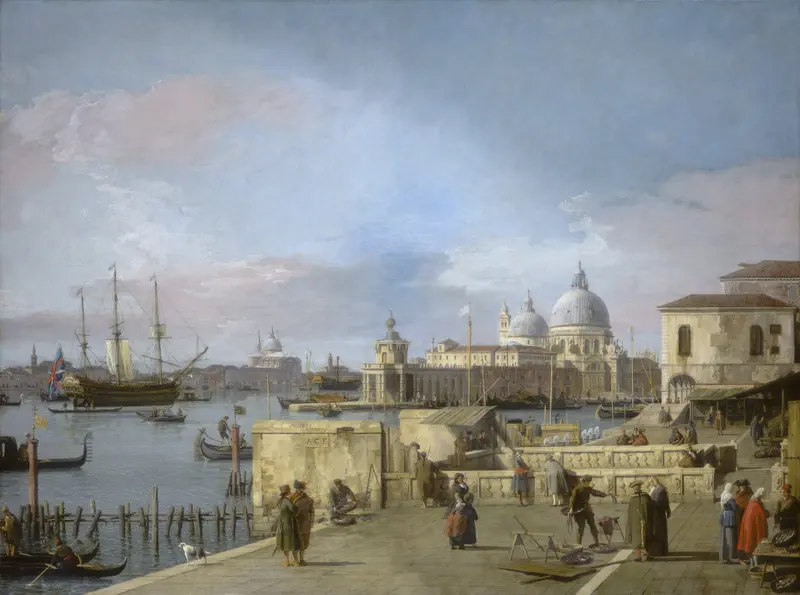
Venice: The Molo towards the Dogana and Santa Maria della Salute
Canaletto

Venice: The Piazzetta
Canaletto
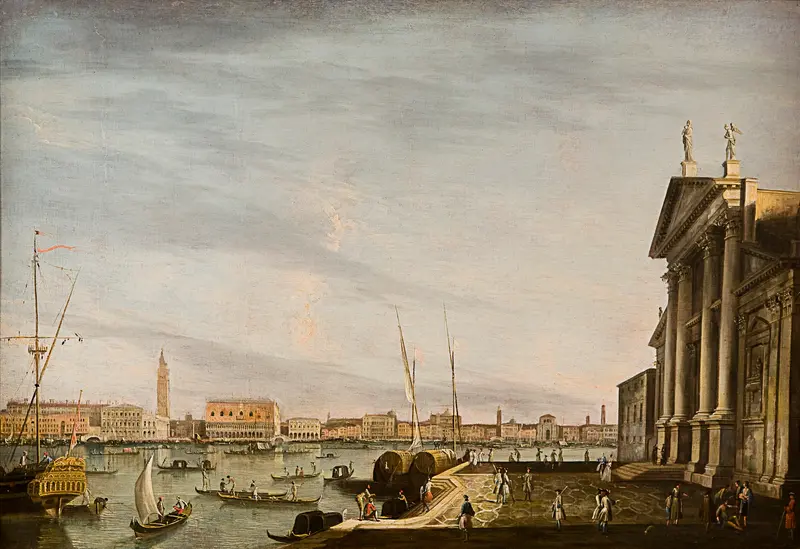
Venice, View of San Giorgio Maggiore
Canaletto

London: The Thames from Somerset House Terrace towards Westminster
Canaletto


