
Casting, Number Two — History & Facts
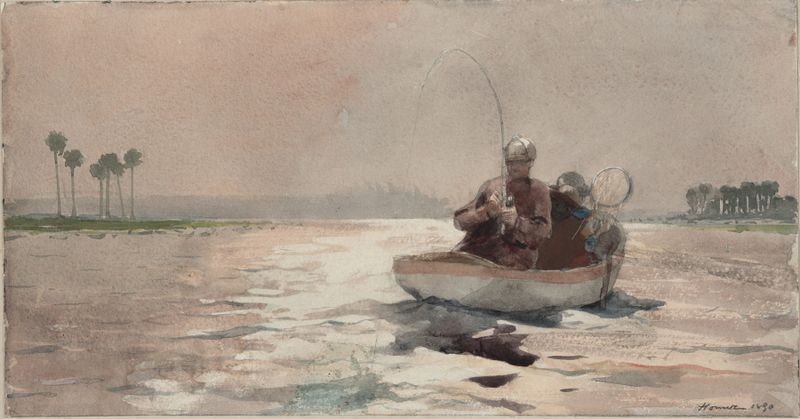
When did color learn to lie? The layers of hues and textures in Casting, Number Two compel us to question the very essence of reality and reflection. Focus on the water that shimmers with a myriad of blues and greens, every ripple a brushstroke of life. Notice how the sunlight dances upon the surface, illuminating the scene in a way that transforms the ordinary into the extraordinary. Look closely at the figure, poised with a fishing rod, their silhouette striking against the vibrant backdrop.
The composition skillfully leads the viewer’s eye through the play of light, inviting contemplation of the unseen depths below. Beneath the apparent tranquility lies a tension between nature and human endeavor. The fisherman, caught in a moment of stillness, suggests a paradox of solitude and connection, as the reflected image in the water becomes almost as significant as his physical presence. The stark contrast between the serene surface and the darkened underwater world hints at the hidden complexities of our environment and our place within it.
Each brushstroke serves as a reminder of the delicate balance between man and nature. In 1894, Winslow Homer was immersed in the vibrant world of American realism, residing in his studio in Prouts Neck, Maine. His focus on the coastlines and fishermen reflected both personal experiences and the broader themes of American life during a period of rapid change. This work, like much of his later career, encapsulated a moment of introspection, marrying the natural world with a sense of quiet contemplation.
More Artworks by Winslow Homer
Browse all →
The Gulf Stream
Winslow Homer
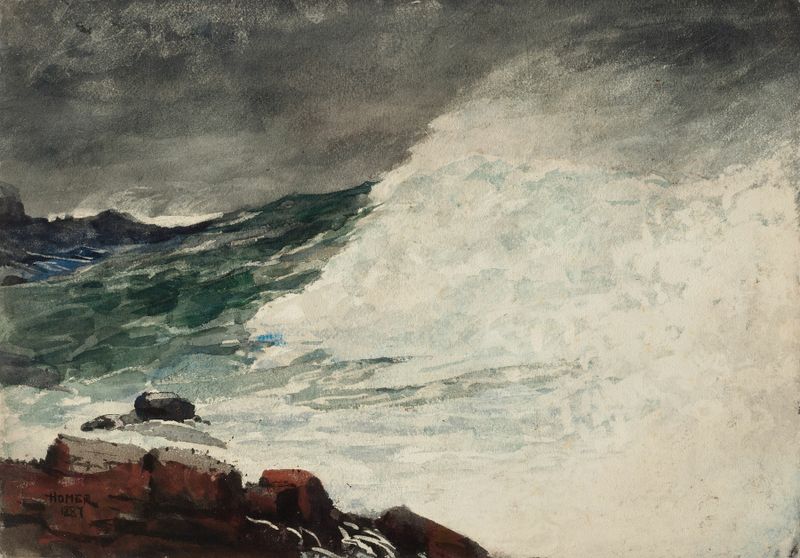
Prout’s Neck, Breaking Wave
Winslow Homer
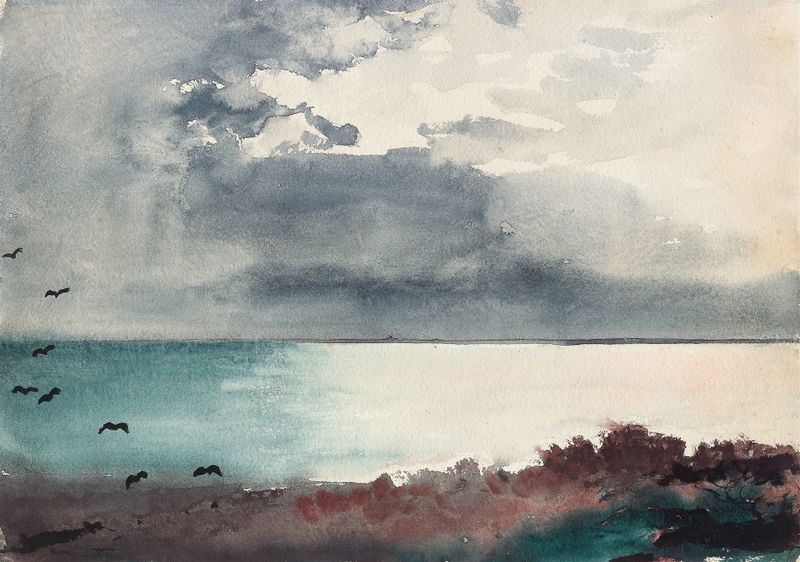
Breaking Storm, Coast of Maine
Winslow Homer
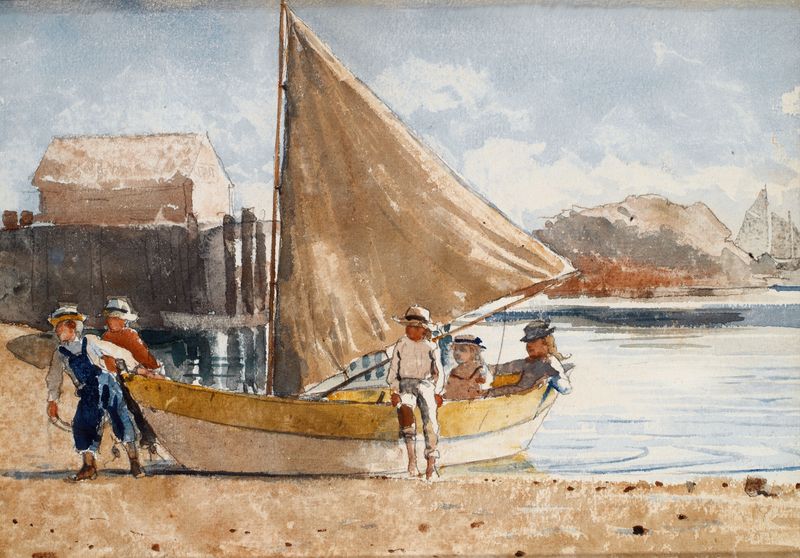
Summertime
Winslow Homer
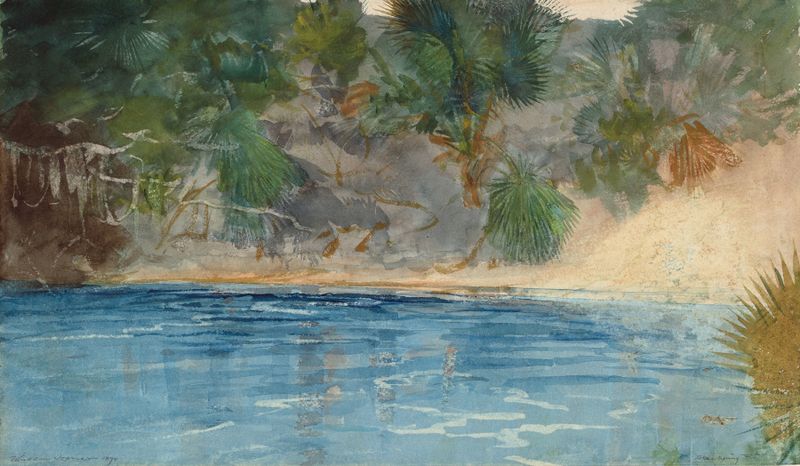
Blue Spring, Florida
Winslow Homer
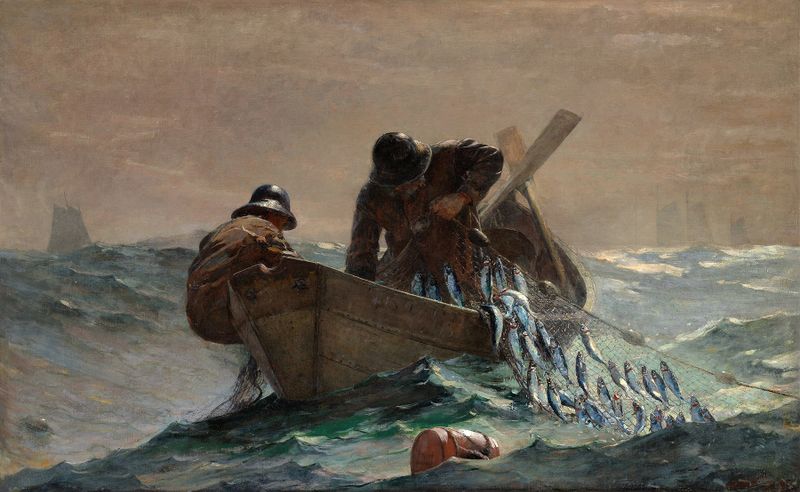
The Herring Net
Winslow Homer
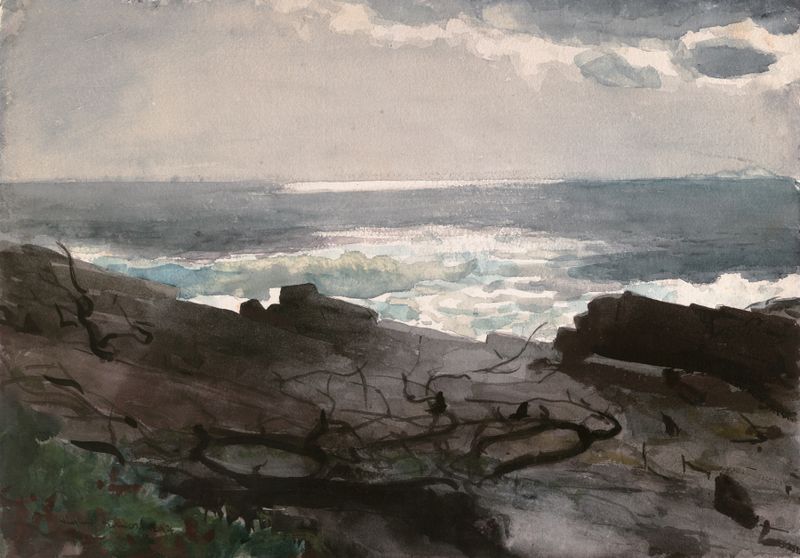
Sunshine and Shadow, Prout’s Neck
Winslow Homer
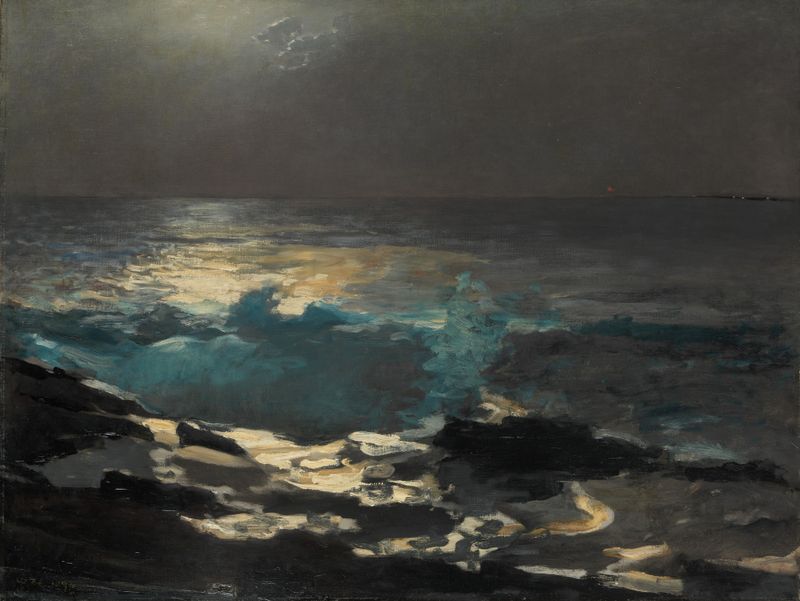
Moonlight, Wood Island Light
Winslow Homer
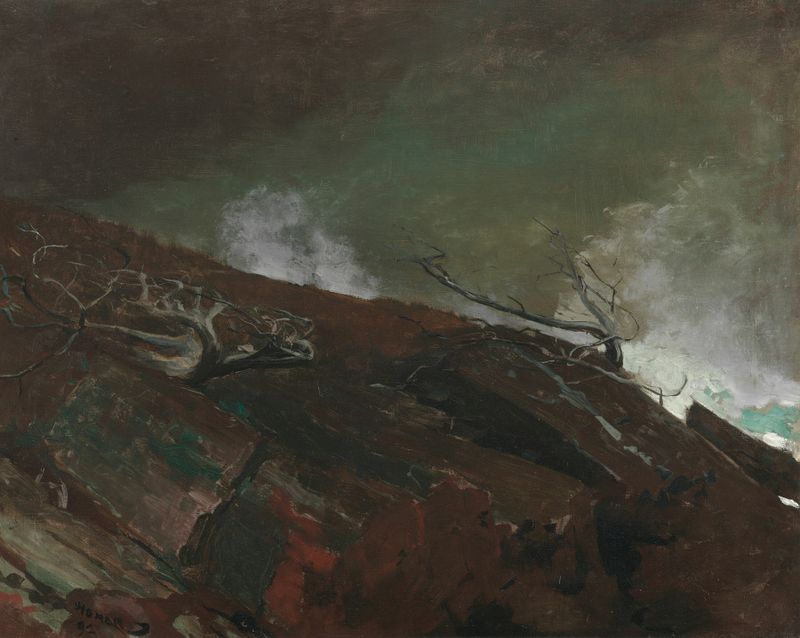
Coast of Maine
Winslow Homer
Bass Fishing – Florida
Winslow Homer




