
Castle on a River — History & Facts
Can beauty exist without sorrow? The landscape unfolds, a splendid yet haunting tableau where the majesty of nature intertwines with the shadows of human existence. Look to the left at the castle rising imperiously above the river. Its stone walls, rendered in subtle shades of gray and brown, stand resolute against the backdrop of a tumultuous sky. The light dances delicately upon the water's surface, creating a shimmering contrast to the dark, brooding clouds above.
Notice how the verdant bank frames the scene, its lush greens offering a sense of vitality that clashes with the ominous atmosphere, suggesting that beneath beauty lies an undercurrent of desolation. The juxtaposition of the serene river and the imposing castle evokes a tension between the permanence of human ambition and the fleeting nature of life. The turbulent sky looms, hinting at imminent storms—both literal and metaphorical—that may engulf the tranquility of the moment. Small, almost unnoticed details, like the solitary figure in the foreground, amplify this contrast, embodying the universal search for solace amid the vast and indifferent beauty of the world. Jacob Salomonsz.
van Ruysdael painted this work in 1644 during a period marked by both personal and societal turmoil. Living in the Dutch Golden Age, he witnessed the rising tensions of political conflicts and the complexity of human emotion reflected in the nature surrounding him. While he was establishing his reputation as a landscape artist, this piece exemplifies his mastery in blending realism with a profound sense of melancholy, a hallmark of his oeuvre.
More Artworks by Jacob Salomonsz. van Ruysdael
Browse all →
River Landscape With Fishermen And Cattle, The Grote Kerk Of Alkmaar Beyond
Jacob Salomonsz. van Ruysdael
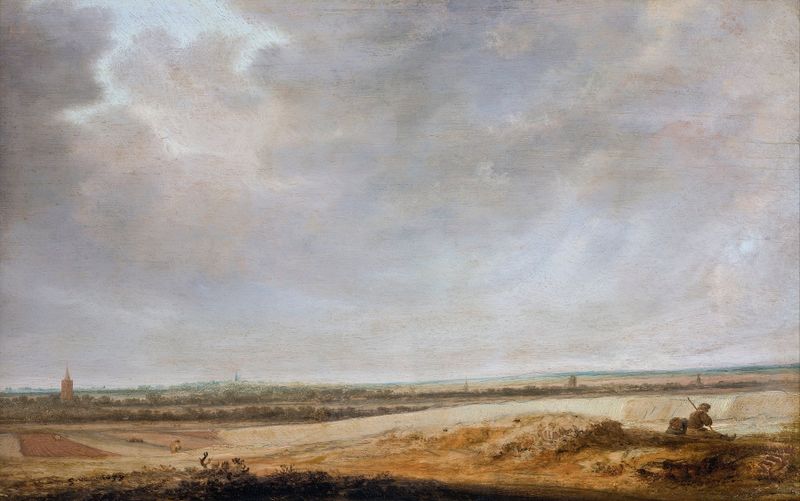
Landscape with Cornfields
Jacob Salomonsz. van Ruysdael

View of Sailing Boats on a Lake
Jacob Salomonsz. van Ruysdael
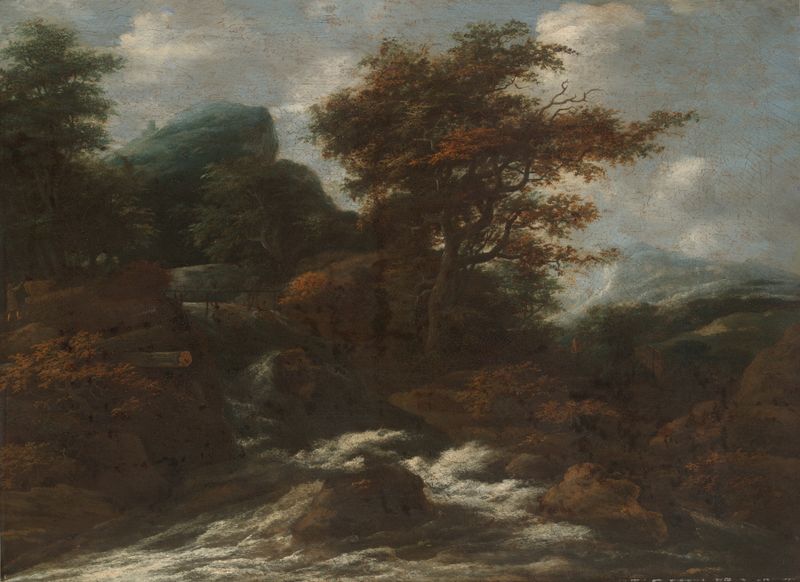
Landscape with Waterfalls
Jacob Salomonsz. van Ruysdael
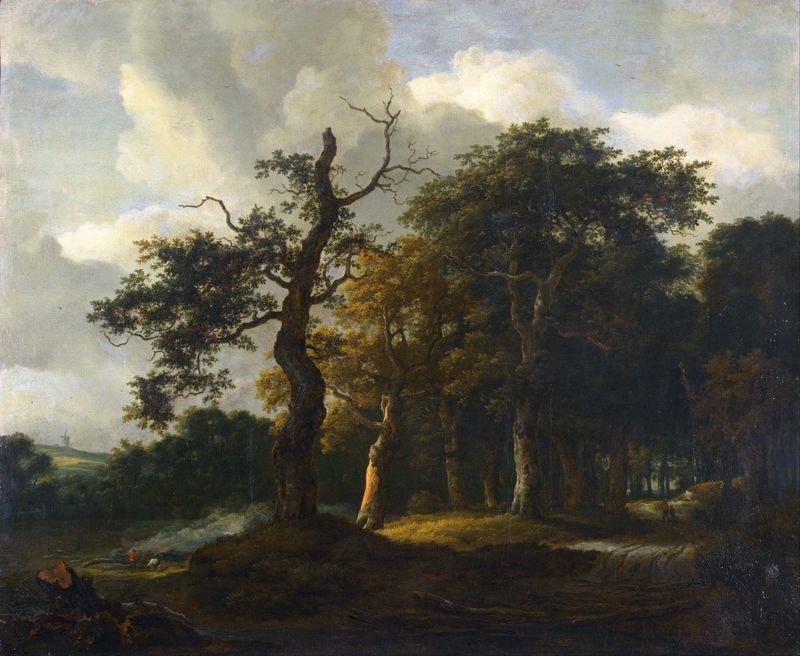
A Road through an Oak Wood
Jacob Salomonsz. van Ruysdael
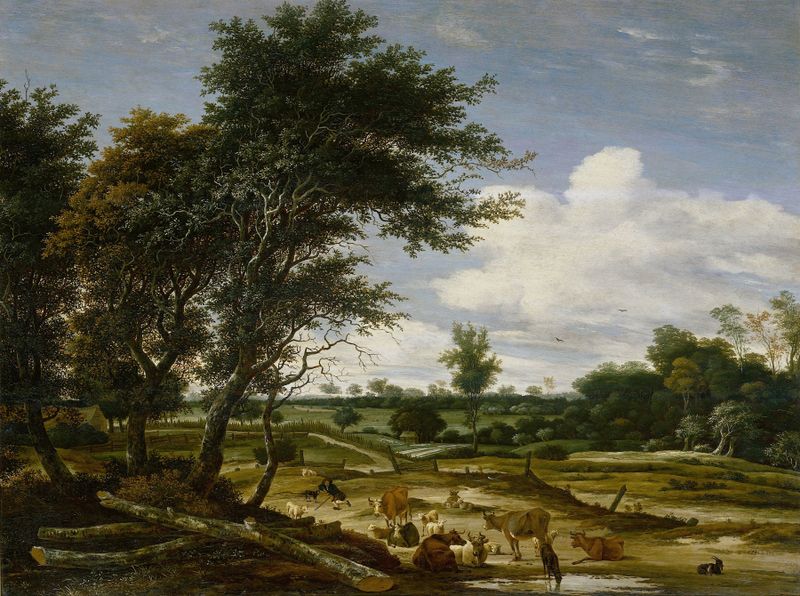
Landscape with herdsmen and cattle
Jacob Salomonsz. van Ruysdael
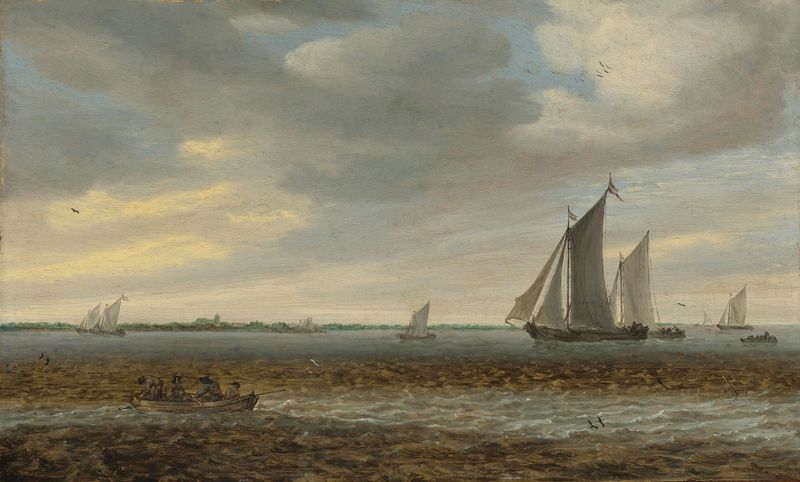
Sailboats And A Rowboat In Coastal Waters
Jacob Salomonsz. van Ruysdael

Marine
Jacob Salomonsz. van Ruysdael

River Landscape
Jacob Salomonsz. van Ruysdael

A Dune Landscape
Jacob Salomonsz. van Ruysdael





