
Charles Lang Freer — History & Facts
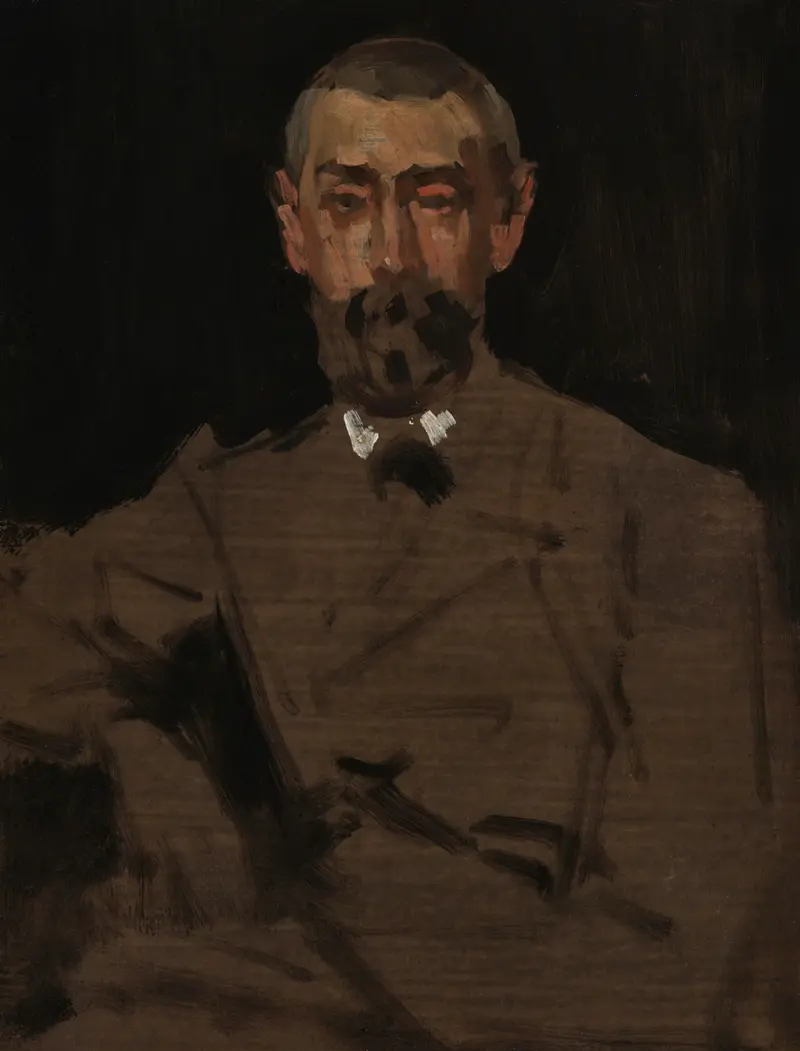
The first thing to catch the eye in Charles Lang Freer by James McNeill Whistler is the way the sitter’s gaze seems to materialize out of the darkness, direct and searching, as if caught mid-thought by the artist’s brush. The face emerges with a startling immediacy, the features modeled in broad, almost ghostly strokes that suggest both the physical presence and the inner life of the man. Whistler’s handling of paint here is loose and unfinished at the edges, the jacket dissolving into the background, drawing all attention to the head and the piercing eyes.
The muted palette of browns and ochres, set against a nearly black ground, creates a mood of introspection and quiet authority, while the sitter’s turned pose and sharply rendered mustache add a note of character and individuality. Painted in 1902, this portrait belongs to a moment when artists were increasingly interested in capturing the psychological truth of their subjects rather than simply recording a likeness. Whistler, known for his experiments with tone and atmosphere, brings a modern sensibility to the traditional genre of portraiture—his brushwork here is both economical and expressive, leaving much to the imagination. Portraits like this were often commissioned to honor patrons or prominent figures, and in the early twentieth century, they served as both personal mementos and public statements of status or taste.
While little is recorded about the specific circumstances of this painting, its presence today in a major collection invites us to linger on the subtle drama of the sitter’s expression, and to wonder about the relationship between artist and subject that such a portrait preserves.
More Artworks by James McNeill Whistler
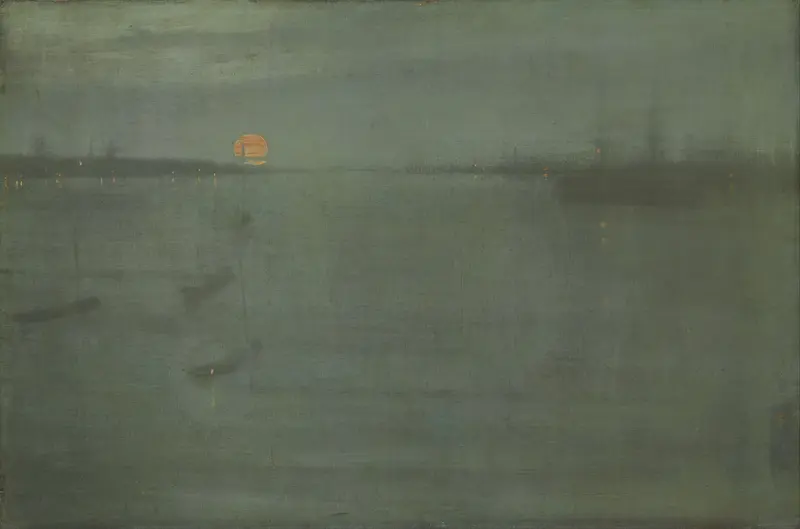
Nocturne: Blue and Gold—Southampton Water
James McNeill Whistler
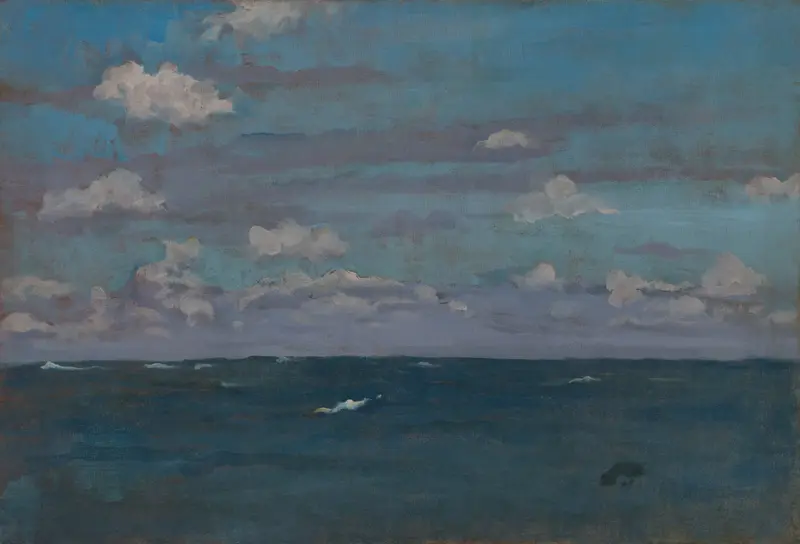
Violet and Silver—The Deep Sea
James McNeill Whistler
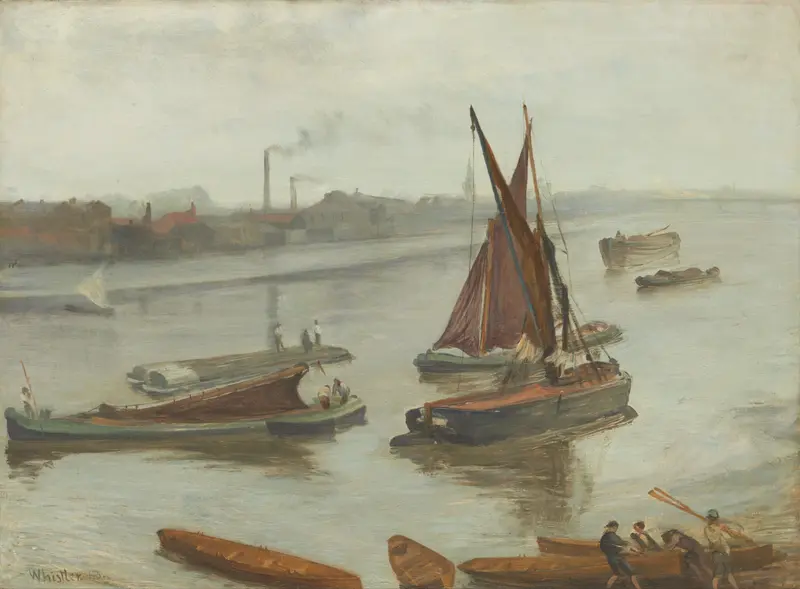
Grey and Silver: Old Battersea Reach
James McNeill Whistler
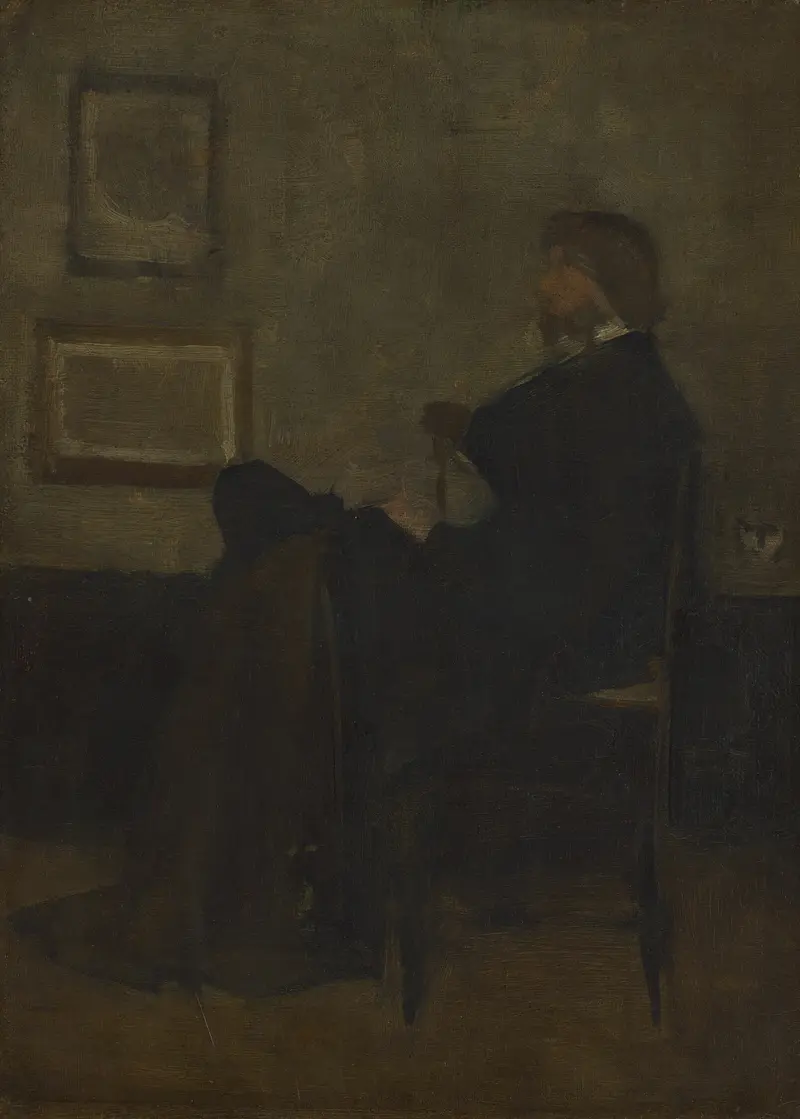
Study for "Arrangement in Grey and Black, No. 2: Portrait of Thomas Carlyle"
James McNeill Whistler
Portrait of M. R. Elden
James McNeill Whistler
The Blue Sea
James McNeill Whistler
Arrangement in Gray: Portrait of the Painter
James McNeill Whistler
Arrangement in Grey and Green. Portrait of John James Cowan
James McNeill Whistler
Valparaiso Harbor
James McNeill Whistler
Whistler's Mother
James McNeill Whistler





