
Chaumière et pâturage sur les bords de la Touques — History & Facts
Is this a mirror — or a memory? The gentle undulation of the landscape invites contemplation, as if time folds back upon itself to reveal a moment forever captured in nature's embrace. Look to the left at the charming thatched cottage, its soft, muted tones harmonizing effortlessly with the lush greens of the surrounding fields. Notice how the light falls upon the rippling surface of the Touques River, sparkling like scattered diamonds beneath a serene sky. The brushstrokes are loose yet deliberate, each stroke breathing life into the scene, blending impressionistic flair with precise detailing that beckons the viewer to linger. As you explore the painting, consider the tension between the tranquil beauty of the pastoral setting and the looming presence of the river.
The juxtaposition of the calm landscape and the flowing water symbolizes the passage of time and the fleeting nature of the moment. The delicate interplay of light and shadow deepens the emotional resonance, suggesting a longing for continuity and connection in an ever-changing world. Eugène Boudin painted this piece between 1860 and 1865 while residing in Normandy, a region that profoundly influenced his work. At this time, he was emerging as a pivotal figure in the Impressionist movement, championing the en plein air technique that celebrated outdoor painting.
Boudin's dedication to capturing atmospheric effects would later influence many of his contemporaries, marking a significant departure from the conventional academic style of his predecessors.
More Artworks by Eugène Boudin
Browse all →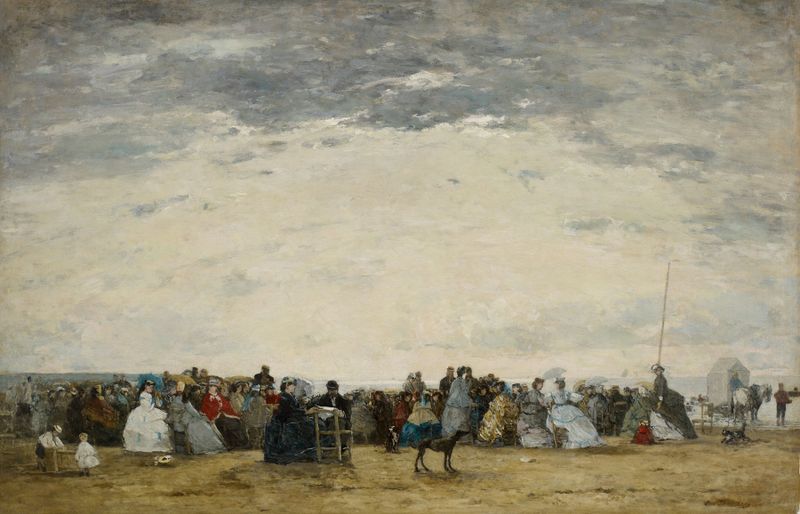
Vacationers on the Beach at Trouville
Eugène Boudin

Washerwoman near Trouville
Eugène Boudin
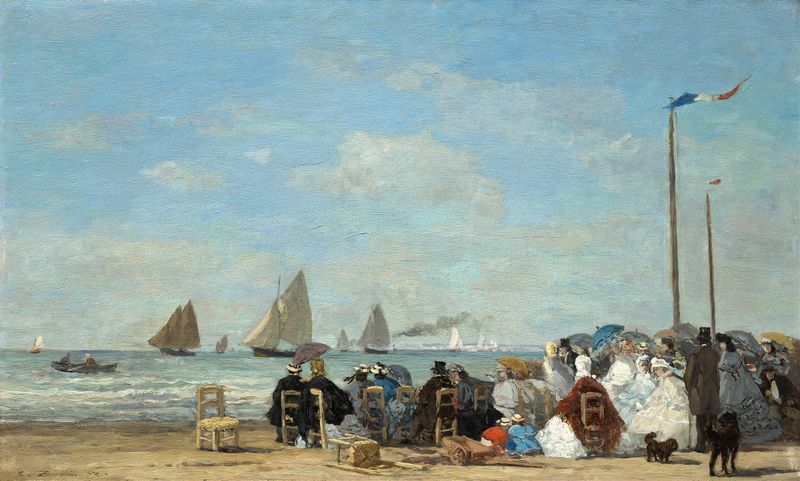
Beach Scene at Trouville
Eugène Boudin

Port aux environs d’Honfleur
Eugène Boudin

Le Faou, un coin du village
Eugène Boudin
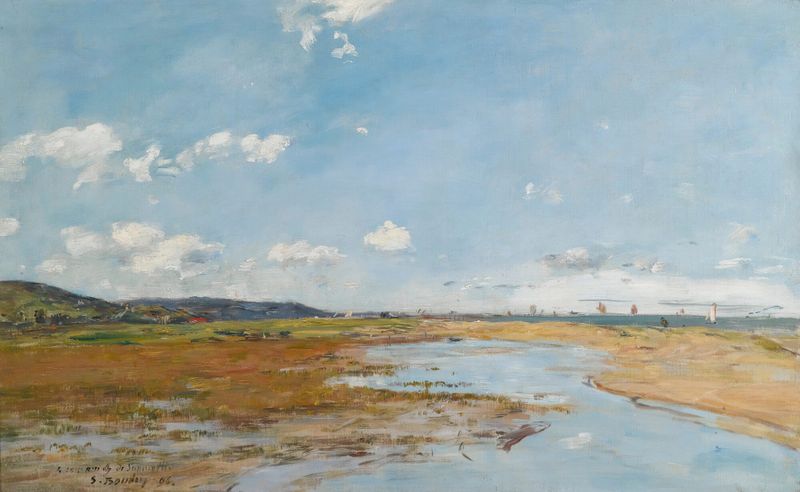
Deauville. Le Rivage
Eugène Boudin
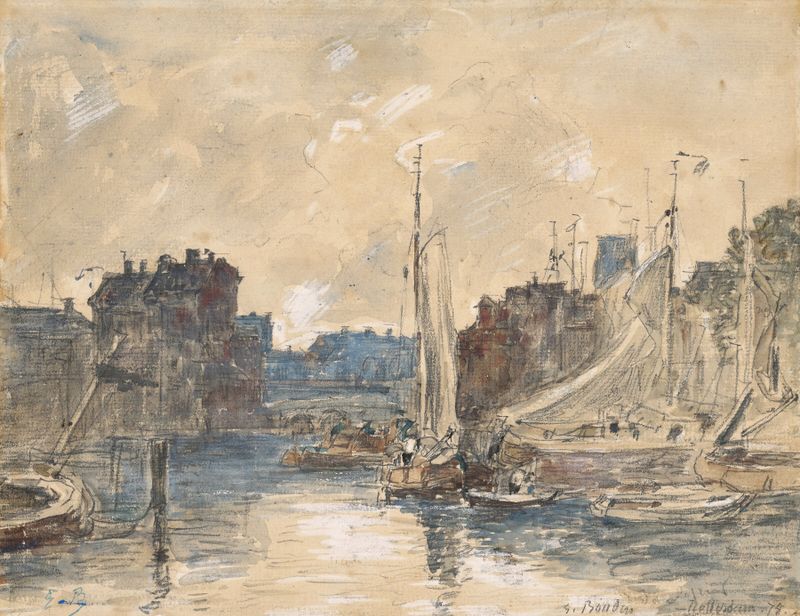
Port de Rotterdam
Eugène Boudin

View of Bordeaux, from the Quai des Chartrons
Eugène Boudin

Trouville, Scène De Plage
Eugène Boudin

Trouville, Le Port
Eugène Boudin





