
Chemin animé, bord de rivière — History & Facts
What if silence could speak through light? In the hazy embrace of twilight, a riverbank scene emerges, where whispers of memory linger in the air. Look to the left, where the shimmering surface of the water reflects a palette of soft blues and muted greens. Notice how the gentle strokes of paint create a rhythmic flow that draws the eye toward the serene path winding along the river’s edge. The subtle play of light casts delicate shadows, inviting contemplation, as if the landscape holds secrets waiting to be discovered. Upon closer inspection, a juxtaposition of movement and stillness unfolds.
The lively figures meandering along the path suggest life and connection, yet their distant presence evokes a poignant sense of absence, hinting at what has been lost. The interplay of light and shadow serves as a metaphor for memories, both cherished and fleeting, creating an emotional dichotomy that resonates deeply within the viewer. In 1887, when this work was created, Eugène Boudin was in the midst of his artistic evolution, exploring the nuances of plein air painting. Operating primarily in France, he was a precursor to Impressionism, seeking to capture the ephemeral beauty of everyday moments.
The world of art was shifting, as artists began to embrace the effects of light and atmosphere, a movement that Boudin was instrumental in shaping.
More Artworks by Eugène Boudin
Browse all →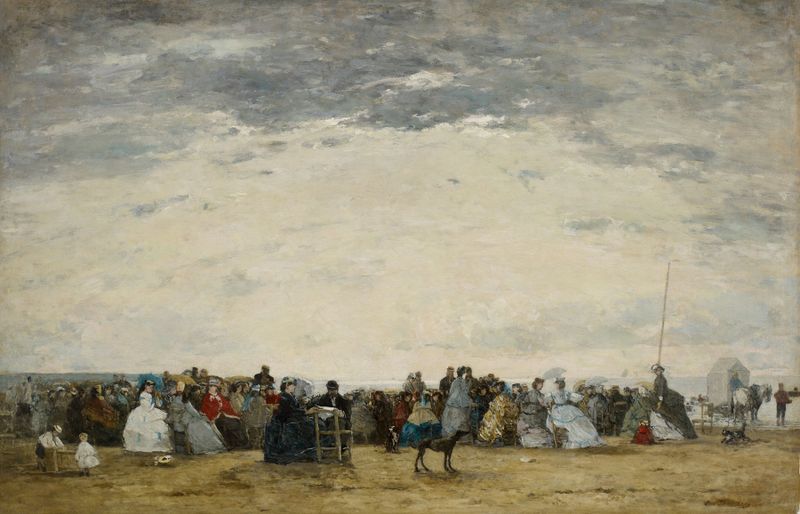
Vacationers on the Beach at Trouville
Eugène Boudin

Washerwoman near Trouville
Eugène Boudin
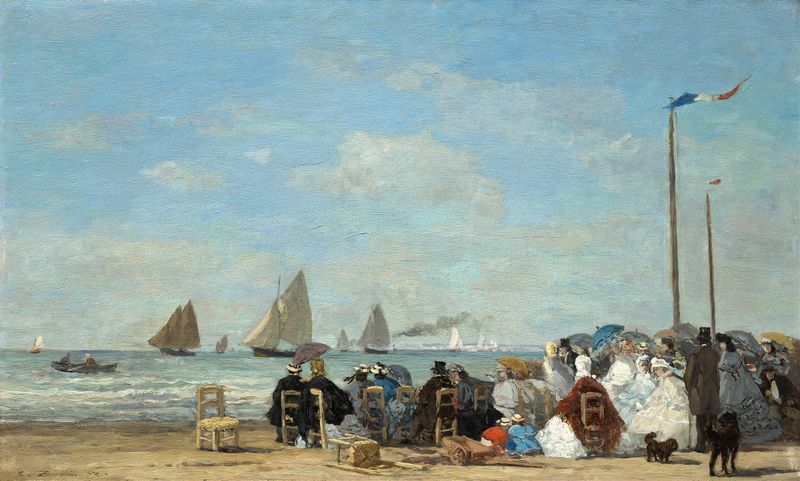
Beach Scene at Trouville
Eugène Boudin

Port aux environs d’Honfleur
Eugène Boudin

Le Faou, un coin du village
Eugène Boudin
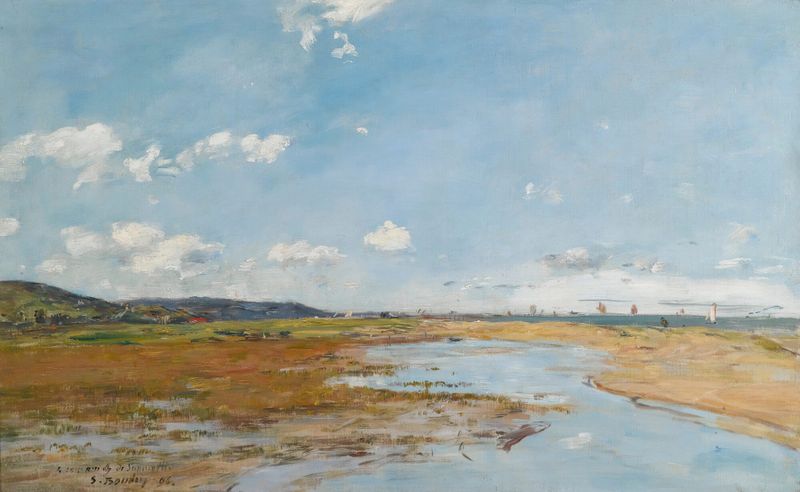
Deauville. Le Rivage
Eugène Boudin
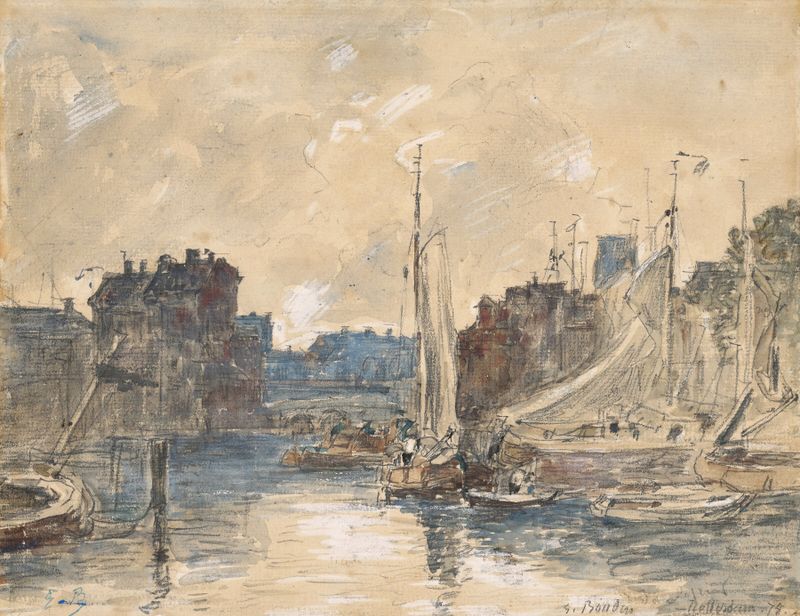
Port de Rotterdam
Eugène Boudin

View of Bordeaux, from the Quai des Chartrons
Eugène Boudin

Trouville, Scène De Plage
Eugène Boudin

Trouville, Le Port
Eugène Boudin





