
Chemin creux — History & Facts
A narrow, winding path slices through the fields, drawing the viewer’s gaze into the heart of the French countryside. The lines etched into the land and sky seem to vibrate with movement, as if the landscape itself is restless beneath a curtain of rain or the hush of dusk. The trees form a dark, protective barrier, sheltering the hollow way as it disappears into the distance.
Steinlen’s hand is unmistakable in the dense crosshatching that gives weight to the earth and a restless energy to the sky, inviting us to follow the path not just with our eyes, but with a sense of quiet anticipation. The horizon is low, giving the sky a commanding presence and setting a contemplative, almost cinematic mood. Created in 1914, this work belongs to a world on the edge of transformation, with the tranquil fields of Courdimanche in Val-d’Oise standing in stark contrast to the upheavals about to sweep Europe. Landscapes like this, often collected by figures such as Ernest de Crauzat, were cherished for their power to evoke place and memory, especially as rural life faced the onrush of modernity and war.
While little is recorded about this particular print, its presence in the Bibliothèque nationale de France and its connection to a noted collector root it firmly in the tradition of early 20th-century French landscape art—a tradition that prized both observation and atmosphere. Let your eye wander back along the etched furrows and shadowed hollows; the story of the land is written in every line.
More Artworks by Théophile Alexandre Steinlen

Village et charrette
Théophile Alexandre Steinlen
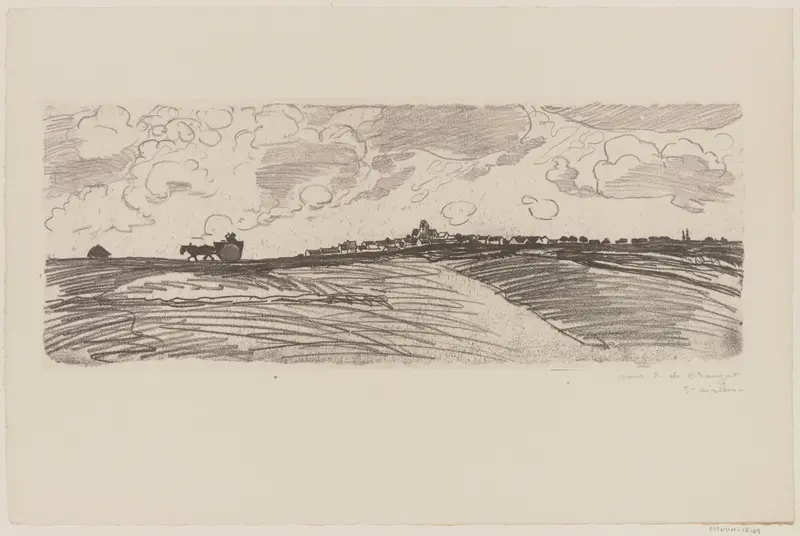
Village et charrette
Théophile Alexandre Steinlen
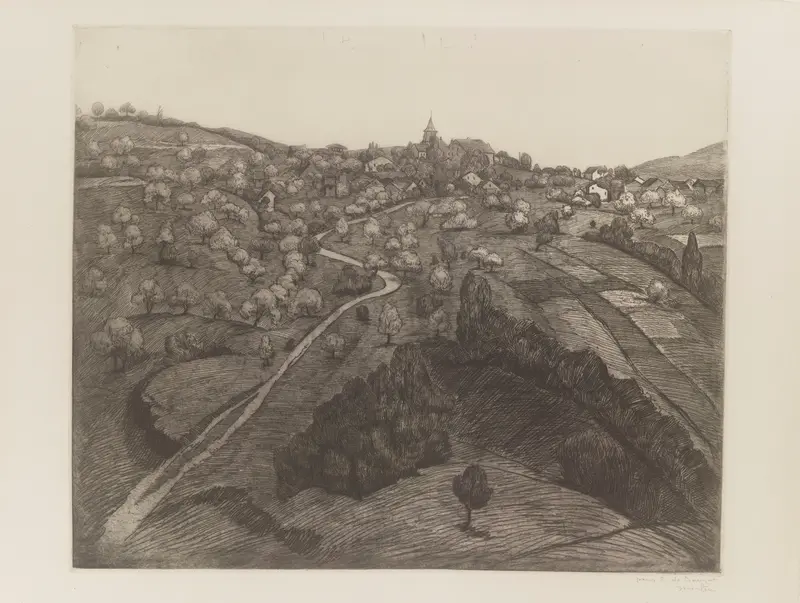
Vue de Belmont, près de Lausanne
Théophile Alexandre Steinlen
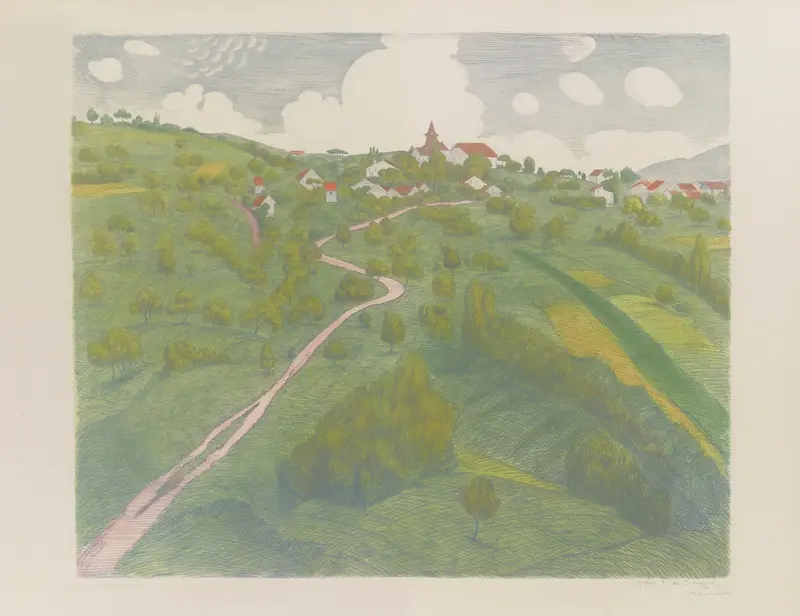
Vue de Belmont, près de Lausanne
Théophile Alexandre Steinlen
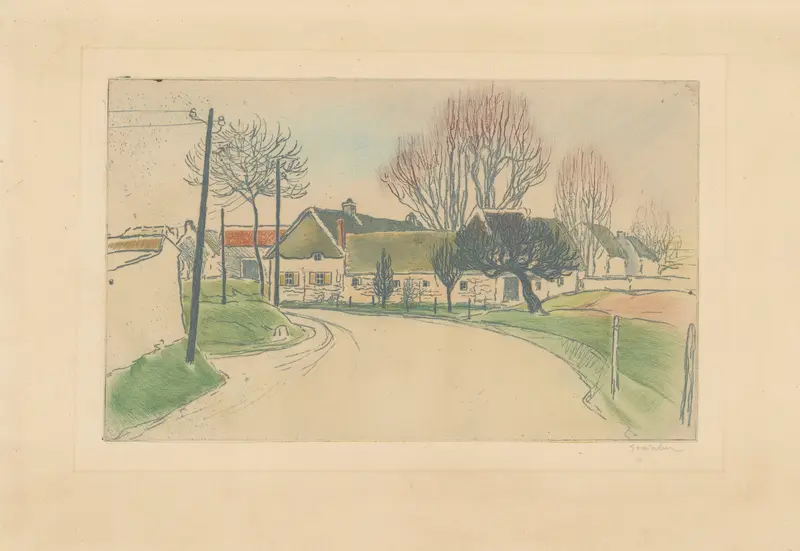
La maison à l’entrée du village
Théophile Alexandre Steinlen
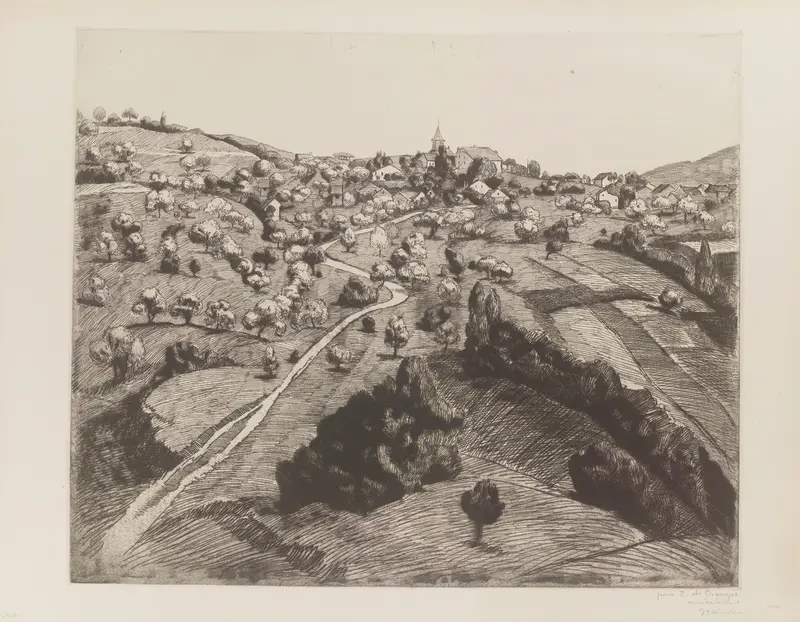
Vue de Belmont, près de Lausanne
Théophile Alexandre Steinlen
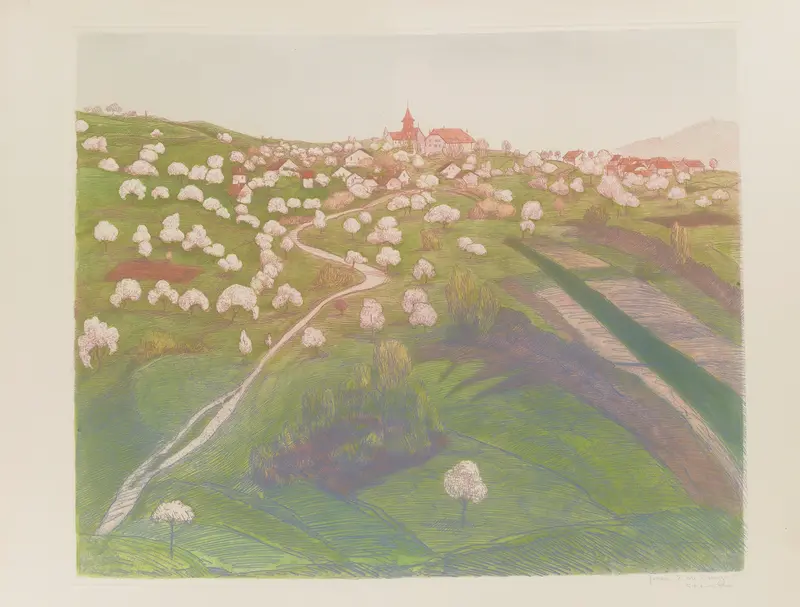
Vue de Belmont, près de Lausanne, n° 2
Théophile Alexandre Steinlen
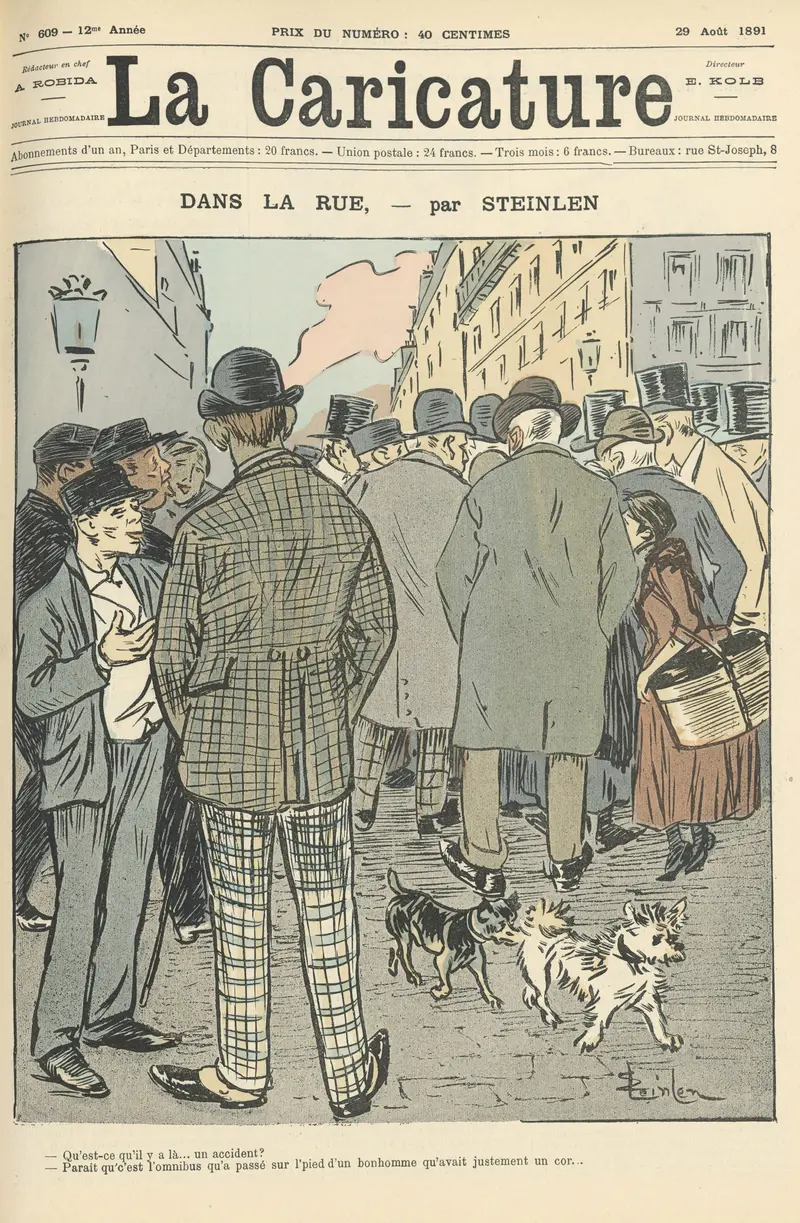
Dans la rue (La Caricature, 29 août 1891)
Théophile Alexandre Steinlen
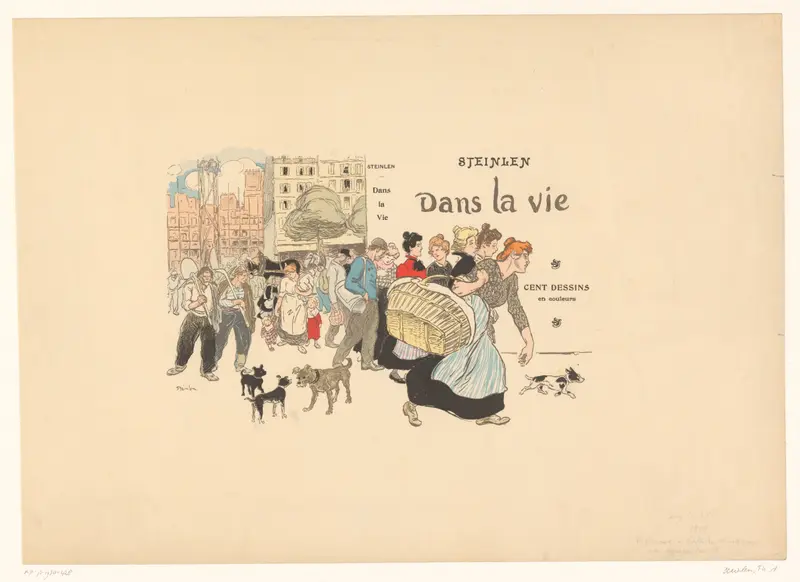
Dans la vie
Théophile Alexandre Steinlen
The Laundresses
Théophile Alexandre Steinlen
More Landscape Art

Starry Night
Vincent van Gogh

View of Delft
Johannes Vermeer

Water Lilies
Claude Monet

The Grand Canal, Venice, looking north-west from the Ca' Corner to the Ca' Contarini degli Scrigni, with the campanile of Santa Maria della Carità
Canaletto

Windsor Castle
Canaletto

The Grand Canal looking North-East from the Palazzo Dolfin-Manin to the Rialto Bridge
Canaletto